Best Finger Drum Pad For Beginners: Easy Top Picks
The Yamaha FGDP-30 is my top pick for beginners who want real sounds in a compact finger drum pad.
Many new players want to practice beats, but a full drum kit can cost a lot, take up room, and upset the neighbors. A finger drum pad solves that problem with simple touch control and quick setup. I compared electronic pads, MIDI controllers, roll-up kits, and quiet acoustic practice pads for this 2026 guide. The best finger drum pad for beginners should feel easy, sound good, and help you build timing without adding stress.
Yamaha FGDP-30 Finger Drum Pad

The Yamaha FGDP-30 is one of the easiest ways to start finger drumming. Its compact shape gives you a group of responsive playing areas without the size of a normal drum kit. Built-in sounds let a beginner play right away, so you do not need a laptop, music app, or extra gear for the first session. That simple start matters when learning a new skill.
I like this pad for beginners because it can grow with the player. You can use it as a stand-alone instrument, and its USB connection gives you a path into computer music later. It suits quiet practice, beat making, and basic rhythm drills. The layout also feels less confusing than a large controller with many unfamiliar controls.
Pros:
- Built-in sounds allow instant play without a computer
- Compact design fits small desks and music bags
- USB connection supports modern music setups
- Good choice for finger drumming and rhythm practice
- Simple format helps new players focus on timing
- Yamaha build quality inspires confidence for regular use
Cons:
- It offers fewer pads than a full-size MIDI controller
- Beginners may need time to learn the pad layout
- Extra accessories may be needed for a complete recording setup
My Recommendation
I recommend the FGDP-30 for the beginner who wants a true electronic finger drum pad rather than a silent rubber practice surface. It is especially useful for apartment players, songwriters, and anyone who wants built-in sounds with a clean learning curve. If you want the best finger drum pad for beginners with room to develop, this Yamaha is my strongest overall choice. Its value is highest when you want both stand-alone play and future USB music work.
GLEAM 12-Inch Double-Sided Practice Pad

The GLEAM 12-inch pad is a traditional drum practice pad, not an electronic finger controller. It uses a rubber surface to help a new drummer work on stick control, rolls, rudiments, and steady strokes. The double-sided design gives you two surfaces with different playing feels. That makes it useful for learners who want a quiet way to build hand skill.
This model includes a carrying bag and two pairs of drumsticks, which adds useful value for a first-time player. The 12-inch size feels close to a normal snare practice area, so the player has enough room to use proper technique. Its foam backing helps reduce some vibration on a table. Still, it is best for stick practice, not for producing drum sounds or controlling a music app.
Pros:
- Double-sided design offers two practice feels
- 12-inch surface gives beginners useful playing space
- Includes a carrying bag for simple transport
- Two pairs of sticks provide a helpful starter supply
- Rubber surface supports quiet rudiment practice
- Simple design has no menus, cables, or software to learn
Cons:
- It does not create electronic drum sounds
- It does not work as a MIDI finger controller
- A table or separate stand may be needed for ideal height
My Recommendation
I would choose this GLEAM pad for a child or adult who means “finger drum pad” as a beginner drum practice pad. It is also a good pick for a player who wants to learn snare technique before buying a full kit. The included sticks and bag reduce the number of extra items you must buy. Choose another product if you want looping, headphones, samples, or computer control.
Umelody JP-1 Wireless MIDI Pad Controller

The Umelody JP-1 takes the beginner into computer-based beat making. It has 16 RGB beat pads and supports wireless connection, giving you a broad surface for drums, samples, loops, and music production. The lights can make pad selection easier, especially when a new user works with a beat-making app. Its portable size also suits a laptop, tablet, or phone setup.
This controller is more flexible than a simple practice pad, but it also asks the learner to understand MIDI software. The pads themselves do not replace a full sound library; the connected device and compatible app usually provide the sounds. I see the JP-1 as a bridge between casual finger drumming and serious home production. It offers more creative control than many stand-alone beginner products.
Pros:
- 16 pads give you room for drums, samples, and loops
- RGB lights help show active pads and assignments
- Wireless use can reduce desk clutter
- Works with laptop, tablet, and phone-based music setups
- Portable design supports beat making away from a studio
- Strong choice for learners who want production skills
Cons:
- It needs compatible software or an app for most sounds
- MIDI setup may feel difficult during a first session
- Wireless performance can depend on the connected device
My Recommendation
The JP-1 is best for a tech-friendly beginner who wants to make beats, trigger samples, and learn MIDI. I would not call it the simplest first pad for a young child, but it may be the best finger drum pad for beginners who already use music apps. The 16-pad layout gives you a useful path from basic rhythms to live looping. Check device compatibility before buying, since software support affects the full experience.
Yamaha FGDP-50 Portable Finger Drum Pad

The Yamaha FGDP-50 is a portable electronic finger drum pad with built-in sounds, a speaker, USB MIDI, and battery power. Those features make it ready for practice in more places. A beginner can play without setting up a complete drum kit or opening a computer. The built-in speaker also makes quick rhythm work feel more natural than playing through a tiny phone speaker.
This model makes sense for players who want more freedom than a desktop-only pad provides. Battery power supports travel, rehearsal rooms, and outdoor creative sessions where a wall outlet may not be nearby. USB MIDI gives it a useful role in a modern studio as your skills improve. It costs more than a basic acoustic pad, but the extra flexibility can justify the difference for active users.
Pros:
- Built-in sounds support immediate stand-alone play
- Speaker makes casual practice easy to hear
- Battery power improves portability
- USB MIDI supports recording and music production
- Compact format is easier to carry than a drum kit
- Good long-term option for growing musicians
Cons:
- It may cost more than a simple beginner practice pad
- Battery use requires regular charging or replacement planning
- Small electronic pads can take practice to play accurately
My Recommendation
I recommend the FGDP-50 for beginners who want one instrument for home, travel, and future recording. It is a strong option for a songwriter, beat maker, or student who values built-in sound and battery use. Between the two Yamaha pads, this is the better choice when portability matters most. For many buyers, it can be the best finger drum pad for beginners because it removes the need for several extra pieces of gear.
GLEAM 12-Inch Practice Pad With Stand

The GLEAM stand set solves a common problem with beginner practice pads: poor playing height. It combines a 12-inch silent pad with an iron drum stand, drumsticks, and a stick holder. A stable stand lets the player sit or stand with a more natural posture. That can make practice feel less awkward during repeated exercises.
The double-sided pad gives you another way to adjust the feel of practice. Its silent surface is useful when you need to work on timing without making the volume of a real snare. This is a focused tool for stick control rather than music production. I like the included holder because small details such as keeping sticks close can help a new drummer practice more often.
Pros:
- Included stand creates a more natural playing position
- 12-inch pad provides a useful practice target
- Double-sided surface offers playing variety
- Drumstick holder keeps gear within easy reach
- Includes sticks for a faster start
- Silent design works well for home practice
Cons:
- It does not include electronic sounds or MIDI output
- The stand takes more storage space than a pad alone
- Rubber rebound may not match every acoustic snare
My Recommendation
This kit is best for a beginner who wants proper posture and a dedicated practice station. I would choose it over the bag-only version for a student who plans to practice several times each week. It is not the best finger drum pad for beginners who want samples or beat production, but it is a strong first step for acoustic drumming. The stand, sticks, and holder make the kit feel complete at its price level.
Sboet 9-Pad Roll-Up Electronic Drum Kit

The Sboet roll-up kit gives beginners more of a drum-set layout than a single finger pad. It has nine drum practice pads, a built-in speaker, drum pedals, sticks, and a headphone jack. The flexible format can roll up for storage, which helps families with limited room. It is a practical way to try several drum positions before committing to a larger electronic kit.
The headphone jack is a useful feature for quiet home sessions, while the speaker lets a player share the beat. A listed play time of up to 10 hours supports longer practice between charges, though actual use can vary with volume and playing conditions. I see this kit as a fun entry point for children and casual learners. It may not offer the detailed response or deeper control of a dedicated electronic drum pad, but it gives beginners a lot to explore.
Pros:
- Nine pads create a familiar drum-set style layout
- Roll-up design stores easily in a closet or drawer
- Built-in speaker allows immediate play
- Headphone jack supports quieter practice
- Includes pedals and sticks for a fuller setup
- Long listed play time suits extended sessions
Cons:
- Roll-up surfaces may move on smooth floors or tables
- It needs more setup than a compact finger pad
- Young players may outgrow its basic sound controls
My Recommendation
I recommend the Sboet kit for families, children, and beginners who want to imitate a full drum set at a low space cost. It is also a good gift because it includes the main parts needed to start. If you want a compact electronic drum pad with several playing zones, this is worth considering. However, a dedicated Yamaha model is the better choice for precise finger drumming, built-in sound quality, and long-term production work.
12-Inch Beginner Practice Pad With Stand
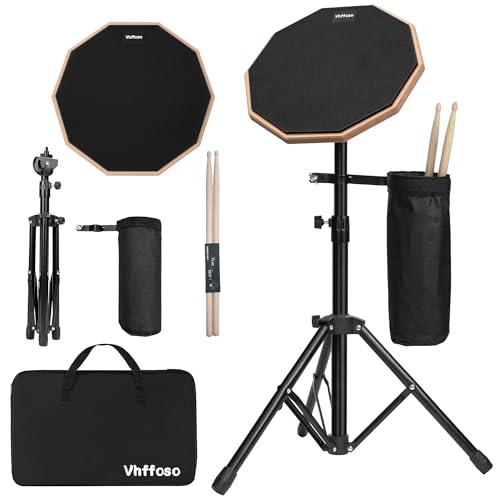
This 12-inch beginner pad focuses on the core skills of acoustic drumming. It includes a stand, drumsticks, and a carrying bag, so a new player can practice at a useful height and pack it away after a lesson. The double-sided surface helps add variety to basic strokes. Its silent design also makes it suitable for bedrooms, shared homes, and late practice.
The main benefit here is simplicity. A student can work through single strokes, double strokes, paradiddles, and metronome drills without dealing with cables or menus. The carrying bag makes trips to lessons easier. While it does not provide a digital drum sound, it can build the hand control that every drummer needs before moving to an acoustic or electronic kit.
Pros:
- Stand supports a more comfortable practice height
- Carrying bag makes lessons and travel easier
- Includes sticks for immediate use
- Double-sided pad adds useful surface choice
- Quiet response helps reduce household noise
- Good entry price for basic drum education
Cons:
- No built-in sounds, speaker, or headphone output
- It cannot trigger samples or connect as a MIDI pad
- Stand quality and stability should be checked after setup
My Recommendation
This set suits a beginner taking drum lessons or learning basic technique at home. I would select it for someone who wants a real practice routine rather than a music production tool. It may not be the best finger drum pad for beginners who expect electronic features, but it is a sensible value for stick control. The stand and bag give it an advantage over a loose pad that must sit on any available table.
POGOLAB 7-Pad Roll-Up Electronic Drum Kit

The POGOLAB electronic drum kit uses seven roll-up pads in a compact layout. It includes a built-in speaker, pedals, a headphone jack, and wireless function, giving beginners several ways to play. The rechargeable format is easy to move between rooms. It also takes far less space than a standard electronic kit with rigid shells and stands.
This kit works well for casual rhythm games, basic coordination, and first drum lessons. A beginner can use the speaker for open play or headphones for a quieter session. The wireless feature may also support a more flexible connection, but buyers should confirm the exact function and compatibility for their device. The soft roll-up design is convenient, although it may not deliver the same stick response as a firm practice pad.
Pros:
- Seven pads offer a simple electronic drum layout
- Roll-up body is easy to store and carry
- Rechargeable design avoids constant disposable batteries
- Built-in speaker supports stand-alone practice
- Headphone jack helps limit noise at home
- Pedals add a more complete drum-playing feel
Cons:
- Soft pads may feel less natural than firm rubber pads
- Wireless features may require device compatibility checks
- It offers fewer playing zones than a nine-pad kit
My Recommendation
I would suggest the POGOLAB to a beginner who values storage and portability above advanced response. It is a nice fit for a small apartment, a child’s room, or a player who wants an electronic kit for occasional use. It can be the best finger drum pad for beginners who want pedals and headphones in one low-space package. For serious finger control or studio work, I would move up to a dedicated MIDI controller or Yamaha pad.
Rock And Roll It Micro Drum Keychain

The Rock And Roll It Micro Drum is a tiny electronic drum designed for playful finger tapping. Its keychain format lets you hang it from a backpack, bag, or set of keys. The miniature size makes it easy to carry almost anywhere. It also includes a battery, so the recipient can start using it soon after opening the package.
This is not a full practice tool, but it can make rhythm feel fun and less intimidating. A child can tap short patterns during a break, while an adult can use it as a novelty desk instrument. The small playing area limits serious technique work, and the tiny controls are not ideal for detailed beat production. Think of it as a pocket-sized introduction to electronic percussion.
Pros:
- Extremely small and easy to carry
- Keychain design makes it fun for travel and gifts
- Battery included for a quick start
- Simple controls suit casual tapping
- Play-anywhere format can encourage rhythm interest
- Low space needs make storage effortless
Cons:
- Very small size limits serious practice
- It does not replace a full finger drum pad
- Limited controls provide little room for musical growth
My Recommendation
I recommend the Micro Drum as a fun gift, stocking stuffer, or first exposure to electronic percussion. It is best for a child or casual player who wants instant play rather than structured training. I would not choose it as the best finger drum pad for beginners who want to learn production or proper drum technique. Its value comes from portability, charm, and quick entertainment.
12-Inch Blue Double-Sided Practice Pad

This blue 12-inch practice pad comes with two pairs of 5A maple drumsticks and a carrying bag. The double-sided surface gives a learner two ways to work on strokes and rebound. Its silent design supports practice without the sharp volume of an acoustic snare. The bright blue finish also gives it a more inviting look than a plain black training pad.
The included 5A sticks are a familiar size for many beginners, and having two pairs is helpful if one pair gets misplaced or damaged. The bag supports transport to lessons or group practice. I see this product as a basic but useful tool for building hand strength, control, and timing with a metronome. It does not offer digital sounds, but it can help a new player form habits that transfer to a full kit.
Pros:
- Two pairs of 5A maple sticks add starter value
- Double-sided surface offers more practice choice
- 12-inch target gives beginners room to aim
- Carrying bag supports easy transport
- Quiet design is suitable for home practice
- Bright blue color may appeal to younger players
Cons:
- No electronic sound or MIDI connection
- It needs a table or separate stand for setup
- Silent rubber rebound may not feel like a real snare
My Recommendation
This pad is best for a beginner who wants a low-cost practice setup with extra sticks. I would choose it for home lessons, school practice, or a player who often travels with gear. It is not the best finger drum pad for beginners who want to tap samples with their hands, but it is a good acoustic drum training pad. The two stick pairs and bag make it a practical value for first-time buyers.
What Makes the Best Finger Drum Pad for Beginners?
Before choosing a pad, decide what “drumming” means for you. Some buyers want to tap built-in electronic sounds with their fingers. Others want to hold sticks and learn snare technique. These products look similar in search results, but they serve very different goals.
An electronic finger drum pad should offer responsive playing zones, clear sounds, and simple controls. A MIDI controller should connect well with the device and software you already use. A traditional practice pad should give steady rebound, a stable base, and a quiet surface. If you match the product to your goal, you will avoid paying for features you do not need.
Electronic Sounds or Silent Practice?
Electronic models create drum sounds when you tap a pad. This makes them more fun for beat making and live play. They may also support headphones, speakers, USB MIDI, or wireless connections. A traditional practice pad stays quiet and focuses on the physical motion of drum strokes.
For a child who wants instant feedback, an electronic model may hold attention better. For a student who takes drum lessons, a rubber practice pad may build better stick habits. Neither type wins for every person. The best finger drum pad for beginners is the one that fits the kind of practice you will actually do.
Pad Size and Playing Comfort
Small pads save space, but they give your hands less room to move. Larger pads feel easier when learning basic placement. A 12-inch practice pad gives a beginner a broad target and feels closer to a snare. Compact electronic pads often use several smaller zones, so they reward careful finger placement.
Also consider where you will play. A desk pad needs a firm, flat surface. A stand-based practice pad needs floor space but may offer better posture. A roll-up kit stores well, yet it can shift if you play hard. Comfort is not a luxury. It helps you stay with practice when the first excitement fades.
Noise Level
Noise is one of the main reasons people shop for a beginner drum pad. Rubber practice pads are much quieter than acoustic drums, but they still create tapping sounds. Electronic models with a headphone jack can offer more privacy. A built-in speaker is handy for open play, but it may not suit a shared home.
I suggest checking the room, floor, and time of day before you buy. A soft mat under a roll-up kit may reduce movement and some vibration. Headphones can help, but they do not solve every mechanical noise from sticks or pedals. Good neighbors are part of a good practice plan.
Connectivity for Music Production
USB MIDI can send performance data to a computer or other compatible music device. That lets you use software drum sounds, record patterns, and control virtual instruments. A wireless feature may reduce cable clutter, but compatibility still matters. Read the device requirements before you assume a controller will work with every phone or tablet.
If you only want to play built-in sounds, you may not need MIDI. If you want to make beats, MIDI can extend the life of your purchase. The Umelody JP-1 is aimed at that path, while the Yamaha FGDP models offer a simpler stand-alone start with a route into USB-based work.
Built-In Speaker, Headphones, and Power
A speaker helps you play without an amplifier. A headphone jack helps you practice without filling the room with sound. Battery or rechargeable power makes a pad easier to move. These features add convenience, but they can also increase the price.
Think about your daily routine. If you play at a desk near an outlet, battery power may matter less. If you travel or play in different rooms, portable power can be a major benefit. Convenience often decides whether a beginner practices twice a week or twice a day.
Build Quality and Long-Term Value
A beginner product should survive normal learning, not just look good on day one. Check that the pad stays in place, the buttons feel clear, and the surface does not distract you. On a traditional pad, inspect the stand and base. On an electronic pad, pay attention to cable ports, power controls, and how easy it is to adjust volume.
Do not confuse more pads with better learning. A large layout can seem exciting, but too many controls may slow a new player. A simple pad with a clear response can act like a good teacher: it gives you enough help without making every choice for you.
Best Finger Drum Pad for Beginners: Quick Comparison
| Best for | Why |
|---|---|
| Built-in electronic sounds | Yamaha FGDP-30 offers a compact, focused start without requiring a computer. |
| Portable electronic play | Yamaha FGDP-50 adds a speaker, USB MIDI, and battery power for flexible use. |
| Quiet stick training | GLEAM and 12-inch practice pad kits provide a broad, silent surface with useful starter extras. |
How I Would Start Learning on a Finger Drum Pad
I would begin with one sound and one simple beat. Play four steady taps with your right hand, then add a backbeat with the other hand. Keep the tempo slow. Speed hides mistakes, while a slow beat lets you hear where your timing slips.
Next, use a metronome at a comfortable pace. Play for five minutes, rest for one minute, and repeat the cycle two or three times. Short sessions help protect your hands and keep practice from feeling like a chore. I would increase the tempo only after the beat feels even.
For a MIDI controller, assign kick, snare, and hi-hat sounds to easy-to-reach pads. For an electronic Yamaha pad, start with a basic kit and avoid changing sounds every few seconds. For a rubber pad, practice single strokes, double strokes, and paradiddles with relaxed hands. These small steps build a strong base.
Common Buying Mistakes to Avoid
The first mistake is buying a traditional practice pad when you really want to make electronic beats. A rubber pad cannot produce samples or send MIDI data. The second mistake is buying a complex controller without checking app support. A controller can be powerful yet frustrating if your device cannot connect to it.
Another mistake is ignoring posture. A pad on a low coffee table may force your wrists into a poor angle. A stand can improve comfort, especially during long sessions. I also suggest checking return terms and current Amazon availability because prices, bundles, and stock can change over time.
Finally, do not judge a product only by the number of pads. A beginner needs clear response, easy controls, and a design that encourages daily use. One excellent pad is more useful than a large kit that stays in a closet. Buy for your real routine, not for an imaginary studio.
FAQs Of best finger drum pad for beginners
What is the best finger drum pad for beginners?
The Yamaha FGDP-30 is my top overall pick for beginners who want built-in electronic drum sounds, compact size, and USB support. The FGDP-50 is better if battery power, a speaker, and portability matter most.
Can I use a practice pad for finger drumming?
You can tap a practice pad with your fingers, but it is made mainly for drumsticks. It will not create electronic sounds or trigger samples. Choose a MIDI or electronic pad for music production.
Are electronic drum pads quiet enough for apartments?
They are usually much quieter than acoustic drums, especially with headphones. Finger taps are also softer than stick hits. Pedals and physical tapping can still create some vibration, so a mat may help.
Do beginners need a MIDI drum pad?
No. A MIDI pad is useful for computer music, samples, and loops, but it may add setup work. Beginners who want instant play may prefer a model with built-in sounds.
Is a roll-up drum kit good for a first-time player?
Yes, if you want several drum zones, pedals, and easy storage. Roll-up kits are convenient, but their soft surfaces may not feel as natural as a firm rubber practice pad.
Final Verdict: Which Should You Buy?
The Yamaha FGDP-30 is the best finger drum pad for beginners who want clear built-in sounds and a simple path into USB music making. Choose the FGDP-50 for battery-powered travel, or a GLEAM pad for quiet stick training.
Match the pad to your goal, space, and noise needs. The right beginner drum pad can turn a small desk into a steady first step toward better rhythm.