In the United States, the snare drum and bass drum are the two main voice types in a drum set, marching band, concert band, and orchestra. A snare drum makes a sharp, bright sound with vibrating wires under the head. A bass drum makes a deep, low sound from its larger shell and larger drumhead.
The simplest difference is this:
- Snare drum: high and crisp; often plays rhythm, accents, and rolls.
- Bass drum: low and powerful; often marks the pulse or adds weight.
The drums also differ in size, construction, playing method, and role. A snare drum is usually struck with sticks. A bass drum may be played with a foot pedal, a soft mallet, or a large beater, depending on the type of music.

Snare Drum vs. Bass Drum: Quick Comparison
| Feature | Snare drum | Bass drum |
|---|---|---|
| Main sound | Sharp, bright, and buzzing | Deep, low, and full |
| Main sound source | Drumhead plus snare wires | Large drumhead and air inside the shell |
| Typical size | About 10–15 inches in diameter | Often 16–36 inches in diameter |
| Common playing tool | Drumsticks, brushes, or rods | Foot pedal, mallet, or large beater |
| Common role | Backbeat, accents, rolls, and detailed rhythms | Pulse, low-end impact, and major accents |
| Common drum-set position | Center or left side of the player | Operated by the right foot |
| Typical tuning | Medium to high tension | Low tension |
| Common use | Drum set, marching band, orchestra, concert band | Drum set, marching band, orchestra, concert band |
These size ranges are common, not fixed rules. A marching snare, piccolo snare, concert snare, and drum-set snare can all have different dimensions. The same is true for bass drums.
The key design difference is the snare mechanism. A snare drum has metal wires, cords, or cable strands stretched across the bottom head. When the drum is struck, these strands vibrate against the head and create the familiar crackle or buzz.
A bass drum does not use snare wires. Its larger shell and head move more air, which creates a lower and deeper tone.
What Is a Snare Drum?
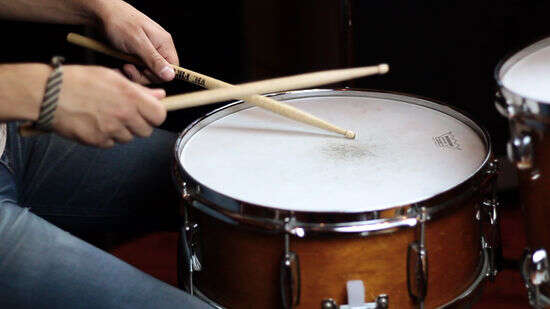
A snare drum is a shallow, two-headed drum with a set of snares stretched across its bottom head. It is also called the side drum in some military and orchestral settings.
The top head is the main playing surface. The bottom head is often called the snare-side head. A throw-off mechanism lets the player move the snares away from the head. This creates two useful sounds:
- Snares on: bright, sharp, and buzzing.
- Snares off: more like a small tom or shallow concert drum.
Most snare drums have a metal or wood shell. Metal shells often produce a bright, cutting tone. Wood shells can sound warmer, though shell material is only one part of the final sound. Head type, tuning, rim style, snare tension, and playing technique also matter.
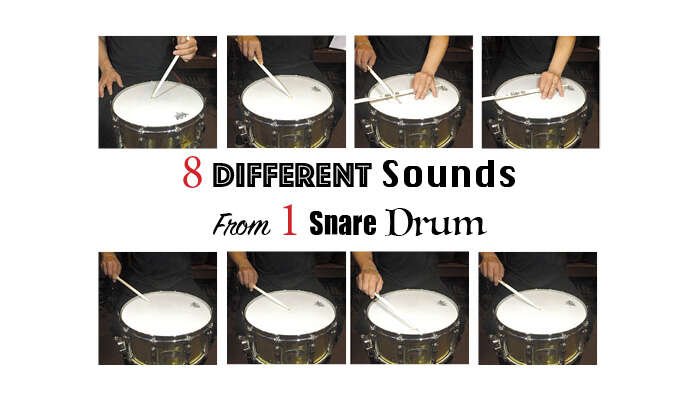
A snare drum can play more than backbeats. Common snare techniques include:
- Single and double strokes
- Flam accents
– Rolls - Ghost notes
- Rimshots
- Cross-stick clicks
- Press rolls
- Marching accents
In a rock or pop drum set, the snare often plays on beats two and four. In a marching band, it may carry fast patterns and complex accents. In an orchestra, it can add tension, military color, or sharp rhythmic detail.

What Is a Bass Drum?
A bass drum is a large drum that produces a low, resonant sound. It has a much wider shell than a snare drum, so its heads move more air when struck.
In a standard drum set, the bass drum is often called the kick drum. The player operates it with a foot pedal. The beater strikes the batter head, which faces the player. A resonant head may sit on the opposite side of the shell.
A drum-set bass drum often provides the foundation of the groove. It may line up with the bass guitar, support dance rhythms, or create a strong musical accent. In many styles, the bass drum and snare work as a pair:
- The bass drum gives the groove its low push.
- The snare adds a sharp backbeat above it.
Concert and marching bass drums work in a different way. The player usually strikes the head with a handheld mallet. A marching bass drum may be carried on a harness, while an orchestral bass drum usually rests on a stand.
Bass drums can produce more than one sound. A center hit gives a strong, focused tone. A near-edge hit may sound softer and more open. A mallet with a hard head creates more attack, while a soft felt or yarn mallet gives a rounder sound.

The Main Sound Difference: Buzz and Snap vs. Depth and Boom
The snare drum sounds sharp because its snares vibrate against the bottom head. The bass drum sounds deep because its large heads and shell move a greater volume of air at a slower rate.
Pitch is not the only difference. The drums also differ in attack, sustain, and tone color:
- Attack is the first part of the sound. A snare has a fast, clear attack.
- Sustain is how long the sound continues. A bass drum often has a longer, fuller decay.
- Tone color is the character of the sound. Snare wires add a noisy, bright texture.
A snare drum can sound tight and dry or open and ringing. A bass drum can sound short and punchy or deep and booming. Tuning and muffling can change both instruments greatly.
Why does the bass drum sound lower?
A drum’s pitch depends on several factors, including:
- Head size
- Head tension
- Shell depth
- Shell diameter
- Head thickness
- Air movement
- How and where the drum is struck
Larger drumheads tend to produce lower fundamental tones when tuned under similar conditions. That is why a bass drum generally sounds lower than a snare drum.
Drums do not produce one pure musical note in the same way that a flute or piano does. Their sound includes many frequencies at once. Still, the bass drum has more low-frequency energy, while the snare has more high-frequency attack and noise.
Why does the snare sound louder or sharper?
The snares add many high-frequency vibrations. A rimshot also sends a strong attack through the shell and head at the same time. This helps the snare cut through guitars, horns, and other loud instruments.
A bass drum may have greater physical impact, but its sound can seem less sharp. Low sounds spread through a room differently from high sounds. Room size, flooring, microphones, and speaker systems can change how each drum feels and sounds.

How Their Roles Differ in a Drum Set
In a typical American drum set, the snare drum and bass drum perform different jobs but work together closely.
The bass drum usually supports the beat. A drummer may play it on beat one, beat three, or in a more complex pattern. In rock, funk, country, jazz, and metal, the bass drum pattern can change the entire feel of a song.
The snare drum often marks the backbeat. In a common 4/4 rock pattern, the snare lands on beats two and four while the bass drum supports beats one and three. This is a basic example, not a rule for every style.
For example:
| Beat | 1 | 2 | 3 | 4 |
|---|---|---|---|---|
| Bass drum | X | — | X | — |
| Snare drum | — | X | — | X |
A drummer can then add hi-hat notes, extra bass drum hits, ghost notes, and fills. The bass drum gives the pattern weight. The snare gives it contrast.
This relationship is one reason beginners learn both drums early. Playing only the bass drum can make a rhythm feel empty. Playing only the snare can make it feel light. Together, they create a clear push-and-pull.

How Their Roles Differ in Marching and Concert Music
The terms can mean slightly different things outside a drum set.
A marching snare is built for projection and fast, clear playing. It often has a deeper shell than a standard drum-set snare. Marching snares may use high-tension heads and strong rims to handle forceful playing.
A marching bass drum is usually worn on a carrier. Marching ensembles may use several bass drums, each with a different size and pitch. Players can create moving lines and musical phrases across the drum section.
A concert bass drum is often much larger and is played with a soft mallet. It can create a deep swell, a sudden impact, or a long rumble. The player may control the sound with mallet choice, striking position, and dampening.
Concert snare drums can also use soft sticks, brushes, or specialized mallets. They may provide delicate rolls, short accents, or sharp attacks. The same basic drum family can serve very different musical purposes.

Which Drum Is Easier for a Beginner?
Neither drum is automatically easier. The answer depends on what the learner wants to play.
A snare drum may be the better starting point for learning:
- Basic stick control
- Reading rhythm
- Alternating strokes
- Rolls
- Accents
- Marching patterns
A bass drum may feel more direct at first because the player can focus on a steady pulse. However, good bass drum playing still requires control. The player must manage timing, volume, beater position, and the length of each note.
For a new drum-set player, learning both is useful. Start with a simple pattern:
- Count four steady beats.
- Play the bass drum on beats one and three.
- Play the snare on beats two and four.
- Add even eighth notes on the hi-hat when ready.
Use a metronome at a slow speed. Keep the sound relaxed. A clean, steady pattern is more useful than a fast but uneven one.

Choosing Between a Snare Drum and a Bass Drum
Choose a snare drum if you want to focus on detailed rhythm, marching, rudiments, backbeats, or sharp accents. It is also the more practical choice for someone starting with a snare-only practice pad or beginning percussion lessons.
Choose a bass drum if you need a low pulse, large musical accents, or a drum-set groove. A drum-set bass drum requires space, a pedal, and a stable playing setup. A concert or marching bass drum may require a stand, harness, or suitable mallet.
The setting matters as much as the sound:
| Your goal | More suitable choice |
|---|---|
| Learn basic sticking | Snare drum |
| Play rock backbeats | Snare drum and bass drum |
| Practice marching percussion | Snare drum, then bass drum |
| Add low impact to an orchestra | Concert bass drum |
| Build a standard drum set | Both drums |
| Play quiet hand percussion at home | Practice pad or muted snare |
| Create cinematic or concert accents | Bass drum |
A snare drum is usually easier to fit into a small practice space. A bass drum can create strong low-frequency sound that travels through walls and floors. If you live in an apartment, use a practice pad, low-volume setup, or electronic drum system where suitable.

Common Mistakes and Misunderstandings
“The bass drum is always played with a foot.”
This is true for most drum-set bass drums, but not for every bass drum. Concert and marching bass drums are commonly played with handheld mallets.
“A snare drum is always small.”
Many snare drums are smaller than bass drums, but size varies. Marching snares may be deep and large. Piccolo snares may be shallow. Diameter, shell depth, and tuning all affect the sound.
“The snare wires make the whole sound.”
The wires are important, but they are only one part of the sound. The shell, heads, rims, tuning, stick choice, and playing location also shape the tone.
“A louder drum is a better drum.”
Volume is not the same as quality. A drum should suit the player, room, style, and musical role. Excessive force can damage heads, rims, hearing, or nearby equipment.
“Any bass drum pedal works with any bass drum.”
Most standard drum-set pedals attach to compatible bass drum hoops, but fit can vary. Concert and marching bass drums may not use a pedal at all. Check the drum’s design before buying hardware.

Care and Safe Playing Tips
Keep both drums tuned evenly and inspect the heads for dents, cracks, or loose areas. Do not tighten a head far beyond the maker’s guidance. Uneven tension can make the drum hard to control and may damage the shell or hardware.
Check snare wires for loose strands. If the wires rattle when they should be off, inspect the throw-off and tension system. A small amount of adjustment is normal, but damaged wires may need replacement.
Use hearing protection during loud practice and rehearsal. The National Institute for Occupational Safety and Health identifies loud sound as a risk for hearing damage, especially with repeated exposure. Keep practice volume reasonable and take breaks.
Use the right tool for the drum. A heavy bass drum mallet can damage a snare head. A small drumstick may not produce the intended sound on a large concert bass drum. When in doubt, follow the instrument maker’s care instructions.

Frequently Asked Questions
Can a snare drum replace a bass drum?
No. A snare can provide rhythm and accents, but it does not create the same low-frequency support as a bass drum. A player can imitate a bass pattern on a snare, but the tone and physical impact will be different.
Can a bass drum replace a snare drum?
No. A bass drum cannot produce the same crisp attack and snare-wire buzz. It can play rhythm, but it will not provide the same backbeat sound or detailed articulation.
Is a kick drum the same as a bass drum?
In a standard drum set, “kick drum” usually means the bass drum played with a foot pedal. In concert, marching, and orchestral settings, “bass drum” often means a larger drum played with a handheld mallet.
Why does a snare drum have wires on the bottom?
The wires vibrate against the bottom head when the drum is struck. This creates the snare’s bright buzz and sharp response. The player can switch the wires off for a more open drum sound.
Which drum should a child learn first?
A snare drum or practice pad is often a practical first step because it teaches basic rhythm and stick control. A qualified music teacher can adjust the choice for the child’s age, goals, hand size, and available equipment.
Do bass drums have a specific musical pitch?
They can produce a low pitch area, but drums create a group of frequencies rather than one clear note like a piano string. Tuning, size, head type, and striking method affect the perceived pitch.
Key Takeaways
- A snare drum is smaller, sharper, and fitted with wires that create a buzzing sound.
- A bass drum is larger, deeper, and designed to produce low-end power.
- The snare often plays backbeats, rolls, and accents.
- The bass drum often supports the pulse and adds weight.
- A drum-set bass drum is usually played with a foot pedal.
- Marching and concert bass drums are commonly played with mallets.
- Most drum-set players use both drums because they complement each other.
Conclusion
The difference between a snare drum and a bass drum comes down to sound, design, and musical role. The snare creates a bright, detailed attack through its vibrating wires. The bass drum creates a deep, broad sound through its larger head and shell.
If you are learning drum set, practice both. Use the snare to build control and rhythm. Use the bass drum to develop a steady pulse. Then combine them slowly with a metronome. That simple pairing forms the core of many drum grooves.
For basic definitions and instrument context, see the Encyclopaedia Britannica entries on the snare drum and bass drum.

Senior Music Reviewer
Alex Carter is a seasoned music reviewer with over a decade of experience in the world of sound and instruments. Passionate about helping musicians and enthusiasts make informed choices, he brings sharp insights and in-depth knowledge to every review. From classical instruments to modern gear, Alex combines technical expertise with a love for music to deliver content that resonates with readers.
As a Senior Music Reviewer and expert author on Tuneluma.com, Alex is dedicated to sharing honest evaluations, practical advice, and thoughtful commentary to guide readers in their musical journey.