Is Ordinary By Alex Warren Hard To Play On Piano: Easy?
Ordinary by Alex Warren is fairly easy on piano, especially when you use simple chords and a steady rhythm.
If you are learning “Ordinary” by Alex Warren, you do not need advanced piano skills to play a recognizable version. The song relies on a repeating pop chord pattern, but its emotional feel, timing, and vocal phrasing add a little challenge. This guide explains the real difficulty, the chords to expect, common mistakes, and a simple path from beginner version to fuller performance.

Is Ordinary by Alex Warren hard to play on piano?
For most players, “Ordinary” by Alex Warren is easy to moderate in difficulty. A beginner can learn the basic chord pattern, while an intermediate player can work on a richer arrangement with moving bass notes, inversions, and the vocal melody.
The song sounds more complex than it is. Like many modern pop ballads, it uses a small group of chords that repeat through much of the verse and chorus. The main challenge comes from playing with feeling and keeping the rhythm smooth.
A simple version may use:
• Block chords in the left and right hands
• A steady four-beat pulse
• Basic major and minor triads
• Simple chord changes
• A slow, relaxed tempo
A fuller version may add:
• Broken chords
• Chord inversions
• Passing bass notes
• Sustained pedal
• Melody notes above the chords
• Stronger dynamics in the chorus
This means the answer to “is Ordinary by Alex Warren hard to play on piano” depends on the arrangement. A lead sheet is much easier than a detailed piano cover.
What makes Ordinary by Alex Warren relatively easy?
The main reason “Ordinary” works well for piano beginners is its repeated harmonic structure. You can often learn one short chord group and use it across several sections of the song.
The song also has a clear pulse. You do not need a fast finger technique or complex classical patterns. The music gives you time to prepare each chord, which is helpful when your hand changes are still developing.
Other beginner-friendly features include:
• No need for rapid scales
• No large jumps across the keyboard
• Mostly familiar pop harmony
• A clear verse and chorus structure
• Plenty of space between major phrases
• A melody that can be added later
The emotional style also helps. You can play the first version softly and slowly without losing the character of the song. That makes it a good choice for someone who wants to practice expression, not just speed.
Still, easy chords do not always mean easy music. The song can sound flat if every chord is played with the same force. Good timing and control matter just as much as knowing the notes.

What piano chords are used in Ordinary by Alex Warren?
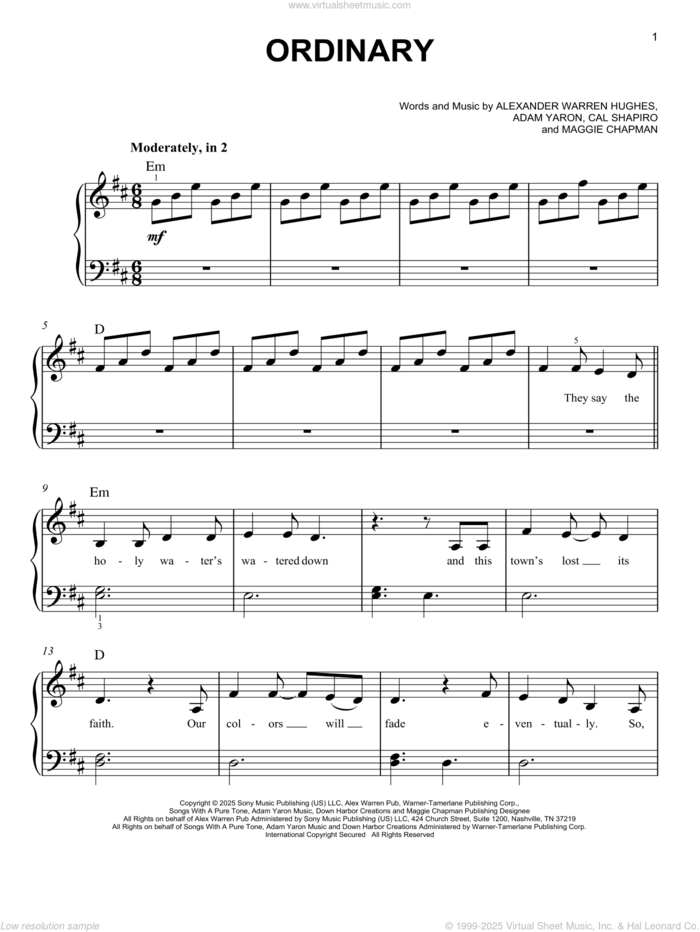
Chord charts and arrangements for “Ordinary” may differ in key. Some versions are simplified for beginners, while others are transposed to match the singer’s range or a specific tutorial.
Many pop piano arrangements use familiar chords such as:
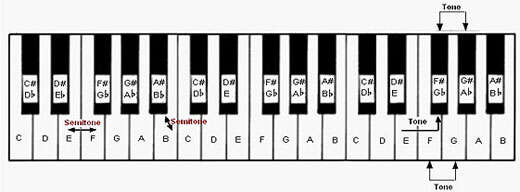
• C major
• G major
• A minor
• F major
This common four-chord family is often written as C, G, Am, and F in a beginner-friendly key. However, you should check the exact sheet music or chord chart you are using because the official recording, live performances, and online tutorials may use different keys.
If you see a chord such as F major, you can simplify it at first. Play only the notes F and C in the left hand, then play the full F major triad in the right hand when comfortable.
A useful starting pattern is:
- Play the root note with your left hand.
- Play the full chord with your right hand.
- Hold the chord for four steady beats.
- Move to the next chord without stopping.
- Repeat the pattern until the changes feel automatic.
This method answers much of the question, “is Ordinary by Alex Warren hard to play on piano?” The chord shapes are not difficult, but smooth movement between them takes practice.
Is Ordinary by Alex Warren suitable for beginners?
Yes. “Ordinary” by Alex Warren is suitable for beginners who already know basic piano notes and simple triads. Even a new player can use a reduced version with one left-hand note and one right-hand chord.
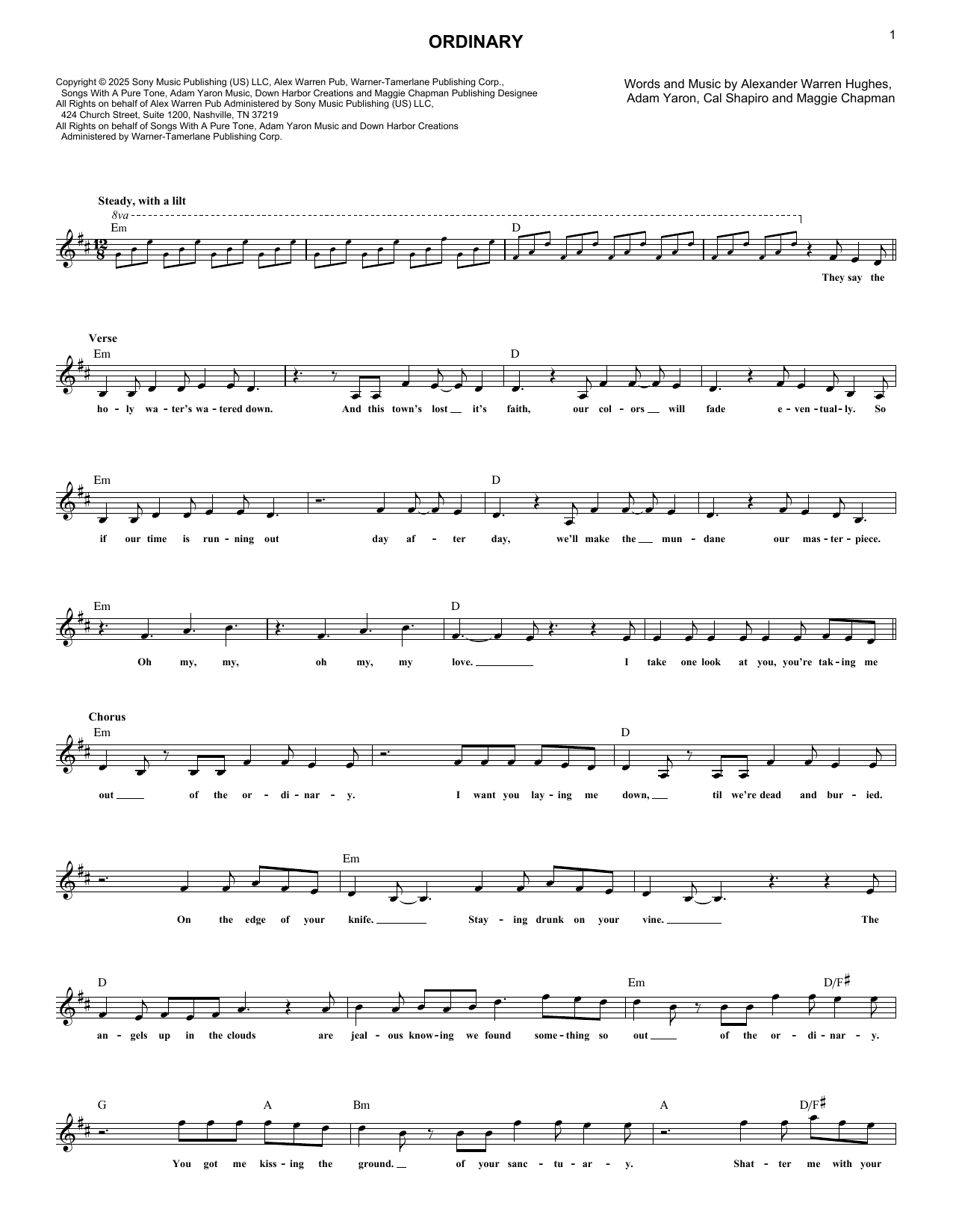
A beginner arrangement might look like this:
• Left hand: Play one bass note per measure.
• Right hand: Play one chord per measure.
• Rhythm: Count four even beats.
• Tempo: Start slower than the recording.
• Pedal: Use light pedal changes with each chord.
Do not try to sing and play at the same time on your first attempt. That adds two separate tasks: hand coordination and vocal timing. Learn the piano pattern first, then hum the melody, and only later add the lyrics.
A good beginner goal is not to sound perfect. Your first goal should be to play through the verse without stopping. After that, improve the tone, rhythm, and chord changes one at a time.
Which parts of the song are the hardest?
The chorus is usually the most demanding section for beginners. It often needs more volume, wider movement, and a stronger emotional lift than the verse.
The hardest skills may include:
Smooth chord changes
Your hands must move from one shape to the next without a pause. Practice only two chords at a time. Repeat the change slowly until your fingers begin to remember the shape.
Playing with dynamics
The song needs contrast. The verse can feel soft and close, while the chorus should open up. Pressing every key with the same force can make the performance sound mechanical.
Coordinating melody and chords
Adding the vocal melody to the piano part creates a new layer of difficulty. The melody may use notes that are not part of the basic chord, so your right hand must shift between chord tones and melody notes.
Using the sustain pedal
The sustain pedal can make the song sound warm, but too much pedal can blur the harmony. Lift and press the pedal when the chord changes instead of holding it through the entire phrase.
Keeping a steady tempo
Emotional songs often tempt players to slow down during dramatic words. Small timing changes can be expressive, but large pauses may disrupt the song’s flow.
These details explain why “is Ordinary by Alex Warren hard to play on piano” has more than a simple yes-or-no answer. The notes may be easy, but musical control takes time.
A simple way to learn Ordinary by Alex Warren on piano
Use a gradual practice plan. Trying to learn the full arrangement at once can create tension and frustration.
Step 1: Find a comfortable key
Choose a key that lets you play the chords without strain. If the original key feels awkward, use a transposed beginner version. Changing the key is not cheating; it is a normal part of piano arranging.
Step 2: Learn the chord shapes
Practice the main chords separately. Play each one several times, then switch between two chords. Keep your fingers close to the keys.
Step 3: Add the left-hand bass
Start with single bass notes. Avoid octaves until your hand feels relaxed. A simple root note can support the entire song.
Step 4: Add a basic rhythm
Try this pattern:
• Beat 1: Play the bass note.
• Beat 1: Play the right-hand chord.
• Beats 2 through 4: Hold the chord.
Once that feels easy, play the chord again on beats 2 and 4. This creates a gentle pop-ballad pulse.
Step 5: Practice each section
Work on the verse, pre-chorus, and chorus separately. Then connect two sections. Short practice loops are often more useful than playing the whole song repeatedly.
Step 6: Add expression
Play the verse softly. Increase the volume in the chorus. Use a light pedal and let important notes ring without rushing.
A focused 15-minute session can be more effective than an unfocused hour. Stop when your hands become tense, then return with a slower tempo.
How to make the piano arrangement sound better
Once you can play the basic version, you can make “Ordinary” sound fuller without making it much harder.
Try these changes:
• Use chord inversions to keep your right hand near the same area.
• Add fifths or octaves in the left hand for more depth.
• Break the chord into separate notes for a gentle arpeggio.
• Play the melody slightly louder than the accompaniment.
• Use the sustain pedal only when the harmony changes.
• Leave space before important vocal phrases.
• Build the chorus gradually instead of playing loudly from the start.
Chord inversions are especially useful. For example, instead of moving from a root-position C chord to a root-position G chord, choose the nearest G shape. This reduces hand movement and makes the changes sound smoother.
A common mistake is adding too many notes too soon. A full arrangement should support the song, not cover it. If the piano becomes busy, return to the simple pattern and rebuild it with better control.
Common mistakes when learning the song
Many players make the same errors when they first learn a pop piano song.
Starting at full speed
The recording may feel slow, but the vocal phrasing can still be difficult. Begin at about half speed if needed. Increase the tempo only when you can play without missed changes.
Ignoring the rhythm
Knowing the chords is not enough. Count out loud or use a metronome. A steady beat will make a simple arrangement sound much more polished.
Holding the pedal too long
Long pedal use can blend several chords into one unclear sound. Change the pedal with the harmony and listen for muddy notes.
Playing every section the same way
The verse, chorus, and ending should not all have the same volume. Use contrast to create a musical shape.
Practicing only from the beginning
If you always restart after a mistake, you may never learn the middle or ending. Begin practice from different sections and make small loops.
Reaching for advanced tutorials too soon
A difficult cover may include extra notes that are not needed for a satisfying performance. Learn the song’s structure first, then add detail.
These lessons apply to many songs, not only “is Ordinary by Alex Warren hard to play on piano.” Simple music becomes enjoyable when your timing, tone, and confidence grow together.
How long does it take to learn Ordinary by Alex Warren?
A complete beginner may learn a basic version in a few days to two weeks with regular practice. An intermediate player may learn the chords in one session and spend more time refining the sound.
Your learning time depends on:
• Previous piano experience
• The arrangement you choose
• Whether you read sheet music
• Your hand coordination
• Practice consistency
• Whether you also sing
A realistic plan is to practice for 10 to 20 minutes a day. Focus on one skill during each session. For example, practice chord changes on Monday, rhythm on Tuesday, and the chorus on Wednesday.
Do not judge progress by how quickly you finish the song. Judge it by how few times you stop, how relaxed your hands feel, and how clearly each chord sounds.
Should you use chords, sheet music, or a tutorial?
Each learning method has benefits.
Chord charts
Chord charts are best for players who know basic triads and want to accompany singing. They are quick to read but may not show the exact rhythm or piano pattern.
Sheet music
Sheet music gives more detail. It can show the melody, rhythm, dynamics, and pedal marks. However, a full arrangement may look harder than the song actually feels.
Video tutorials
Video tutorials can help you see hand positions and rhythm. Choose one that explains the notes clearly and shows the full arrangement at a manageable speed.
Before using any version, check:
• The key
• The tempo
• The chord names
• Whether a capo or transposition is involved
• The skill level
• The difference between the tutorial and the recording
There is no single answer to “is Ordinary by Alex Warren hard to play on piano” because different arrangements can change the difficulty by a wide margin.
Frequently Asked Questions About Is Ordinary by Alex Warren Hard to Play on Piano
Is Ordinary by Alex Warren easy to play on piano?
Yes, the basic version is easy to moderate. Beginners can use simple chords and a slow rhythm, while advanced details such as melody, inversions, and arpeggios require more practice.
What piano chords are used in Ordinary by Alex Warren?
Beginner arrangements often use familiar pop chords such as C, G, A minor, and F. The exact key may vary, so check the arrangement you are using before practicing.
Can a complete beginner learn Ordinary by Alex Warren?
A complete beginner can learn a simplified version with one bass note and one right-hand chord. It is best to learn the piano part first and add singing after the chord changes feel steady.
Do you need to read music to play Ordinary by Alex Warren?
No. You can learn the song from chord symbols or a clear tutorial. Reading sheet music can help if you want to play a detailed arrangement with the melody and exact rhythm.
How can I make Ordinary by Alex Warren sound more professional?
Use smooth chord changes, gentle pedal, clear dynamics, and a steady tempo. Start with a simple pattern, then add inversions or broken chords only after the basic version feels natural.
What is the hardest part of playing Ordinary by Alex Warren on piano?
The hardest parts are usually the chorus dynamics, smooth transitions, and coordination between the vocal melody and piano chords. The notes are manageable, but expressive playing takes careful practice.
Conclusion
“Ordinary” by Alex Warren is not a highly technical piano song. Its basic chords and steady structure make it a strong choice for beginners, while its emotional phrasing gives intermediate players room to grow.
Start with simple triads, single bass notes, and a slow tempo. Then add pedal, inversions, melody, and dynamics one layer at a time. If you can play the chord pattern without stopping, you already have the foundation for a convincing performance.
Try the song today, record your progress, and adjust the arrangement to match your level. If you have a favorite version or practice tip, share it in the comments.

Senior Music Reviewer
Alex Carter is a seasoned music reviewer with over a decade of experience in the world of sound and instruments. Passionate about helping musicians and enthusiasts make informed choices, he brings sharp insights and in-depth knowledge to every review. From classical instruments to modern gear, Alex combines technical expertise with a love for music to deliver content that resonates with readers.
As a Senior Music Reviewer and expert author on Tuneluma.com, Alex is dedicated to sharing honest evaluations, practical advice, and thoughtful commentary to guide readers in their musical journey.