How Big Is A Grand Piano: Sizes And Guide
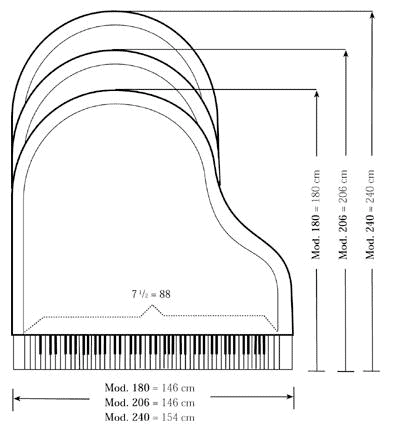
Most grand pianos measure 4 feet 5 inches to more than 9 feet long and about 5 feet wide.
Understanding how big is a grand piano helps you choose the right model, plan delivery, and protect your room. Grand pianos vary greatly in length, weight, sound, and space needs. A compact baby grand may fit in a large living room, while a concert grand often needs a dedicated hall. This guide explains the sizes, floor space, weight, and practical measurements you should know before buying or moving one.
How Big Is a Grand Piano?
A grand piano is usually 4 feet 5 inches to 9 feet or more in length. Most models are about 4 feet 6 inches to 5 feet wide, though exact measurements differ by maker and design.
The length is measured from the front of the keyboard to the far end of the curved piano case. Unlike an upright piano, a grand piano extends outward across the floor. Its large soundboard and long strings sit flat inside the case, which helps create its rich tone.
Here are common grand piano size ranges:
• Baby grand piano: About 4 feet 5 inches to 5 feet 2 inches long
• Parlor or petite grand piano: About 5 feet 3 inches to 5 feet 8 inches long
• Medium grand piano: About 5 feet 9 inches to 6 feet 6 inches long
• Semi-concert grand piano: About 6 feet 7 inches to 7 feet 6 inches long
• Concert grand piano: About 7 feet 7 inches to 9 feet or more long
The piano’s width does not increase as much as its length. Most grand pianos remain close to 5 feet wide because the keyboard must stay at a standard playing width.
Grand Piano Dimensions by Type
The best way to answer how big is a grand piano is to compare the main size classes. Piano makers may use different names for similar sizes, so these categories are useful guides rather than strict industry rules.
Baby Grand Piano
A baby grand piano is the smallest common grand piano style. It usually measures about 4 feet 5 inches to 5 feet 2 inches long and around 5 feet wide.
Despite its name, a baby grand is still a serious instrument. It has the same basic horizontal design as a larger grand, but its shorter strings and smaller soundboard produce less volume and bass depth.
A baby grand can work well in:
• A large living room
• A private music room
• A church practice space
• A small studio
• An upscale apartment with enough open floor area
A 5-foot baby grand often needs more space than new owners expect. The piano itself may fit, but the bench, lid clearance, player, and walking paths also need room.
Parlor Grand Piano
A parlor grand piano generally measures about 5 feet 3 inches to 5 feet 8 inches long. It offers more tonal power than a baby grand while remaining suitable for many homes.
This size is often a strong middle choice. It can produce a fuller bass response without demanding the space of a concert instrument. Many experienced pianists prefer this range for home performance and serious practice.
The name “parlor grand” comes from its traditional use in large homes and sitting rooms. Today, it may also be called a petite grand or small grand, depending on the brand.
Medium Grand Piano
A medium grand is usually about 5 feet 9 inches to 6 feet 6 inches long. These pianos provide more string length, a larger soundboard, and stronger projection.
A piano around 6 feet long can be an excellent choice for:
• Advanced home players
• Music teachers
• Small recital rooms
• Recording studios
• Intimate performance spaces
At this size, the low strings can become longer and more responsive. That often gives the bass a deeper, more controlled sound. However, the increase in length also affects delivery cost, room layout, and floor loading.
Semi-Concert Grand Piano
A semi-concert grand piano often measures about 6 feet 7 inches to 7 feet 6 inches long. It is designed for larger rooms, schools, churches, and professional settings.
These pianos can project sound with much greater force. They also offer a broader tonal range between soft and loud playing. A semi-concert grand may be too powerful for a small room, where the sound can become harsh or overwhelming.
Concert Grand Piano
A concert grand piano is normally about 7 feet 7 inches to 9 feet long. Some custom or historic concert instruments are even longer.
Concert grands are built for large halls and professional performances. Their long bass strings, large soundboards, and powerful frames support strong projection across a big space.
A concert grand is not simply a larger decoration. It needs:
• A large performance room
• Professional delivery and setup
• Careful humidity control
• Regular tuning
• A strong, level floor
• Enough clearance for the lid and moving crew
Standard Grand Piano Width and Height
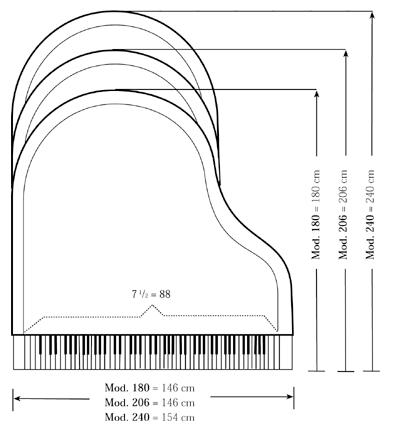
When people ask how big is a grand piano, they often focus only on length. Width and height matter just as much when planning a room.
Most grand pianos are about 4 feet 6 inches to 5 feet wide. The keyboard itself is close to 4 feet wide, while the case extends farther on both sides.
The height of a grand piano is measured from the floor to the top of its closed lid. Many grand pianos stand around 3 feet to 3 feet 6 inches tall with the lid closed. The exact height depends on the case design and leg structure.
With the lid open, the highest point may reach about 5 feet or more from the floor. The open lid also changes how sound moves through the room. A lid raised on the long stick directs more sound outward, while a short stick gives a softer effect.
Other useful measurements include:
• Keyboard height: Often about 28 to 30 inches from the floor
• Bench height: Commonly adjustable between about 18 and 22 inches
• Closed-lid height: Often about 3 to 3.5 feet
• Open-lid height: Commonly about 5 feet or more
• Width: Usually about 4.5 to 5 feet
Always check the manufacturer’s specification sheet. Two pianos in the same size class may differ by several inches.

How Much Floor Space Does a Grand Piano Need?
The piano’s official dimensions show only the instrument’s footprint. You also need room for the player, bench, open lid, doors, and safe movement.
A simple planning rule is to allow at least 2 feet of clear space in front of the keyboard. The pianist needs room for the bench and enough distance to move comfortably.
For a small grand piano, plan for approximately: