What Does The Left Pedal On A Piano Do: Explained
The left pedal on a piano softens the sound by shifting the action or changing the tone.
If you have wondered what does the left pedal on a piano do, you are asking about one of the instrument’s most subtle controls. Known as the una corda pedal on a grand piano, it changes how the hammers meet the strings, helping pianists create a softer, gentler, and sometimes more muted color. This guide explains how it works, when to use it, and why its effect differs between grand pianos, upright pianos, and digital keyboards.

What Does the Left Pedal on a Piano Do?
The left pedal on most acoustic pianos makes the sound softer and changes its tone. On a grand piano, it moves the entire keyboard action slightly to the right. This causes the hammers to strike fewer strings or a different part of the hammer felt.
The left pedal is called the una corda pedal. The Italian term means “one string.” On a modern grand piano, however, the hammer may strike two strings instead of three, rather than only one string in every case.
This movement creates two main effects:
• Lower volume: The hammer has less string contact, so the note is quieter.
• Different tone: The hammer touches a fresh part of the felt, which can produce a softer, warmer, or more covered sound.
So, what does the left pedal on a piano do in simple terms? It gives you another color for your sound. It is not just a volume switch.

How the Una Corda Pedal Works on a Grand Piano
A grand piano usually has three strings for each note in the middle and upper range. These strings are tuned very close to the same pitch. When you press a key, the hammer normally strikes all three strings at once.
Pressing the left pedal shifts the keyboard and action sideways. The hammers then strike fewer strings. The sound loses some power and becomes more delicate.
The pedal also changes which part of the hammer felt touches the strings. Piano hammers develop grooves and compacted areas over time. These harder areas create a bright, strong sound. The softer part of the felt produces a rounder tone.
This explains why the una corda pedal can change tone even when the volume change seems small. It is similar to speaking through a thin cloth. The voice is still clear, but its color feels softer and less direct.
Why “Una Corda” Does Not Always Mean One String
The name una corda comes from older piano designs. Early grand pianos could move far enough for the hammer to strike only one string. Modern grands often have three strings for one note, so the action may move enough to strike two strings instead.
In the bass section, the design can be different. Some bass notes have two strings, while the lowest notes may use only one large string. The left pedal may therefore shift the hammer to a different area of the string or felt rather than reduce the number of strings.
The exact effect depends on:
• The piano’s size and design
• The position of the strings
• The hammer shape and condition
• The amount of pedal movement
• The technician’s regulation of the action
That is why the same pedal can sound different on two pianos.

What Does the Left Pedal on an Upright Piano Do?
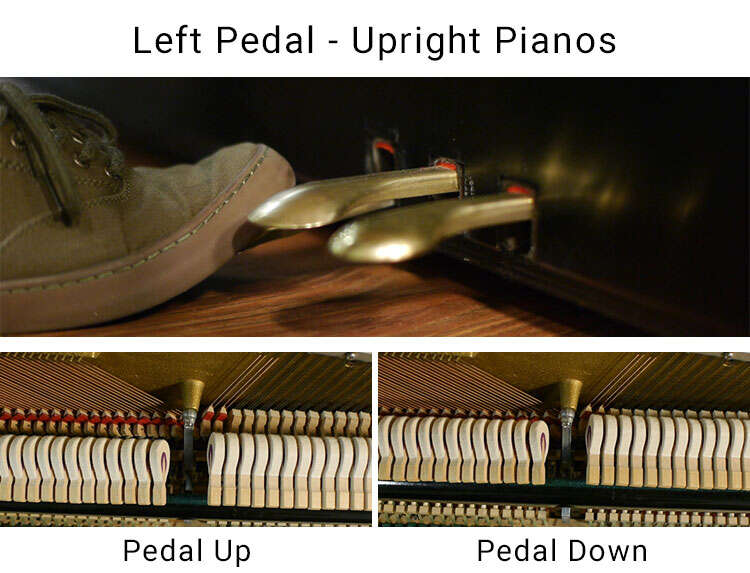
On an upright piano, the left pedal often works in a different way. Instead of shifting the entire action sideways, it may move the hammers closer to the strings.
When the hammers travel a shorter distance, they strike with less force. This makes the notes quieter, but the tonal change is often smaller than on a grand piano.
Some upright pianos use a felt rail or practice rail. When you press the left pedal, a strip of felt moves between the hammers and the strings. The felt reduces the volume sharply and gives the piano a muted sound.
This system is useful in apartments, classrooms, and homes where noise matters. However, it does not create the same refined tone as the una corda action on a well-regulated grand piano.
When asking what does the left pedal on a piano do, always consider the piano type. A grand piano usually changes hammer and string contact. An upright piano often shortens hammer travel or adds felt between the hammer and string.

Is the Left Pedal the Same as a Soft Pedal?
The left pedal is often called the soft pedal because it usually lowers the volume. That name is helpful, but it does not describe the full effect.
A true soft pedal only reduces loudness. The left pedal on a grand piano also changes tone, attack, and resonance. A note played with the pedal may sound more intimate, veiled, or mellow.
For example, imagine playing a quiet melody at night. You could simply press the keys lightly. You could also use the left pedal while playing lightly. The first method changes your touch. The second method changes the piano’s response and color as well.
This distinction matters because good piano playing uses both:
• Finger control for precise volume and expression
• The left pedal for a broader change in tone and projection
The pedal should support your touch, not replace it.
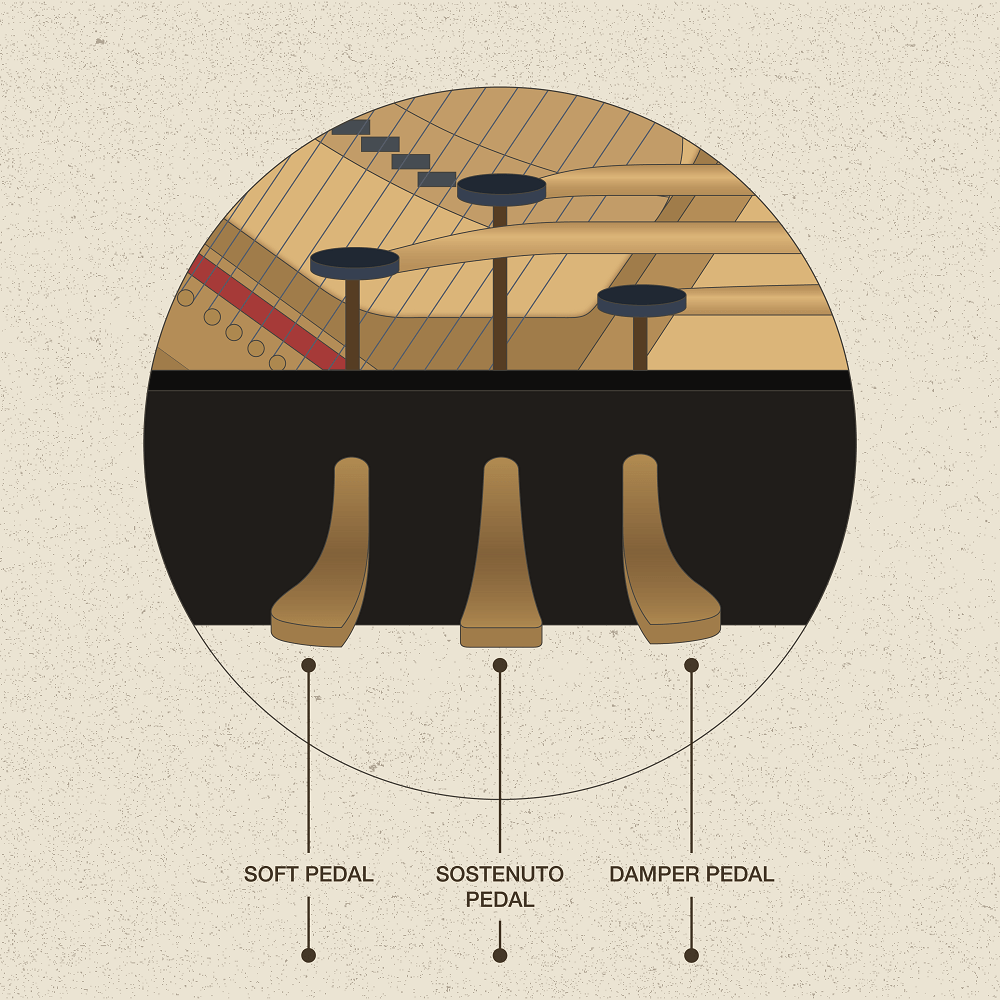
What Does the Left Pedal on a Piano Do Compared With the Middle Pedal?
The three piano pedals have different jobs, although their functions can vary by instrument.
Left pedal
The left pedal is usually the una corda or soft pedal. It reduces volume and changes the tone.
Middle pedal
The middle pedal may be a sostenuto pedal on a grand piano. It sustains only the notes that are already held when you press the pedal. Notes played afterward do not continue unless you use another pedal.
Many upright pianos use the middle pedal for a practice mute. This places felt between the hammers and strings to reduce sound. Some models use the middle pedal for bass sustain or another special function.
Right pedal
The right pedal is the damper or sustain pedal. It lifts the dampers from the strings, allowing notes to continue ringing after you release the keys.
A simple way to remember the pedals is:
• Left pedal: changes color and reduces power
• Middle pedal: has a special or limited sustain function
• Right pedal: allows notes to ring
The pedal layout may look standard, but the middle pedal deserves special attention because its function is not the same on every piano.

When Should You Use the Left Piano Pedal?
Use the left pedal when you want a softer sound with a different tone. It works best when the music calls for privacy, warmth, distance, or gentle contrast.
Common situations include:
• Quiet melodies
• Soft openings and endings
• Dreamlike or mysterious passages
• Accompaniments that should remain in the background
• Repeated phrases that need a new color
• Music marked una corda or una corde
• Passages where you want less projection without losing control
The left pedal can also help when a piano feels too bright. Pressing it may soften the attack and make the instrument easier to blend with a singer or another musician.
Still, do not use it for every quiet passage. A pianist can often play softly with the fingers alone. If the music needs a clear, transparent sound, finger control may be better than pedal use.
A Practical Example
Suppose you are playing a slow melody in the upper register. Without the left pedal, the notes sound bright and direct. With the left pedal, the melody may become softer and more distant.
Now release the pedal but keep the same gentle finger pressure. The sound may remain quiet but regain some brightness. This comparison helps you hear the difference between volume and tone.

How to Use the Left Pedal Correctly
The left pedal is easy to press but harder to use with purpose. Start by listening closely to the tone, not only the volume.
Try this simple exercise:
-
Play a five-note scale without the left pedal.
-
Play it again while pressing the left pedal.
-
Keep your fingers at the same strength.
-
Listen for changes in attack, color, and sustain.
-
Release the pedal and repeat the exercise softly.
-
Compare the three sounds.
This exercise shows what does the left pedal on a piano do in a direct way. It lets you hear how the pedal changes the instrument’s voice.
Use the pedal before the musical phrase begins when you want the whole phrase to have a softer color. Release it when you want the sound to return to its normal brightness.
Avoid pressing and releasing the pedal in a nervous or constant motion. The left pedal is not usually used in the rapid rhythmic way that some pianists use the sustain pedal. It often remains down for a phrase or section.
Coordinate the Pedal With Your Hands
Your hands still control the main expression. The left pedal adds a layer of color.
For the best result:
• Play with a relaxed hand
• Use less key force when appropriate
• Listen for balance between melody and accompaniment
• Press the pedal before the phrase if the color should begin at once
• Release it at a musical point, not randomly
• Test the pedal at different depths if the piano allows it
On some grand pianos, the pedal can be held partway. This may create a partial tonal change. Do not force the pedal, though. Its travel should feel smooth and natural.
Common Mistakes With the Left Pedal
Many players make the same mistakes when learning what does the left pedal on a piano do. These errors are easy to fix once you know what to listen for.
Using it as a replacement for quiet playing
The left pedal can reduce projection, but it cannot replace good finger control. A pianist who always uses it for soft music may lose control over touch and balance.
Practice the passage without the pedal first. Add the pedal when you want a special tone or need extra control over the piano’s volume.
Expecting every piano to respond the same way
A large concert grand may produce a clear una corda effect. A small upright may simply become quieter. A digital piano may imitate the effect through software or a mechanical sensor.
Test the pedal before performing. Never assume that the left pedal will sound exactly as it did on your practice instrument.
Pressing it too late
If you begin a phrase without the pedal and press it halfway through, the tone may change suddenly. That can sound like an unwanted color shift.
Plan the pedal change with the phrase. Press it before the note where you want the new sound to begin.
Holding it without a musical reason
A pedal should solve a musical problem or create an artistic effect. If you cannot hear a useful change, you may not need it.
Ignoring piano maintenance
A poorly regulated action may not shift evenly. Some notes may sound different from others when the pedal is pressed. If the pedal feels stiff, noisy, or uneven, ask a qualified piano technician to inspect it.
Left Pedal Technique for Different Types of Music
The left pedal can serve different purposes across musical styles.
Classical piano music
In classical music, the left pedal often supports a marked change in color. Romantic composers used it for intimate passages, echo effects, and gentle contrast.
Always follow the score when a composer marks una corda or tre corde. Tre corde usually tells the pianist to release the left pedal and return the action to its normal position.
Film music and contemporary piano
In modern music, the pedal can create a soft, distant mood. It may help a simple chord pattern sound less bright and more atmospheric.
Since modern scores do not always mark pedal use in detail, listen to the desired character. Try the passage with and without the pedal, then choose the sound that fits the scene.
Jazz and popular music
Jazz pianists often depend more on touch, voicing, and the sustain pedal. Still, the left pedal can help create a subdued ballad sound or blend the piano with a vocalist.
In a band, listen to the other instruments. A gentler piano tone may leave more space for a guitar, saxophone, or singer.
Piano practice
The left pedal can help you practice control, but it should not hide mistakes. Practice each piece both with and without it so that your rhythm, tone, and dynamics remain secure.
What Does the Left Pedal on a Digital Piano Do?
On a digital piano, the left pedal usually triggers an electronic version of the soft pedal effect. It may lower the volume, soften the attack, alter the sampled tone, or combine several changes.
The result depends on the model. Some digital pianos use a simple switch. Better instruments may detect half-pedaling or several levels of pedal movement.
A digital piano may not physically move hammers or strings. Instead, its processor changes the recorded or modeled sound. This can feel different from an acoustic grand, even when the result is convincing.
Check the instrument’s manual for terms such as:
• Soft pedal
• Una corda
• Left pedal
• Half-pedal support
• Assignable pedal function
Some keyboards allow you to assign the left pedal to another function. In that case, it may not perform a traditional una corda effect at all.
The Difference Between the Left Pedal and Playing Softly
Playing softly and using the left pedal are related, but they are not identical.
When you play softly with your fingers, the hammers move more slowly and strike the strings with less energy. This controls volume while preserving the normal hammer and string relationship.
When you use the left pedal, the piano’s action changes. The hammer may strike fewer strings or a different section of the felt. This changes the instrument’s tone as well as its volume.
Think of it this way:
• Finger control is like lowering your speaking voice.
• The left pedal is like speaking in a softer room with a different acoustic.
The strongest results often come from combining both. Use a gentle touch for control, then use the left pedal when the music needs a softer color.
Personal Practice Tips From the Keyboard
When I test a piano’s left pedal, I do not judge it by volume alone. I play the same short phrase three times: once normally, once softly without the pedal, and once softly with the pedal.
This simple test reveals a great deal. On a grand piano, the third version often has a rounder attack and less edge. On an upright piano, the main difference may be reduced volume. On a digital piano, the change depends on how well the pedal system models the acoustic effect.
One lesson stands out: the left pedal is most useful when you can describe the sound you want. “I need this phrase to feel farther away” is a better goal than “I should press the soft pedal here.”
Here are a few practical habits:
• Test the pedal before a performance.
• Use your ears instead of trusting a pedal marking blindly.
• Practice transitions from una corda to tre corde.
• Avoid pressing the pedal with excessive force.
• Ask a teacher or technician if the tone changes unevenly.
• Record yourself to hear whether the change is noticeable.
A common beginner mistake is to press the left pedal and then play too hard. The pedal cannot fully soften a heavy attack. Let your fingers stay calm and light.
Can the Left Pedal Affect Piano Tone and Intonation?
The left pedal can change tone, but it does not normally retune the piano. If a note sounds out of tune, the pedal is not usually the cause.
On a grand piano, shifting the action changes where the hammers meet the strings. Because hammers wear over time, the alternate striking area may sound less compact and less bright. This can make the piano seem warmer.
A technician may regulate the action so that the pedal shifts smoothly and evenly. Regulation includes adjustments to key movement, hammer travel, and related mechanical parts.
The pedal may also reveal existing problems. For example, a worn hammer, uneven voicing, or misaligned action can become more noticeable when the left pedal is pressed.
If the effect sounds harsh, weak, or uneven, do not try to repair the mechanism yourself. Piano actions contain precise parts that require specialized tools and knowledge.
A Short History of the Una Corda Pedal
Early piano builders developed the una corda mechanism to expand the instrument’s expressive range. Early pianos were much quieter than modern concert grands, and composers valued subtle changes in color.
The pedal became especially important as piano makers increased string tension, hammer size, and overall power. As the instrument grew louder, pianists needed more ways to create intimacy and contrast.
Modern grand pianos use a sophisticated version of this idea. The action moves sideways while the strings remain in place. This is one reason the pedal feels and sounds different from the soft mechanisms found on many upright pianos.
The design has changed over time, but the artistic purpose remains clear: create a softer voice with a new shade of tone.
Frequently Asked Questions About What Does the Left Pedal on a Piano Do
What does the left pedal on a piano do on a grand piano?
It shifts the keyboard action sideways so the hammers strike fewer strings or a different part of the felt. This usually makes the sound softer and warmer.
Is the left piano pedal only for quiet playing?
No. It can reduce volume, but it also changes tone and attack. Pianists use it for color, mood, and contrast, even when the passage is not extremely soft.
What is the left pedal on an upright piano called?
It is often called a soft pedal, but its mechanism may differ from a grand piano’s una corda pedal. Many upright pianos move the hammers closer to the strings or place felt between the hammers and strings.
Is the left pedal the same as the sustain pedal?
No. The right pedal is usually the sustain pedal, which lets notes ring after you release the keys. The left pedal mainly changes volume and tone.
Should beginners use the left pedal?
Yes, but beginners should first learn to control soft dynamics with their fingers. After that, they can add the left pedal to create a quieter or more muted tone.
Why does my left pedal barely change the sound?
The effect may be subtle, especially on an upright piano or basic digital piano. The action may also need regulation, or the pedal may use a different mechanism than you expect.
What does “una corda” mean in piano music?
Una corda means “one string” in Italian. It is an instruction to use the left pedal, although modern grand pianos may cause the hammers to strike two strings instead of exactly one.
Conclusion
The left pedal on a piano, usually called the una corda or soft pedal, reduces power and changes tone. On a grand piano, it shifts the action so the hammers contact fewer strings or a softer part of the felt. On an upright or digital piano, it may use a different mechanical or electronic system.
Use it with purpose. Practice soft finger control first, then add the pedal when you want warmth, distance, or a gentle change in color. Try the exercises in this guide on your own piano, listen closely, and share your experience or questions in the comments.

Senior Music Reviewer
Alex Carter is a seasoned music reviewer with over a decade of experience in the world of sound and instruments. Passionate about helping musicians and enthusiasts make informed choices, he brings sharp insights and in-depth knowledge to every review. From classical instruments to modern gear, Alex combines technical expertise with a love for music to deliver content that resonates with readers.
As a Senior Music Reviewer and expert author on Tuneluma.com, Alex is dedicated to sharing honest evaluations, practical advice, and thoughtful commentary to guide readers in their musical journey.