How To Select A Good Violin: Smart Buying Guide
Choose a good violin by checking its size, sound, comfort, setup, condition, and value with an experienced player.
Learning how to select a good violin can feel confusing, especially when many instruments look alike but sound very different. A beautiful finish does not always mean a good violin, and a high price does not guarantee the right fit. This guide explains the key details that teachers, players, and violin shops use to judge an instrument.
Whether you are buying a first violin, upgrading to a better student model, or choosing a used instrument, you will learn how to compare violins with care. You will also find practical testing steps, common mistakes to avoid, buying advice, and clear answers to questions that many new violinists ask.
Know What Makes a Violin Good
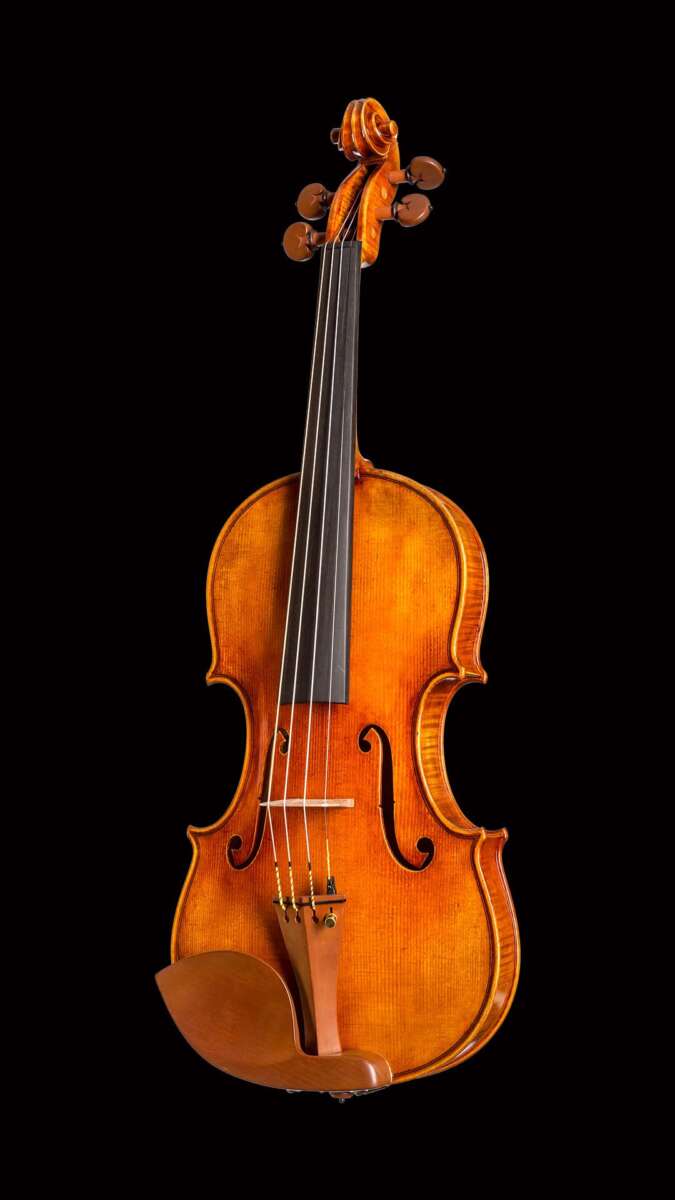
A good violin is not simply an expensive violin. It should be well made, easy to play, in good condition, and suited to the player’s current skill level. Its tone should be clear and balanced, and its setup should allow the player to press, bow, and tune the strings with ease.
When learning how to select a good violin, focus on the complete instrument rather than one feature. Fine wood, attractive varnish, or an old label can be interesting, but these details do not matter if the violin is hard to play or produces a harsh sound.
A good violin should offer:
• A clear and even tone across all four strings
• Comfortable string height and fingerboard shape
• Smooth tuning pegs that hold their position
• A correctly fitted bridge
• A straight neck and stable body
• No serious open cracks or loose parts
• A sound post that is correctly placed
• Reliable fittings, such as the chin rest and tailpiece
The best violin for a beginner may differ from the best violin for an advanced player. Beginners often need a responsive instrument that produces sound without too much effort. Advanced players may want a wider range of tone colors and more power.

Set a Realistic Violin Budget
Your budget should include more than the violin itself. You may also need a bow, case, shoulder rest, rosin, strings, and professional setup work. These extras can affect the total cost by hundreds of dollars.
For many beginners, a quality student violin from a respected shop is a safer choice than the cheapest new violin online. Very low-cost instruments may have poor bridges, weak pegs, rough fingerboards, or low-quality strings. These problems can make learning frustrating.
A simple budget plan may look like this:
• Entry-level outfit: violin, bow, and case for basic study
• Mid-range student outfit: stronger materials and better setup
• Advanced student violin: more refined tone and response
• Professional instrument: individual character, power, and craftsmanship
Prices vary widely by brand, maker, age, region, and condition. Treat price as one clue, not proof of quality. A properly set up $800 violin can be more useful than a poorly adjusted $1,500 violin.
If money is limited, consider renting from a shop with a rent-to-own program. This option lets a student grow into the instrument without making a large first payment. It also gives you a chance to learn what sound and size you prefer.
Choose the Correct Violin Size
The correct size is one of the most important parts of how to select a good violin. A violin that is too large can cause tension, poor posture, and discomfort. One that is too small may limit technique and feel cramped.
Most adults and older teens use a full-size 4/4 violin. Children usually need smaller sizes, such as 1/16, 1/10, 1/8, 1/4, 1/2, or 3/4. Age alone should not decide the size because children grow at different rates.
A teacher or violin shop should measure the player. The player should be able to hold the violin comfortably while reaching the scroll with a relaxed arm. The left hand should not stretch hard to reach the notes.
Signs that a violin may be too large include:
• The player cannot reach the scroll with a relaxed arm
• The left shoulder rises during playing
• The wrist bends sharply
• The player struggles to place the fingers
• The instrument causes pain after a short practice session
For a child, do not choose a larger violin just to avoid buying another one later. A poor fit can slow progress and create bad habits. Comfort and control matter more than saving money in the short term.

Inspect the Violin’s Construction
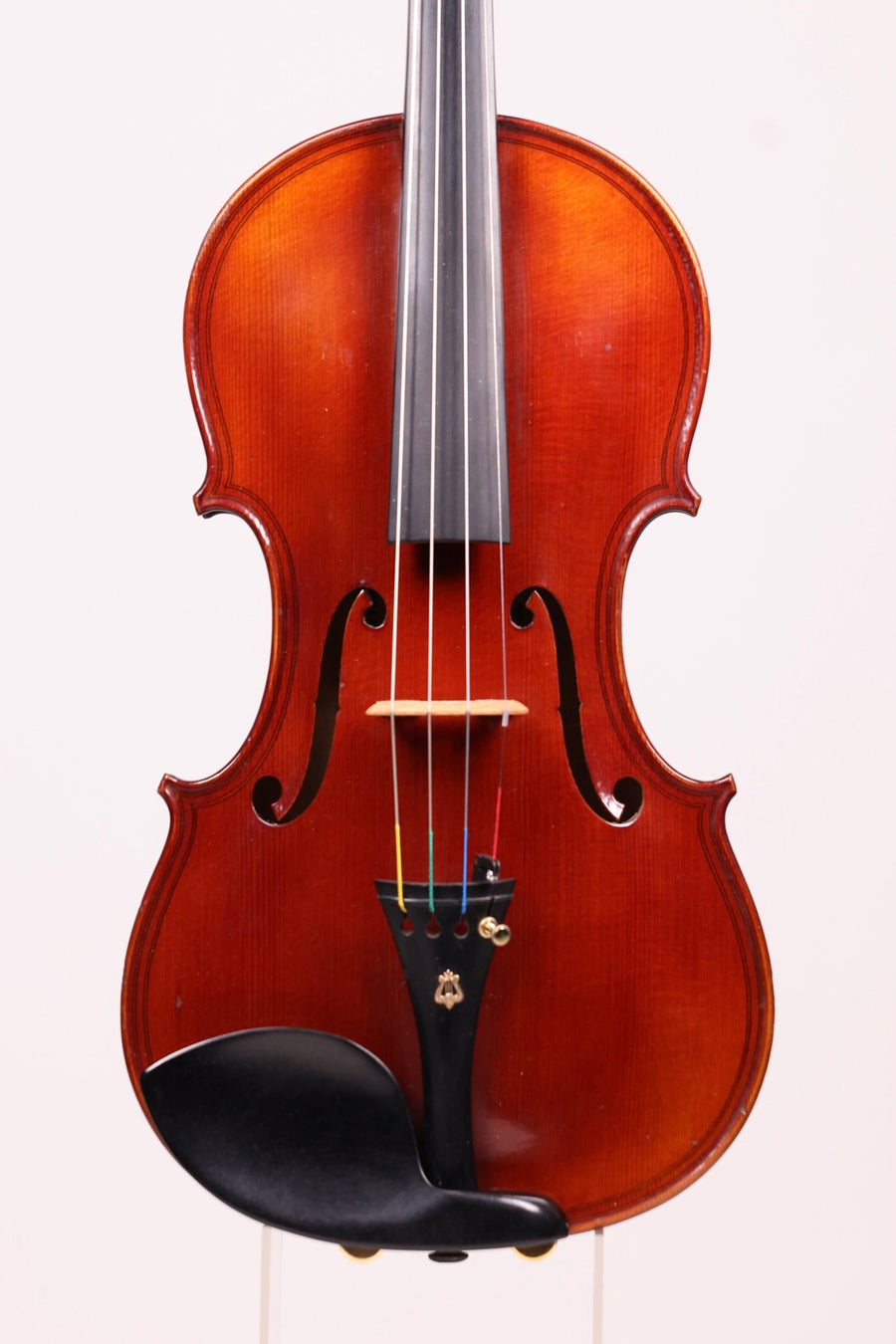
A careful visual inspection can reveal many problems before you play a single note. Hold the violin under good light and look at the top, back, ribs, scroll, and edges.
The body should look symmetrical, although small differences are normal in handmade instruments. The top and back should fit the ribs cleanly. The edges should not show major chips, lifting, or fresh damage.
Check these areas closely:
• The top: Look for cracks, repairs, bulges, or areas that appear separated.
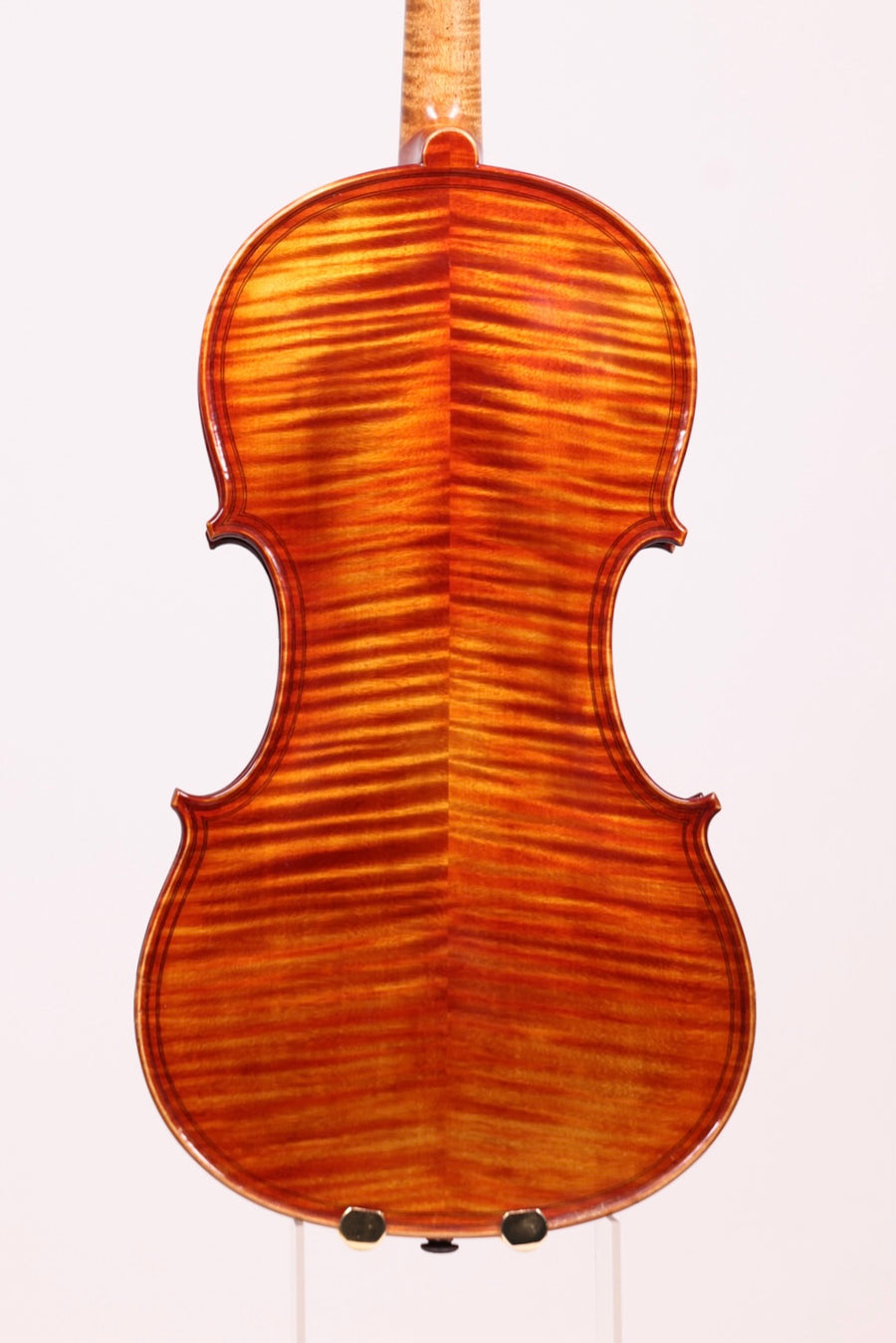
• The back: Check for cracks and unusual warping.
• The ribs: Look for open seams or crushed wood.
• The neck: Make sure it appears straight and firmly attached.
• The scroll: Check for damage and signs of rough carving.
• The corners: Look for major impact damage.
• The purfling: This decorative line should be neat and properly set.
Some cracks can be repaired well by a skilled luthier. Others can affect strength, tone, or value. A repaired crack is not always a reason to reject a violin, but you should understand the repair before buying.
Avoid an instrument with loose seams, a detached neck, severe warping, or major unrepaired cracks unless a qualified professional has examined it. Repair costs can quickly exceed the original price.
Examine the Violin’s Setup
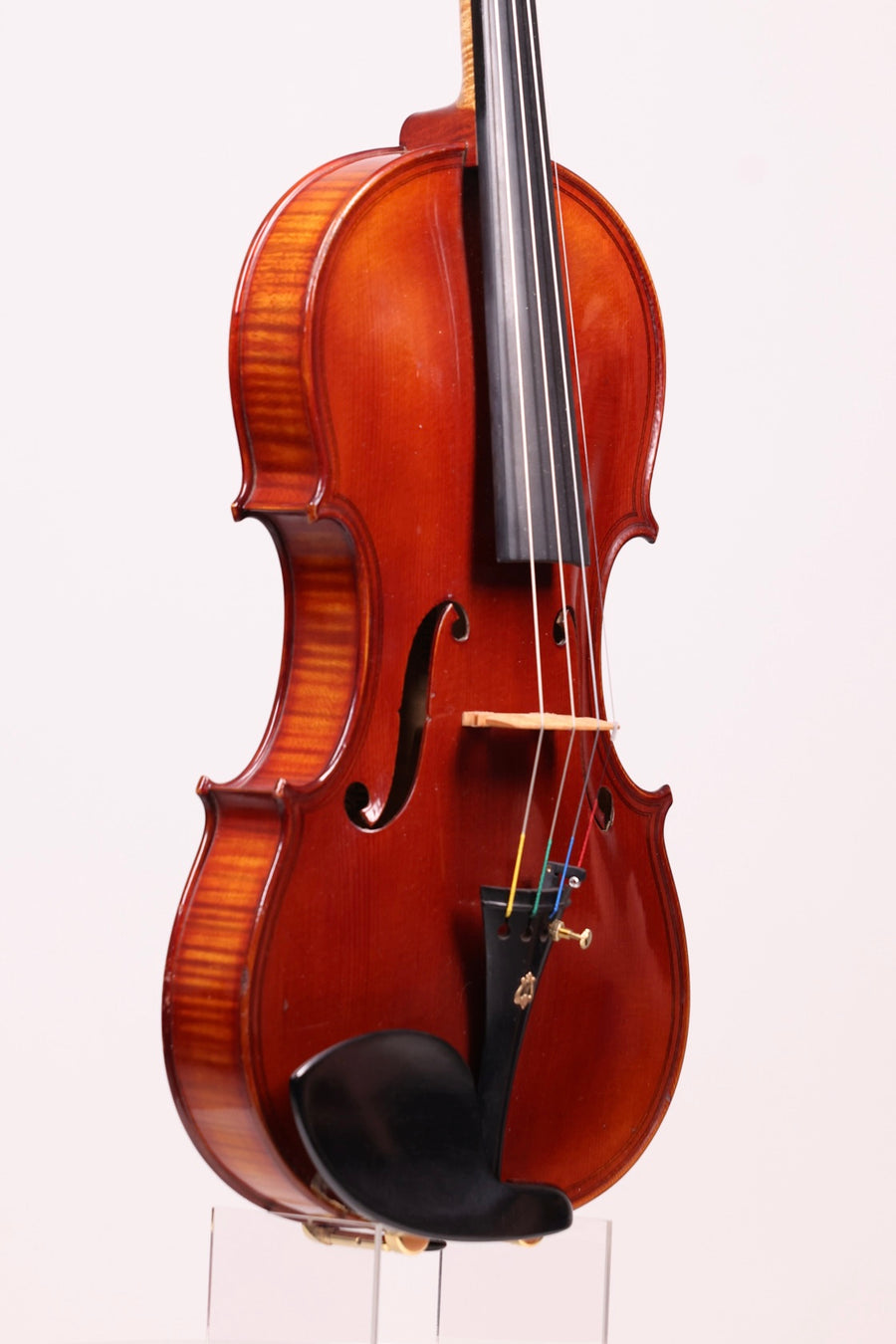
Setup describes the way the violin is adjusted for playing. It includes the bridge, nut, sound post, fingerboard, pegs, tailpiece, endpin, and strings.
A good setup can make an average violin feel much better. A poor setup can make a well-made violin feel difficult and unresponsive. This is why setup is central to how to select a good violin.
Look for the following features:
• The bridge should stand upright and match the curve of the fingerboard.
• The strings should sit at a comfortable height.
• The fingerboard should be smooth and properly shaped.
• The pegs should turn without excessive force or slipping.
• The tailpiece should be secure and properly aligned.
• The endpin should fit firmly.
• The sound post should stand inside the violin without looking loose.
Do not try to move the bridge or sound post yourself. These parts require careful adjustment. An experienced luthier can correct many setup problems, but the cost should be included in your buying decision.
New violins often need setup work after shipping or storage. Ask the seller whether the instrument has been inspected and adjusted by a qualified violin technician.
Listen to the Violin’s Tone
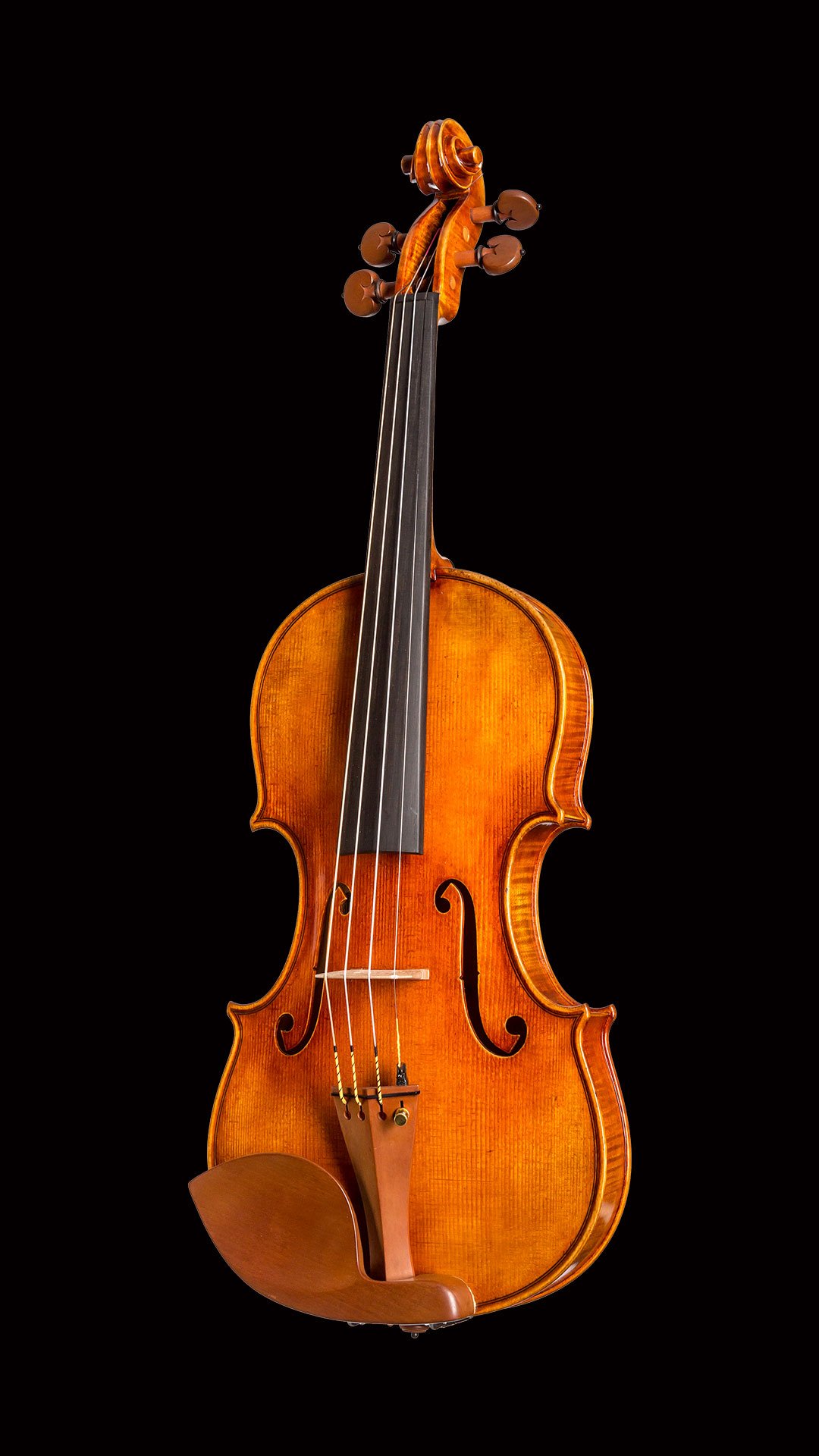
Tone is one of the hardest parts of how to select a good violin because sound is personal. One player may prefer a bright, direct tone. Another may prefer a dark, warm, and rounded sound.
Still, some basic qualities are widely useful. The violin should speak easily when the bow touches the string. The sound should remain stable across the four strings. Notes should not feel weak, harsh, or difficult to produce without a clear reason.
Test each string separately:
• G string: Listen for depth and strength.
• D string: Check warmth and balance.
• A string: Listen for clarity and focus.
• E string: Check for a clean sound without excessive harshness.
Play slow, long bows first. Then try scales, simple melodies, and short passages with different bow speeds. A violin that sounds impressive under one strong note may not perform well across a full piece.
Ask another experienced player to test the violin from several feet away. A violin can sound very different under the ear than it does across a room. This outside opinion is especially helpful for beginners.
In my experience, new players often choose the loudest violin in the room. That can be a mistake. A powerful sound is not always a beautiful or flexible sound, and a loud instrument may become tiring during long practice sessions.

Test Playability and Response
Playability describes how easily the violin responds to the player. A responsive violin produces a note with modest bow pressure and does not require constant force.
When learning how to select a good violin, test more than volume. Pay attention to how quickly each string speaks, how easily notes change, and whether the instrument feels comfortable under the left hand.
Try these simple tests:
- Play open strings with slow bows.
- Play a one-octave scale on each string.
- Test first-position finger patterns.
- Play soft notes and then louder notes.
- Try both short and long bow strokes.
- Shift between a few notes if you have the skill.
- Check whether the instrument stays comfortable after several minutes.
A good violin should allow quiet playing as well as strong playing. It should also respond without excessive scratching when the bow moves correctly.
If you are a beginner, ask your teacher to play the instrument. A teacher can separate problems in the violin from problems caused by developing technique. This is one of the most reliable ways to select a good violin.
Compare Several Violins
Never judge a violin by testing only one instrument. Even violins from the same workshop can differ in tone, response, and comfort.
Try at least three instruments in a similar price range. Use the same bow, similar strings when possible, and the same short piece of music. This creates a fairer comparison.
Take notes about:
• Tone on each string
• Ease of playing
• Brightness or warmth
• Volume and projection
• Response at soft dynamics
• Comfort under the chin and shoulder
• Tuning stability
• Visible condition
• Setup quality
• Asking price and included services
Give each violin a few minutes. Some instruments feel unusual at first because the neck shape, string tension, or response differs from what you know.
If possible, take the violin home on trial. A shop trial lets you test the instrument in your normal practice space and ask your teacher for feedback. A short trial is far safer than making a rushed decision after five minutes.

Decide Between a New and Used Violin
Both new and used violins can be good choices. The right option depends on your budget, playing level, and access to professional advice.
A new violin may offer:
• A clean condition history
• A warranty or return period
• Fresh setup and strings
• Easy replacement if a problem appears
A used violin may offer:
• A more mature or complex tone
• Better materials at the same price
• A proven playing history
• Greater value when inspected by a professional
However, age alone does not improve a violin. Some old instruments are excellent, while others have serious repairs or poor construction. Be careful with labels that claim a famous maker. Labels are often copied, changed, or misunderstood.
When buying used, ask for:
• A written condition report
• Details about repairs
• Information about the maker and origin
• A return period
• A recent setup record
• Permission for an independent luthier inspection
Avoid buying a costly used violin from a seller who refuses reasonable questions or independent inspection. Trustworthy sellers should explain the instrument’s condition clearly.
Evaluate the Bow and Accessories
A violin outfit is only as useful as its bow and basic accessories. A weak or warped bow can make a good violin feel difficult to play.
The bow should have a straight stick when viewed from the frog toward the tip. The hair should be in good condition, and the screw should work smoothly. Some beginner bows are made from fiberglass, while better bows may use pernambuco or other materials. Material matters, but balance and condition matter too.
Check the case as well. It should protect the violin from bumps, heat, cold, and sudden changes in humidity. A shoulder rest should fit the player without forcing the neck or shoulder into an awkward position.
You may also need:
• Rosin
• A tuner or tuning app
• A cleaning cloth
• Spare strings
• A music stand
• A humidifier for dry climates
Do not let free accessories persuade you to buy a weak violin. A useful case and bow are helpful, but the instrument itself remains the main decision.
Understand the Role of Wood and Craftsmanship
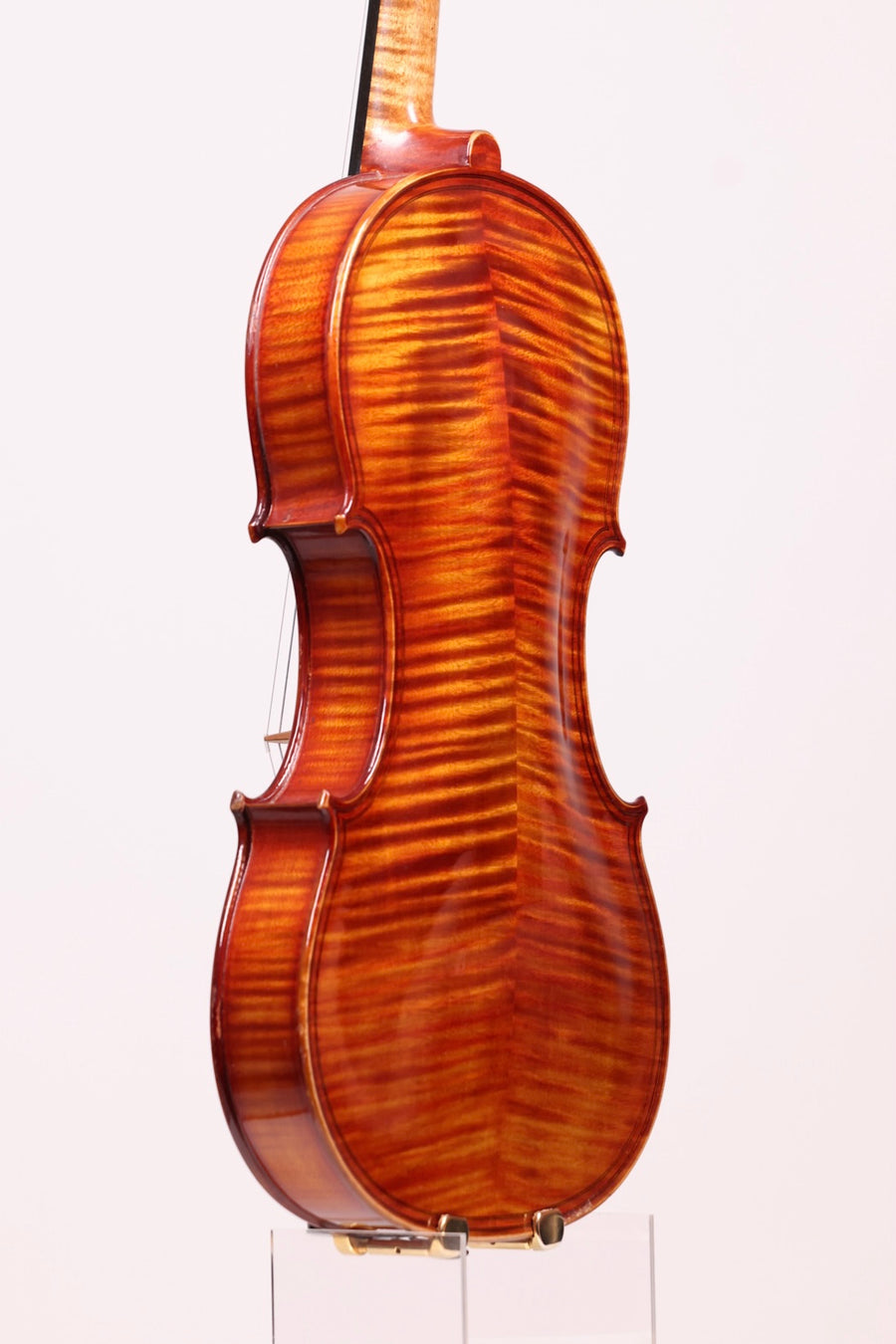
Most traditional violins use spruce for the top and maple for the back, ribs, and neck. These woods are common because they can provide strength, flexibility, and useful acoustic qualities.
The wood must be properly seasoned and carefully shaped. Grain appearance alone does not tell you how a violin sounds. Attractive flame in the maple can improve visual appeal, but it does not automatically create a better tone.
Craftsmanship includes:
• Arching of the top and back
• Thickness and graduation of the plates
• Shape of the f-holes
• Fit of the neck and fingerboard
• Quality of the varnish
• Accuracy of the bridge and sound post
These details are difficult for beginners to judge. That is why playing tests and advice from a teacher or luthier are more useful than relying on appearance.
A violin is an acoustic system. Its parts work together like members of a small orchestra. Changing the bridge, strings, or sound post can change the whole voice of the instrument.
Avoid Common Violin-Buying Mistakes
Many poor purchases happen because the buyer feels rushed or focuses on the wrong detail. Knowing the common mistakes makes how to select a good violin much easier.
Avoid these errors:
• Buying only because the violin looks old
• Choosing the loudest instrument without testing tone quality
• Ignoring cracks, open seams, or neck problems
• Selecting a size based only on age
• Buying from a seller with no return policy
• Assuming a famous label proves the maker
• Forgetting the cost of setup and repairs
• Testing only one violin
• Letting a beginner make a final choice without teacher input
• Purchasing a very cheap instrument that cannot be adjusted properly
One mistake I often see is choosing a violin before checking the pegs and bridge. If the pegs slip and the bridge is poorly fitted, the student may struggle to tune and play. These problems can look small, but they affect every practice session.
Do not be embarrassed to ask basic questions. A dependable shop should welcome them. The goal is not to appear knowledgeable; it is to make a wise and comfortable choice.
Buy From a Reliable Seller
A reliable violin shop can provide guidance that online photographs cannot. Shops often offer trial periods, professional setup, repairs, trade-in options, and teacher consultations.
Before buying, ask:
• Who completed the setup?
• Can I return or exchange the violin?
• Has a luthier inspected it?
• Are repairs documented?
• What strings are installed?
• Is the price for the violin alone or a full outfit?
• Can my teacher test it?
• What happens if a problem appears after purchase?
Online buying can work when the seller has clear photos, honest descriptions, a return policy, and a strong reputation. Avoid listings that use grand claims but provide little information about condition or setup.
A professional appraisal may be worthwhile for an expensive instrument. It can help confirm identity, condition, insurance value, and market context. Appraisals are not perfect, but they add useful protection for a major purchase.
Create a Practical Testing Checklist
Use this checklist when visiting a shop or meeting a private seller. It helps you stay focused when several violins begin to sound similar.
- Confirm the violin is the correct size.
- Inspect the body under bright light.
- Look for cracks, open seams, and warping.
- Check the neck, bridge, fingerboard, and pegs.
- Play open strings with slow bows.
- Test soft and loud dynamics.
- Play a scale or simple piece.
- Ask another player to test it.
- Compare it with at least two other violins.
- Ask about setup, repairs, warranty, and returns.
- Calculate the cost of accessories and future maintenance.
- Take time before making the final decision.
Record short notes after each test. Your memory can become unreliable after hearing many instruments. A written comparison helps you choose with reason instead of excitement.
Maintain Your Violin After Buying
Selecting a good violin is only the first step. Regular care protects its tone, structure, and value.
Wipe rosin dust from the strings and top after each practice session. Keep the violin in its case when you are not playing. Do not leave it in a hot car, near a heater, or in direct sunlight.
Schedule professional maintenance when needed. A luthier can check the bridge, sound post, pegs, seams, fingerboard, and strings. Replace strings when they sound dull, feel rough, or no longer hold tuning well.
Humidity also matters. Very dry conditions may contribute to cracks or open seams, while excessive moisture can affect response and stability. A simple case hygrometer can help you monitor the environment, especially during winter.
Treat the violin as a living piece of wood. With steady care, a good instrument can support years of learning and musical growth.
Frequently Asked Questions About How to Select a Good Violin
What is the best violin for a beginner?
The best beginner violin is comfortable, correctly sized, well set up, and easy to play. A dependable student model from a reputable shop is usually a better choice than the cheapest instrument available.
How much should I spend on a good beginner violin?
The right amount depends on your region, budget, and whether you buy or rent. Include the cost of the bow, case, strings, setup, and other accessories rather than judging the violin price alone.
Is an old violin better than a new violin?
Not always. Some old violins have beautiful tone and strong construction, while others need expensive repairs; a well-made new violin may be more reliable for a beginner.
How can I tell if a violin is good quality?
Check its condition, setup, tone, comfort, and response. A teacher or qualified luthier should inspect expensive or used instruments because visual appearance and labels can be misleading.
Should I buy a violin online?
You can buy online if the seller offers accurate descriptions, clear photos, professional setup, and a fair return policy. For a first violin, an in-person trial is usually safer because sound and comfort are difficult to judge from a screen.
What size violin should an adult use?
Most adults use a full-size 4/4 violin. Smaller adults may still need professional measurement if the full-size instrument causes stretching, shoulder tension, or poor control.
Is a more expensive violin always better?
No. Price may reflect the maker, materials, age, condition, and craftsmanship, but it does not guarantee a good match for every player. The best choice is the instrument that fits your needs and responds well in your hands.
Conclusion
Learning how to select a good violin means looking beyond color, age, and price. Check the size, construction, setup, tone, response, condition, and seller support. Test several instruments, involve a teacher or luthier, and give yourself time to compare.
A good violin should make practice feel possible, not punishing. Use the checklist in this guide, ask clear questions, and choose an instrument that supports your current level while leaving room to grow. If you found this guide helpful, share your violin-buying experience or explore more resources on care, technique, and music learning.

Senior Music Reviewer
Alex Carter is a seasoned music reviewer with over a decade of experience in the world of sound and instruments. Passionate about helping musicians and enthusiasts make informed choices, he brings sharp insights and in-depth knowledge to every review. From classical instruments to modern gear, Alex combines technical expertise with a love for music to deliver content that resonates with readers.
As a Senior Music Reviewer and expert author on Tuneluma.com, Alex is dedicated to sharing honest evaluations, practical advice, and thoughtful commentary to guide readers in their musical journey.