Best Digital Piano For MIDI: Top Picks For Musicians
The Yamaha P71 is the best digital piano for MIDI, thanks to weighted keys, reliable USB connectivity, and a natural piano feel.
You may want to record piano parts in a DAW, control virtual instruments, or practice with headphones after the house is quiet. A basic keyboard can send notes, but it may feel small, noisy, or hard to express. The right digital piano for MIDI solves that gap. It gives you full-size keys, useful control, and a playing feel that supports both music making and daily practice. I reviewed the models below with key action, USB-MIDI use, portability, accessories, and long-term value in mind.
Digital Piano 88 Key Semi-Weighted Set

This full-size digital piano offers 88 semi-weighted keys, built-in speakers, a stand, and a sustain pedal. That package makes it a practical choice for a new player who wants a complete setup without buying each part separately. The Bluetooth, MIDI, USB, and MP3 features also make it useful beyond basic piano practice. I like the broad feature set for home use, lessons, and simple recording.
Semi-weighted keys sit between a light synthesizer action and a heavy acoustic-piano action. They can feel easier for beginners, while still giving your fingers some resistance. USB-MIDI lets the keyboard send performance data to compatible music software, while the speakers let you play without a computer. It is a flexible first setup, though serious classical players may want a more piano-like action.
Pros:
- Full 88-key range supports standard piano pieces
- Includes a stand and sustain pedal
- Built-in speakers allow instant play
- USB-MIDI and Bluetooth support modern music setups
- MP3 functions help with practice and playback
- Good starter value for a complete home package
Cons:
- Semi-weighted keys may feel light to advanced pianists
- Large 88-key design needs more floor space
- Feature details and software support may vary by device
My Recommendation
I recommend this model for beginners, casual players, and home creators who want many features at a modest cost. It is especially useful if you need a stand, speakers, pedal, and MIDI functions in one purchase. The key action should feel friendly during long practice sessions, and the full range leaves room to grow. If your main goal is controlling virtual instruments rather than mastering classical touch, this may be the best digital piano for MIDI in an affordable all-in-one class.
Yamaha P71 88-Key Weighted Digital Piano

The Yamaha P71 remains one of the safest picks for players who want a simple, focused digital piano. It has 88 weighted keys, a sustain pedal, and a power supply. Yamaha’s GHS weighted action gives the lower keys a heavier feel and the upper keys a lighter feel, much like an acoustic piano. That graded response helps build better finger control than a basic unweighted keyboard.
The P71 does not try to be a workstation packed with hundreds of sounds. Instead, it focuses on core piano playing, which can be a real benefit. With the right MIDI connection or compatible interface, it can serve as a dependable controller for piano software and virtual instruments. I also value its compact design, clean controls, and strong brand support.
Pros:
- Weighted 88-key action feels closer to an acoustic piano
- Graded key resistance supports proper technique
- Simple controls reduce setup stress
- Includes a sustain pedal and power supply
- Compact body fits many apartments and studios
- Yamaha has a strong record in musical instruments
Cons:
- Fewer built-in sounds than feature-heavy keyboards
- Stand and bench usually require separate purchases
- Direct computer MIDI setup may require the correct cable or interface
My Recommendation
I would choose the Yamaha P71 for a pianist first and a producer second. Its weighted action gives the best foundation for lessons, classical study, pop chords, and expressive MIDI performance. It suits adults who want a serious instrument without a large control panel. For many buyers, this is the best digital piano for MIDI because its clean design keeps attention on the hands while its piano feel remains convincing.
88-Key Semi-Weighted Piano Bundle

This 88-key electronic piano is designed as a ready-to-use beginner bundle. It includes semi-weighted keys, a sustain pedal, a stand, a carrying case, headphones, and a power supply. USB-MIDI compatibility makes it a useful bridge between a traditional keyboard and a computer-based music setup. The included headphones are also helpful for quiet practice in shared spaces.
The bundle makes sense for students who do not yet own piano accessories. A carrying case adds value if you move between lessons, rooms, or small performances. Semi-weighted action offers more resistance than a light keyboard, although it will not match the feel of a fully weighted digital piano. I see it as a practical choice for learning, songwriting, and basic DAW work.
Pros:
- Includes stand, case, headphones, pedal, and power supply
- 88 keys provide the full piano range
- USB-MIDI supports computer music applications
- Headphones make late-night practice easier
- Portable bundle works well for lessons and rehearsals
- Semi-weighted action offers useful beginner feedback
Cons:
- Included accessories may be basic in build quality
- Semi-weighted action is not the same as hammer action
- The complete bundle can take time to pack and move
My Recommendation
This model is best for a beginner who wants to open one box and start playing. It also suits families, students, and hobby producers who need quiet practice and simple MIDI recording. The case and headphones make it more flexible than a bare keyboard. If convenience matters as much as key feel, this could be the best digital piano for MIDI for a first-time buyer on a tight setup budget.
KUMENG 88-Key Weighted Home Digital Piano

The KUMENG digital piano takes a home-focused approach with a full 88-key weighted keyboard. Its desk-style format can look more natural in a living room, bedroom, or dedicated music corner than a lightweight stage keyboard. The weighted action is the main attraction for players who want a more substantial response under the fingers. It is also a good fit for someone who wants an instrument that feels like permanent furniture.
Weighted keys can improve control when you practice soft notes, loud chords, and repeated patterns. They may also help a student adjust to an acoustic piano later. The desk design is less travel-friendly than a portable slab, so I would plan its location before ordering. For MIDI work, confirm the exact output and cable needs in the current listing before connecting it to a computer or tablet.
Pros:
- Full weighted keybed encourages stronger piano technique
- Home desk design looks settled and polished
- 88 keys support advanced repertoire
- Good option for daily practice in one room
- More substantial feel than many entry-level keyboards
- Suitable for piano study and MIDI-based composition
Cons:
- Desk format is not ideal for frequent travel
- May require more assembly and floor space
- Buyers should verify computer MIDI connection details
My Recommendation
I recommend the KUMENG to home players who want a furniture-style instrument with weighted keys. It is a stronger match for daily lessons than a very light portable keyboard. It can also act as a MIDI source for a home studio, provided your planned connection is supported. For a stable practice corner, it offers a comfortable mix of presence, range, and piano-like response.
Universal Sustain Pedal for MIDI Keyboards

This universal sustain pedal is an accessory rather than a complete digital piano, but it can make a major difference in a MIDI setup. It uses a standard quarter-inch plug and includes a polarity switch for compatibility with many keyboards and digital pianos. Sustain lets notes ring after you lift your fingers, which adds smoothness to chords, melodies, and piano samples. A pedal also makes software piano performance feel much more natural.
The polarity switch is especially useful because keyboards do not all interpret pedal wiring in the same way. If the notes sustain when the pedal is released, switching polarity may solve the problem. I would check the keyboard’s pedal input before buying, since some instruments use a special multi-pedal connector. This is a low-cost upgrade for a MIDI controller that feels incomplete with only hands-on control.
Pros:
- Standard 1/4-inch plug suits many keyboards
- Polarity switch helps correct compatibility issues
- Adds expressive sustain to virtual piano sounds
- Useful with MIDI controllers and digital pianos
- Simple plug-and-play design
- Affordable way to improve performance feel
Cons:
- It is an accessory, not a piano or MIDI keyboard
- May not support half-pedaling functions
- Compatibility still depends on the keyboard input
My Recommendation
I recommend this pedal for anyone whose keyboard lacks a reliable sustain pedal or whose original pedal feels too light. It is best for home producers, students, and MIDI users who want more control over held notes. The polarity switch adds a useful layer of safety when pairing it with different brands. It cannot be the best digital piano for MIDI by itself, but it can help a good keyboard feel far more musical.
UISCOM 88-Key Weighted Home Digital Piano

The UISCOM is a full-size weighted home digital piano with a wooden desk-style body and triple-pedal system. That design targets players who want a more traditional piano appearance and a complete pedal layout. Three pedals can support sustain, soft, and sostenuto functions when the instrument and software use them. The full cabinet also gives the piano a stable presence in a home practice room.
A weighted action and triple-pedal setup can help students learn habits that transfer to an acoustic piano. The main trade-off is mobility. This is better for a settled home station than for a band member who loads gear every weekend. For MIDI work, check the current connection specifications and confirm whether the intended software can receive the pedal data you plan to use.
Pros:
- Weighted 88-key design supports serious practice
- Wooden desk cabinet suits a home music room
- Triple-pedal layout offers more traditional control
- Stable format is comfortable for seated playing
- Full range works for beginner through advanced pieces
- Can support expressive piano software setups
Cons:
- Heavy cabinet is difficult to move alone
- Needs more space than a portable keyboard
- MIDI and pedal software features should be confirmed before purchase
My Recommendation
The UISCOM is best for a home pianist who values a classic look and a full pedal system. It makes sense for lessons, long practice sessions, and a permanent music corner. I would not choose it for frequent transport, but I would consider it for a family piano room. Among furniture-style options, it may be the best digital piano for MIDI when piano technique and home appearance matter equally.
Another 88-Key Semi-Weighted Piano Bundle

This second 88-key bundle follows the same practical formula: semi-weighted keys, a stand, a sustain pedal, a carrying case, headphones, and a power supply. It is aimed at beginners who want a full kit for practice and simple music production. USB-MIDI compatibility lets you use the keyboard as an input device with supported computers and music apps. The included accessories reduce the extra shopping that often surprises new players.
I see this model as a flexible starter board rather than a specialist stage piano. Its semi-weighted action can make chords and scales feel more controlled than they do on a light action. The case helps with transport, while the headphones support private practice. Before using it with an iPad or phone, check whether that device needs a powered adapter or camera-style connection accessory.
Pros:
- Full 88-key layout works for standard piano lessons
- USB-MIDI supports recording and virtual instruments
- Stand and carrying case improve convenience
- Headphones help with quiet practice
- Pedal is included for more natural phrasing
- Good entry point for students and hobby musicians
Cons:
- Semi-weighted keys lack the response of hammer action
- Bundled stand may not suit every playing height
- Mobile devices may need an additional adapter
My Recommendation
I recommend this bundle for a student who wants portability without giving up the full piano range. It also works for bedroom producers who need a basic USB-MIDI keyboard with speakers and headphones. The large accessory package adds real value when you are starting from zero. If you want a convenient, low-cost route into piano and computer music, this is a sensible contender.
Donner DEP-20 Weighted Digital Piano

The Donner DEP-20 is an 88-key full-size digital piano with weighted keys, a sustain pedal, and a power supply. It focuses on giving beginners a piano-like key response at a more approachable price. The portable body is easier to place than a furniture cabinet, so it can work on a desk, stand, or compact music workstation. For players who want to learn proper finger strength while also exploring MIDI, it offers a balanced starting point.
Weighted keys matter when you want dynamics to come from your fingers instead of only from software settings. The DEP-20 can also serve as a practice instrument when the computer is turned off. I like that dual purpose because it keeps the keyboard useful even when you are not recording. Its simpler design means you should review the exact MIDI ports and included cables before planning a complex studio rig.
Pros:
- Weighted 88-key action supports developing technique
- Portable body fits more rooms than a cabinet piano
- Includes sustain pedal and power supply
- Useful for both independent practice and MIDI work
- Full-size range supports advanced songs
- Focused layout is easy for beginners to understand
Cons:
- May need a separate stand or furniture support
- Sound and action may not satisfy advanced concert players
- Accessory package is smaller than some bundle competitors
My Recommendation
The DEP-20 is best for a beginner who wants weighted keys without moving into a large furniture-style piano. It is also a good choice for a home studio where the keyboard must serve as both a piano and a MIDI controller. I would pair it with a stable stand and a computer cable suited to the instrument. For a focused, piano-first setup, it remains a strong value pick.
Donner DEP-07 88-Key MIDI Keyboard Bundle

The Donner DEP-07 stands out for its broad sound library and generous accessory package. It offers 88 semi-weighted keys, 500 tones, 128-note polyphony, USB MIDI, speakers, a carry bag, an X-stand, a pedal, and a music rest. That combination gives beginners plenty to explore without needing a separate controller and sound module. The high polyphony figure is useful when layering sounds or using a sustain pedal.
This is more of a feature-rich keyboard piano than a stripped-down MIDI controller. The semi-weighted action should feel approachable for new players, while the many tones encourage songwriting and experimentation. The included X-stand and bag also make it easier to move than a cabinet model. I would choose it for variety and convenience, not for the closest possible acoustic-piano touch.
Pros:
- 500 tones provide wide creative range
- 128-note polyphony helps prevent cut-off notes
- Includes X-stand, carry bag, pedal, and music rest
- USB MIDI supports computer-based production
- 88 keys allow full-range piano playing
- Speakers make it ready for standalone practice
Cons:
- Semi-weighted action is less realistic than graded hammer action
- Large feature count may feel busy to a total beginner
- Bundled X-stand may be less rigid than a fixed stand
My Recommendation
I recommend the DEP-07 for a beginner who wants a keyboard that can grow into songwriting and light performance. It is especially useful for someone who wants many onboard sounds as well as USB-MIDI access. The included stand and bag make the package practical for lessons or rehearsals. If creative variety ranks above realistic piano touch, this may be the best digital piano for MIDI in a feature-packed starter bundle.
Ktaxon Foldable 88-Key Piano Keyboard

The Ktaxon foldable piano keyboard solves a problem that full-size digital pianos often create: storage. An 88-key instrument can be hard to fit in a small apartment, bedroom, or shared office. A foldable body makes it easier to put the keyboard away after practice or take it on a trip. That portability can keep music within reach instead of leaving the instrument covered in a closet.
Foldable keyboards usually focus on convenience more than the feel of a traditional piano. I would treat this model as a space-saving practice and MIDI tool, not as a replacement for a weighted home piano. Before buying, review the current listing for its exact key action, ports, pedal options, and power method. If your main need is compact storage, its unusual design may matter more than premium touch.
Pros:
- Foldable design saves storage space
- 88 keys preserve the full piano note range
- Easy to carry between rooms or locations
- Useful for small apartments and travel setups
- Can support beginner practice and basic MIDI work
- Black finish gives it a simple modern look
Cons:
- Foldable action may feel less like an acoustic piano
- Check the exact MIDI and pedal specifications carefully
- Portable designs may need a firm, flat support surface
My Recommendation
The Ktaxon is best for space-conscious players who would not use a large fixed piano. It suits travelers, students in small rooms, and creators who need to store the keyboard between sessions. I would select it when portability is the first concern and realistic weighted action is less important. In that niche, it can be the best digital piano for MIDI because a keyboard only helps when you can keep it ready to play.
How I Evaluate a Digital Piano for MIDI
MIDI does not transmit recorded audio. It sends performance data such as note number, velocity, timing, sustain, pitch bend, and control changes. That difference matters. A digital piano can sound good through its speakers, yet still be a poor MIDI controller if its connection is unreliable or its keys do not respond well.
When I review the best digital piano for MIDI, I first look at the key count and action. An 88-key board gives you the full range of an acoustic piano. Weighted keys offer resistance, while semi-weighted keys feel quicker and lighter. Neither action is automatically right for every buyer. A producer who plays synth lines may prefer light movement, while a piano student often needs weight and dynamic control.
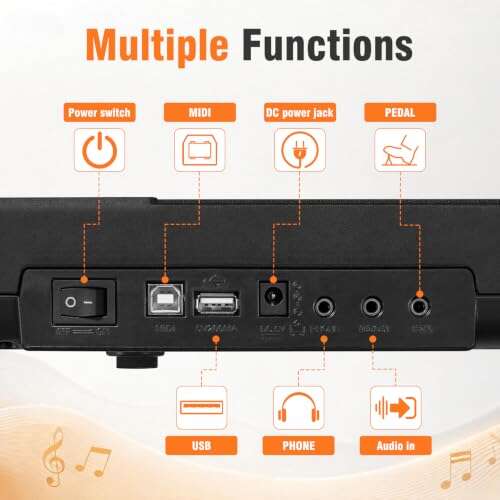
I also check the connection path. USB-MIDI is usually simple with a modern computer, but the keyboard still needs the correct cable and operating-system support. Some instruments use a traditional 5-pin MIDI port, while others use USB only. A tablet or phone may need an adapter, and some mobile setups may benefit from powered USB connections.
Polyphony is another useful number. It describes how many notes a piano can handle at once before older notes drop out. High polyphony helps when you use sustain, layered tones, or complex arrangements. Still, polyphony alone does not make a keyboard sound better. Key response, software quality, speakers, and your playing technique matter just as much.
Weighted Versus Semi-Weighted Keys
Weighted keys use more resistance to imitate the feel of an acoustic piano. Many weighted digital pianos also use a graded design, with heavier keys in the bass and lighter keys in the treble. This can help a player shape dynamics across the keyboard. It also makes repeated notes and fast passages feel different from those on a light controller.
Semi-weighted keys add some resistance but usually move with less force. They are often easier for new players and useful for organ, synth, and electronic parts. They can also reduce hand fatigue during long MIDI sessions. If you mainly control virtual instruments, semi-weighted action may give you the speed and comfort you need.
I suggest weighted keys for classical study, serious piano lessons, and players who want one instrument for many years. I suggest semi-weighted keys for beginners on a budget, mobile producers, and users who value a large accessory bundle. A good MIDI piano should match your hands and goals, not just a specification sheet.
USB-MIDI, Bluetooth, and Traditional MIDI
USB-MIDI sends note data between the piano and a compatible computer or mobile device. In many cases, the computer recognizes the keyboard as a MIDI input without installing a special driver. You can then select it inside a DAW, notation program, or virtual-instrument app. Always test the cable and input settings if the software does not receive notes.
Bluetooth can mean different things. Some products use Bluetooth MIDI, which sends performance data wirelessly. Others only use Bluetooth audio, which streams music from a phone through the piano’s speakers. Those functions are not identical. If wireless control is important, confirm that the listing says Bluetooth MIDI rather than only Bluetooth audio.
Traditional five-pin MIDI remains useful in studios with older synthesizers, drum machines, and hardware modules. USB is often easier for direct computer use. The best digital piano for MIDI may include one connection type or several. I recommend choosing the connection that matches your current equipment instead of paying for ports you will never use.
Why Sustain Pedal Support Matters
A sustain pedal is not just an extra comfort feature. It changes how you shape harmony and phrasing. With a pedal, you can connect chords, let bass notes ring, and create a smoother sound with virtual piano software. Without one, even a good keyboard can feel stiff during piano performance.
Most basic setups use a single sustain pedal. More advanced digital pianos may support three pedals, including soft and sostenuto functions. A universal pedal with a polarity switch can work well across many devices, but you should confirm the plug type and input design. Some cabinet pianos use proprietary pedal connectors.
I also look for a pedal that stays in place. A pedal that slides across the floor can break focus during practice. Rubber feet, a firm hinge, and a suitable cable length all improve the playing experience. Small hardware details often matter more than buyers expect after the first week.
Using a Digital Piano With a DAW
Connecting a digital piano to a DAW is usually straightforward. First, connect the keyboard with the correct USB or MIDI cable. Next, open the DAW’s MIDI settings and select the keyboard as an input. Create an instrument track, load a virtual piano, and play a few notes to confirm the signal.
If the notes arrive late, check buffer size and audio-driver settings. A very large buffer can increase delay, while a very small buffer may cause clicks on a slower computer. Keep the piano’s local sound off if you hear both the internal tone and the software tone at once. That double sound can create an echo that makes timing hard to judge.
Velocity is important for expressive playing. It tells the software how hard you pressed each key. A responsive keybed gives you more useful control over volume and tone. This is one reason I place action high on my list when choosing the best digital piano for MIDI.
Best Features for Different Buyers
| Best for | Why |
|---|---|
| Serious piano students | Weighted 88-key action supports technique and full-range practice. |
| Beginner home producers | USB-MIDI, speakers, pedal support, and useful bundled accessories simplify setup. |
| Small rooms and travel | A portable or foldable design makes storage and transport much easier. |
Common Buying Mistakes to Avoid
The first mistake is buying by sound count alone. Hundreds of tones can be fun, but they do not replace a good keybed or stable MIDI connection. If piano is your main instrument, prioritize touch, range, and pedal response. You can always add more sounds through software later.
The second mistake is assuming every USB port sends MIDI. Some USB ports only play files or connect storage devices. Read the manual and product description for USB-MIDI wording. That small detail can save you from buying a keyboard that cannot control your chosen software.
The third mistake is ignoring size and stand height. An 88-key piano is wide, and a weak stand can wobble during chords. Measure your room before ordering. If you often move the instrument, consider a portable model with a quality stand rather than a heavy cabinet.
The fourth mistake is overlooking headphones and speakers. Built-in speakers are useful for quick play, but headphones help when others are nearby. For studio work, you may prefer an audio interface or separate monitors. Decide whether you need a quiet practice piano, a recording controller, or both.
Which Key Action Is Best for MIDI Production?
There is no single answer. Weighted action works well for piano tracks because it gives your fingers a strong dynamic range. Semi-weighted action can feel faster when you play pads, strings, organs, and synth leads. Some producers keep both types because each one inspires a different performance.
If you record mostly piano, choose an 88-key weighted model if your budget and space allow it. If you build electronic songs with many instruments, a semi-weighted bundle may be more flexible. If you need to travel, weight and folding design may beat both options. The best digital piano for MIDI is the one that supports the parts you actually play.
Care and Setup Tips
Keep the keyboard away from direct heat, damp windows, and dusty floors. Use a soft dry cloth on the keys. Do not spray cleaner directly onto the instrument. Unplug the power supply before cleaning around ports.
Place the piano at a height that lets your forearms stay close to level. Sit near the center of the keyboard, not too far back. Use a stable bench instead of a soft chair that sinks. Good posture makes the instrument feel better and reduces strain during long sessions.
Label your cables if you use several MIDI devices. Save a simple template in your DAW with the keyboard input already selected. These small steps turn setup into a habit rather than a daily puzzle. I also recommend testing every key, pedal, and port soon after delivery while the return period remains open.
FAQs Of best digital piano for midi
What is the best digital piano for MIDI overall?
The Yamaha P71 is my top overall pick for most piano-focused users. Its weighted 88-key action, simple layout, and dependable design make it easy to use for practice and MIDI performance. Buyers who need many accessories may prefer a complete semi-weighted bundle.
Do all digital pianos work with MIDI?
No. Many modern models support USB-MIDI, but you should confirm the product details before buying. A USB port does not always mean MIDI support. Check for USB-MIDI, MIDI output, or a compatible MIDI connection in the specifications.
Are weighted keys better for MIDI?
Weighted keys are better for realistic piano performance and finger training. Semi-weighted keys may be better for fast synth parts, portability, and lower cost. Your main playing style should guide the choice.
Can I connect a digital piano to a phone or tablet?
Often, yes. You may need a USB adapter, an appropriate cable, and sometimes a powered hub. Confirm that the piano, mobile device, and music app support the same connection method.
Does Bluetooth MIDI replace USB-MIDI?
Not always. Bluetooth MIDI can reduce cable clutter, but USB often offers a direct and stable connection. Also confirm whether the product supports Bluetooth MIDI or only Bluetooth audio.
Final Verdict: Which Should You Buy?
For most players, the Yamaha P71 is the best digital piano for MIDI because its weighted 88-key action feels natural and its focused design is easy to trust. Choose a bundle model if accessories, speakers, and portability matter more.
Match the piano to your hands, room, and software. The best digital piano for MIDI should make practice feel inviting and recording feel simple.

Senior Music Reviewer
Alex Carter is a seasoned music reviewer with over a decade of experience in the world of sound and instruments. Passionate about helping musicians and enthusiasts make informed choices, he brings sharp insights and in-depth knowledge to every review. From classical instruments to modern gear, Alex combines technical expertise with a love for music to deliver content that resonates with readers.
As a Senior Music Reviewer and expert author on Tuneluma.com, Alex is dedicated to sharing honest evaluations, practical advice, and thoughtful commentary to guide readers in their musical journey.