What Are The Best Beginner Violins: Buying Guide
The best beginner violins offer reliable tuning, comfortable playability, a good setup, and room to grow.
Choosing among the best beginner violins can feel hard when every model claims to be easy to play. After comparing student instruments, setup quality, materials, sizing, and long-term value, I find that the right choice depends less on the lowest price and more on fit, sound, and support. This guide will help you choose with confidence.
What makes a violin good for beginners?
A beginner violin should make learning easier, not more frustrating. It needs stable tuning, a comfortable neck, responsive strings, and a bridge that sits correctly. A poor instrument can feel stiff and harsh, even when the student practices well.
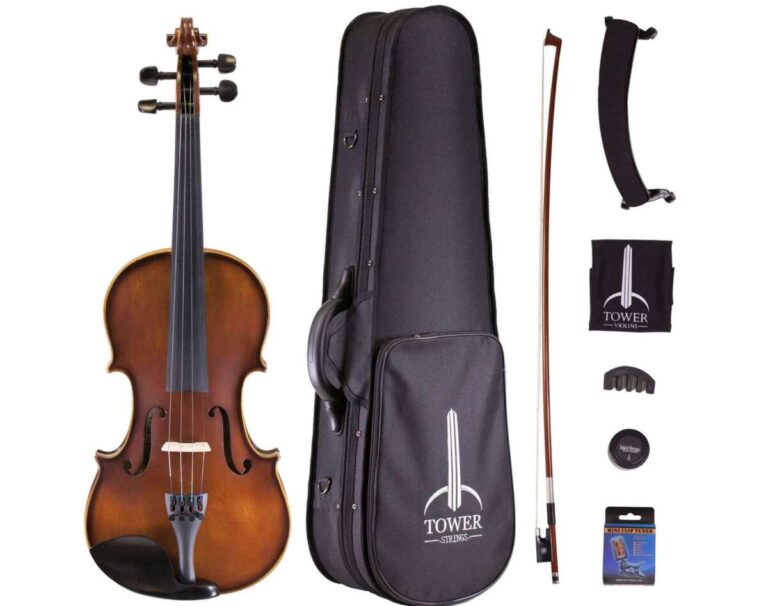
The best beginner violins usually come as complete outfits. These packages often include a case, bow, and rosin. However, the included accessories can vary in quality, so inspect the full package before buying.
Look for these key features:
• Proper setup from a violin shop or skilled technician
• A solid spruce top and maple back and sides
• Pegs that turn smoothly and hold their pitch
• A bridge with correctly shaped feet and string grooves
• A bow that feels balanced and has straight hair
• A case with firm padding and strong zippers
• Good return coverage and customer support
A violin is not like a basic guitar that you can play right away from the box. Small setup issues matter. A high string action, poorly cut bridge, or stuck peg can make simple notes feel almost impossible.
In my experience helping new players, setup is often the biggest difference between a joyful first month and a frustrating one. A modest violin with expert setup can outperform a more expensive violin that arrives poorly adjusted.
 beginners?”
style=”max-width: 100%; height: auto; border: 2px solid black; border-radius: 10px; display: block; margin: 0 auto;”
loading=”lazy”
/>
The best beginner violins at a glance
The best beginner violins vary by budget, age, and playing goals. The models below are common choices because they offer a useful mix of playability, sound, availability, and support.
Yamaha V3 Series
The Yamaha V3 is one of the safest choices for a serious beginner. Yamaha has a strong reputation for consistent student instruments, and the V3 outfit usually includes a violin, bow, case, and rosin.
Its tone is clear and controlled rather than loud or rough. It is often a good choice for children, teens, and adults who want an instrument that can support several years of study.
Best for:
• Students who want dependable quality
• Families that prefer a trusted brand
• Players taking regular private lessons
The main drawback is price. It often costs more than entry-level online packages, but the better consistency can be worth it.
Stentor 1500 Student II
The Stentor Student II is a popular first violin in many markets. It offers a warm, pleasant tone and a solid build for basic lessons.
This model can be a strong value when purchased from a shop that checks the setup. Its included bow and case may be basic, but the violin itself can serve a new player well.
Best for:
• Beginners seeking a balanced student instrument
• Parents who want a practical first violin
• Players who need several size options
As with most student violins, inspect the bridge and strings after delivery. Some online units need adjustment before they are ready for regular practice.
Eastman VL80
The Eastman VL80 is a respected student violin with a more refined feel than many low-cost outfits. It is often sold through music stores, where a technician can prepare it for the buyer.
It can produce a focused tone and respond well to beginner bow strokes. This makes it useful for students who plan to continue into school orchestra, youth orchestra, or private study.
Best for:
• Students with long-term goals
• Buyers who want shop support
• Players who value a more polished sound
The outfit may cost more than basic online brands. Still, the added quality and professional setup can reduce common beginner problems.
Cecilio CVN-300
The Cecilio CVN-300 is widely available and usually sold as a complete outfit. It can be an affordable starting point for casual learners or families working with a limited budget.
Its main advantage is convenience. Buyers usually receive the core accessories without needing to shop for each item separately.
Quality control can be less consistent than with premium student brands. Buy from a seller with a clear return policy, and have the violin checked by a teacher or repair shop.
Best for:
• Budget-conscious beginners
• Short-term lessons or trial periods
• Students who need a low-cost outfit
Mendini MV300
The Mendini MV300 is another low-cost option for first-time players. It is easy to find and often includes a case, bow, rosin, and extra strings.
This violin may work for basic practice if it arrives with a decent setup. However, some units may need bridge adjustment, better strings, or peg work.
Best for:
• Beginners testing the waters
• Families with a strict starting budget
• Students who have access to a local setup technician
A very cheap violin is not always the cheapest choice in the long run. Repair costs can quickly remove the savings.
Knilling Perfection Planetary Peg violins
Knilling student violins with Perfection Pegs are worth considering because the geared pegs make tuning easier. They look like standard pegs but contain a small internal gear system.
This feature can help children and new adults who struggle with traditional friction pegs. Tuning becomes more controlled, which may reduce one of the biggest early frustrations.
Best for:
• Young beginners
• Players who find tuning difficult
• Families willing to pay more for convenience
The main limitation is cost. These violins may be harder to find and may not suit every budget.
Best beginner violins by player type
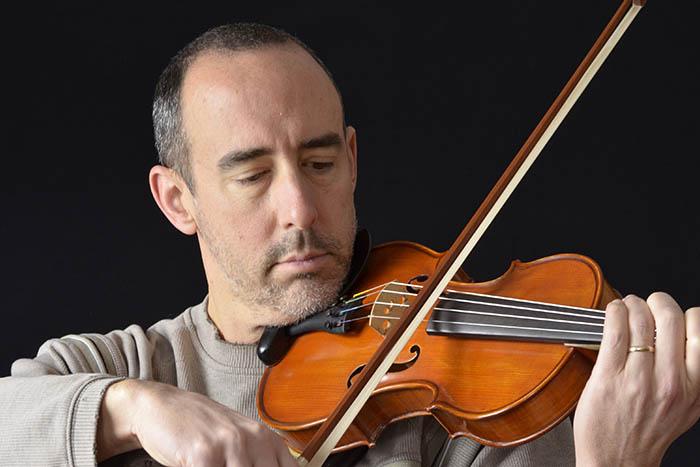
The right violin for a six-year-old may not suit a tall adult. Age helps, but arm length and hand size matter more than age alone.
Best beginner violin for children
For children, choose a violin based on correct size and easy handling. A full-size violin can be too large for a small player and may cause poor posture.
Common sizes include:
• 1/16 for very small children
• 1/10 and 1/8 for young players
• 1/4 and 1/2 for growing children
• 3/4 for larger children
• 4/4 for most teens and adults
A teacher should measure the student when possible. The child should be able to hold the violin comfortably, reach the scroll area, and keep the left arm relaxed.
Best beginner violin for adults
Most adults use a full-size 4/4 violin. Adult beginners often benefit from a comfortable neck, smooth pegs, and a warm tone that does not sound overly sharp.
The Yamaha V3, Eastman VL80, and a well-set-up Stentor Student II are sensible choices. An adult who is unsure about continuing should consider renting before buying.
Best beginner violin for school orchestra
School orchestra players need an instrument that can handle frequent practice. Stable tuning and durable construction matter because students often transport the violin to school, rehearsals, and performances.
A Yamaha, Eastman, or carefully prepared Stentor is usually a better choice than an unknown package with flashy extras. The instrument should also have a strong case and a spare set of strings.
Best beginner violin for a tight budget
A rental is often the smartest low-cost option. Many rental programs allow size exchanges as a child grows, and some apply rental payments toward a future purchase.
If you buy online, choose a model with a return period. Set aside money for a professional setup, because that service can have a greater effect on playability than a decorative finish.

Why setup matters more than the brand name
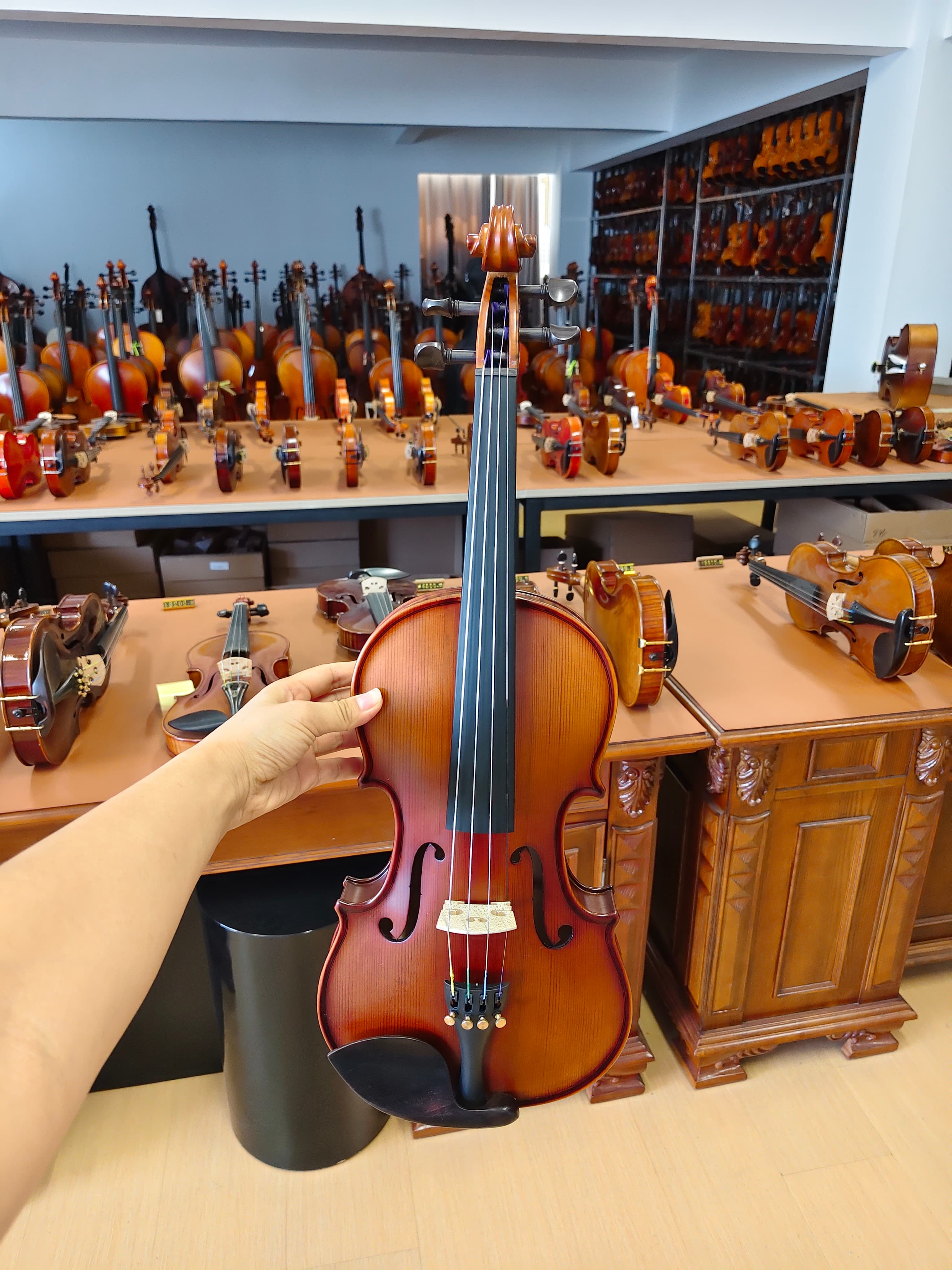
A violin’s setup controls how easy it is to play. Setup includes bridge shaping, string height, soundpost placement, peg fitting, fingerboard inspection, and general adjustment.
A beginner may not know whether a problem comes from technique or the instrument. For example, a bridge that is too high can make the strings hard to press. Pegs that slip can make practice stop every few minutes.
Ask a violin shop to check:
• Bridge position and string height
• Peg movement and tuning stability
• Soundpost placement
• Fingerboard smoothness
• String condition
• Bow tension and hair condition
• Tailpiece and fine tuner function
Many new violins need at least a basic inspection. This is especially true for instruments shipped in boxes. Temperature and humidity changes can affect wood, glue, pegs, and strings.
One lesson I have seen repeatedly is simple: do not judge a violin only by its first sound. A new set of strings and a careful setup can change the instrument dramatically.
What materials should a beginner violin have?
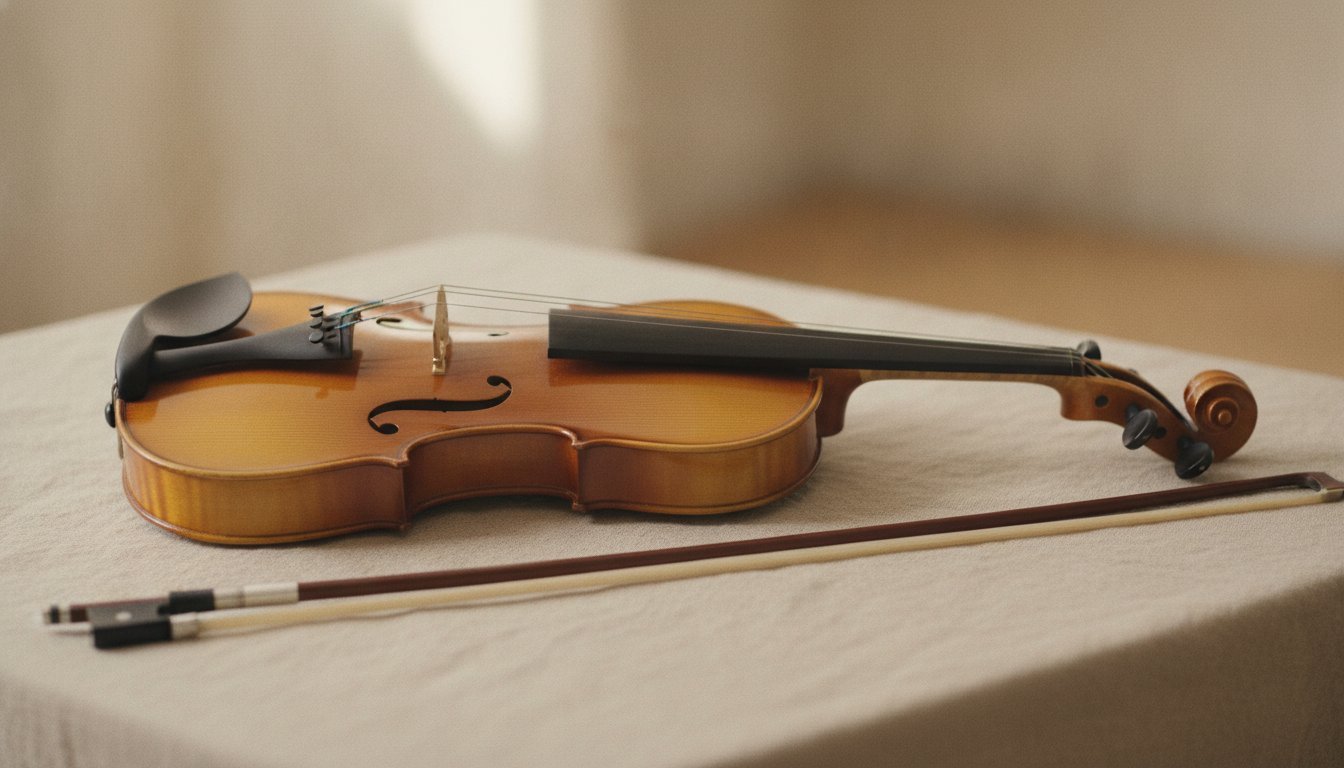
Traditional violins use spruce for the top and maple for the back, ribs, and neck. Ebony is commonly used for the fingerboard, pegs, and chin rest.
Solid wood often gives a more natural response than very cheap laminated materials. That does not mean every solid-wood violin is excellent. Craftsmanship, wood quality, varnish, and setup still matter.
Avoid choosing by appearance alone. A bright finish, carved pattern, or decorative tailpiece does not guarantee good sound.
Pay attention to these details:
• A spruce top with clean, even construction
• A maple back and ribs
• An ebony fingerboard
• A bridge with smooth edges
• Neat purfling around the body
• No open seams or visible cracks
• A comfortable chin rest
Some low-cost instruments use painted details to imitate features that should be carved or inlaid. These instruments may still work for casual use, but they often have less consistent quality.
How much should you spend on a beginner violin?
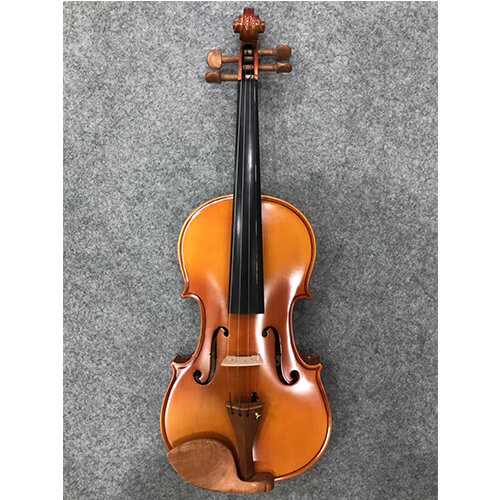
A realistic budget helps you avoid false savings. Prices change by country, season, size, accessories, and setup.
In the United States, beginner options often fall into these broad ranges:
• Under $150: basic online outfits with variable quality
• $150 to $350: better entry-level packages
• $350 to $700: stronger student instruments and shop support
• Over $700: refined student models with better materials and setup
These are general ranges, not fixed rules. A local rental may cost less at first and offer better support than a cheap purchase.
Remember to budget for:
• Professional setup
• Replacement strings
• Extra rosin
• Shoulder rest
• Music books
• Insurance or protection
• Occasional bow rehairing
The included bow is often the weak point in a cheap outfit. A bow that is too soft, warped, or poorly balanced can make bow control much harder.

Violin rental versus buying
Renting is often best for children who may change size. It also lets a new player test the instrument before making a larger purchase.
Buying may make more sense when:
• The player already takes regular lessons
• The correct size is unlikely to change
• The rental cost becomes high over time
• A trusted teacher recommends a specific violin
• The player wants to keep the instrument for years
A good rental program should offer maintenance and size exchanges. Ask whether repairs, strings, and bow service are included.
If you buy, look for a return window of at least several days. Have the instrument tested by a teacher or violin shop during that period.

Common mistakes when buying a beginner violin
New players often focus on price and appearance. Those are understandable concerns, but they should not lead the decision.
Avoid these mistakes:
• Buying the wrong size
• Choosing a violin only because it looks attractive
• Assuming every included bow is usable
• Ignoring the seller’s return policy
• Skipping professional setup
• Buying from a seller with no repair support
• Expecting a very cheap violin to sound concert-ready
• Using metal or synthetic strings without checking compatibility
• Storing the violin near a heater or in direct sun
Do not tighten the bow too much. The bow stick should remain curved toward the hair, not bend into a straight line. Loosen the bow after every practice session.
Also avoid leaving the violin in a hot car. Extreme heat can soften glue and damage the finish. Small care habits protect the instrument and save money.

How to test a beginner violin before buying
If you can visit a shop, bring your teacher or an experienced player. A beginner may not yet know what a healthy violin should feel like.
Test the instrument in this order:
- Check that the body has no cracks or open seams.
- Look at the bridge from the side. It should stand upright.
- Turn each peg slowly and check whether it holds.
- Play open strings and listen for a clear, steady tone.
- Play simple notes on each string.
- Test the bow for balance and smooth movement.
- Check that the case closes firmly.
- Ask about setup, warranty, and returns.
The violin does not need to sound perfect in a noisy store. It should feel comfortable, respond without excessive force, and stay reasonably in tune.
For online purchases, read recent customer reviews carefully. Look for comments about tuning, bridge position, string height, and seller support rather than comments about color alone.
How to care for a beginner violin
Good care keeps a student violin playable. Wipe rosin dust from the strings and body with a soft, dry cloth after each session.
Follow these basic habits:
• Loosen the bow after playing
• Store the violin in its case
• Keep the case away from damp areas
• Avoid touching the bow hair
• Replace strings when they sound dull or feel rough
• Check the bridge after tuning
• Never force a stuck peg
• Keep food and drinks away from the case
Humidity can affect wooden instruments. A violin may respond poorly in very dry or very damp conditions. A case humidifier can help in dry climates, but use one carefully and follow the maker’s instructions.
Teachers and repair shops are useful partners. A quick check can prevent a small issue from becoming expensive damage.
Frequently asked questions about the best beginner violins
What are the best beginner violins for adults?
The Yamaha V3, Eastman VL80, and a well-set-up Stentor Student II are strong choices for adults. The best option is the one that fits comfortably, stays in tune, and has reliable shop support.
Is a cheap violin good for a beginner?
A cheap violin can work, but quality varies widely. Choose one with a return policy and plan for a professional setup before deciding whether it is suitable.
Should I rent or buy a beginner violin?
Renting is usually best for children who may need larger sizes soon. Buying can be better for adults or committed students who want to keep the same instrument for several years.
What violin size does an adult beginner need?
Most adults need a full-size 4/4 violin. Players with smaller hands may benefit from advice from a teacher before buying.
Do beginner violins come with a bow and case?
Most beginner outfits include a bow, case, and rosin. The quality of these items varies, so check the package details and inspect the bow before playing regularly.
How much does a good beginner violin cost?
A dependable beginner violin outfit often costs between $150 and $700 in the United States. Price depends on materials, setup, brand, accessories, and seller support.
Can a beginner violin sound good?
Yes, a properly set-up student violin can sound clear and pleasant. Technique, strings, bow quality, and regular maintenance all affect the final sound.
Conclusion
The best beginner violins are not always the cheapest or most attractive models. Focus on correct size, stable tuning, comfortable playability, solid construction, and professional setup.
The Yamaha V3 and Eastman VL80 are excellent choices for students who want dependable long-term value. The Stentor Student II offers a practical balance, while Cecilio and Mendini can work for tighter budgets when purchased from a seller with strong support.
If you are unsure, rent from a reputable music shop or ask a teacher to test the instrument. Start with a violin that makes practice feel possible, then explore lessons, accessories, and better instruments as your skills grow.

Senior Music Reviewer
Alex Carter is a seasoned music reviewer with over a decade of experience in the world of sound and instruments. Passionate about helping musicians and enthusiasts make informed choices, he brings sharp insights and in-depth knowledge to every review. From classical instruments to modern gear, Alex combines technical expertise with a love for music to deliver content that resonates with readers.
As a Senior Music Reviewer and expert author on Tuneluma.com, Alex is dedicated to sharing honest evaluations, practical advice, and thoughtful commentary to guide readers in their musical journey.