How To Measure Drum Heads: Quick Accurate Guide
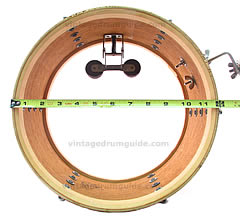
Measure the head across the drum shell from edge to edge, using the hoop for accuracy.
I’ve measured hundreds of drum heads for kits, repairs, and upgrades. This guide shows exactly how to measure drum heads, why it matters, and practical tips I’ve learned on the road and in the studio. Read on for step-by-step methods, tools, real examples, and troubleshooting so you can confidently match, replace, or tune your drum heads.

Why accurate measurement matters for drum heads
Getting the size right affects tone, fit, and playability. If you buy the wrong size head, it won't seat correctly. That leads to poor sound, air leaks, and wasted time.
Knowing how to measure drum heads helps you pick the right replacement. It also helps you choose the right bearing edge contact and hoop seating. This saves money and keeps your drums sounding their best.

Tools you need to measure drum heads
- Tape measure or ruler
Use a soft tape for curved shells. A metal ruler also works for rim-to-rim checks. - Caliper (optional)
Use this for precise hoop and shell thickness checks. - Marker or masking tape
Mark reference points when measuring odd setups. - Notebook or phone
Record sizes, model numbers, and notes on bearing edges.
Practical tip from experience: carry a small tape measure in your kit bag. It saves time at gigs and shops.
How to measure drum heads: step-by-step
- Remove the hoop and head if you need an exact shell or hoop measurement.
- Loosen and remove lugs evenly to free the hoop.
- Place the head and hoop on a flat surface.
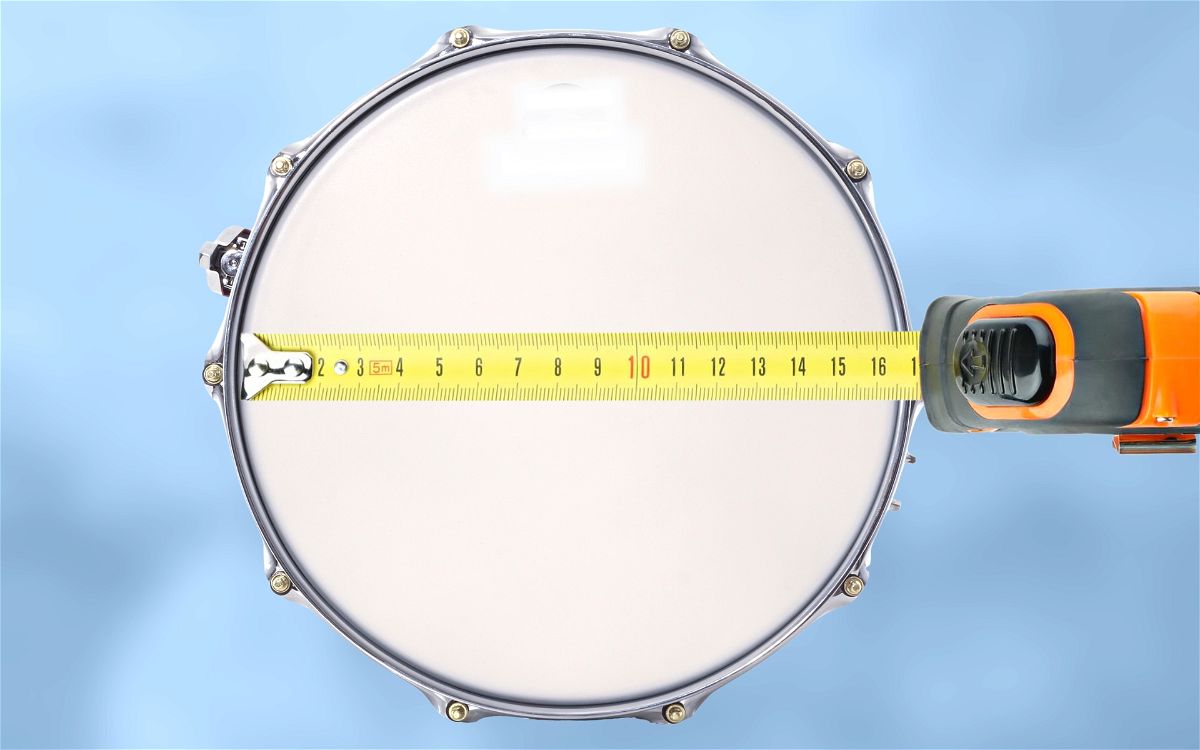
- Measure the head diameter across the playable surface.
- For an existing head, measure rim-to-rim across the outside of the hoop for the marketed size.
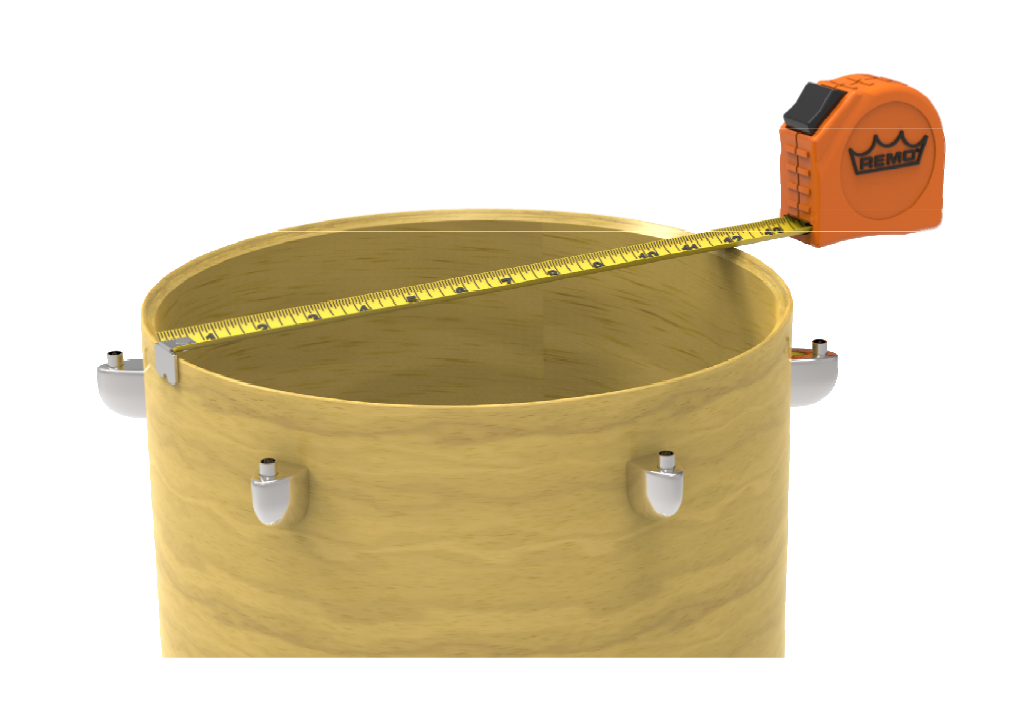
- For the bare shell, measure the inside diameter at the bearing edge.
- Record both shell and hoop numbers.
- Shell inside diameter often equals marketed head size minus hoop thickness.
- Hoop or rim design can affect which head fits best.
- Match the measured size to standard head sizes.
- Common sizes: 6", 8", 10", 12", 13", 14", 16", 18", 20", 22".
- Round down to the closest standard if needed, then verify fit.
How to measure drum heads tip: If you measure the outside of the hoop and get 14.5", the correct marketed head size is likely 14". Measure twice for accuracy.

Quick PAA-style questions (short answers)
Q: Do I measure the hoop or the shell?
A: Measure both when you can. The hoop outside gives the marketed head size; the shell inside gives the true bearing edge diameter.
Q: Can a slightly larger head be forced on?
A: Forcing a larger head often damages the hoop or shell. Always match sizes or consult the manufacturer.
Q: Does rim type change the size I buy?
A: Yes. Triple-flanged, die-cast, and wood hoops seat differently. Measure and test fit if possible.
Measuring different drum types: snare, toms, and bass
- Snare drums
Measure the outside of the hoop to match the marketed head size. Snares commonly use 14" heads. Tension and snare wires also affect fit and feel. - Tom drums
Floor toms and rack toms can vary. Measure the shell internal diameter at the bearing edge. Toms often use 8", 10", 12", 13", 14", 16" heads. - Bass drums
Measure across the inside of the shell for the batter and resonant heads. Standard bass sizes are 18", 20", 22", 24". Drum hoops and mounting systems sometimes require custom heads.
Real example from my experience: I once measured a vintage 16" tom that listed as 16". The original hoop thickness meant a 15.5" rim-to-rim reading, but a 16" head was still the correct fit. Always test-fit when possible.
Tips, common mistakes, and troubleshooting when you measure drum heads
- Mistake: measuring only the shell outside
Why it matters: outside measurements include the shell thickness and can lead to buying the wrong head. - Mistake: ignoring the hoop type
Why it matters: thicker hoops may require slightly different head sizing or seated adjustments. - Mistake: not checking bearing edge condition
Why it matters: a damaged edge causes leaks and inconsistent tuning even with the correct head.
Troubleshooting tips
- If a head seems loose, check hoop seating and lug tension before re-measuring.
- If a head binds when you fit it, remove it and check hoop contour and bearing edge alignment.
- For vintage drums, always measure multiple points around the shell. Warps or out-of-round shells need special attention.
Practical tip: label each drum with shell and recommended head size. It speeds up maintenance and avoids mistakes during quick swaps.
Maintenance, lifespan, and when to replace drum heads
- Lifespan factors
Frequency of play, playing style, drum tuning, and environmental conditions affect life. Heavy hitters and high humidity shorten lifespan. - When to replace
Replace when you see dents, loss of tone, persistent tuning instability, or oxidation on hardware. A dull, flat sound is a clear cue. - Selecting replacements
Match the size using the measurement steps above. Consider head type: clear, coated, single-ply, or double-ply. Each affects tone and durability.
Personal note: I replace snare batter heads annually for recording sessions. Toms get rotated when tone degrades. Keep an inventory of heads in standard sizes.

Frequently Asked Questions of how to measure drum heads
How do I know if I should measure the hoop or shell?
Measure both when possible. The hoop outside usually matches the marketed head size, while the shell inside gives the true bearing edge diameter.
Can I measure drum heads without removing the head?
Yes. Measure rim-to-rim across the hoop for a quick check. For exact fitting, remove the hoop and measure the shell at the bearing edge.
What if my drum is an odd or vintage size?
Measure in multiple spots around the shell. Note any variations and consult manufacturers or custom head makers for exact sizes.
Will different hoop types change which head fits?
Yes. Hoop thickness and contour change how a head seats. Always test fit when switching hoop styles.
How precise do measurements need to be?
Within 1/8" is usually acceptable for standard heads. For tight fittings or custom drums, aim for 1/16" accuracy.
Do bearing edges affect head fit?
Yes. The bearing edge angle and height determine contact with the head. Measure the shell and inspect the edge if heads slip or sound off.
Are there standard size charts I can trust?
Yes, most manufacturers follow standard sizes. Still, measure your shell and hoop to confirm before purchasing.
Conclusion
Measuring drum heads correctly saves money, improves tone, and speeds up maintenance. Use a tape measure and, when you can, remove the hoop to measure the shell at the bearing edge. Record both hoop and shell diameters, check the bearing edge, and match to standard head sizes. Take time to measure carefully, test-fit, and keep spare heads in your kit.
Take action: measure your kit this week, note each size, and replace any worn heads. If you found this guide helpful, subscribe, share your measurement stories below, or ask a question about a tricky drum size.

Senior Music Reviewer
Alex Carter is a seasoned music reviewer with over a decade of experience in the world of sound and instruments. Passionate about helping musicians and enthusiasts make informed choices, he brings sharp insights and in-depth knowledge to every review. From classical instruments to modern gear, Alex combines technical expertise with a love for music to deliver content that resonates with readers.
As a Senior Music Reviewer and expert author on Tuneluma.com, Alex is dedicated to sharing honest evaluations, practical advice, and thoughtful commentary to guide readers in their musical journey.