In the United States, it can cost about $300 to $1,500 to make a basic violin yourself, excluding your labor and workshop tools. A professional handmade violin may cost $5,000 to $30,000 or more to produce, mainly because of skilled labor, long seasoning times, workshop overhead, and careful setup.
A factory-made student violin has a much lower production cost, often estimated at under $500, but the final retail price also includes shipping, quality control, distribution, marketing, warranty service, and the seller’s margin.
The real answer depends on what “make a violin” means:
- Building one as a hobby: roughly $300–$1,500 in materials
- Building one in a professional workshop: roughly $5,000–$30,000 in total production cost
- Producing a student violin in a factory: often a few hundred dollars or less
- Making a high-end American bench-made violin: $10,000–$50,000 or more in labor and business cost
- Selling the finished violin: the price may be much higher than the cost to build it
These are practical U.S. planning estimates, not fixed prices or live supplier quotes. Wood grade, labor rate, tools, location, and the maker’s reputation can change the total substantially.


What Does the Cost of Making a Violin Include?
The cost of making a violin includes materials, labor, tools, workshop expenses, finishing supplies, and final setup. Materials alone may be affordable, but the labor can take several weeks or months.
A violin is not made from one block of wood. It contains many parts, including:
- Spruce for the top
- Maple for the back, ribs, and neck
- Ebony for the fingerboard, pegs, and possibly the tailpiece
- A bridge
- A soundpost
- Fine tuners or a tailpiece
- Strings
- Purfling
- Varnish
- Glue
- Chin rest
- Endpin
- Case and accessories, if included
The maker must also shape, join, carve, bend, varnish, assemble, and adjust the instrument. A small error in the arching, thickness, neck angle, or bridge can affect both sound and playability.
Three costs that people often confuse
| Cost type | What it means | Typical U.S. range |
|---|---|---|
| Material cost | Wood, fittings, glue, varnish, strings, and small supplies | $300–$2,000 |
| Production cost | Materials plus labor, tools, rent, utilities, and waste | $5,000–$30,000+ |
| Retail price | Production cost plus business costs, distribution, warranty, and profit | $500–$50,000+ |
A violin that costs $700 to produce does not necessarily sell for $700. A shop must recover many costs that are not visible in the finished instrument.

How Much Do Violin Materials Cost?
For a first violin, expect to spend about $300 to $1,500 on materials. A professional maker using aged tonewood and higher-grade fittings may spend $1,000 to $3,000 or more on one instrument.
The largest material cost is usually the wood. The price depends on species, grain, age, appearance, dryness, and whether the wood has been cut for violin making.
Estimated material costs
| Part or supply | Typical cost range in the U.S. |
|---|---|
| Spruce top plate | $50–$400+ |
| Maple back, ribs, and neck set | $100–$800+ |
| Ebony fingerboard | $30–$200+ |
| Pegs, tailpiece, and endpin | $40–$300 |
| Bridge blank or fitted bridge | $10–$150 |
| Soundpost material | $2–$20 |
| Purfling | $10–$60 |
| Glue and small supplies | $20–$100 |
| Varnish and pigments | $50–$300 |
| Strings | $30–$300 |
| Chin rest and fittings | $20–$200 |
| Shipping and replacement material | $25–$200 |
These figures are broad because violin parts come in many grades. A low-cost ebony fingerboard and a carefully selected, accurately shaped fingerboard do not have the same price or performance.
Tonewood is more than attractive wood
The wood must be dry and stable. Violin makers look for suitable grain, low defects, proper stiffness, and predictable movement as humidity changes.
A piece of wood can look beautiful but still be a poor choice for a violin. Wood that is too heavy, too soft, warped, cracked, or poorly seasoned may create problems later.


Why aged wood can cost more
Older, well-seasoned wood often costs more because it has been stored for years and has already absorbed the cost of storage and selection. Age alone does not guarantee a better violin, though. The cut, stiffness, density, workmanship, and setup also matter.

How Much Does Labor Add to the Cost?
Labor is usually the largest part of the cost of making a handmade violin. A careful build may require 150 to 300 hours, although the exact time depends on the maker’s skill, tools, design, and finish standard.
A beginning maker may take longer than 300 hours. An experienced maker with specialized tools may work more efficiently, but still spends substantial time on carving, smoothing, varnishing, assembly, and adjustment.
A simple labor calculation
Consider this hypothetical example:
- 220 hours of work
- $40 per hour for direct labor
- $1,200 in materials
- $2,000 for workshop overhead and tool use
The calculation would be:
- Labor: 220 × $40 = $8,800
- Materials: $1,200
- Overhead: $2,000
- Estimated production cost: $12,000
At a $75 hourly labor rate, the same build would cost:
- Labor: 220 × $75 = $16,500
- Materials: $1,200
- Overhead: $2,000
- Estimated production cost: $19,700
This is why two violins made from similar materials can have very different prices.
What labor includes
Labor does not only mean carving wood. It can include:
- Selecting and preparing wood
- Making or adjusting templates
- Carving the plates
- Bending the ribs
- Making the blocks and linings
- Joining the plates
- Carving the scroll and pegbox
- Fitting the neck
- Applying ground and varnish
- Installing the fittings
- Cutting and fitting the bridge
- Fitting the soundpost
- Installing strings
- Testing and correcting the setup
A violin may require more than one setup cycle. The maker may need to adjust the bridge, soundpost, strings, or fingerboard after the instrument is strung.

How Much Do Tools and Workshop Equipment Cost?
A beginner may spend $500 to $3,000 on tools. A professional violin workshop can contain $10,000 to $50,000 or more in tools, machines, wood inventory, benches, lighting, and finishing equipment.
Tool costs are often overlooked because they are not used up in one violin. However, they still form part of the cost of production.
Basic violin-making tools
A beginner may need:
- Carving knives
- Gouges
- Planes
- Chisels
- Scrapers
- Clamps
- Calipers
- Finger planes
- Files and rasps
- Bending iron
- Drill and bits
- Measuring tools
- Templates and molds
- Sharpening equipment
- Workbench and lighting
A complete professional shop may also use:


- Bandsaw
- Drill press
- Dust collection
- Specialized bending equipment
- Thickness calipers
- Precision measuring tools
- Spray or brushing equipment for varnish
- Humidity control
- Storage racks
- Specialized jigs
How to include tools in the cost of one violin
If a $2,000 tool collection produces 20 violins, a simple tool allocation is:
$2,000 ÷ 20 = $100 per violin
That is only a planning method. It does not account for repairs, replacement blades, sharpening stones, electricity, or the time needed to maintain the tools.
A person making one violin for personal use may treat tools as a separate investment. A professional maker must include a portion of those costs in each instrument.

How Much Does It Cost to Make a Violin in a Factory?
A factory-made student violin can have a much lower production cost than a handmade instrument. Depending on the quality and production location, the factory cost may range from less than $100 to several hundred dollars.
The exact figure is difficult to verify because manufacturers generally do not publish their full production costs. Labor rates, production volume, automation, wood sourcing, finishing methods, and factory location all affect the number.
Factory production may reduce cost through:
- Bulk wood purchasing
- Repeated templates
- Machine cutting
- Standardized parts
- Specialized assembly stations
- Lower labor costs
- Large-volume finishing
- Centralized quality control
Lower production cost does not always mean poor quality. A well-designed factory violin can serve a beginner well. However, a factory instrument usually has less individual adjustment and less personal variation than a handmade violin.
Factory cost versus retail price
A violin that costs $100 to produce may sell for $250, $500, or more after additional costs are added:
- International shipping
- Import duties
- Warehouse handling
- Distributor margins
- Retail staff
- Advertising
- Product returns
- Warranty work
- Packaging
- Sales tax collection
- Business profit
The retail price is therefore not a direct measure of material cost.
How Much Does a Handmade Violin Cost to Produce?
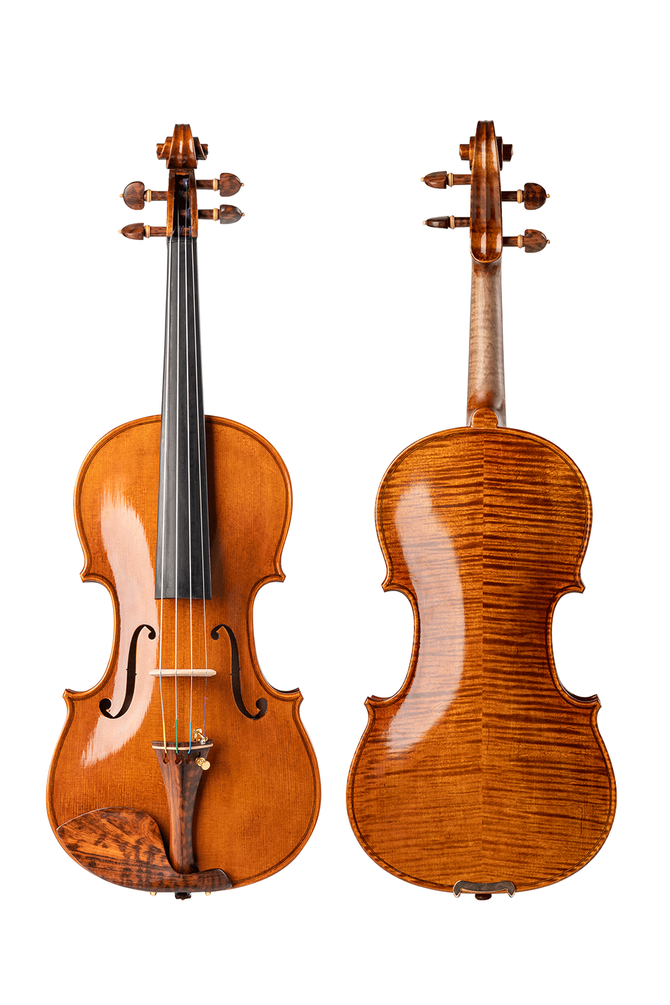
A handmade violin usually costs $5,000 to $30,000 to produce when the maker properly values labor and overhead. The cost can be lower for an apprentice build and much higher for a highly established maker.
A useful planning breakdown looks like this:
| Handmade violin cost | Lower estimate | Higher estimate |
|---|---|---|
| Materials | $500 | $3,000 |
| Direct labor | $4,000 | $22,500 |
| Tool and shop allocation | $500 | $3,000 |
| Varnish and setup work | $300 | $2,000 |
| Rent, utilities, insurance, and waste | $500 | $5,000 |
| Estimated total | $5,800 | $35,500 |
These numbers are not a standard industry price list. They show how the total can grow when the maker’s time is treated as a real business expense.


Apprentice-made violins
An apprentice may charge less because the maker is still building skill and reputation. The instrument can still require many hours of work, but the hourly labor rate may be lower.
A lower price does not automatically mean the violin is unsuitable. Buyers should inspect:
- Neck alignment
- Fingerboard shape
- Bridge fit
- Peg operation
- Clean joints
- Varnish quality
- Soundpost fit
- Ease of playing
- Return policy
Established makers
A respected maker may charge more because buyers are paying for:
- Proven workmanship
- Consistent construction
- A recognizable model
- Long-term support
- Setup expertise
- Scarcity
- Reputation and resale demand
That additional price is not simply the cost of wood and labor. It also reflects the maker’s professional history and the market’s willingness to pay.

Why Does a Violin Take So Long to Make?
A violin takes a long time because it combines precise carving with materials that respond to moisture, temperature, glue, varnish, and string tension.
The physical construction may take several weeks of full-time work. The entire process can take longer when the maker allows glue, ground, and varnish layers to dry between stages.
Main stages of construction
-
Wood selection
The maker chooses spruce and maple suitable for the instrument. -
Mold and rib construction
The ribs are bent around a mold and joined to blocks and linings. -
Plate carving
The top and back are shaped and graduated to planned thicknesses. -
Assembly
The plates are joined to the rib structure. -
Neck and scroll work
The neck, pegbox, and scroll require careful carving and alignment. -
Varnishing
Ground, color, and protective varnish are applied in multiple stages. -
Final setup
The bridge, soundpost, pegs, strings, tailpiece, and chin rest are fitted. -
Adjustment
The maker checks response, comfort, tuning stability, and string clearance.


The violin is finished when it plays correctly, not merely when all parts are attached.

What Is the Cheapest Way to Make a Violin?
The cheapest practical way to make a violin is to use a complete kit, basic tools you already own, and lower-cost fittings. A kit may cost $200 to $1,000, depending on the wood, parts, instructions, and supplier.
A kit can reduce design and sourcing work, but it does not remove the need for skill. The plates may still need carving, the ribs may still need bending, and the final setup may determine whether the violin is playable.
Ways to reduce the cost
- Start with a student-grade tonewood set
- Buy a complete kit instead of separate parts
- Borrow or share specialized tools
- Use hand tools instead of buying large machines
- Take a supervised violin-making class
- Build a workshop tool collection over time
- Have a professional perform the final setup
- Avoid buying expensive decorative fittings at the start
Where not to cut costs
Do not save money by using:
- Unseasoned or cracked wood
- Weak glue
- Poorly fitting pegs
- A badly cut bridge
- Incorrect string spacing
- Unsafe varnish products
- A soundpost that is too short or too tight
A cheap bridge or poor setup can make an otherwise sound violin difficult to play. Final adjustment is one of the areas where professional help can produce the greatest improvement.

Is It Cheaper to Build a Violin or Buy One?
For most people, buying a violin is cheaper than building one if the value of time, tools, and mistakes is included. Building becomes financially reasonable when the goal is learning, craft, personal satisfaction, or professional production.
Example comparison
Suppose a hobby maker spends:
- $800 on materials
- $1,500 on tools
- 200 hours on the build
- $500 on corrections and setup
The cash cost is about $2,800. If the maker values time at $25 per hour, the time adds another $5,000.
The full economic cost becomes:
$800 + $1,500 + $500 + $5,000 = $7,800
A beginner violin may be purchased for much less than that. The homemade violin may still be worth making, but the reason is usually the experience rather than savings.
When making one makes sense
Making a violin may be a good choice if you:
- Want to learn traditional woodworking
- Enjoy detailed handcraft
- Plan to make several instruments
- Have access to a suitable workshop
- Can work under an experienced maker
- Accept that the first build may have defects
If your only goal is to obtain a playable violin at the lowest cost, buying a properly set-up student instrument is usually more practical.


What Makes One Violin More Expensive Than Another?
The biggest cost differences come from labor, materials, setup quality, maker reputation, and market demand.
Important price factors
Workmanship
Clean joints, accurate arching, smooth transitions, proper graduation, and careful edge work take time. Poor workmanship can create structural or playing problems.
Wood quality
Highly selected spruce and maple can cost more than ordinary wood. Attractive flame or unusual grain may raise the price, but appearance does not prove superior tone.
Varnish
Varnish affects appearance and protection. A complex hand-applied finish may require more time than a fast production finish.
Setup
A violin with a well-fitted bridge, properly shaped fingerboard, working pegs, and suitable strings can cost more because setup requires specialized skill.
Maker reputation
Established makers may charge more because their instruments are scarce and their work has a documented market history.
Provenance and certification
Older or historically important instruments may require documentation, authentication, insurance, and specialist valuation. Those issues are separate from the cost of building a new violin.

Hidden Costs to Include in a Violin-Making Budget
A realistic budget should include more than wood and strings. Hidden costs can add hundreds or thousands of dollars.
Consider including:
- Shipping for wood and fittings
- Replacement parts damaged during work
- Tool sharpening and repair
- Workshop rent
- Electricity and climate control
- Insurance
- Dust collection and protective equipment
- Varnish storage
- Failed experiments
- Professional setup
- Instrument photography
- Packaging
- Sales tax obligations
- Business registration and accounting
- Warranty repairs
A professional maker also loses money when a project takes longer than planned or when an instrument needs major correction.
Humidity and storage
Wood changes as humidity changes. A workshop in a dry U.S. climate may need humidification, while a humid area may require dehumidification.
Poor humidity control can contribute to:
- Open seams
- Cracks
- Neck movement
- Bridge deformation
- Peg problems
- Finish damage
A violin-making budget should therefore include a stable workspace, not only hand tools.

What Does It Cost to Set Up a Finished Violin?
Final setup may cost $100 to $500 or more, depending on the work required, the region, and the quality of the parts.
A basic setup can include:
- Bridge fitting
- Soundpost fitting
- String installation
- Peg adjustment
- Fingerboard inspection
- Nut adjustment
- Tailpiece and endpin checks
More extensive work may include fingerboard dressing, neck correction, peg replacement, seam repair, or varnish repair.
A new violin may look complete but still need this work before it plays well. The setup is part of the instrument’s practical cost.
If the bridge is badly cut or the soundpost is forced into place, the violin can suffer damage. A trained luthier should handle difficult setup work.

Common Mistakes That Increase the Cost
The most expensive mistakes usually happen before the final assembly. Careful planning can prevent much of the waste.
Buying unsuitable wood
Low-cost wood may contain hidden cracks, excessive runout, or poor stability. Ask the supplier about dimensions, moisture condition, and intended use.
Underestimating tool costs
A few knives and chisels are not a complete workshop. Sharpening gear, clamps, molds, measuring tools, and a stable bench are also necessary.
Rushing the arching and thicknessing
The top and back control much of the violin’s response. Removing too much wood can be difficult or impossible to correct.
Ignoring neck geometry
The neck angle, projection, fingerboard height, and bridge height must work together. A mistake here can make the instrument uncomfortable or unplayable.
Applying varnish too quickly
Thick or poorly cured varnish can remain soft, mark easily, or affect the instrument’s response. Follow the product’s safety and drying guidance.
Treating setup as an afterthought
A good build can perform badly with a poor bridge, unsuitable strings, or an incorrectly fitted soundpost.
Using unsafe chemicals
Varnish solvents, pigments, dust, and finishes can harm the lungs, skin, or eyes. Use ventilation, protective equipment, and the product’s safety instructions. Do not spray finishes in an unventilated living space.

How to Estimate Your Own Violin-Making Cost
Use this simple formula:
Total cost = materials + labor + tools and equipment + workshop overhead + finishing and setup + waste
For a personal project, you can calculate two totals:
- Cash cost: money that leaves your account
- Full cost: cash cost plus the value of your time
Example personal-build budget
| Category | Example amount |
|---|---|
| Wood and fittings | $900 |
| Varnish, glue, and supplies | $200 |
| Strings and final parts | $150 |
| Tools | $1,200 |
| Professional final setup | $300 |
| Shipping and waste | $250 |
| Cash cost | $3,000 |
If the build takes 200 hours and you value your time at $25 per hour:
- 200 × $25 = $5,000 in time
- Full project cost = $3,000 + $5,000
- Estimated full cost = $8,000
This calculation does not say the violin is worth $8,000 on the resale market. It only shows what the project cost you when time and equipment are included.

Frequently Asked Questions
How much does it cost to make a violin from scratch?
A basic personal build may cost $300 to $1,500 in materials, while a professional handmade violin may cost $5,000 to $30,000 or more after labor and overhead. Tools are extra unless the maker already owns them.
How long does it take to make a violin?
A skilled maker may spend 150 to 300 hours on construction and setup. A beginner may need much longer, especially when learning to sharpen tools, carve plates, bend ribs, and correct mistakes.
Is making a violin profitable?
It can be profitable for an established maker who controls labor, maintains quality, and has enough demand. A first violin is rarely profitable when tools, learning time, mistakes, and unpaid labor are counted.
Can a beginner make a violin?
Yes, but instruction is strongly recommended. A supervised class or experienced mentor can reduce unsafe tool use, prevent costly errors, and improve the final setup.
Is a handmade violin better than a factory violin?
Not automatically. A handmade violin may offer more individual attention and detailed adjustment, while a factory violin can provide consistent construction at a lower price. Playability, setup, and the player’s needs matter more than the production method alone.
Final Answer
The cost to make a violin in the United States ranges from about $300 for basic DIY materials to more than $30,000 for a professional handmade instrument.
For most first-time builders, a realistic budget is:
- $300–$1,500 for materials
- $500–$3,000 for basic tools
- $100–$500 for professional final setup
- $5,000–$15,000 or more when the maker’s time is valued
If you want to build one, begin with a complete kit or a supervised class. Budget for tools, failed parts, humidity control, and professional setup. If you only need a playable violin, compare the full cost of making one with the price of a properly adjusted factory instrument before starting.

Senior Music Reviewer
Alex Carter is a seasoned music reviewer with over a decade of experience in the world of sound and instruments. Passionate about helping musicians and enthusiasts make informed choices, he brings sharp insights and in-depth knowledge to every review. From classical instruments to modern gear, Alex combines technical expertise with a love for music to deliver content that resonates with readers.
As a Senior Music Reviewer and expert author on Tuneluma.com, Alex is dedicated to sharing honest evaluations, practical advice, and thoughtful commentary to guide readers in their musical journey.