A good violin bow feels stable, draws a clear sound, and responds to small changes in your hand. It should not fight the player, feel badly warped, or need excess pressure to produce a focused tone.
The best way to judge a bow is to inspect its condition and then play it on your own violin. Price, brand, wood type, and appearance can help, but none proves that a bow is right for you.
Introduction
A violin bow is good when it combines sound, control, balance, and sound construction. A costly bow may not suit your technique, while a well-made student bow may work very well.
For a fair test, compare at least two or three bows under the same conditions. Use the same violin, rosin, strings, and playing space. If you plan to buy a used or valuable bow, have a qualified violin maker or repair shop inspect it before you pay.


What Makes a Violin Bow Good?
A good violin bow has four main traits:
- It makes a clear, even sound.
- It responds quickly to changes in bow speed, pressure, and contact point.
- It feels balanced and comfortable in the hand.
- It is straight, well cambered, and free from serious damage.
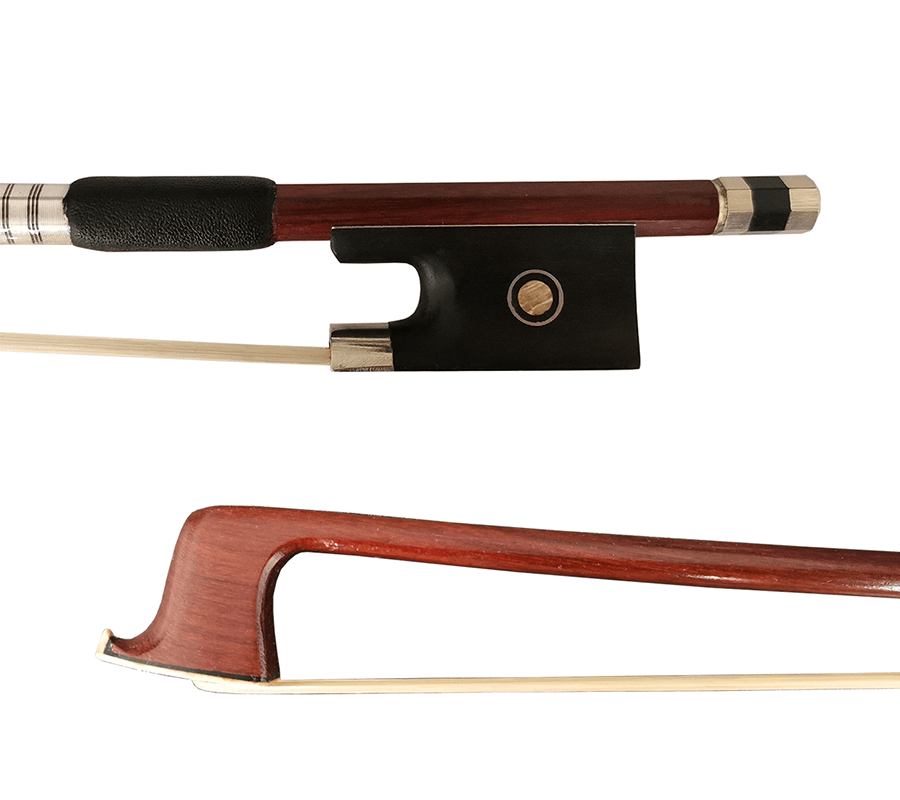
The bow is not just a stick that moves across the strings. Its camber, weight, stiffness, balance point, hair, frog, and tip all affect how it works.
Sound quality
A good bow should help you produce a focused tone without forcing the string. It should offer enough grip for a full sound but still allow a soft attack.
Listen for:
- A clear tone on all four strings
- Even volume from frog to tip
- A clean sound during slow bows
- Easy changes between soft and loud playing
- No sudden scratch, whistle, or loss of focus
The bow does not create the entire sound by itself. The violin, strings, rosin, bridge, setup, and player all matter. This is why a bow that sounds great on one violin may sound only average on another.
Response
Response means how quickly the bow reacts to your hand. A responsive bow starts and stops cleanly. It also makes short strokes, accents, slurs, and string crossings feel predictable.
Try these strokes:
- Slow détaché
- Short détaché
- Martelé
- Spiccato
- Light sautillé, if you use it
- Smooth legato across two strings
A good bow does not need to perform every stroke equally well. Some bows favor long, rich strokes. Others feel quick and lively for short strokes. The right choice depends on your playing style.
Balance
Balance describes how the bow’s weight is spread from the frog to the tip. A bow that feels too heavy at the tip may tire your right arm. One that feels too frog-heavy may feel less free in the upper half.
There is no single ideal balance point for every player. A beginner may prefer a stable bow with a little more weight near the hand. An advanced player may prefer a lighter, quicker bow for fast strokes.


The bow should feel secure without making you grip the thumb, index finger, or pinky too hard.
construction
a sound bow should have a straight stick, usable camber, a secure frog, and a healthy tip. The hair should be even and properly fitted.
Construction problems can include:
- A stick that bends sideways
- A stick that has lost too much camber
- Cracks near the head or frog
- A loose or damaged tip plate
- A frog that rocks or slides
- A worn screw or eyelet
- Uneven, dirty, or sparse hair
Some problems are easy to repair. Others can make a bow unsafe or too costly to restore.
How to Inspect a Violin Bow Before Playing
Inspect the bow first. A short visual check can reveal problems before you put tension on it.
1. Check the stick for straightness
Loosen the hair until it is slack. Hold the bow at eye level and look down the length of the stick from the frog toward the tip.
Then view it from the side.
A good bow may have a small amount of designed camber. It should not have a strong sideways bend. A sideways warp can make the bow harder to control and may lower its value.
Do not judge straightness while the bow is tightly tightened. Tension can hide or exaggerate some problems.
2. Check the camber
Camber is the inward curve built into the bow stick. With the hair loose, the stick should curve toward the hair in a controlled and even way.
A bow with weak camber may feel soft and unstable. It may also bottom out against the hair during firm playing. A bow with too much or uneven camber can feel stiff or unpredictable.
Camber is not something a buyer should try to correct at home. A bow maker uses heat and specialized methods to adjust it.
3. Examine the head and tip
The head is one of the most important areas to inspect. Look for:
- Cracks around the head
- Repairs near the mortise
- A loose or damaged tip plate
- Splits along the stick
- Chipped edges
- Signs of glue or filler
A crack in the head can be a serious repair. It does not always make a bow unusable, but it can affect strength, safety, and value.
Never tighten a bow that appears to have a loose tip or crack. Ask a repair professional to inspect it.


4. Examine the frog and fittings
The frog should move smoothly and sit firmly on the stick. The metal fittings should be secure. The screw should turn without grinding, slipping, or binding.
Check that:
- The frog does not wobble
- The screw holds tension
- The button is secure
- The eye is not badly cracked
- The metal parts are not loose
- The leather or thumb grip is usable
Wear is normal on an old bow. The key question is whether the wear affects function or points to expensive restoration.
5. Look at the hair
Good hair should be reasonably clean, even, and securely held at both ends. A few broken hairs are normal. Large gaps, dark buildup, or a very thin ribbon of hair are warning signs.
Old hair can make a good bow seem poor. If the rest of the bow is healthy, a rehair may solve the problem.
A rehair is not a reason to reject a bow by itself. However, include the cost and wait time in your buying decision.
6. Consider the materials
Many violin bows are made from pernambuco, a dense tonewood traditionally used by bow makers. Others use brazilwood, carbon fiber, fiberglass, or other materials.
Material alone does not determine quality.
A well-made carbon-fiber bow can be reliable and consistent. A poor wooden bow can be unstable. Likewise, an old pernambuco bow may have value as an object but still need major repair.
Wood species can affect price and collectability. Your playing test should still come first.

How to Test a Violin Bow While Playing
The playing test is the most useful part of the process. Test the bow on your violin, not only on a shop instrument.
Use fresh or familiar strings and your normal rosin. Ask the seller to tune the violin before each comparison. Play the same short set of exercises with every bow.
Start with open strings
Play slow, full bows on each open string. Use the middle, then the frog, then the tip.
Listen for:


- An even tone across the bow
- Stable contact with the string
- Easy starts and stops
- A lack of unwanted scratch
- Similar control on each string
Open strings remove some left-hand variables. They make it easier to compare the bow itself.
Test different bow speeds and pressures
Play one note several times:
- Start with a slow bow and light pressure.
- Repeat with a faster bow.
- Add moderate pressure.
- Move the contact point closer to the bridge.
- Move it farther from the bridge.
A good bow gives you a useful range. It should not collapse into a scratch when you ask for more sound. It should also produce a soft tone without losing contact.
Play scales and string crossings
Use a simple scale across all four strings. Then play slurred pairs and four-note slurs.
Notice whether the bow:
- Moves smoothly during crossings
- Stays stable during slurs
- Helps you change strings without a bump
- Feels controlled at the frog and tip
- Requires unusual tension in your right hand
A bow that feels impressive on one open string may be less useful in real music. Scales expose balance and transition problems.
Try your normal repertoire
Play a short passage that you know well. Choose music that includes your usual bow strokes.
Do not choose only a passage that flatters the bow. Include:
- A quiet phrase
- A loud phrase
- Short articulated notes
- Long connected notes
- String crossings
- Any stroke that often gives you trouble
The right bow should make the passage feel more predictable. It may not solve every technical issue, but it should not create new ones.
Test at several contact points
The contact point is where the bow meets the string between the fingerboard and bridge.
Test near:
- The fingerboard
- The middle of the available area
- The bridge
A good bow should let you change contact point without sudden loss of sound. Some bows favor playing near the bridge. Others produce an easier sound over the fingerboard.
Neither preference is automatically better. The deciding factor is whether the bow supports the sound you need.
Ask another player to listen
A player can feel a bow in the hand, but a listener can hear its effect more clearly. Ask a teacher, colleague, or trusted violinist to listen while you play the same passage with each bow.
The listener should compare:


- Tone clarity
- Projection
- Evenness
- Articulation
- Changes between strings
This is helpful, but it is not a replacement for your own comfort. You must be able to control the bow.
A Practical Violin Bow Comparison Table
Use this table as a screening tool. It does not replace a professional inspection or a real playing test.
| Feature | Good sign | Warning sign |
|---|---|---|
| Stick | Straight from frog to tip, with even camber | Strong sideways bend or uneven curve |
| Hair | Even ribbon with secure ends | Large gaps, heavy dirt, or loose hair |
| Frog | Moves smoothly and stays firm | Wobbles, binds, or slips |
| Screw | Turns smoothly and holds tension | Grinds, slips, or feels loose |
| Tip | Solid, clean, and free of major cracks | Loose plate, split head, or damaged mortise |
| Sound | Clear, even, and easy to shape | Persistent scratch or weak response |
| Balance | Comfortable through the full bow | Causes excess hand or arm tension |
| Response | Starts, stops, and changes strokes cleanly | Feels delayed, unstable, or harsh |
| Condition | Repairs are documented and stable | Hidden damage or unclear repair history |
If a bow has one repair, that does not automatically make it bad. A well-executed repair may be stable for many years. The concern is unknown damage, poor workmanship, or a repair that changes how the bow functions.
Does Bow Weight Prove That a Violin Bow Is Good?
No. Weight is only one clue.
Many full-size violin bows fall roughly within the high-50-gram to mid-60-gram range, but usable bows can fall outside that range. The final weight depends on the stick, frog, button, winding, leather, and hair.
Two bows with the same weight can feel very different. Their balance, stiffness, camber, and response may not match.
Use weight to identify an unusual bow, not to make the final choice. A bow that feels comfortable and performs well is usually more useful than one that matches a target number.
Pernambuco, Brazilwood, and Carbon-Fiber Bows
Material affects feel, durability, repair, and price, but it does not provide a complete quality rating.
Pernambuco bows
Pernambuco has long been valued for fine bow making. A good pernambuco bow may offer a refined mix of strength, flexibility, and response.
However:
- Not every pernambuco bow is well made.
- Older bows may need costly repairs.
- Pernambuco is subject to conservation and trade concerns.
- A material label does not prove age, origin, or maker.
Be cautious when a seller makes strong claims about a bow’s age or maker without documentation.
Brazilwood bows
“Brazilwood” can describe a broad group of less costly wooden bows. These bows are common in beginner and intermediate outfits.
A good brazilwood bow can work well for a student. Check its straightness, camber, hair, and response just as you would with any other bow.
Carbon-fiber bows
Carbon-fiber bows often offer consistent construction and resistance to changes in humidity. They can be a practical choice for students, outdoor playing, travel, or players who want a dependable backup.
They still vary in stiffness, balance, and response. Test the individual bow rather than assuming every carbon-fiber model feels the same.


Common Mistakes When Judging a Violin Bow
Choosing by price alone
Price may reflect the maker, materials, history, condition, and market demand. It does not guarantee that the bow suits your hand or violin.
Choosing by appearance
A polished finish and attractive fittings can create a strong first impression. They say little about response.
A plain-looking bow may play very well. A beautiful bow may have a weak stick or costly hidden damage.
Testing only at the middle
Many bows feel acceptable in the middle. Problems often appear at the frog or tip.
Use the full length of the bow during your test.
Using too much pressure
A bow may seem powerful when you press hard. That test can hide its natural response and encourage poor technique.
Start with normal playing pressure. Then increase pressure in small steps.
Testing with different rosin
Rosin changes grip and sound. Use the same rosin for every bow. If a shop applies a different rosin, clean comparisons become harder.
Tightening the hair too far
Turn the screw only until the hair comes off the stick and the bow feels usable. The stick should retain its designed camber.
Do not tighten until the hair looks like a rigid band. Excess tension can stress the stick, screw, frog, and tip.
Ignoring the cost of a rehair
A bow with worn hair may need immediate service. Ask a reputable shop for a repair estimate before treating a low price as a bargain.
When Should You Ask a Violin Maker to Inspect the Bow?
Ask a qualified violin maker or bow specialist to inspect the bow when:
- The bow has a crack
- The head or tip looks loose
- The stick is badly warped
- The bow may be old or valuable
- The seller claims a famous maker
- The price is high for your budget
- The repair history is unclear
- You are buying online without a trial period
A professional can assess condition, identify repairs, check the mortises and fittings, and explain whether the asking price makes sense.
A violin teacher can help with playing feel. A violin maker is usually better suited to judge structural condition and repair risk. For an expensive bow, use both opinions when possible.
How Much Should You Pay for a Good Violin Bow?
There is no single correct price. A bow’s value depends on several factors:
- Material
- Maker and authenticity
- Age and documented history
- Condition
- Repair quality
- Playability
- Current market demand
- Included fittings
For a student, a reliable bow that improves control may be a better purchase than a costly bow with uncertain history. For an advanced player or collector, maker attribution and provenance may matter much more.
Before buying, compare the bow with similar examples from reputable violin shops and auction records. Treat online asking prices as seller claims, not proof of market value.
How to Tell If an Online Violin Bow Listing Is Trustworthy
Online listings create extra risk because you cannot feel the bow or hear it on your violin.
Look for:
- Clear photos of the full stick, head, frog, and button
- Straight-on views that show the stick
- A written condition report
- Details about cracks and repairs
- A return period long enough for a playing test
- A professional shop or known seller
- A clear statement about authenticity
- Shipping protection and insurance
Be careful with listings that use phrases such as “old French bow” or “possibly by” without supporting evidence. Those phrases may describe a guess, not a verified attribution.
Never send a large payment by an irreversible method to an unknown seller. For a high-value bow, consider an escrow service or a purchase through an established shop.
A Simple 10-Minute Bow Test
Use this sequence when comparing bows in a shop:
- Inspect the stick, head, frog, screw, and hair.
- Check the stick with the hair loose.
- Play slow open-string bows.
- Play short strokes in the middle.
- Play short strokes near the frog and tip.
- Play a scale with string crossings.
- Test soft, medium, and strong dynamics.
- Play a familiar piece.
- Ask someone to listen.
- Repeat the same test with each bow.
After the test, write down what changed. Do not trust memory alone, especially after trying many bows.
A successful test usually leaves you with less hand tension, cleaner attacks, and more control. The bow may not sound dramatic at once. It should make ordinary playing easier and more consistent.
Frequently Asked Questions
Is a heavier violin bow better?
No. A heavier bow may provide stability, but it can also feel tiring or slow. A lighter bow may feel quick but lack the resistance you need. Balance and response matter more than weight alone.
Should a violin bow be perfectly straight?
The stick should not have a strong sideways bend. From the side, it normally has camber rather than being perfectly flat. A bow maker should judge whether the curve is healthy and even.
Is carbon fiber better than wood?
Neither is always better. Carbon fiber can offer consistency and durability. A well-made wooden bow may offer a feel that a player prefers. Compare the individual bows under the same playing conditions.
Can a rehair make a bad bow good?
A rehair can improve a healthy bow with old or poor hair. It cannot fix a warped stick, cracked head, weak camber, or serious structural damage.
How long should a violin bow last?
A well-maintained bow can last for decades or much longer. Its life depends on use, storage, humidity, repairs, and how often it is rehaired. Loosen the hair after every playing session and store the bow in a suitable case.
Can I assess a bow without playing it?
You can identify visible problems, but you cannot fully judge response or sound without playing. If you are not a confident player, ask your teacher or a violin shop to test it for you.
Final Recommendation
To tell if a violin bow is good, combine three checks: inspect the structure, test the full length of the bow, and compare its response on your own violin.
Choose the bow that gives you a clear sound, steady control, easy articulation, and comfortable balance. If the bow has cracks, major repairs, uncertain authenticity, or a high price, get a professional inspection before buying.
For background on violin and bow construction, conservation, and the work of bow makers, consult resources from the Violin Society of America, the Library of Congress, and established American violin shops with documented repair services. These sources can explain materials and workmanship, but your hands, ears, and a qualified inspection should make the final decision.

Senior Music Reviewer
Alex Carter is a seasoned music reviewer with over a decade of experience in the world of sound and instruments. Passionate about helping musicians and enthusiasts make informed choices, he brings sharp insights and in-depth knowledge to every review. From classical instruments to modern gear, Alex combines technical expertise with a love for music to deliver content that resonates with readers.
As a Senior Music Reviewer and expert author on Tuneluma.com, Alex is dedicated to sharing honest evaluations, practical advice, and thoughtful commentary to guide readers in their musical journey.