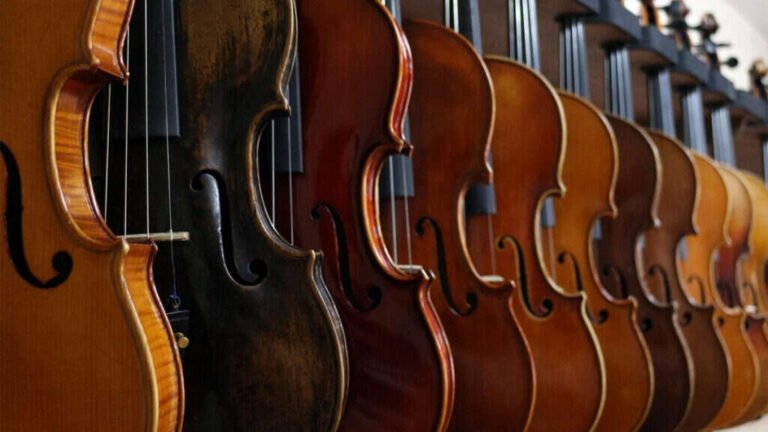
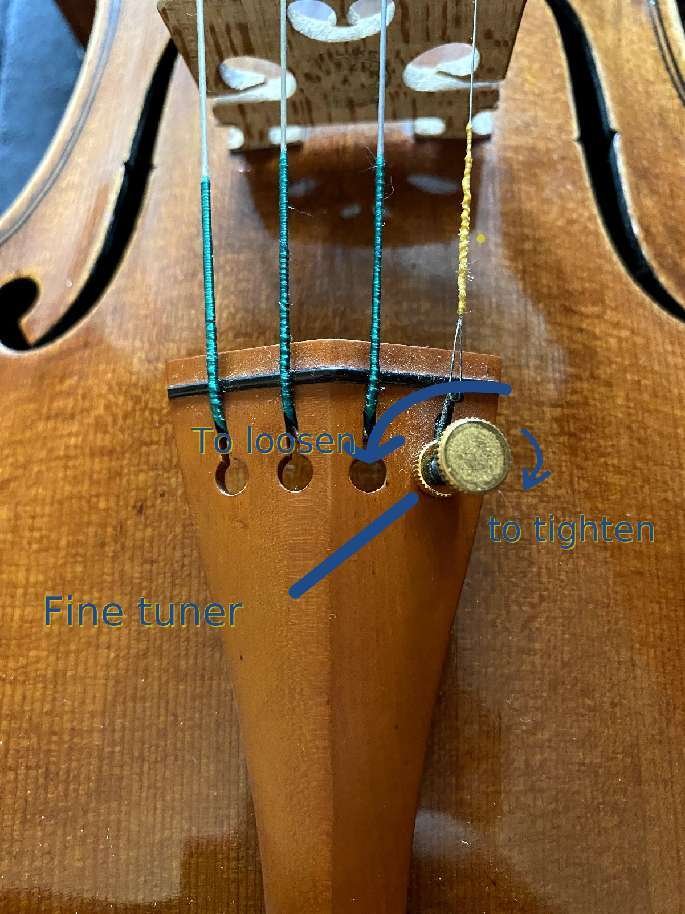
In the United States, a 3/4 violin usually costs between $100 and $600 for a new student instrument. A better-quality 3/4 violin may cost $600 to $1,500 or more, while used models can sell for $50 to $400.
Renting is often cheaper at first. In the U.S., a 3/4 violin rental commonly costs about $15 to $40 per month, plus a deposit, insurance fee, or setup charge.
The right price depends on the violin’s build quality, brand, condition, included accessories, and whether you buy or rent. A low price is not always a bargain if the violin is hard to tune, poorly set up, or uncomfortable to play.
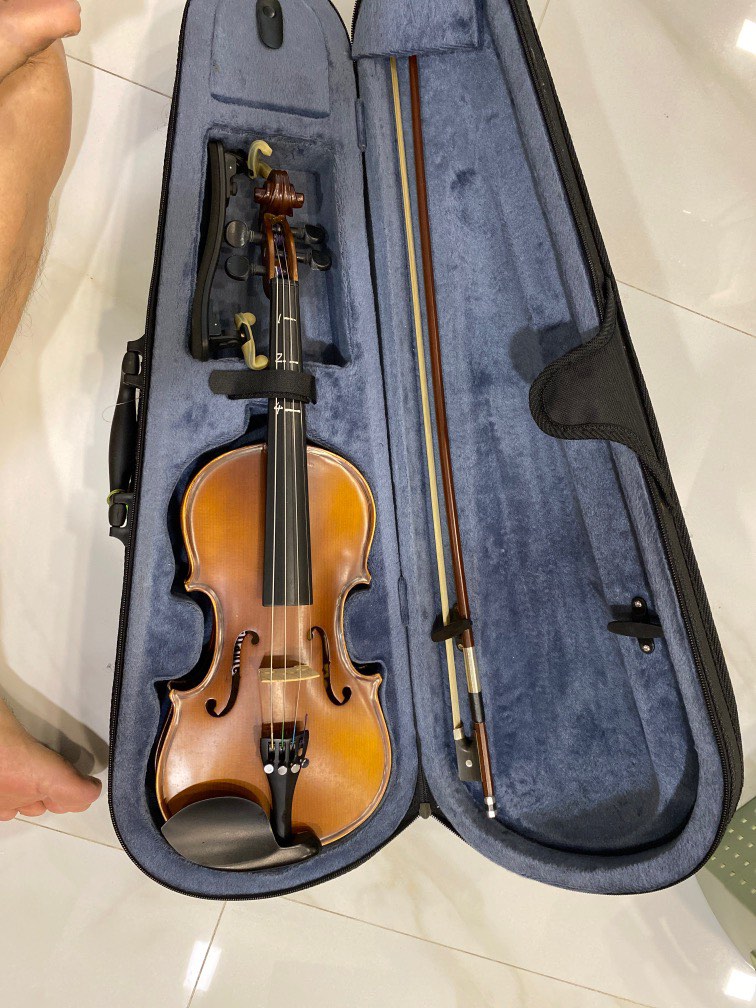
3/4 Violin Price Ranges in the United States
A 3/4 violin is a smaller violin size, not a separate quality class. You can find basic, intermediate, and professional-level instruments in this size.
| 3/4 violin type | Typical U.S. price | What to expect |
|---|---|---|
| Basic new student violin | $100–$250 | Entry-level materials and simple fittings |
| Better student violin | $250–$600 | More reliable setup and improved sound |
| Intermediate violin | $600–$1,500 | Better wood, fittings, response, and workmanship |
| Advanced or professional violin | $1,500+ | Specialized instruments, often sold through dealers |
| Used student violin | $50–$400 | Price depends heavily on condition and setup |
| Monthly rental | $15–$40 | Often includes case and bow; terms vary |
These are practical planning ranges, not fixed prices. U.S. sales tax, shipping, seasonal discounts, local dealer policies, and brand availability can change the final amount.
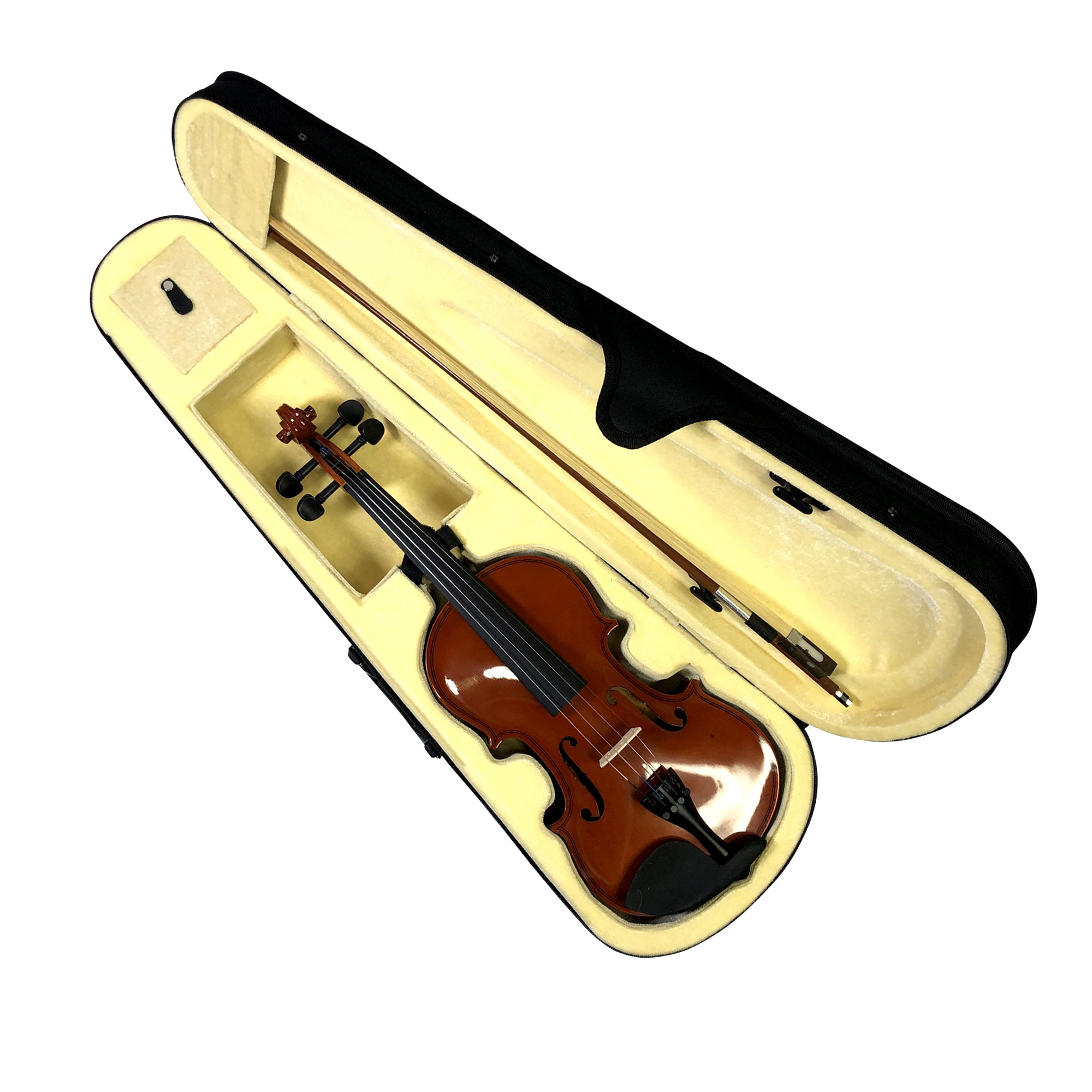
A complete outfit usually includes:
- The violin
- A bow
- A case
- Rosin
- Strings
- A shoulder rest, in some packages
Some inexpensive packages include all of these items but use low-cost accessories. A package listed at $150 may need a new bow, better strings, or professional setup soon after purchase.
Why prices vary so much
The violin itself is only part of the cost. A $200 violin with a good setup may be easier to play than a $350 violin that arrives with a high bridge, rough fingerboard, or poorly fitted pegs.
The largest price differences usually come from:
- Wood quality and age
- Handwork and finish
- Bridge and soundpost setup
- Quality of the bow
- Fingerboard and peg materials
- Brand and dealer support
- Condition if the violin is used
For a beginner, setup often matters more than a fancy label. A modest violin that responds well can help a student learn with less frustration.

What Affects the Cost of a 3/4 Violin?
The main cost drivers are construction, setup, condition, and what comes with the instrument. Two violins with the same size can have very different playing qualities.
Materials and construction
Low-cost violins often use basic tonewoods and machine-made parts. That does not make every inexpensive violin unusable, but quality control can be uneven.
More expensive student and intermediate violins may have:
- Better spruce tops
- More carefully shaped maple backs
- Cleaner varnish work
- Ebony fittings
- More accurate graduations
- Better bridges and soundposts
These features can improve tone and playability, but a higher price does not guarantee that a particular violin will suit every player.
setup
setup is the work that makes a violin playable. It may include:
- Cutting and fitting the bridge
- Adjusting the soundpost
- Shaping the nut
- Fitting the pegs
- Checking the fingerboard
- Installing and tuning the strings
A new setup from a violin shop can cost roughly $75 to $200 or more, depending on the work needed and the local market. A full repair or correction may cost much more.
This cost explains why some online violins are cheaper than instruments from a local shop. A factory may ship the violin with basic adjustments, while a specialist dealer may inspect and prepare it before sale.
Included accessories
A low-priced violin outfit may look cheaper because it includes fewer useful accessories. Check whether the listing includes:
- A usable bow
- A rigid or padded case
- Rosin
- A shoulder rest
- Replacement strings
- A warranty
- Return shipping
A bow that does not hold hair tension or balance well can make bow control harder. Strings that are very poor may produce a harsh or weak sound.
New versus used condition
A used 3/4 violin can offer good value, especially when it comes from a known brand and has been inspected by a violin shop.
However, used instruments may have hidden problems, such as:
- Open seams
- Cracks
- Loose purfling
- A warped neck
- Damaged pegs
- A poorly cut bridge
- Missing or loose soundpost
- Excessive wear on the fingerboard
Repair costs can quickly exceed the purchase price. Ask for clear photos and a return period when buying online.

Is It Better to Rent or Buy a 3/4 Violin?
For a child who may soon need a full-size violin, renting is often the safer financial choice. Buying can make sense when the player will use the 3/4 size for a longer period or when a reliable used instrument is available.
Renting
A U.S. rental often costs around $15 to $40 per month. Some programs offer rent-to-own plans, while others apply part of the rental payment toward a later purchase.
Ask the rental shop:
- Is maintenance included?
- Can the violin be exchanged for a larger size?
- Is the bow covered if it breaks?
- Is there damage protection?
- Does the rental fee apply to a future purchase?
- Are there late, return, or insurance charges?
Renting can reduce the risk of buying the wrong size. It also gives the student access to a shop that may adjust or replace the instrument.
Buying
Buying may cost less over time if the violin remains in good condition and can later be sold or passed to another student.
A new $300 violin, for example, may have a lower long-term cost than paying $30 each month for 18 months. But that calculation changes if the child grows quickly, stops lessons, or needs a different instrument.
Buying used from a reputable shop usually provides more protection than buying an unknown violin from a private seller. A shop may check the instrument and offer limited service or a return policy.

How Much Should You Budget for a Good 3/4 Violin?
For many U.S. beginners, a reasonable starting budget is $200 to $500 for a complete student outfit or $25 to $40 per month for a rental.
Here is a simple budget guide:
| Budget | Best suited for | Main caution |
|---|---|---|
| Under $150 | Short-term trial or very limited budget | Quality and setup may be inconsistent |
| $150–$300 | Beginner practice at home | Inspect the bow, bridge, and return policy |
| $300–$600 | Regular student use | Compare sound and setup, not just brand |
| $600–$1,500 | Serious study or longer-term use | Professional evaluation is useful |
| Over $1,500 | Advanced playing or specialized needs | Buy based on sound and fit, not price alone |
A teacher can often help compare two or three instruments. This is useful because a student may not yet know how to judge tone, response, or physical comfort.
Example total cost
Suppose a family buys a $275 violin outfit. The final first-year cost might look like this:
- Violin outfit: $275
- Better strings: $45
- Shoulder rest: $25
- Setup adjustment: $100
- Sales tax: varies by state and locality
The practical first-year total could be close to $450 before tax, even though the advertised violin price was $275.
This is a hypothetical example. Actual prices depend on the instrument and local shop.
How to Choose a 3/4 Violin Without Overpaying
Start with size and playability, then compare price. Do not choose an instrument only because it has a familiar brand name or an attractive finish.
1. Confirm that 3/4 is the right size
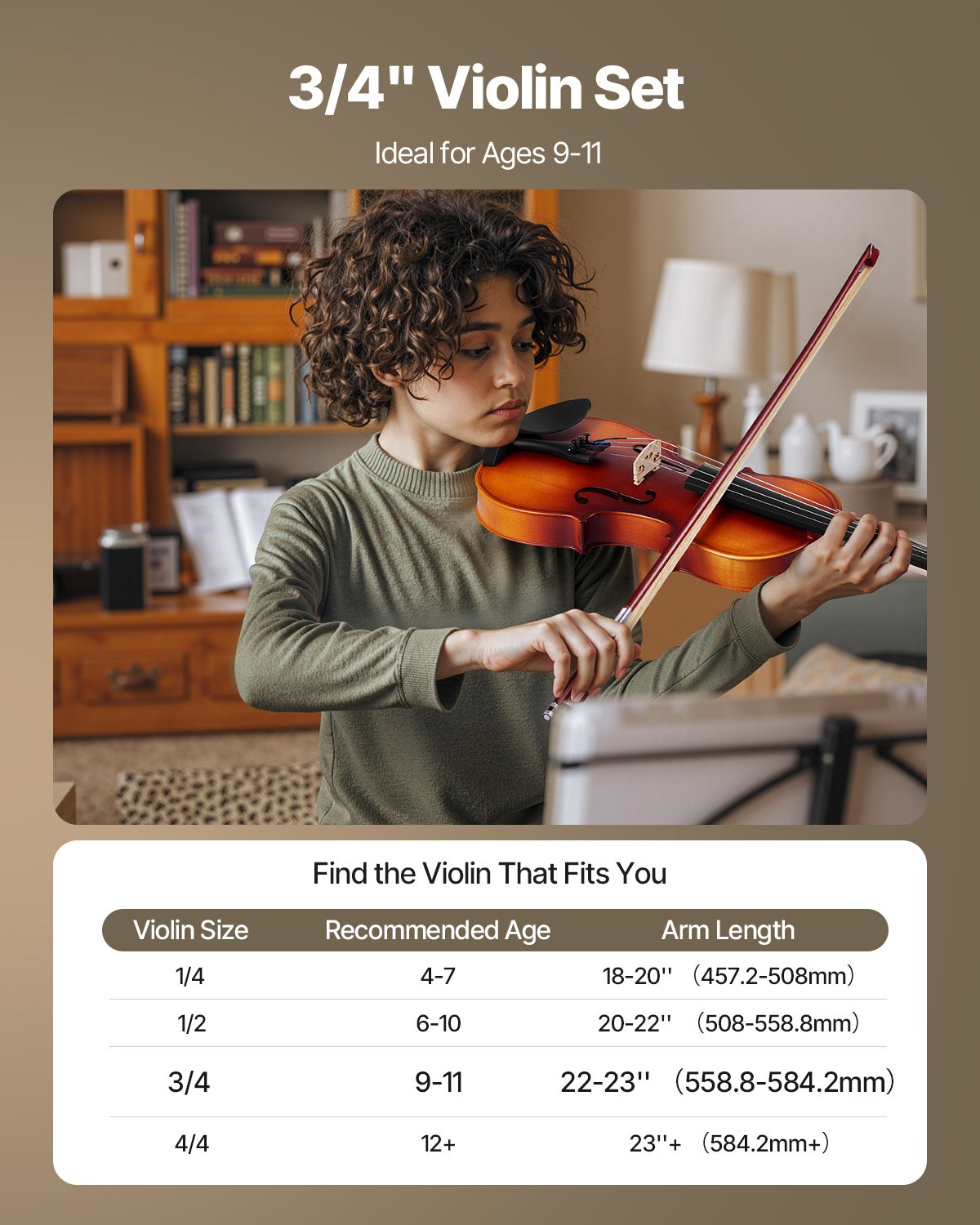
A 3/4 violin is commonly used by children roughly between ages 9 and 12, but age is only a rough guide. Arm length, hand size, reach, and playing comfort matter more.
A teacher or violin specialist should check the fit. A violin that is too large can strain the shoulder and hand. One that is too small may limit technique and sound development.
2. Compare complete outfits
Check what is included in each package. A $220 violin with a usable bow and case may be a better deal than a $180 violin that needs both replaced.
Look for clear details about:
- String brand and condition
- Bow materials
- Case type
- Setup work
- Return period
- Warranty
- Shipping and repair support
3. Test basic playability
If possible, have a teacher or experienced player check that:
- The strings sit at a comfortable height
- The pegs turn and hold
- The bridge stands straight
- The bow grips the strings
- The fingerboard feels smooth
- The instrument produces a clear sound
- No rattles or buzzing appear during play
A beginner may not be able to judge all of these points. That is normal. A short inspection by a teacher or violin shop can prevent an expensive mistake.
4. Check the return policy
Online purchases carry more risk because photos cannot show every structural problem. Choose a seller with a clear return period and read who pays return shipping.
Be cautious when a seller offers no returns, gives no detailed photos, or cannot explain the instrument’s setup and condition.
Common Mistakes When Buying a 3/4 Violin
The most common mistake is treating the advertised price as the total cost. The violin may need setup work, better strings, or a more useful bow.
Other mistakes include:
Buying the cheapest package available
Very cheap instruments can work for a short trial, but some are difficult to tune or play. If the student struggles because of the instrument, lessons may feel harder than they should.
Choosing based on appearance
Bright colors, decorative finishes, and unusual shapes do not prove good sound or playability. Focus first on fit, setup, construction, and return protection.
Ignoring the bow
The bow affects tone and control. A weak or badly balanced bow can make a decent violin feel difficult to play.
Buying the wrong size
Do not move a student into a larger violin simply to avoid another purchase. A poor fit can affect posture, reach, comfort, and technique.
Assuming a higher price guarantees better sound
Violin sound is partly personal. A more expensive instrument may be louder or richer, but the student may prefer another violin with a different response.
Forgetting maintenance
Violins need new strings from time to time, and bows need periodic rehairing. Keep the instrument away from extreme heat, cold, and rapid humidity changes. Never leave it in a hot car.

Key Takeaways
- A new 3/4 violin in the U.S. often costs $100 to $600 for student use.
- A better intermediate instrument may cost $600 to $1,500 or more.
- Used violins can cost less, but hidden repairs can remove the savings.
- Rental prices commonly fall around $15 to $40 per month.
- Setup, bow quality, strings, and accessories affect the real cost.
- Renting is often sensible for a growing child or uncertain beginner.
- Ask a teacher or violin shop to check size and playability before buying.
Frequently Asked Questions
Is a 3/4 violin cheaper than a full-size violin?
Not always. Size does not determine price by itself. A 3/4 violin from a respected maker can cost as much as, or more than, a basic full-size student violin.
What is a good 3/4 violin for a beginner?
A good beginner violin should fit the student, stay in tune, respond without excessive force, and come with a usable bow and case. A teacher or violin shop should inspect the instrument when possible.
Can an adult use a 3/4 violin?
An adult can use one, but it may feel cramped and produce less volume than a full-size violin. Adults should normally use a full-size violin unless a teacher or medical concern supports a smaller instrument.
How long will a child use a 3/4 violin?
It varies widely. Some students use a 3/4 violin for several years, while others move to a full-size violin sooner. Growth, arm length, hand reach, and comfort determine the timing.
Are cheap online violins worth buying?
Some can work for a short trial, but quality varies greatly. Buy only when the seller provides a clear return policy, accurate condition details, and a properly usable bow and bridge.
What extra costs should I expect after buying?
Plan for replacement strings, occasional setup work, rosin, a shoulder rest, and possible bow rehairing. The amount depends on how often the violin is played and how well it is maintained.
Conclusion
A realistic U.S. budget for a usable 3/4 student violin is about $200 to $500, while renting may cost $15 to $40 per month. Less expensive options exist, but setup and accessory quality deserve close attention.
For a growing child, rent first or buy from a shop with exchange support. For a student who will use the instrument for years, compare several properly set-up violins and involve the teacher in the choice. The best value is not the lowest sticker price; it is an instrument that fits, stays playable, and supports steady progress.

Senior Music Reviewer
Alex Carter is a seasoned music reviewer with over a decade of experience in the world of sound and instruments. Passionate about helping musicians and enthusiasts make informed choices, he brings sharp insights and in-depth knowledge to every review. From classical instruments to modern gear, Alex combines technical expertise with a love for music to deliver content that resonates with readers.
As a Senior Music Reviewer and expert author on Tuneluma.com, Alex is dedicated to sharing honest evaluations, practical advice, and thoughtful commentary to guide readers in their musical journey.