How Many Octaves Does A Piano Have: Piano Range Explained
A standard 88-key piano has 7¼ octaves, ranging from A0 to C8.
Knowing how many octaves a piano has helps you understand its size, pitch range, and musical power. Most acoustic and digital pianos use 88 keys, but smaller keyboards and rare concert instruments can offer fewer or more octaves. This guide explains piano octave ranges, key counts, layouts, and how to choose the right instrument with confidence.
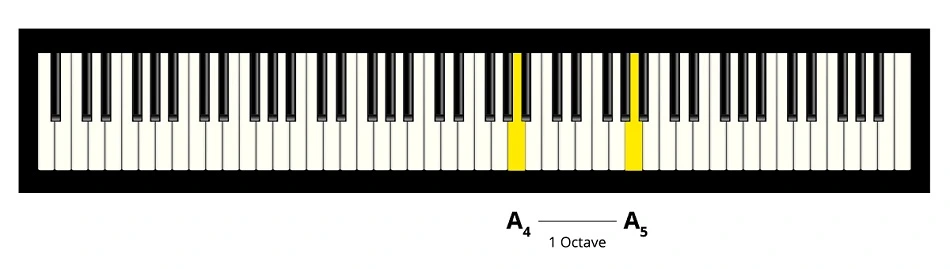
What Is an Octave on a Piano?
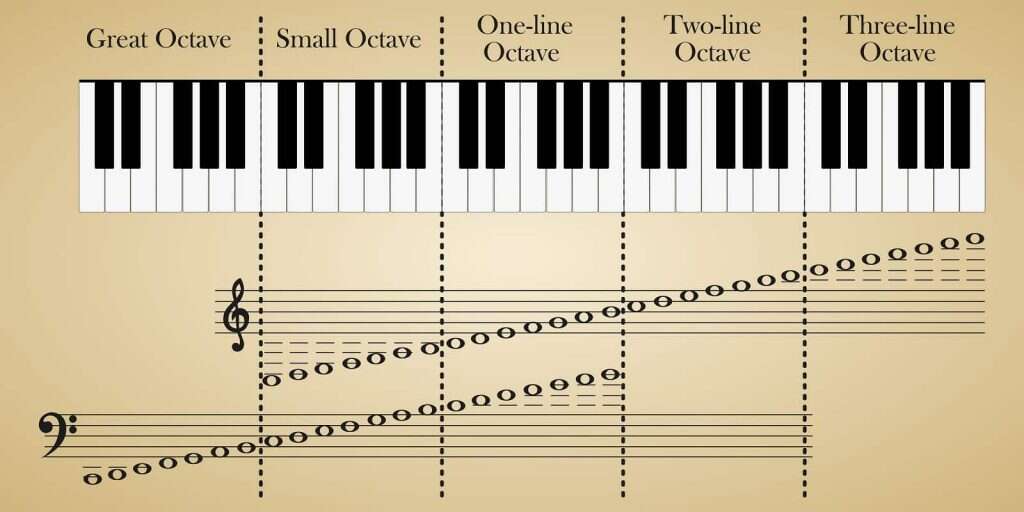
An octave is the distance between one musical note and the next note with the same name. For example, the distance from one C to the next C is one octave.
Each octave contains 12 semitones:
• Seven white keys
• Five black keys
• Twelve total notes
On a piano, octaves move from low pitches on the left to high pitches on the right. The left side sounds deep and warm, while the right side sounds bright and clear.
The word “octave” comes from the Latin word for eight. This refers to the eight note names in a major scale, such as C, D, E, F, G, A, B, and the next C.
When people ask how many octaves does a piano have, they often mean the total pitch span from the lowest key to the highest key. That measurement is slightly different from simply counting groups of 12 keys.

How Many Octaves Does a Standard Piano Have?
A standard modern piano has 88 keys and covers 7¼ octaves. Its lowest note is A0, and its highest note is C8.
The full range includes:
• 52 white keys
• 36 black keys
• 88 keys in total
• 7 full octaves plus a minor third
• 12 semitones per octave
The range from A0 to C8 is not exactly eight complete octaves. It begins three semitones above the lowest C and ends on C8. For this reason, the most accurate description is 7¼ octaves.
Still, many people casually say that an 88-key piano has about eight octaves. This is understandable, but 7¼ octaves is the precise answer to how many octaves does a piano have.
A piano’s range is much wider than the human speaking voice. It can support deep bass lines, rich chords, delicate melodies, and bright high notes on the same instrument.

Why Does an 88-Key Piano Have 7¼ Octaves?
The 88-key design became widely accepted because it gives players a broad musical range without making the instrument too large for normal use.
An 88-key piano begins at A0 instead of C0. It also ends at C8. If it began at C0 and ended at C8, it would cover eight full octaves and require more keys.
The extra lower keys would make the piano longer and heavier. They would also add notes that most traditional piano music does not need. The 88-key layout offers a practical balance between musical range, instrument size, and cost.
The lowest note, A0, vibrates at about 27.5 hertz. The highest note, C8, vibrates at about 4,186 hertz. That is a very wide range of sound, stretching from a low rumble to a sharp, bell-like tone.
This is one reason the piano remains so useful. It can imitate the range of several instruments at once.
Piano Octaves by Key Count
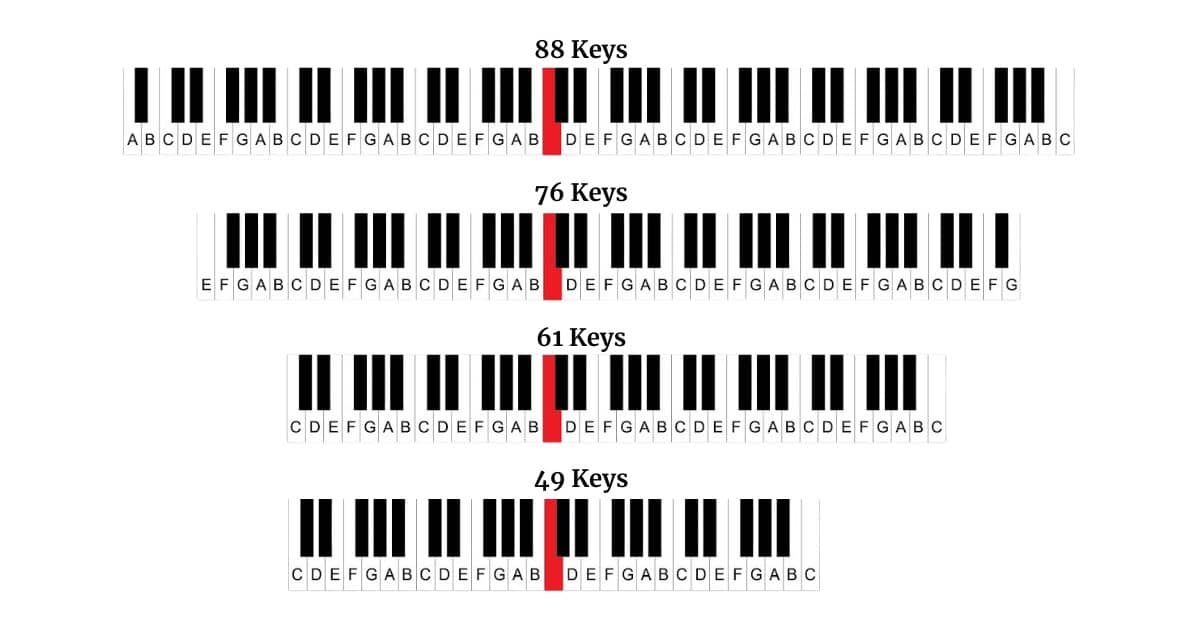
Not every piano has 88 keys. Many portable keyboards, beginner digital pianos, and compact instruments use shorter layouts.
Here is a general guide:
| Key count | Approximate range |
|---|---|
| 25 keys | 2 octaves |
| 32 keys | 2½ octaves |
| 37 keys | 3 octaves |
| 49 keys | 4 octaves |
| 54 keys | 4½ octaves |
| 61 keys | 5 octaves |
| 76 keys | 6¼ octaves |
| 88 keys | 7¼ octaves |
| 92 to 97 keys | About 7½ to 8 octaves |
These figures are approximate because the exact range depends on the lowest and highest notes. A 61-key keyboard may begin and end at different notes from another 61-key model.
For example, a 61-key keyboard may cover five octaves if it starts at C2 and ends at C7. A different model may shift its range to include more bass or treble notes.
The key count alone does not tell you everything. Always check the lowest and highest note listed by the manufacturer.
How Many Octaves Does a 61-Key Keyboard Have?
A typical 61-key keyboard has five octaves. It usually includes 36 white keys and 25 black keys.
Many 61-key keyboards begin at C and end at C. This creates exactly five complete octave spans from the first C to the last C.
A 61-key instrument works well for:
• Beginners
• Pop and rock players
• Music producers
• Small home studios
• Portable performances
• Basic chord and melody practice
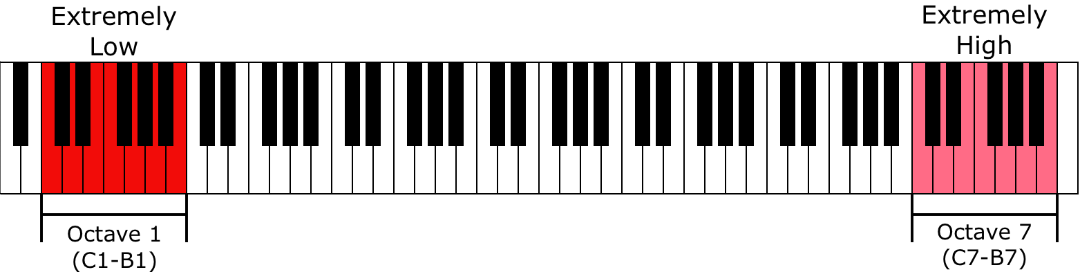
However, it may not have enough range for advanced classical pieces. Some piano works use very low bass notes or very high treble notes that sit outside a 61-key keyboard.
Most electronic keyboards solve this with an octave shift button. You can move the entire keyboard up or down by one or more octaves, but you cannot play notes from both distant ranges at the same time.

How Many Octaves Does a 76-Key Piano Have?
A 76-key piano or keyboard usually covers about 6¼ octaves. It provides more range than a 61-key model while staying smaller than a full 88-key piano.
A 76-key layout often suits:
• Intermediate pianists
• Musical theater players
• Church musicians
• Singer-songwriters
• Jazz performers
• Players who need portability
The extra 15 keys can make a real difference. You gain more room for left-hand bass notes and right-hand melody lines without using the octave shift function as often.
For many players, 76 keys offer a comfortable middle ground. Yet students preparing for advanced classical exams may still benefit from the full 88-key range.

Do All Pianos Have the Same Number of Octaves?
No. Pianos vary in key count and pitch range.
Most modern upright and grand pianos have 88 keys. Smaller historical pianos often had fewer keys because piano design evolved over time. Early instruments could have five or six octaves, while later instruments gradually gained more notes.
Some modern concert pianos have more than 88 keys. The best-known extended designs reach down to C0 and provide an eight-octave range. These instruments add extra bass keys for composers and performers who want deeper resonance.
Examples include:
• Small spinets with fewer than 88 keys
• 61-key digital keyboards
• 76-key stage pianos
• Standard 88-key acoustic and digital pianos
• Extended concert grands with up to 97 keys
Extra bass keys are not common in everyday piano music. They are most useful in certain modern compositions and for creating a deeper, fuller sound.

The Difference Between Octaves and Piano Keys
Keys and octaves are related, but they are not the same thing.
One complete octave contains 12 semitones. On a piano, those semitones appear as seven white keys and five black keys. However, a piano range can begin or end in the middle of an octave.
An 88-key piano is a good example. It starts at A0, which is not the beginning of a full octave. It ends at C8, so the total span includes seven complete octaves plus three extra semitones.
This explains why the answer to how many octaves does a piano have is 7¼ rather than eight.
Think of the keyboard as a ruler. The octaves are marked sections, but the ruler may start or stop before a full section is complete.
Why Piano Octave Range Matters
A piano’s octave range affects what you can play and how naturally you can play it.
A wider range gives you more space for:
• Bass notes
• Treble melodies
• Wide chord voicings
• Large musical arrangements
• Classical repertoire
• Two-handed independence
A smaller keyboard can still be useful. It may be easier to carry, less expensive, and less intimidating for a new player. The limitation appears when a song uses notes beyond the instrument’s range.
In my practical approach to comparing keyboard layouts, the most common mistake is focusing only on price. A compact keyboard may seem like a bargain, but replacing it later can cost more than choosing the right range at the start.