How Wide Is a Piano Keyboard: Sizes Explained
A standard piano keyboard is about 58 to 61 inches wide, while compact digital models can be much narrower.
Knowing how wide is a piano keyboard helps you plan a music room, choose a stand, move an instrument, or pick the right digital piano. The exact size depends on the number of keys, the key design, and the case around the keyboard. This guide explains standard piano dimensions, common keyboard sizes, measuring tips, and space needs in clear terms.
How Wide Is a Piano Keyboard?
A full-size 88-key piano keyboard is usually about 58 to 61 inches wide. This range applies to many acoustic pianos and full-size digital pianos.
The keys themselves take up most of the width. The case, side panels, control area, and speaker housing add extra space. That is why the total keyboard width is wider than the visible span of the white keys.
A typical 88-key keyboard may measure:
• 58 inches wide, or about 147 centimeters
• 60 inches wide, or about 152 centimeters
• 61 inches wide, or about 155 centimeters
Some slim digital pianos are only 50 to 55 inches wide. They use a smaller case and may place speakers above or below the keys.
So, how wide is a piano keyboard in practical terms? For room planning, allow at least 5 feet of wall space for the instrument itself. Add more room if you need a bench, music stand, speakers, or space to sit comfortably.
Standard 88-Key Piano Dimensions
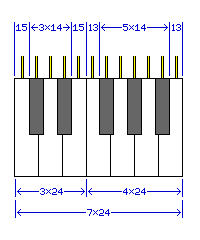
An 88-key piano has 52 white keys and 36 black keys. This is the standard range found on concert grands, upright pianos, and most advanced digital pianos.
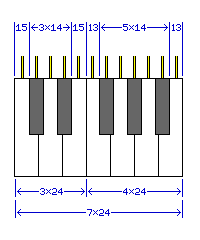
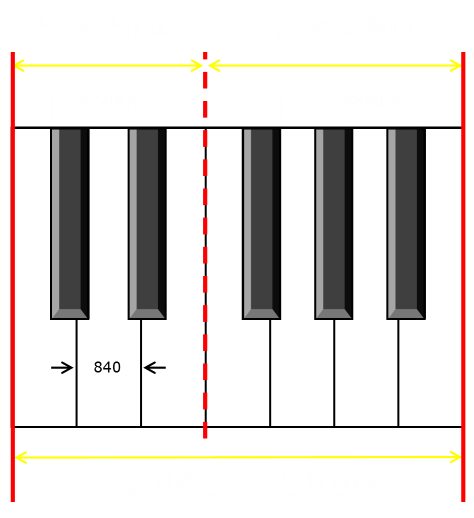
The white keys usually measure close to 0.9 inches wide. However, the keys are arranged in a staggered pattern, so the total key section is not calculated by simply multiplying every key by its full width.
The playable key area often spans about 48 to 49 inches. The piano body then adds several inches on both sides.
Typical full-size dimensions include:
• Width: 58 to 61 inches
• Depth of an upright piano: 20 to 30 inches
• Depth of a digital piano: 10 to 16 inches
• Height of an upright piano: 36 to 52 inches
• Height of a digital piano on a stand: 30 to 36 inches
A concert grand piano may have the same 88-key layout but a much greater depth. Its width can still fall near 60 inches, although the curved body makes the instrument feel much larger in the room.

How Wide Are Different Piano Keyboard Sizes?
Not every keyboard has 88 keys. Smaller models are common for beginners, children, performers, and producers who need an easy-to-carry instrument.
Here is a general guide to common keyboard widths:
| Number of keys | Approximate width |
|---|---|
| 25 keys | 15 to 20 inches |
| 32 keys | 20 to 24 inches |
| 37 keys | 22 to 27 inches |
| 49 keys | 29 to 34 inches |
| 61 keys | 36 to 42 inches |
| 76 keys | 45 to 51 inches |
| 88 keys | 50 to 61 inches |
These measurements are estimates. A keyboard with large built-in speakers may be wider than a model with the same number of keys and a slim design.
A 61-key keyboard is often wide enough for basic chords, melodies, and many modern songs. A 76-key model gives players more bass and treble range. An 88-key piano provides the full traditional range used in classical music and advanced piano study.

Why Piano Keyboard Width Varies
Two keyboards can have the same number of keys but different widths. Several design choices affect the final measurement.
Key size
Most acoustic pianos use full-size keys. Many portable keyboards also use full-size keys, but some compact models use narrow keys to reduce width.
Narrow keys can help children and traveling musicians. They may feel less natural to an adult who has trained on a standard acoustic piano.
Side panels and controls
A keyboard with large end blocks, wheels, screens, knobs, or speakers needs more width. A simple digital piano may keep the outer case close to the keybed.
Speaker placement
Built-in speakers often sit on the left and right sides of a digital piano. This can add several inches to the instrument’s total width.
Key action
Weighted hammer-action keys often require a deeper and stronger case. The key width may remain standard, but the body can become larger and heavier.
Acoustic piano construction
An acoustic piano needs space for strings, tuning pins, dampers, and the action. Its case is built around those parts, so it usually takes up more room than a portable keyboard.

How Wide Is a Piano Keyboard Compared With a Digital Piano?
An acoustic upright piano is commonly 58 to 61 inches wide. A digital piano with 88 full-size keys may be 50 to 58 inches wide.
This difference can matter in a small apartment or bedroom. A digital model may fit where an upright piano cannot, especially when the digital piano has a narrow stand and no large side cabinet.
Still, width is only one part of the space calculation. You should also check:
• Depth from the wall
• Height under shelves or windows
• Bench clearance
• Cable space
• Door and hallway width
• Room for your arms and legs
A portable 88-key keyboard may be easy to carry, but its separate stand can change the total footprint. Measure the keyboard and stand together rather than relying on the keyboard width alone.

How Much Room Does a Piano Keyboard Need?
A full-size piano keyboard needs more than the width of its case. The player also needs space to sit, move, and use the pedals.
For comfortable use, plan for:
• At least 60 to 64 inches of wall width
• About 30 inches of depth for the keyboard and bench area
• Around 36 inches of open space in front of the keys
• Extra room for pedals and leg movement
• A small gap from the wall for cables and ventilation
A narrow room can still work. Place the keyboard against the longest wall, keep the bench centered, and avoid blocking a doorway.
The ideal layout feels open when you play. If your knees touch a desk or your elbows hit a wall, the keyboard may technically fit but still be poorly placed.
Measuring a Piano Keyboard Correctly
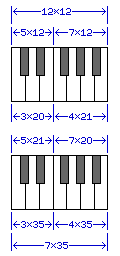
Manufacturers may list the width in inches or millimeters. Product pages can also list the keyboard width without the stand, music rest, or side speakers.
Use this simple method:
- Measure from the far left edge to the far right edge.
- Include side panels and built-in controls.
- Check whether the music rest extends beyond the case.
- Measure the stand at its widest point.
- Add room for cables, pedals, and a bench.
- Compare the full measurement with your doorway and wall space.
For an existing piano, use a tape measure rather than estimating from the number of keys. Small differences in case design can change the total width by several inches.
When moving an acoustic piano, also measure every doorway, corner, stairway, and elevator. A piano that fits along one wall may not fit through the path needed to reach that wall.

How Wide Is a Piano Keyboard for Small Spaces?
If space is limited, a 61-key keyboard is often a practical choice. It is usually 36 to 42 inches wide and can fit on a desk or small stand.
A 49-key keyboard may be better for music production, travel, or simple lessons. It often measures around 29 to 34 inches wide.
For serious piano study, an 88-key digital piano remains the better choice. Look for a slim model with full-size keys, a compact speaker layout, and a narrow stand.
Useful small-space options include:
• A portable 61-key keyboard
• A slim 88-key digital piano
• A wall-facing console digital piano
• A folding keyboard stand
• A keyboard with detachable music support
Do not choose a keyboard based on width alone. Key feel, sound quality, pedal support, and warranty service also affect long-term value.
Full-Size Keys Versus Narrow Keys
Full-size piano keys are close to the dimensions used on acoustic pianos. They give your fingers a familiar spacing and support proper hand movement.
Narrow keys reduce the total width. They can make large chords easier for small hands, but they may require adjustment for anyone used to a traditional piano.
Full-size keys are usually best for:
• Classical piano study
• Exam preparation
• Hand technique practice
• Playing acoustic piano later
• Players who want a familiar feel
Narrow keys may suit:
• Young children
• Travel keyboards
• Compact home studios
• Portable practice setups
• Basic melody and chord work