How Do You Read Piano Tabs: Easy Beginner Guide
You read piano tabs by matching letters, numbers, timing marks, and hand positions to the piano keys.
If you are new to piano, learning how do you read piano tabs can feel much easier than learning standard sheet music. Piano tabs use simple symbols to show which notes to play, when to play them, and how the left and right hands work together. This guide explains each symbol, walks through real examples, and shares practical tips that help beginners play songs with confidence.
What Are Piano Tabs?
Piano tabs are a simplified way to write music for a keyboard or piano. They usually show note names, numbers, chords, or keyboard layouts instead of using a traditional five-line staff.
Most piano tabs are made for popular songs, video game music, movie themes, and online tutorials. They can help you start playing quickly, but they may not show every detail found in sheet music.
When learning how do you read piano tabs, think of them as a map. The letters tell you which keys to press, while the spacing and symbols help show the order and rhythm.
How Do You Read Piano Tabs Step by Step?
The exact format can change from one website or app to another. Still, most piano tabs use the same basic ideas.
1. Find the note names
Piano tabs often use the seven letter names:
• A
• B
• C
• D
• E
• F
• G
After G, the pattern starts again at A. These letters match the white keys on the piano.
For example:
C D E F G
This means you play the white keys C, D, E, F, and G in that order.
2. Identify the octave
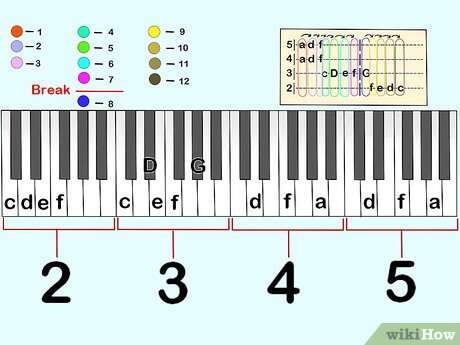
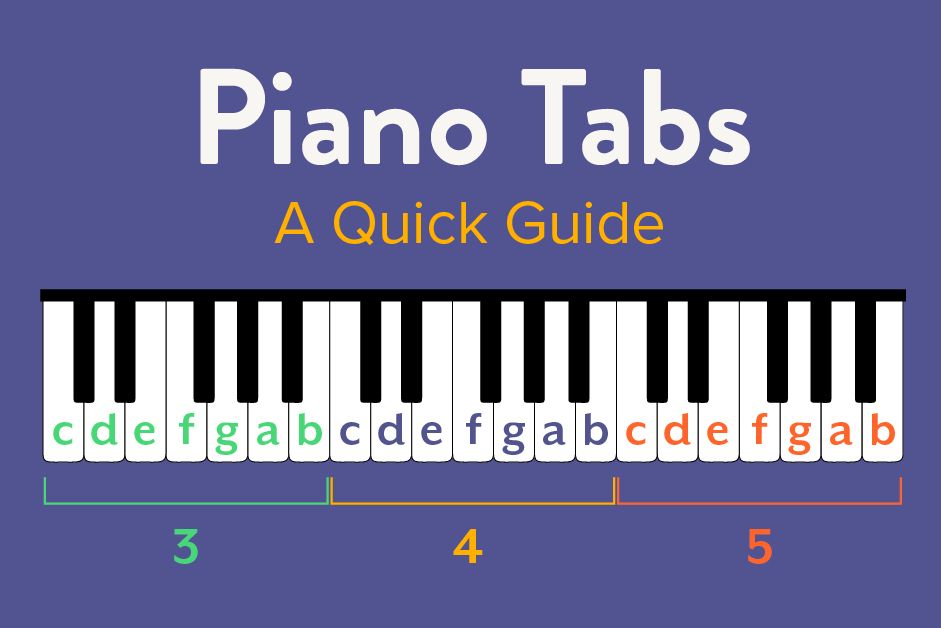
A piano has several versions of the same note. For example, you may see C3, C4, or C5. The number tells you the octave, or the area of the keyboard where the note appears.
Middle C is commonly labeled C4 in scientific pitch notation. It sits near the center of a full piano keyboard.
If a tab does not show octave numbers, look for clues such as:
• “Low C” or “high C”
• A diagram of the keyboard
• Separate lines for the left and right hand
• Capital and lowercase letters
• Notes placed higher or lower on the page
When learning how do you read piano tabs, octave numbers are important because the same letter can sound much higher or lower in different positions.
3. Follow the note order
Read the notes from left to right unless the tab gives another instruction. For example:
C D E G E D C
Play C, then D, then E, then G, and return to E, D, and C.
Some tabs place each hand on its own line:
Right hand: C D E G
Left hand:  C     G
In this example, the right hand plays the melody. The left hand plays lower notes that support it.
4. Watch for notes played together
Notes written in brackets or stacked vertically are often played at the same time.
[C E G]
This usually means you play C, E, and G together. These three notes form a C major chord.
A tab may also write a chord name:
C G Am F
This tells you which chord to play during each section. You can play the chord with your left hand while using your right hand for the melody.
5. Notice repeated notes and sections
Tabs often use symbols such as:
• x2, which means repeat twice
• R, which means repeat
• |: and :|, which mark a repeated section
• Verse, chorus, bridge, or intro, which identify song sections
For example:
C D E F | C D E F | x2
Play the pattern two times.

Understanding Piano Tab Symbols
Piano tabs do not follow one universal system. This is one of their main limits. A tab from one site may use different symbols from a tab on another site.
Before you begin, check whether the page includes a key or legend. A legend explains what each symbol means.
Common piano tab symbols
| Symbol | Common meaning |
|---|---|
| C, D, E | Natural note names |
| C# or Db | A black key |
| [C E G] | Notes played together |
| C4 | C in the fourth octave |
| x2 | Repeat two times |
| S or sustain | Hold the note |
| / | Slide upward or move higher |
| \ | Move downward |
| RH | Right hand |
| LH | Left hand |
Sharp and flat notes can look different. C# and Db refer to the same piano key in most modern music, although their names depend on the musical key.
On a keyboard, black keys are named with sharps or flats. For example, the black key between C and D can be called C# or Db.
Dashes and spaces
Some tabs use dashes to show that a note should continue:
C--- D--- E
This may mean that C and D are held longer than E. However, dashes are not always precise. The tab may not tell you whether a note lasts two beats, four beats, or simply fills the space.
Spacing can also suggest timing:
C D E G
Even spacing may mean the notes are played evenly. Uneven spacing may suggest different note lengths, but you should confirm this with the song.

How Piano Tabs Show Rhythm
Rhythm is often the hardest part of learning how do you read piano tabs. Many tabs show the correct notes but give only limited timing information.
Standard sheet music uses note values, rests, time signatures, and measures. Piano tabs may use simpler clues.
Common rhythm clues
• Numbers may count beats: 1, 2, 3, 4
• Slashes may separate measures
• Dashes may show held notes
• Extra spaces may suggest longer gaps
• Chord names may change when the harmony changes
• Audio or video may demonstrate the exact timing
For example:
Count: 1   2   3   4
Notes: C   C   G   G
Play one note on each count.
Another example:
Count: 1   2   3   4
Notes: C-------    G
This may mean you hold C for three beats, then play G on beat four. Since tab writers use different systems, listen to the original song when the timing is unclear.
A metronome can help. Start slowly at about 50 to 60 beats per minute. Play each note evenly before increasing the speed.

How to Read Piano Tabs With Both Hands
Many beginners can play a right-hand melody but struggle when the left hand joins in. The best approach is to separate the tasks.
Start with the right hand. Learn the melody until you can play it without stopping. Then practice the left-hand notes alone. Finally, combine both hands at a slow speed.
For example:
Right hand: C  D  E  G
Left hand:  C     G
The right hand plays four melody notes. The left hand plays C at the start and G later.
Try this process:
- Circle or mark the right-hand notes.
- Find the starting position for each hand.
- Practice each hand alone.
- Count aloud while playing.
- Combine the hands at half speed.
- Repeat small sections instead of the whole song.
- Increase the speed only when the notes feel secure.
One useful lesson from beginner piano practice is that slow playing is not wasted time. It builds control. Playing too fast often hides mistakes until they become habits.

How to Read Chords in Piano Tabs
Chords are groups of notes played together. They provide harmony and make a simple melody sound fuller.
Here are several common piano chords:
C major:  C E G
F major:  F A C
G major:  G B D
A minor:  A C E
If a tab shows:
C F G C
You may play one chord during each section. The exact rhythm depends on the song.
Basic chord symbols
• C means C major
• Cm means C minor
• C7 means C dominant seventh
• Cmaj7 means C major seventh
• Cadd9 means C major with an added ninth
• C/E means a C chord with E in the bass
You do not always need to play every chord note at once. A beginner arrangement may use the root note in the left hand and the full chord in the right hand.
For example:
Left hand:  C
Right hand: C E G
This creates a clear C major sound.
When learning how do you read piano tabs, do not worry about advanced chord names at first. Learn major, minor, and seventh chords before studying more complex shapes.

Piano Tabs vs. Sheet Music
Piano tabs and sheet music both help you play songs, but they communicate music in different ways.
| Piano tabs | Standard sheet music |
|---|---|
| Easy for many beginners | Takes longer to learn |
| Often uses letters and chords | Uses notes on a musical staff |
| May show less rhythm detail | Shows rhythm in a precise system |
| Common for popular songs | Used across formal music training |
| Can be quick to read | Gives more complete musical information |
Piano tabs are useful when you want to learn a song quickly. They can also reduce the fear that some beginners feel when first seeing a page of sheet music.
However, tabs may not show dynamics, exact rhythm, fingering, articulation, or pedal use. They are best viewed as a starting tool rather than a complete replacement for music notation.
A strong long-term approach is to use tabs for quick results while slowly learning standard notation. This gives you both speed and accuracy.
How to Read Piano Tabs From Online Videos
Online videos often show piano tabs in a falling-note format. Colored bars move toward a keyboard at the bottom of the screen. When a bar reaches the key, you play that note.
These videos are visual, so they can be easy to follow. They also show rhythm more clearly than many written tabs.
To use one well:
• Pause the video often
• Reduce the playback speed
• Learn one short phrase at a time
• Watch the hand position, not only the falling notes
• Check whether the colors represent the left or right hand
• Practice without the video after learning the pattern
Do not depend on memory alone. Write down the note names or starting positions when needed.
Some online arrangements may also simplify the original song. That is not a problem, but remember that a beginner version may not include every note from the recording.

Common Mistakes When Reading Piano Tabs
Learning how do you read piano tabs becomes easier when you avoid a few common errors.
Starting too fast
Speed can make a song feel exciting, but it also makes mistakes harder to correct. Begin slowly and use a metronome.
Ignoring octaves
Playing the right letter in the wrong octave can make the melody sound completely different. Always check the note range before you begin.
Treating every tab as exact
Tabs vary in quality. Some are carefully arranged, while others contain wrong notes or unclear timing. Compare difficult parts with a reliable recording.
Using only one hand
A melody may sound thin without the left hand. Practice simple bass notes or chords once the right hand feels comfortable.
Forgetting rhythm
Correct notes with incorrect timing still sound wrong. Count aloud, tap the beat, or play along with a slow recording.
Looking only at your fingers
Try to look ahead at the next notes. This helps you move smoothly and reduces sudden pauses.
Depending on letter names forever
Letter tabs are useful, but learning note positions and basic sheet music will help you progress further.

A Simple Practice Plan for Beginners
You can learn how do you read piano tabs with a short daily routine. Even 15 minutes can help if you practice with focus.
Five-minute warm-up
Play the white keys from C to G and back. Keep your fingers relaxed and use a steady beat.
Five-minute tab reading
Choose two or four measures. Read the notes slowly with your right hand. Then repeat them without looking at the tab.
Five-minute coordination
Add the left hand. Use only one bass note or a simple chord at first.
Weekly progress check
At the end of the week, record yourself playing the section. Listen for uneven timing, missed notes, and tense hands.
A recording gives you feedback that you may miss while playing. It also makes progress easier to notice, which can keep practice encouraging.
Are Piano Tabs Good for Beginners?
Piano tabs can be very good for beginners because they reduce the amount of information you must learn at once. You can start with note names, basic rhythms, and simple chords.
Their main weakness is that they may leave out important details. A tab may not explain fingering, dynamics, pedal use, or exact note length.
Use piano tabs when:
• You want to learn a favorite song quickly
• You are not ready for full sheet music
• You prefer visual learning
• You want to practice chords and melodies
• You are using a video tutorial
Move toward sheet music when:
• You want to play classical pieces
• You need exact rhythm and expression
• You plan to study music theory
• You want to sight-read new music
• You need a complete musical arrangement
The most effective path is not tabs versus sheet music. It is tabs first, then broader reading skills as your confidence grows.
Frequently Asked Questions About How Do You Read Piano Tabs
Are piano tabs the same as guitar tabs?
No. Guitar tabs usually use six lines that represent guitar strings. Piano tabs more often use note letters, chords, keyboard diagrams, or falling-note visuals.
Do piano tabs show rhythm?
Sometimes. They may use spacing, dashes, counts, or video timing, but many tabs do not show rhythm as precisely as standard sheet music. Listening to the song can help you understand unclear timing.
What do numbers mean in piano tabs?
Numbers may identify octaves, finger numbers, beats, or the order of notes. Always check the tab’s legend because the meaning changes between formats.
Can I learn piano using only tabs?
You can learn many songs with tabs, especially simple melodies and chord patterns. For stronger long-term skills, also learn basic rhythm, note reading, fingering, and music theory.
What does C4 mean in a piano tab?
C4 usually means the C note in the fourth octave. In common scientific pitch notation, C4 is middle C, although some systems may label octaves differently.
How do I know which hand to use?
The tab may label parts as RH for right hand and LH for left hand. If no hand is listed, higher notes are usually played with the right hand and lower notes with the left.
What should I do if a piano tab sounds wrong?
Check the octave, rhythm, and accidental symbols such as sharps and flats. If the problem remains, compare the tab with a trusted recording or another arrangement.
Conclusion
Learning how do you read piano tabs starts with a few simple skills: recognize note letters, find the correct octave, follow the order, understand chords, and keep a steady rhythm. Practice each hand alone before combining them, and use slow repetition to build control.
Piano tabs are a helpful entry point, but they work best when paired with listening and basic music reading. Choose a short song section today, practice it slowly for 15 minutes, and record your progress. Then explore more piano tutorials and share the first song you learn.

Senior Music Reviewer
Alex Carter is a seasoned music reviewer with over a decade of experience in the world of sound and instruments. Passionate about helping musicians and enthusiasts make informed choices, he brings sharp insights and in-depth knowledge to every review. From classical instruments to modern gear, Alex combines technical expertise with a love for music to deliver content that resonates with readers.
As a Senior Music Reviewer and expert author on Tuneluma.com, Alex is dedicated to sharing honest evaluations, practical advice, and thoughtful commentary to guide readers in their musical journey.