How Do You Clean A Guitar Fretboard: Easy Safe Guide
To clean a guitar fretboard, remove the strings, wipe away dirt, use the right conditioner, and let the wood dry fully.
A clean fretboard feels smoother, looks better, and helps your strings stay fresh. However, the best method depends on the fretboard wood, finish, and amount of grime. After years of guitar maintenance, I have learned that gentle cleaning works better than strong products or heavy scrubbing. This guide explains how do you clean a guitar fretboard safely, including what to use, what to avoid, and how often to repeat the process.

Why You Should Clean a Guitar Fretboard
Your fingers leave behind sweat, skin oil, dust, and dirt every time you play. That residue can build up around the frets and create a sticky feel. Over time, it may also make strings sound dull and cause the fretboard to look dry.
Learning how do you clean a guitar fretboard helps protect both comfort and appearance. A clean board lets your fingers move with less drag. It also makes it easier to spot fret wear, loose inlays, cracks, or other problems.
Cleaning does not mean soaking the wood or polishing it until it shines. A fretboard is more like a wooden table than a piece of glass. It needs careful handling, light moisture, and the right product for its finish.
Clean your fretboard when:
• The board feels sticky or rough
• Dirt has built up beside the frets
• The wood looks unusually dry
• You are changing all the strings
• Your guitar has been stored for a long time
• You notice dark grime under your fingertips

Identify Your Guitar Fretboard Wood
Before you learn how do you clean a guitar fretboard, identify the type of wood or finish. Different boards need different care. Using an oil on the wrong surface can cause stains, dullness, or finish damage.
Rosewood, ebony, and pau ferro
Rosewood, ebony, and pau ferro fretboards are often unfinished or lightly sealed. These woods can usually accept a small amount of fretboard conditioner. They still need only a thin coat.
Rosewood often has a warm brown color with visible grain. Ebony is usually very dark and smooth, while pau ferro may range from light brown to reddish brown. Color alone is not always enough for identification, so check your guitar’s specifications or ask the maker.
Finished maple
Most maple fretboards have a clear finish over the wood. The finish creates a barrier, so the board should be cleaned with a slightly damp cloth only. Do not apply standard fretboard oil unless the guitar maker specifically recommends it.
Finished maple may feel smooth and glossy. Dirt often collects along the fret edges, where it can look like a dark line. A soft cloth or cotton swab can remove this grime without harming the finish.
Unfinished maple
Unfinished maple is less common and needs extra care. It can absorb moisture and oil more easily than finished maple. Use a dry or barely damp cloth first, and choose a product only after confirming the manufacturer’s advice.
Check before cleaning
Look for these signs:
• A glossy surface usually suggests a finished board
• Visible open grain may suggest unfinished wood
• A product label or owner’s manual may identify the finish
• A guitar repair shop can confirm the wood and finish
If you are unsure, use the least aggressive method. A dry microfiber cloth is safer than guessing with oil.

What You Need to Clean a Guitar Fretboard
You do not need a large repair kit. A few simple tools can clean most fretboards safely.
Gather:
• A clean microfiber cloth
• A second soft cloth for drying
• A guitar-safe fretboard cleaner or conditioner
• A soft toothbrush or small detailing brush
• Cotton swabs
• A string winder and wire cutters
• Painter’s tape or a fretboard guard
• A small amount of naphtha for stubborn grime, if appropriate
Naphtha is used by many repair technicians to remove sticky residue from unfinished boards. Use it only in a well-ventilated area, keep it away from flames, and follow the product’s safety directions. Do not pour it directly onto the guitar.
Avoid these products:
• Household furniture polish
• Olive oil, coconut oil, or cooking oil
• Silicone-based sprays
• Rubbing alcohol
• Water-based cleaners used in large amounts
• Abrasive kitchen sponges
• Paper towels that can leave lint
• Steel wool near magnetic pickups
Pure lemon oil is also a poor choice. The name can be misleading because many products sold as lemon oil are mineral-oil blends, while real lemon oil can contain compounds that may harm wood or finishes. Choose a product made for guitar fretboards instead.

How Do You Clean a Guitar Fretboard Step by Step?
The safest answer to how do you clean a guitar fretboard is to work slowly and use as little liquid as possible. Most damage comes from excess moisture, harsh chemicals, or forceful scrubbing.
1. Prepare a safe work area
Place the guitar on a padded bench, table, or guitar neck rest. Keep the headstock supported. Remove nearby objects that could scratch the finish.
Wash and dry your hands before starting. This may seem minor, but clean hands prevent new oil from spreading across the board.
2. Remove the strings
If the fretboard needs a full cleaning, remove all the strings. This gives you clear access to the area between the frets.
Change one string at a time if you only want to wipe the board lightly and keep the neck under normal tension. For heavy grime, removing all strings is easier and more thorough.
Do not leave old strings loose across the guitar while you work. Their ends can scratch the finish or catch on hardware.
3. Protect the guitar
Cover the pickups with a clean cloth or painter’s tape. This is especially important if you plan to polish the frets. Fine metal particles can stick to pickup magnets.
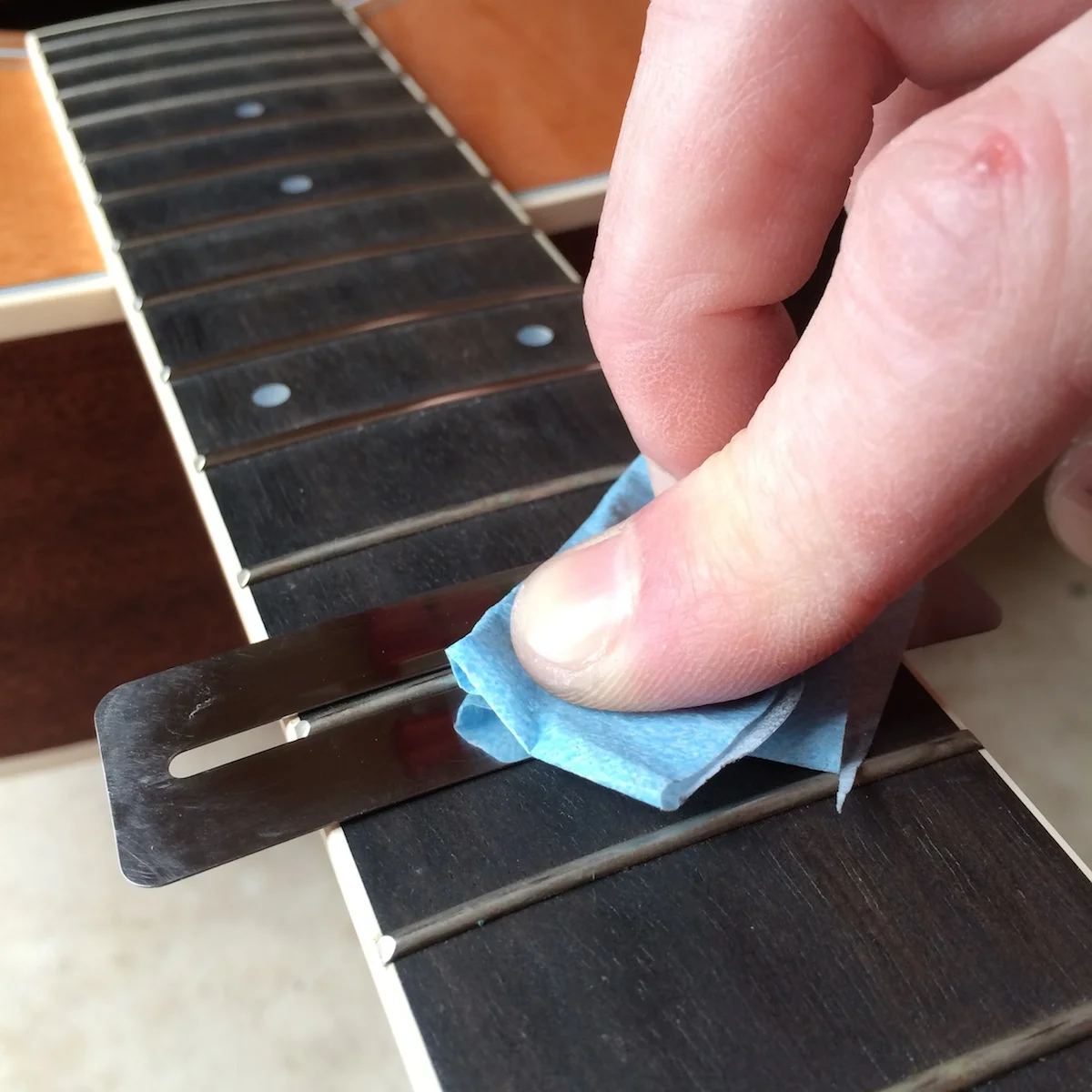
Use a fretboard guard around each fret if you are cleaning or polishing metal frets. A thin piece of cardboard can work in a pinch, but a proper guard is safer and easier.
4. Remove loose dirt
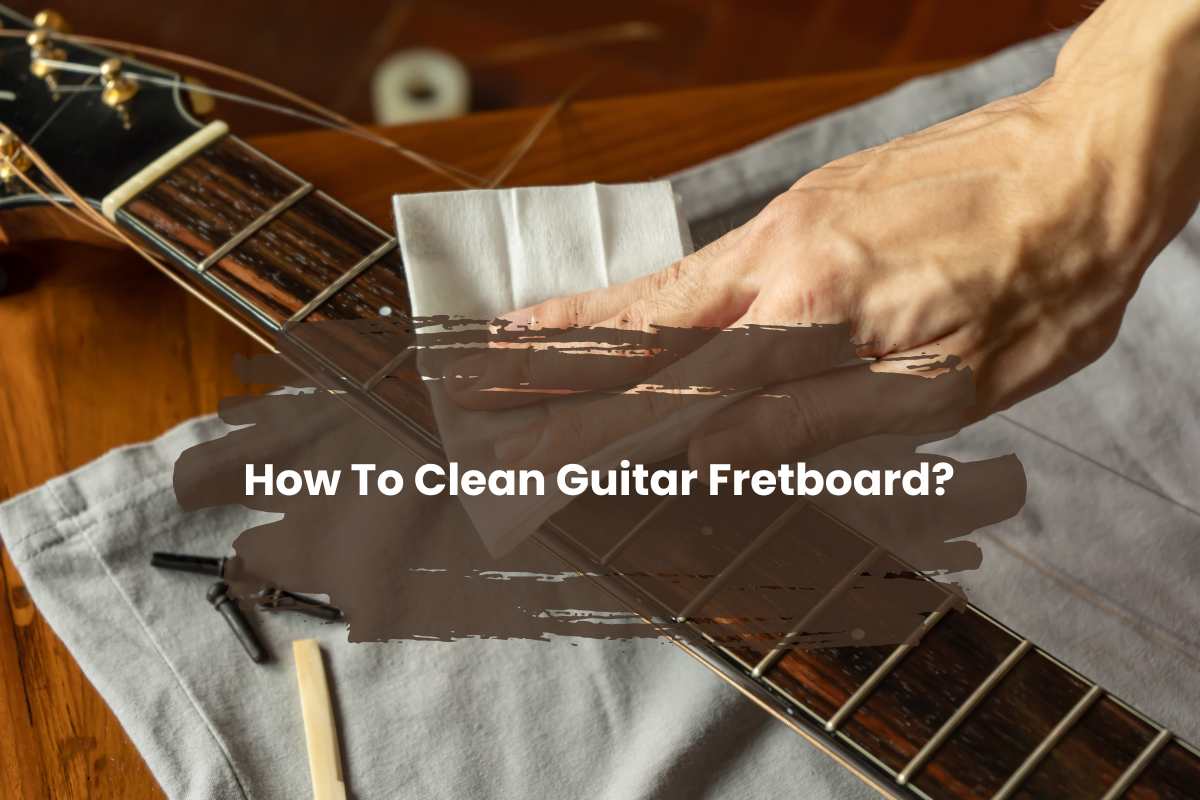
Wipe the entire board with a dry microfiber cloth. Use short strokes that follow the length of the fretboard.
For dirt beside the frets, use a soft toothbrush. Brush gently along the fret edges, then wipe away the loose dust. Do not dig into the wood with a pick, knife, or metal tool.
5. Clean the surface
For a finished maple fretboard, slightly dampen a cloth with water and wring it out well. The cloth should feel almost dry. Wipe a small area, then dry it at once.
For an unfinished rosewood, ebony, or pau ferro board, apply a small amount of guitar-safe cleaner to the cloth rather than directly to the wood. Clean one small section at a time.
This careful method answers how do you clean a guitar fretboard without flooding it. The wood should never look wet or have liquid sitting around the frets.
6. Remove stubborn buildup
If grime remains, place a small amount of suitable cleaner on a cloth or cotton swab. Let the product soften the residue for a moment, then wipe gently.
For very stubborn dirt on an unfinished board, a repair technician may use fine synthetic abrasive pads or carefully controlled naphtha. Home users should avoid aggressive abrasion unless they understand the risks.
7. Apply conditioner only when needed
Once the fretboard is clean and dry, apply a very thin layer of guitar fretboard conditioner if the wood is unfinished and the product is suitable.
Wait a few minutes according to the label. Then remove all excess with a dry cloth. The board should feel smooth, not oily.
A conditioner will not repair cracks, fix loose frets, or restore severely damaged wood. It only adds a small amount of surface moisture and improves the feel.
8. Clean and inspect the frets
A dirty fretboard often makes the frets look dull. You can polish the frets with a fret guard and a product designed for guitar frets.
Use gentle pressure and keep metal polish away from the wood. If the frets have deep grooves, sharp edges, or uneven height, cleaning will not solve the problem. That work belongs to a qualified guitar technician.
9. Install fresh strings
After the board is clean, install a new set of strings. Wipe each string with a dry cloth after playing to reduce future buildup.
Tune the guitar gradually. A full string change can slightly alter neck relief, especially on guitars with different string gauges. If the action changes or the neck feels unusual, allow the instrument to settle before making adjustments.

How to Clean a Guitar Fretboard Without Removing the Strings
Sometimes you need a quick wipe but do not want to restring the guitar. In that case, loosen one string at a time or slide a cloth under the strings.
Use this method:
-
Loosen one string just enough to move it aside.
-
Wipe the exposed section with a dry microfiber cloth.
-
Clean around the fret with a cotton swab.
-
Move to the next string.
-
Return each string to its normal position.
This method works for light dust and fresh finger oil. It will not remove thick grime across the whole fretboard. For a deep clean, removing the strings remains the better option.
When I clean a guitar fretboard during a quick setup, I often use this approach between full string changes. It keeps the board comfortable without adding unnecessary moisture. The key lesson is simple: routine wiping prevents the need for harsh cleaning later.

How Often Should You Clean a Guitar Fretboard?
The right schedule depends on your playing habits, skin chemistry, climate, and storage. A player who practices every day may need more frequent cleaning than someone who plays once a month.
Use this general guide:
• Wipe the strings and fretboard after each playing session
• Perform a light fretboard cleaning every few weeks or as needed
• Deep clean the board when changing all the strings
• Condition an unfinished board only a few times each year, if needed
• Inspect the neck during every full string change
Players with sweaty hands may notice grime within days. Dry climates can make unfinished wood look thirsty, but that does not mean it needs oil every week. Too much conditioner can leave a greasy film and attract more dust.
The best sign is the surface itself. If the board feels clean and smooth, stop cleaning. More product will not make it healthier.
Common Mistakes to Avoid
Many fretboard problems come from good intentions. Guitar owners often use products that seem harmless but were not made for instruments.
Using too much oil
A heavy coat of oil can seep into fret slots and soften surrounding wood. It can also make the neck feel greasy and collect dust. Apply only a few drops to a cloth, never a large puddle to the board.
Scraping dirt with sharp tools
A pick, razor, or screwdriver can cut the wood beside the fret. Even a small mark can become visible under bright stage lights. Use a soft brush and a cloth instead.
Cleaning finished maple with fretboard oil
Finished maple does not need the same treatment as unfinished rosewood. Oil may leave streaks or make the finish look uneven. For finished maple, use a nearly dry cloth and follow the maker’s care instructions.
Using steel wool carelessly
Steel wool can polish frets, but loose fibers can enter pickups and electronics. If steel wool is used by a trained technician, the guitar must be protected carefully. For most home cleaning, a fret polishing pad is a safer choice.
Ignoring humidity
Cleaning cannot fix wood movement caused by extreme humidity. Most acoustic and electric guitars do best in a stable environment, often around 45% to 55% relative humidity. The ideal range can vary by instrument and maker.
A digital hygrometer helps you monitor the room. If the fret ends feel sharp, the top changes shape, or the action shifts, consult a guitar technician rather than applying more oil.

Benefits and Limits of Fretboard Cleaning
A clean fretboard offers several practical benefits:
• Better playing comfort
• Less sticky residue
• Easier string bending
• A cleaner appearance
• Better access for fret inspection
• Less dirt transferred to new strings
Still, cleaning has clear limits. It cannot repair worn frets, loose binding, cracked wood, damaged finish, or a neck that needs adjustment.
Do not confuse a clean fretboard with a fully serviced guitar. If notes buzz, frets feel sharp, or the neck has twisted, schedule a professional inspection. A clean surface is useful, but it is only one part of guitar maintenance.
When to Ask a Guitar Technician for Help
You can handle routine wiping and light cleaning at home. Some conditions need professional care.
Contact a qualified repair technician if:
• The fretboard has a deep crack
• Frets are loose or lifting
• The binding is separating
• The finish is cloudy or peeling
• The neck has severe movement
• The board has absorbed too much oil
• You see corrosion near electronics
• You are unsure whether the fretboard is finished
A technician can identify the wood, test the finish, level the frets, and check the neck. This is especially important for vintage guitars, rare instruments, and guitars with valuable finishes.
A cautious approach saves money. It is much cheaper to ask a question than to repair damage caused by the wrong solvent or tool.
Frequently Asked Questions About How Do You Clean a Guitar Fretboard
Can you clean a guitar fretboard with water?
Yes, but use very little water and only on a cloth that has been wrung out almost dry. Wipe a small area and dry it right away, especially on finished maple.
Should you oil a guitar fretboard?
Unfinished rosewood, ebony, and pau ferro may benefit from a thin coat of guitar-safe conditioner when they look dry. Finished maple usually does not need oil, and excess conditioner can create a greasy buildup.
Can you use lemon oil on a guitar fretboard?
Products labeled lemon oil vary widely, and pure lemon oil is not a safe default for guitar care. Use a conditioner made for musical instruments and follow its label instructions.
How often should you clean a guitar fretboard?
Wipe the board as needed and clean it more fully when changing strings. Many players need a deeper cleaning only a few times a year, but frequent players may need it sooner.
Do you need to remove the strings to clean the fretboard?
You can perform a light cleaning with the strings loosened or moved aside. For heavy dirt, conditioning, and fret polishing, removing the strings gives better access and control.
How do you clean a guitar fretboard with heavy grime?
Start with a dry cloth and a soft brush. If grime remains, use a small amount of guitar-safe cleaner on the cloth, working in small sections and keeping liquid away from fret slots and electronics.
Can household furniture polish damage a fretboard?
Yes, furniture polish may contain waxes, silicone, or solvents that leave residue or harm the finish. Use only products designed for guitars or follow the manufacturer’s care instructions.
Conclusion
Learning how do you clean a guitar fretboard starts with three habits: identify the wood, use minimal moisture, and work gently. Remove the strings for a deep clean, wipe away dirt with a soft cloth, and use conditioner only on suitable unfinished boards.
Avoid household oils, harsh solvents, excess water, and sharp tools. With regular wiping and stable humidity, your fretboard can stay smooth, clean, and comfortable for years. Try these steps during your next string change, then share your guitar-care experience or explore more maintenance guides for your instrument.

Senior Music Reviewer
Alex Carter is a seasoned music reviewer with over a decade of experience in the world of sound and instruments. Passionate about helping musicians and enthusiasts make informed choices, he brings sharp insights and in-depth knowledge to every review. From classical instruments to modern gear, Alex combines technical expertise with a love for music to deliver content that resonates with readers.
As a Senior Music Reviewer and expert author on Tuneluma.com, Alex is dedicated to sharing honest evaluations, practical advice, and thoughtful commentary to guide readers in their musical journey.