How Do Guitar Pedals Work: A Simple Guide
Guitar pedals shape your guitar’s electrical signal by changing its volume, tone, texture, timing, or pitch.
Learning how do guitar pedals work makes it easier to choose the right effects, build a clean pedalboard, and solve common tone problems. Each pedal uses an electronic circuit or digital processor to receive your guitar signal, alter it, and send the new signal to an amplifier. Once you understand that basic path, terms such as gain, clipping, impedance, bypass, and signal chain become much easier to use.
What Are Guitar Pedals?
Guitar pedals are small electronic devices that change the sound from an electric guitar. You place them between the guitar and amplifier with instrument cables.
A pedal receives a low-level audio signal from the guitar’s pickups. It then modifies one or more parts of that signal before sending it onward. The result may be louder, softer, brighter, darker, distorted, delayed, echoed, or shifted in pitch.
This simple idea explains how do guitar pedals work in most cases:
- Your guitar creates an electrical signal.
- The pedal receives that signal through its input jack.
- An electronic circuit changes the signal.
- The pedal sends the processed signal through its output jack.
- Your amplifier boosts the signal and turns it into sound.
Some pedals use analog circuits. Others convert the signal into digital data, process it with software, and convert it back into an audio signal. Both designs can sound excellent.

How Do Guitar Pedals Work Inside the Signal Chain?
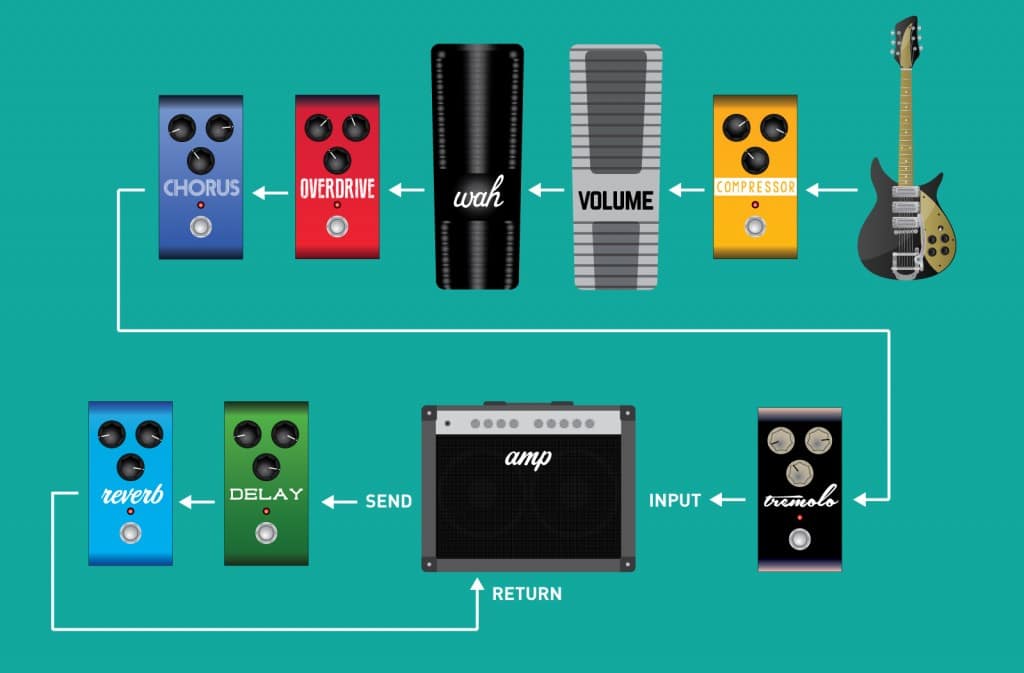
The signal chain is the order in which your guitar, pedals, amplifier, and other equipment connect. This order matters because each pedal changes the signal that the next pedal receives.
A typical chain may look like this:
Guitar → tuner → compressor → overdrive → distortion → modulation → delay → reverb → amplifier
The first pedal sees the raw guitar signal. Every pedal after it works with the sound created by the pedals before it. This is why moving one pedal can change the entire character of your rig.
The guitar signal
A guitar pickup works like a small generator. The vibrating string moves through a magnetic field, which creates a changing electrical voltage. That voltage follows the shape of the string’s vibration.
The signal is fairly weak. It is called an instrument-level signal, and it needs more amplification before it can drive a speaker. Guitar pedals sit in this low-level part of the audio system.
The input stage
The input stage accepts the guitar signal and prepares it for the pedal’s circuit. A good input stage protects the tone and presents the correct electrical load to the pickups.
This is where input impedance matters. Most guitar pedals use a high input impedance so they do not take too much high-frequency energy from passive pickups. A low input impedance can make a guitar sound dull or less lively.
The processing stage
The processing circuit changes the signal. It may increase gain, cut certain frequencies, repeat the sound, or mix the original sound with a modified version.
In analog pedals, this work happens through components such as resistors, capacitors, diodes, transistors, and operational amplifiers. In digital pedals, an analog-to-digital converter samples the sound, a processor applies an algorithm, and a digital-to-analog converter changes it back into an audio signal.
The output stage
The output stage sends the new signal to the next pedal or the amplifier. It controls the signal level and helps the pedal work properly with other equipment.
This explains another key part of how do guitar pedals work: the pedal does not create sound by itself. It changes an electrical signal that the amplifier and speaker later turn into audible sound.

How Do Distortion, Overdrive, and Fuzz Pedals Work?
Overdrive, distortion, and fuzz pedals all add harmonic content by pushing an audio signal beyond a clean operating range. The main difference is how much they reshape the waveform and how they respond to your playing.
A clean guitar signal has a smooth waveform. When a circuit increases the signal beyond its available voltage range, the waveform begins to flatten. This process is called clipping.
Overdrive pedals
Overdrive pedals usually create soft or moderate clipping. They aim to sound like a tube amplifier working harder.
Overdrive often responds well to picking strength. Pick softly, and the sound may stay fairly clean. Pick harder, and the tone becomes more compressed and gritty.
Many blues, rock, and country players use overdrive as a foundation sound. A low-gain overdrive can also push a tube amplifier into natural breakup.
Distortion pedals
Distortion pedals usually create more aggressive clipping than overdrive pedals. They often produce more sustain, compression, and consistent gain.
A distortion pedal can deliver a heavy sound even through a clean amplifier. This makes it useful for players who need the same core tone at different venues and volume levels.
Fuzz pedals
Fuzz pedals push the signal into strong clipping. Some designs nearly flatten the waveform, creating a thick, buzzing, and sometimes unstable sound.
Classic fuzz circuits can react strongly to the guitar’s volume control. Lowering the guitar volume may clean up the fuzz. This interaction is one reason fuzz pedals often work best early in the signal chain.
The practical lesson is simple: how do guitar pedals work when they create distortion? They increase gain and reshape the waveform, but each circuit clips the signal in its own way.

How Do Modulation Pedals Work?
Modulation pedals create movement by changing a signal over time. They may vary pitch, volume, phase, or delay time.
The most common modulation effects include chorus, flanger, phaser, and tremolo. Although they sound different, they all use time-based or level-based changes.
Chorus
A chorus pedal copies the guitar signal, delays the copy by a small amount, and changes its pitch slightly. It then mixes the original and altered signals together.
The small differences make one guitar sound like several guitars playing at once. Slow chorus can sound wide and gentle, while fast chorus can sound watery.
Flanger
A flanger also mixes a short delayed copy with the original signal. However, its delay time changes more dramatically and often creates a strong, hollow sweep.
The sound can resemble a jet plane or a moving comb filter. Feedback controls make the effect sharper and more intense.
Phaser
A phaser splits the signal into stages that shift the phase of selected frequencies. It then combines those stages with the original signal.
This creates moving dips in the frequency response. A phaser often sounds smoother and less metallic than a flanger.
Tremolo
Tremolo changes volume over time. It does not change pitch.
A slow tremolo can create a gentle pulse. A fast tremolo can sound like a rapid stutter. Some amplifiers include built-in tremolo circuits, but a pedal gives you more control over speed and depth.
How Do Delay and Reverb Pedals Work?
Delay and reverb pedals create space by repeating or extending the guitar signal. They help a dry guitar sound feel wider, deeper, or more natural.
Delay pedals
A delay pedal records a short section of the guitar signal and plays it back after a set amount of time. It may repeat that sound once or many times.
Common delay controls include:
• Time controls the gap between the original note and its repeats.
• Feedback controls how many repeats the pedal creates.
• Mix, level, or echo volume controls how loud the repeats are.
• Tone controls the brightness of the repeated sound.
Short delay times can create slapback, a sound often heard in rockabilly and country. Longer delay times can create rhythmic echoes that follow the tempo of a song.
Reverb pedals
Reverb simulates the reflections that happen in a physical space. A room, hall, spring tank, or plate adds many reflections to the original sound.
Digital reverb pedals use algorithms to model these reflections. Spring reverb pedals may use a real spring system or a digital simulation.
Reverb can make a guitar sound more natural, but too much can blur chords. A useful starting point is to set the effect lower than you think you need. You should feel the space without losing the note’s shape.
This is another clear example of how do guitar pedals work: they create a new version of the signal, then blend it with the original to produce a sense of depth.

How Do EQ, Compressor, and Boost Pedals Work?
Not every pedal creates an obvious special effect. Some pedals shape the signal in more practical ways.
Equalizer pedals
An equalizer, or EQ pedal, raises or lowers selected frequency ranges. It can make a guitar brighter, warmer, thinner, thicker, or easier to hear in a full band.
Common EQ areas include:
• Bass controls low frequencies and body.
• Midrange controls fullness, punch, and note focus.