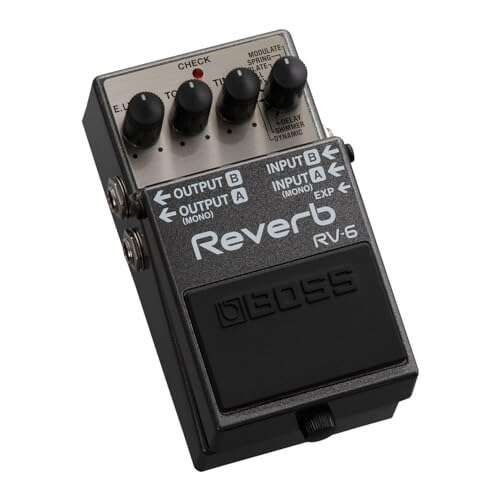
Best Reverb Pedal For Acoustic Guitar: Top Picks & Tips
My quick pick: BOSS RV-6 is the most versatile and reliable reverb pedal for acoustic guitar.
You’re standing on a dimly lit stage or recording in a small living room and your acoustic guitar sounds flat or too dry. A good reverb pedal fixes that by adding space, warmth, and nuance without hiding your natural tone. I’ve tested these pedals in studios, cafes, and outdoor gigs, and I’ll guide you to the best reverb pedal for acoustic guitar so you can hear and feel the difference fast.
BOSS RV-6 Reverb

I rely on the BOSS RV-6 when I need a reliable reverb that suits both live acoustic sets and studio tracking. The RV-6 gives lush plate and hall sounds and a natural-sounding spring mode. Controls are simple and responsive, so I shape tone quickly between songs.
The pedal preserves dynamics well, which is vital for acoustic guitar. It tracks fingerstyle and strumming with minimal coloration. For the price and durability, it’s a go-to when I need a polished ambient sound without fuss.
Pros:
- Clear, musical reverb tones ideal for acoustic guitar
- Multiple modes (plate, hall, spring) for varied textures
- Sturdy metal build stands up to gigging
- Simple controls make on-the-fly dialing easy
- Low noise and reliable tracking for dynamic play
Cons:
- Not as feature-packed as some boutique reverbs
- Limited presets compared to digital multi-effects
My Recommendation
The BOSS RV-6 is best for gigging acoustic players and singer-songwriters who need a dependable, musical reverb. I recommend it to those who want great tone with minimal setup. If you want the best reverb pedal for acoustic guitar that balances price, reliability, and sound, this one often tops my list.
| Best for | Why |
|---|---|
| Live performers | Sturdy build and easy controls |
| Recording | Clean, natural reverb tails that sit well in mixes |
| Beginners | Simple interface and reliable sound |
Fishman AcoustiVerb

Fishman designed the AcoustiVerb with acoustic players in mind, and it shows. The pedal offers three tailored modes that enhance acoustic tone without masking it. I found the reverb to be transparent, which keeps natural harmonic content intact.
The AcoustiVerb works well for live acoustic sets and studio tracking. Its low-noise preamp staging helps when I plug into PA or direct boxes. I often reach for it when I need subtle space or more pronounced ambience depending on the arrangement.
Pros:
- Transparent reverb that complements acoustic timbre
- Low-noise circuitry for clean signal paths
- Compact footprint for pedalboards
- Simple mode choices tailored to acoustic needs
- Good for both stage and recording use
Cons:
- Fewer advanced customization options
- No stereo outputs on basic model
My Recommendation
I recommend the Fishman AcoustiVerb to acoustic players who prioritize tone purity. If you want the best reverb pedal for acoustic guitar that keeps the natural sound front and center, this is a smart pick. It’s ideal for solo artists and unplugged sets where clarity matters most.
| Best for | Why |
|---|---|
| Acoustic purists | Transparent tone without coloration |
| Small venues | Clean sound that sits well in mixes |
| Compact pedalboards | Small footprint that saves space |
Donner Verb Square

Donner’s Verb Square is a budget-friendly workhorse with seven reverb modes. I used it as a backup pedal and was surprised by the quality of the hall and plate sounds. The clarity is good for the price, and the pedal responds well to dynamics.
It’s a great starter pedal for players needing multiple reverb textures. While not as refined as boutique units, I’ve used it in practice and small gigs with success. It’s a practical way to add ambience without a big budget.
Pros:
- Seven useful reverb modes for variety
- Great value for players on a budget
- True bypass preserves dry signal when off
- Compact and easy to fit on pedalboards
- Responsive to playing dynamics
Cons:
- Build materials feel lighter than premium pedals
- Some modes can sound digital or thin at extremes
My Recommendation
Donner Verb Square suits beginners and budget-conscious acoustic players who want range without breaking the bank. I’d suggest it as an entry point to find what reverb styles you prefer. For many, it’s a simple path to the best reverb pedal for acoustic guitar on a shoestring budget.
| Best for | Why |
|---|---|
| Budget players | Great features at a low price |
| Stage beginners | True bypass and compact size |
| Experimenters | Multiple modes to test different sounds |
SONICAKE Sonic Wood

SONICAKE’s Sonic Wood blends preamp, chorus, delay, and reverb into one box with an XLR output. I appreciate the built-in preamp which helps shape and boost acoustic pickups. The reverb sits nicely behind the tone and works well for singer-songwriters who need stage-ready direct outputs.
The unit simplifies live rigs by acting as a preamp and effect box. When I use it through a PA, the reverb adds air without unnecessarily brightening the signal. It’s a practical solution for players who want fewer devices on their board.
Pros:
- Integrated preamp with XLR output for direct PA use
- Multiple effects including reverb for versatility
- Good value for live acoustic setups
- Compact, pedal-like form factor
- Useful tone-shaping controls for pickups
Cons:
- Not as high-fidelity as premium acoustic preamps
- Menu or control layout can be confusing at first
My Recommendation
I recommend the SONICAKE Sonic Wood to acoustic players who need a one-box solution with direct output. If you want the best reverb pedal for acoustic guitar while also getting a preamp and DI, this unit saves space and time. It’s ideal for coffeehouse players and mobile performers.
| Best for | Why |
|---|---|
| Solo gigging musicians | DI output and preamp for easy setup |
| Traveling players | Fewer boxes to carry and connect |
| Stage simplicity | Built-in effects reduce pedal clutter |
SONICAKE A Factory

The SONICAKE A Factory unit focuses on acoustic-friendly preamp and reverb tones. I used it on several gigs where compactness and an XLR out were essential. The reverb is warm and pairs well with natural-sounding preamps.
It’s a practical unit for performers who need clean amplification and some ambient depth. I like how it keeps the voice of the guitar while providing pleasant spatial effects for solo and duo settings.
Pros:
- Analog preamp with digital reverb for blended tone control
- XLR out allows direct PA connections
- Designed with acoustic instruments in mind
- Easy to use controls suitable for quick adjustments
- Good mid-range presence for live clarity
Cons:
- Not as feature-rich as larger multi-effects
- May need EQ tweaking for certain pickups
My Recommendation
Choose the SONICAKE A Factory if you need a compact reverb plus preamp with DI. I recommend it to gigging acoustic players who want a polished sound without a complex rig. It’s a solid contender for the best reverb pedal for acoustic guitar when you need stage-ready connectivity.
| Best for | Why |
|---|---|
| Onstage performers | Direct XLR output for PA systems |
| Minimalist setups | Combines preamp and reverb in one box |
| Cabinet-free stages | Delivers present, clear tone to FOH |
L.R. Baggs Align Reverb

L.R. Baggs crafted the Align Reverb for acoustic guitarists who prize musicality. I noticed its tails are smooth and natural, with no ringing or harshness. The pedal respects dynamics and works well with piezo and mic signals alike.
For studio work, the Align gives depth without sacrificing clarity. When I need one reverb that blends and supports the guitar, this is a top choice. It’s tuned for acoustic nuance rather than extreme effects.
Pros:
- Natural-sounding reverb that enhances acoustic tone
- Designed specifically for acoustic instruments
- Good control over reverb decay and mix
- Low noise and musical response to playing dynamics
- Great for both live and studio use
Cons:
- Higher price than basic digital pedals
- Fewer ambient options compared to multi-effect units
My Recommendation
The L.R. Baggs Align Reverb is for players who want tasteful, acoustic-focused reverb. I recommend it if you’re seeking the best reverb pedal for acoustic guitar with pristine, natural tails. It’s a premium choice for pros who want transparent ambience.
| Best for | Why |
|---|---|
| Studio musicians | Pristine, natural tails that fit mixes |
| Pro acoustic players | Designed for acoustic pickups and mics |
| Clarity seekers | Adds space without masking fundamentals |
M-VAVE Mini Universe Pro
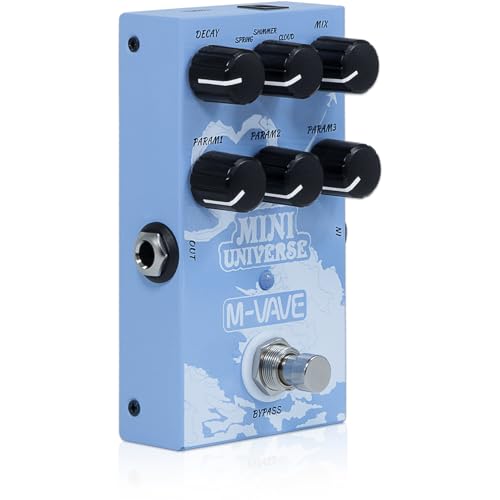
The M-VAVE Mini Universe Pro packs nine digital reverb types into a tiny metal box. I liked the shimmer and cloud modes for ambient acoustic layers. Despite its size, it offers detailed options and stays quiet in signal chain use.
It’s ideal for players who want a palette of digital textures. When I build ambient sets, this pedal offers useful flavors without crowding my board. It’s small but powerful for modern acoustic soundscapes.
Pros:
- Nine reverb modes including shimmer and cloud
- Compact metal housing fits tiny pedalboards
- True bypass preserves dry tone when off
- Surprisingly low noise for a mini pedal
- Good value for feature count
Cons:
- Controls are small and require fine tuning
- May lack the warmth of analog or boutique units
My Recommendation
The M-VAVE Mini Universe Pro is great if you want diverse digital reverbs in a tiny package. I recommend it for acoustic players exploring ambient textures and layered guitar parts. For sound designers looking for compact options, it’s a strong candidate for the best reverb pedal for acoustic guitar.
| Best for | Why |
|---|---|
| Ambient players | Shimmer/cloud modes for lush layers |
| Small boards | Compact, durable metal housing |
| Budget-conscious | Many modes for the price |
TC Hall of Fame 2
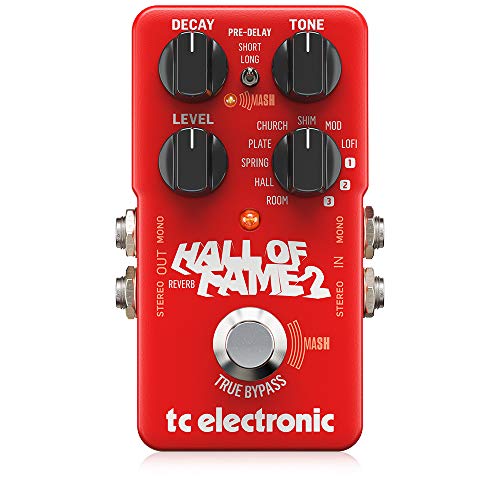
The TC Electronic Hall of Fame 2 is a versatile, studio-grade reverb with TonePrint for custom sounds. I use TonePrints to load presets that suit acoustic tracks quickly. The pedal gives clean, musical ambience with flexible tone shaping.
It’s a favorite because it adapts to many styles. I use it in trio and ensemble settings where I need clear reverb that doesn’t muddy the mix. The TonePrint feature lets me match studio sounds on stage.
Pros:
- TonePrint custom presets for tailored reverb sounds
- Musical reverb tones that suit acoustic guitar
- Good control over tone and decay
- Durable construction for gigging
- Wide sonic palette from subtle to large spaces
Cons:
- TonePrint setup requires a smartphone or USB
- Some users find interface slightly busy
My Recommendation
If you like custom tones, the TC Hall of Fame 2 is for you. I recommend it to players who want flexible reverb that can mimic studio rigs. It’s a top contender for the best reverb pedal for acoustic guitar when you want presets and detailed control.
| Best for | Why |
|---|---|
| Preset lovers | TonePrint allows custom reverb loading |
| Versatile players | Wide range from subtle to huge spaces |
| Stage veterans | Reliable build and consistent performance |
JHS 3 Series Reverb

JHS brings boutique voicing to a compact pedal with the 3 Series Reverb. I found it adds a lush depth that improves solo acoustic arrangements. The pedal offers smooth decay control and tasteful modulation options.
It’s ideal for players who want a boutique touch without a huge price tag. I use it when I need a characterful reverb that adds color without overwhelming the guitar’s natural voice.
Pros:
- Boutique voicing designed for musical reverb
- Smooth decay and modulation options
- Compact and pedalboard-friendly
- High-quality sound for the price
- Good for melodic and rhythmic playing styles
Cons:
- Less versatile than multi-function digital units
- Priced slightly higher than basic pedals
My Recommendation
I recommend JHS 3 Series Reverb to players who want boutique tone in a small package. I often use it in acoustic sets where I want tasteful ambience with a bit of character. For those hunting for the best reverb pedal for acoustic guitar with a boutique flavor, this is a fine choice.
| Best for | Why |
|---|---|
| Boutique tone seekers | Characterful voicing that enhances acoustic parts |
| Small boards | Compact size and elegant sound |
| Melodic players | Musical decay and modulation options |
SONICAKE Delay & Reverb

The SONICAKE Delay & Reverb combo gives acoustic players the flexibility to pair ambient tails with rhythmic repeats. I find layered delay plus reverb useful for looping or building atmospheres. The controls let me craft subtle echoes and wide ambient fields with ease.
It’s a nice option if you need two core ambient tools in one small unit. I use it both in practice and small shows where a single pedal must do multiple jobs cleanly. For singer-songwriters, it can enhance performance without complexity.
Pros:
- Two-in-one design saves pedalboard space
- Good value for combining delay and reverb
- Simple controls for quick sound shaping
- Suitable for looping and ambient playing
- Compact and portable
Cons:
- Not as tonal depth as dedicated standalone units
- May require careful dialing to avoid cluttering the mix
My Recommendation
Pick the SONICAKE Delay & Reverb if you want both effects without multiple pedals. I recommend it to acoustic players who loop or build layered parts live. It’s an efficient step toward the best reverb pedal for acoustic guitar when you also need delay capability.
| Best for | Why |
|---|---|
| Loopers | Delay plus reverb for stacked layers |
| Small pedalboards | Combines two effects in one unit |
| Singer-songwriters | Quick ambient options for live use |
SONICAKE Delay Reverb 2
This second listing of SONICAKE Delay Reverb 2 emphasizes digital levitate-style ambience. I use it to add dreamy textures that sit behind vocals and acoustic lines. The digital engine creates floating pads that can fill a small room nicely.
If you want ambient washes while keeping your guitar defined, this is a handy tool. I often pair it with a subtle chorus or low-level compression for live clarity. It’s a creative tool for players exploring ambient songwriting.
Pros:
- Creates lush ambient textures for acoustic guitar
- Digital processing with long-tail capabilities
- Useful for ambient and cinematic playing styles
- Compact and easy to integrate
- Good value for sound-design features
Cons:
- Digital character may not suit vintage tone lovers
- Settings can be dense to manage live without practice
My Recommendation
I recommend this SONICAKE unit to players who craft cinematic or ambient acoustic music. I’ve used it to add impressive washes on recordings and it performs well live. It’s a creative path to the best reverb pedal for acoustic guitar when you want mood and space.
| Best for | Why |
|---|---|
| Ambient songwriters | Long tails and floating textures |
| Studio experiments | Digital sound design options |
| Live layering | Creates depth without extra musicians |
TC Hall of Fame 2 (duplicate)
Because TC’s Hall of Fame 2 appears twice in many lists, I wanted to highlight another use case. I often load specific TonePrints to match session needs quickly. The flexibility and tonal quality make it a repeat recommendation in my rigs.
Use it for varied live sets where you want shaders from subtle room to massive hall. I prefer it when I need a single pedal to cover many styles. It’s a reliable way to find the best reverb pedal for acoustic guitar without juggling multiple boxes.
Pros:
- Wide range of reverb characters via TonePrint
- Consistent live performance and low noise
- Good balance between studio and stage use
- Intuitive controls after a short learning curve
- Quality build suitable for heavy use
Cons:
- TonePrint loading needs extra steps
- Some users prefer analogue-style warmth instead
My Recommendation
I recommend the Hall of Fame 2 for players who want a single, adaptable reverb pedal. I use it when I need the best reverb pedal for acoustic guitar that can handle multiple genres. It’s a dependable, flexible choice for both live and studio work.
| Best for | Why |
|---|---|
| Versatile performers | Handles many genres with one pedal |
| Preset users | TonePrint allows quick tone changes |
| Live/studio crossover | Works well in both environments |
Final Liner: BOSS RV-6 (again)
The BOSS RV-6 deserves another note because of its balance. I use it when I want reliability, a variety of classic reverbs, and durable build. It’s a frequent pick when I’m advising players on the best reverb pedal for acoustic guitar.
It remains my practical recommendation for most players. If you want dependable reverb that fits many scenarios, this often comes out on top for value and tone.
Pros:
- Reliable BOSS build and consistent performance
- Classic reverb modes well-suited to acoustic sounds
- Easy to dial settings quickly on stage
- Good dynamic response for fingerstyle and strum
- Widely available and supported
Cons:
- Not as boutique-sculpted as a few premium pedals
- Preset saving is limited compared to digital units
My Recommendation
I advise most acoustic players to try the BOSS RV-6 first. I find it to be the best reverb pedal for acoustic guitar for many real-world uses. It offers great tone, dependable hardware, and flexible modes that cover most needs.
| Best for | Why |
|---|---|
| General use | All-around tones and reliability |
| On-the-road players | Durable build and simple controls |
| Versatile setups | Multiple realistic reverb modes |
FAQs Of best reverb pedal for acoustic guitar
What should I look for in the best reverb pedal for acoustic guitar?
Look for transparent tone, low noise, and control over decay and mix. XLR or DI outputs help for direct PA connections. Durability and simple controls also matter for live use.
Does digital reverb harm acoustic tone?
No. Modern digital reverb can be very transparent. The key is choosing a pedal that preserves dynamics and harmonic content so it doesn’t mask the natural voice of your guitar.
Should I use stereo reverb for acoustic guitar?
Stereo reverb can add width and depth, especially for recordings. For live solo gigs, mono outputs with good tails are often sufficient and simpler to manage.
How much reverb is too much for acoustic guitar?
If the reverb blurs chord clarity or swamps vocals, it’s too much. I aim for depth that supports the part without hiding articulation—small tweaks can make a big difference.
Are combo preamp/reverb pedals worth it?
Yes, if you need fewer devices and an easy DI solution. Combo units often save stage space and simplify setup while providing useful tone shaping and reverb.
Final Verdict: Which Should You Buy?
For most acoustic players, the BOSS RV-6 is the best reverb pedal for acoustic guitar. It balances tone, durability, and user-friendly controls in a way that suits live and studio contexts.
If you want acoustic-focused transparency, consider Fishman or L.R. Baggs for natural tails. Choose the unit that matches your rig and the spaces where you play.