Best Delay Pedal For Acoustic Guitar: Top Picks
The L.R. Baggs Align Delay is the best delay pedal for acoustic guitar players who want clear, musical repeats.
You know the moment: your acoustic guitar sounds warm at home, but flat and small on stage. A good delay pedal can add space, rhythm, and depth without hiding the natural wood tone. The hard part is finding one that keeps your pickup signal clean and avoids harsh, noisy repeats. I tested these options by looking at tone, control layout, bypass behavior, size, power needs, and real playing use. This guide will help you choose the best delay pedal for acoustic guitar, whether you play solo shows, church sets, open mics, or home recordings.
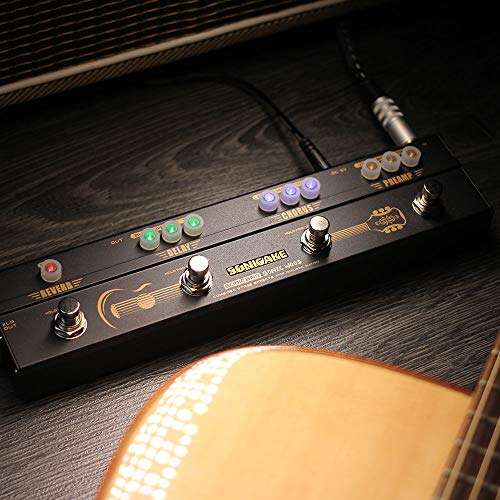
SONICAKE Acoustic Pedal with Delay

The SONICAKE acoustic pedal is more than a delay unit. It combines acoustic preamp control with chorus, delay, and reverb in one compact box. That makes it useful for players who need a quick stage setup without carrying a large pedalboard. The wood-style case also looks at home beside an acoustic guitar.
I like this pedal for small gigs because it offers an XLR output along with guitar-focused effects. You can shape your sound before it reaches a mixer or acoustic amplifier. The delay is best for adding a gentle echo behind chords and picked parts. It may be the best delay pedal for acoustic guitar beginners who want several useful tools at a low cost.
Pros:
- Combines preamp, chorus, delay, and reverb
- Includes a useful XLR output for live sound
- Compact design saves pedalboard space
- Simple controls suit new players
- Helpful all-in-one choice for small acoustic gigs
Cons:
- Less detailed control than a dedicated delay pedal
- Multiple effects may feel limited to advanced users
- Requires careful level setting with active pickups
My Recommendation
I recommend the SONICAKE to acoustic players who want one affordable pedal for several stage jobs. It works well for solo performers, beginners, and singers who need delay, reverb, and basic tone shaping in one unit. The XLR output is a major advantage when you connect straight to a mixer. If your main goal is deep delay editing, choose a dedicated model instead.
| Best for | Why |
|---|---|
| Solo acoustic players | It adds delay, reverb, and chorus without a large board. |
| Small live venues | The XLR output helps connect to a mixer. |
| Beginners | The simple layout makes effect setup less stressful. |
L.R. Baggs Align Delay

The L.R. Baggs Align Delay is designed with acoustic guitar tone in mind. Its main strength is a clean, polished echo that supports the guitar instead of covering it. The control layout stays easy to read, which matters when you need to change settings during a song. It feels like a purpose-built tool rather than a general electric guitar effect.
In use, this pedal suits fingerstyle, worship, country, folk, and modern acoustic pop. A short delay can make a dry pickup sound wider, while a longer setting can create a soft trail after each phrase. The pedal keeps the dry guitar signal at the center of the sound. For many players, this is the best delay pedal for acoustic guitar because it balances natural tone with useful stage control.
Pros:
- Voiced for acoustic guitar applications
- Clear repeats preserve the guitar’s natural character
- Useful for fingerstyle and lead parts
- Easy controls support fast changes on stage
- Strong fit for players who value clean sound
Cons:
- Costs more than many mini delay pedals
- Offers fewer experimental sounds than complex digital units
- May not satisfy players who need looping or modulation
My Recommendation
I would choose the L.R. Baggs Align Delay for a serious acoustic performer who wants one focused delay pedal. It is especially well suited to players using an undersaddle pickup or acoustic preamp. The sound stays smooth and musical, even when the effect is noticeable. If you want a safe, refined choice for live acoustic work, this is the strongest overall option in this group.
| Best for | Why |
|---|---|
| Live acoustic guitar | Its clean repeats add space without masking the core tone. |
| Fingerstyle players | Short and medium echoes support detailed picking. |
| Natural tone fans | The effect feels smooth rather than bright or artificial. |
Donner Yellow Fall Analog Delay

The Donner Yellow Fall is a small analog-style delay with a warm voice. Its repeats become softer as they fade, which can blend well with strummed acoustic guitar. The pedal uses a simple control set for echo time, repeat level, and effect volume. It also includes true bypass, so the dry signal stays direct when the effect is off.
This pedal works best when you want vintage character rather than studio-clean repeats. It can add a short slapback sound to country rhythm or a mellow trail to folk picking. I would keep the effect level modest with a bright acoustic pickup. While it is not a full acoustic preamp, it can serve as the best delay pedal for acoustic guitar on a tight budget.
Pros:
- Warm analog-style repeat character
- Small size fits crowded pedalboards
- True bypass helps preserve dry tone
- Simple controls are quick to learn
- Usually offers strong value for budget buyers
Cons:
- Does not include acoustic EQ or feedback control
- Limited delay range compared with advanced digital pedals
- Analog-style repeats may sound too dark for some pickups
My Recommendation
The Donner Yellow Fall is best for players who want a warm, low-cost echo for acoustic rhythm and simple leads. It suits beginners, buskers, and players building their first pedalboard. I would pair it with a good acoustic preamp if your guitar pickup sounds thin or sharp. It gives useful delay color at a friendly price, but it is not the best choice for complex live presets.
| Best for | Why |
|---|---|
| Budget setups | It provides warm delay without a high purchase cost. |
| Country rhythm | The short echo creates a useful slapback feel. |
| Small pedalboards | The mini case leaves room for other effects. |
Fishman AFX EchoBack Mini Delay

The Fishman AFX EchoBack Mini Delay comes from a brand known for acoustic guitar electronics. Its compact format makes it easy to add echo without taking over your board. The pedal is aimed at practical performance, so it fits players who want a focused effect rather than a menu of complex functions. Its small footprint is helpful for acoustic rigs that already include a tuner, preamp, and looper.
I see this as a good match for players who want controlled ambience behind vocals and guitar. Use a short setting for width, or raise the repeats when you need a more obvious echo. As with any acoustic pedal, your pickup, preamp, and amplifier will affect the final sound. This could be the best delay pedal for acoustic guitar when space and brand compatibility matter most.
Pros:
- Compact mini-pedal design
- Made by a trusted acoustic equipment brand
- Useful for compact acoustic pedalboards
- Focused controls reduce setup time
- Works well for subtle ambience and echo
Cons:
- Mini controls can be harder to adjust on a dark stage
- Fewer features than larger delay pedals
- May require a separate preamp for pickup shaping
My Recommendation
I recommend the Fishman AFX EchoBack Mini to acoustic players who already trust Fishman gear and need a small delay. It is a smart choice for touring musicians with limited board space. It also suits performers who prefer subtle effects that stay behind the song. Check the power and connection needs before buying, especially if your board uses a shared power supply.
| Best for | Why |
|---|---|
| Compact boards | The mini enclosure leaves room for essential acoustic tools. |
| Fishman pickup users | It fits naturally into a Fishman-based signal chain. |
| Subtle ambience | It can add width without making the guitar sound washed out. |
JHS Pedals 3 Series Delay
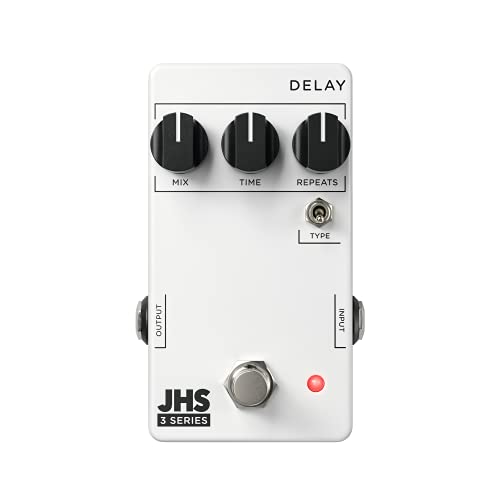
The JHS 3 Series Delay is a flexible digital delay with a clean, modern sound. It gives you familiar controls for time, repeats, and level, plus added ways to shape the effect. The pedal is simple enough for a new user but deep enough for players who enjoy building exact sounds. JHS also gives this series a practical layout that works well in live settings.
With an acoustic guitar, I would use it for rhythmic repeats, wide ambient parts, and long trails behind fingerpicked songs. A clean digital repeat can expose pickup noise, so I suggest placing a quality preamp or noise-aware signal source before it. The pedal does not specialize in acoustic EQ, but its delay engine offers strong creative range. It is a great alternative when the best delay pedal for acoustic guitar must also serve electric guitar.
Pros:
- Clear digital delay sound
- Flexible controls for many music styles
- Useful for both acoustic and electric guitar
- Solid enclosure supports regular gig use
- Easy layout encourages fast sound changes
Cons:
- Not designed specifically for acoustic pickup correction
- May reveal noise from a weak signal chain
- Larger than many mini delay pedals
My Recommendation
The JHS 3 Series Delay is best for guitarists who play acoustic and electric instruments. It offers more creative room than a basic analog mini pedal, yet it avoids the steep learning curve of a high-end multi-delay unit. I would choose it for home recording, worship, indie folk, and players who switch between guitars. Add an acoustic preamp when you need more control over EQ and feedback.
| Best for | Why |
|---|---|
| Acoustic and electric players | One pedal can cover both sides of your setup. |
| Creative delay sounds | The controls allow more than a simple slapback effect. |
| Home recording | Clean repeats work well for layered guitar parts. |
SONICAKE Levitate Delay and Reverb

The SONICAKE Levitate combines delay and reverb in one digital pedal. That pairing makes sense for acoustic guitar because delay creates repeats while reverb supplies room and air. The two effects can help a direct pickup sound less dry. This pedal also saves space for players who want both effects but cannot fit two full-size units.
I find this type of pedal useful for ambient folk, worship, pop, and slow fingerstyle songs. Keep the reverb low when you play in a lively room, since the room already adds natural reflections. A short delay and light reverb can make a simple chord pattern feel much wider. It may be the best delay pedal for acoustic guitar in a compact two-effect rig.
Pros:
- Combines delay and reverb in one enclosure
- Saves space and power connections
- Useful for ambient acoustic arrangements
- Digital design offers clean, repeatable sounds
- Good value for players who need two core effects
Cons:
- Less control than two separate dedicated pedals
- Does not replace an acoustic preamp
- Heavy reverb can blur fast strumming
My Recommendation
I recommend the Levitate to players who want a simple path to a larger acoustic sound. It suits worship musicians, solo performers, and home players who like gentle ambience. It is also a strong choice for a small board with limited space. Choose another pedal if you need detailed EQ, tap tempo, or highly exact delay programming.
| Best for | Why |
|---|---|
| Ambient acoustic music | Delay and reverb work together for broad, soft textures. |
| Small boards | One unit covers two common effects. |
| Worship sets | Light ambience can fill space behind simple chords. |
Pogolab Mini Analog Delay

The Pogolab Mini Analog Delay focuses on the basic job: adding echoes to your guitar. Its small body works well on a crowded pedalboard or in a gig bag. True bypass helps keep the direct sound clear when the pedal is switched off. The controls are familiar, so you can create a useful setting in minutes.
For acoustic guitar, I would use this pedal for short echoes and soft lead support. Its analog-style character can make repeats feel less sharp than a bright digital delay. That can be helpful with a piezo pickup, though every guitar reacts differently. It is not an advanced acoustic processor, but it is a practical low-cost entry point.
Pros:
- Very compact pedalboard footprint
- Simple analog-style delay voice
- True bypass design
- Easy controls for first-time users
- Affordable way to try delay
Cons:
- Limited control range compared with premium models
- No acoustic EQ or feedback tools
- Small knobs may be difficult to adjust while playing
My Recommendation
The Pogolab is best for beginners who want to explore delay without spending much. It also works as a backup pedal for a larger acoustic rig. I would use it for simple songs, home practice, and short echo effects. If you need tap tempo, presets, or a polished acoustic-specific circuit, spend more on a larger model.
| Best for | Why |
|---|---|
| First delay pedal | The controls are easy to understand and set. |
| Backup rigs | The small body is easy to carry to a show. |
| Short echoes | The analog-style voice adds warmth to simple parts. |
TC Helicon Play Acoustic

The TC Helicon Play Acoustic is a complete vocal and acoustic guitar effects processor. It includes guitar tone shaping, vocal effects, harmony tools, looping features, and ambience options. This is much larger in scope than a normal delay pedal. It makes sense for a singer-songwriter who wants to manage the entire front end of a live performance.
Its BodyRez-style processing can help an amplified acoustic guitar feel more natural, while the vocal section adds value for solo performers. The unit takes more time to learn than a three-knob delay. Still, it can replace several separate boxes and simplify a stage setup. For a full singer-songwriter rig, it may be the best delay pedal for acoustic guitar even though delay is only one part of its design.
Pros:
- Designed for vocals and acoustic guitar together
- Includes looping and performance functions
- Offers guitar tone shaping beyond delay
- Can reduce the need for several separate pedals
- Strong option for solo singer-songwriters
Cons:
- More complex than a dedicated delay pedal
- Takes more stage space
- May offer more features than a guitar-only player needs
My Recommendation
I recommend Play Acoustic for performers who sing and play at the same time. It is especially useful when you want vocal effects, looping, guitar processing, and delay under one control system. It is not the most direct choice for someone who only wants a simple echo. For a solo act, however, its broad feature set can deliver excellent overall value.
| Best for | Why |
|---|---|
| Solo singer-songwriters | It handles guitar, voice, looping, and effects together. |
| Full live rigs | One processor can replace several smaller pedals. |
| Loop performers | Built-in looping supports layered acoustic parts. |
Caline Acoustic Guitar Multi-Effects Pedal

The Caline acoustic multi-effects pedal is built for players who need more than delay. It offers acoustic EQ, chorus, reverb, an auxiliary input, DI functions, and a boost alongside its delay section. This broad set of features can help you build a complete acoustic signal path. It is a useful middle ground between a small delay and a large digital processor.
I like the EQ and DI features for live use because acoustic pickups often need shaping before they reach a PA. The delay can then sit inside a cleaner, more balanced signal. The AUX input is handy for practice tracks or casual performance use. This pedal may be the best delay pedal for acoustic guitar when tone control and connection options matter as much as the echo.
Pros:
- Includes acoustic-focused EQ controls
- Combines delay, chorus, reverb, and boost
- Offers AUX connectivity for practice or backing tracks
- DI features support direct live connection
- Useful all-in-one choice for gigging players
Cons:
- Larger learning curve than a simple delay
- More controls can slow down quick setup
- Build and switch feel may not match premium units
My Recommendation
The Caline is best for acoustic guitarists who need tone shaping and several effects in one box. It suits cover players, church musicians, and performers who connect directly to a PA. I would choose it over a basic delay when your pickup needs EQ or your board lacks space for separate effects. It offers strong practical value, but test every output and level with your own system before a major show.
| Best for | Why |
|---|---|
| Direct-to-PA players | DI and EQ tools help prepare the signal for a mixer. |
| Cover musicians | Several effects support different songs from one unit. |
| Practice setups | The AUX input can make play-along sessions easier. |
Klowra Everlast Delay

The Klowra Everlast is aimed at players who want modern delay control. It offers multiple delay types, tap tempo, stereo operation, and support for external control. Those features give you more room to match repeats to a song’s tempo. Analog dry-through also helps keep your original guitar signal present while the effect runs.
For acoustic guitar, tap tempo can be useful when you move between songs with different feels. Stereo output can also create a wider sound when your amplifier or PA supports it. This pedal is more advanced than most entry-level options here. It could be the best delay pedal for acoustic guitar players who want performance control and future expansion.
Pros:
- Offers nine delay types
- Includes tap tempo control
- Supports stereo operation
- Analog dry-through keeps the core signal clear
- Can work with expression and external footswitch control
Cons:
- More complex for players who need one basic sound
- May need extra footswitch hardware for full control
- Its broad features can take time to learn
My Recommendation
I recommend the Klowra Everlast to experienced players who build songs around tempo-based delay. It suits acoustic musicians who use stereo rigs, loopers, or external foot control. It is also a smart choice if you want one pedal that can grow with your setup. Beginners may find a simple acoustic delay easier, but advanced users will appreciate the control range.
| Best for | Why |
|---|---|
| Tempo-based songs | Tap tempo keeps repeats locked to the groove. |
| Stereo acoustic rigs | Two outputs can create a wider stage image. |
| Advanced players | External control supports more detailed performance use. |
How to Choose the Best Delay Pedal for Acoustic Guitar
Acoustic guitar does not always react well to the same pedals used for electric guitar. A piezo pickup can sound bright, thin, or hard when a pedal adds strong high-end repeats. A magnetic soundhole pickup may respond more like an electric guitar. Your pickup type should guide your choice.
Start with the delay character. Digital delay gives clear repeats that remain easy to hear. Analog-style delay gives softer repeats that blend into the background. Both can work, but acoustic players often prefer smooth repeats for strumming and clean repeats for fingerstyle.
Next, check the controls. Time changes the gap between your notes and the repeats. Level changes how loud the effect sounds beside your dry guitar. Feedback changes how many repeats you hear. These three controls cover most basic delay needs.
Tap tempo is useful when you play songs with a set beat. It lets you match the echo to the drummer, click, or backing track. If you mostly play free-time folk or slow solo music, you may not need it. Do not pay for a feature you will never use.
True bypass and buffered bypass both have a place in a pedalboard. True bypass removes the effect circuit from the path when switched off. A buffer can help preserve signal strength over long cable runs. The best option depends on your cables, pickup, preamp, and other pedals.
Power also matters. Most pedals in this category use a 9-volt DC supply, but the current needs can vary. Some units do not include a battery compartment. I always check polarity, voltage, and current before connecting a pedal to a power brick.
Delay Settings for Acoustic Guitar
A short delay can make an acoustic guitar feel wider without sounding like an obvious effect. Try a low effect level, a short time, and only a few repeats. This setting works well for steady strumming and vocal support. Think of it as adding a small room behind the guitar.
A slapback delay uses one clear repeat with a short time. It can add a lively country feel to rhythm parts. Keep the repeat level low so the echo does not compete with your next chord. This sound works best when the guitar part has space between notes.
For fingerstyle, try a medium delay time and a low mix. The repeats can fill gaps between bass notes and melody notes. Avoid too much feedback, since repeated notes can become muddy. A clean preamp before the delay often makes this setting easier to control.
Long delay settings create an ambient sound. They work well for intros, slow songs, and dramatic endings. In a busy band mix, long repeats may take up too much room. I suggest using a footswitch or preset system if you plan to change from short to long delay during a song.
Delay Pedal Placement in an Acoustic Signal Chain
Many acoustic players place delay after a preamp or acoustic EQ. This allows you to correct the pickup sound before the echoes copy it. If you put delay before strong EQ changes, the repeats may change in a less predictable way. A basic chain might be tuner, preamp or EQ, compressor, chorus, delay, and reverb.
Some players prefer delay before reverb. This creates clear echoes that then receive a soft room tail. Others place reverb before delay for a more blurred, ambient sound. Try both methods if your pedalboard allows it. There is no single correct order for every song.
Watch your gain levels when connecting to a PA. An acoustic pickup can produce a strong signal, and a boost may overload the next device. Start with every level control low. Raise each one while listening for harsh clipping, feedback, or sudden volume jumps.
Common Acoustic Guitar Delay Problems
Feedback is one of the most common problems in a live acoustic setup. Delay does not always cause feedback by itself, but it can add more energy to an already unstable signal. Lower the effect level and repeats first. Then check your stage position, monitor volume, EQ, and pickup settings.
A bright or metallic echo often comes from the pickup and pedal combination. Lower the tone or high frequencies if the pedal includes that control. A softer analog-style delay may also help. You can place an acoustic preamp before the delay to smooth the signal.
Muddy repeats usually mean the delay level or feedback is too high. They can also come from too much reverb in the same chain. Turn down the repeats before changing the whole rig. Small adjustments often make a bigger difference than buying another pedal.
Noise may come from a poor power supply, long cables, a weak battery, or a noisy preamp. Test the pedal alone first. Then add each device one at a time. This simple process helps you find the true source instead of blaming the delay.
Who Needs an Acoustic-Specific Delay?
An acoustic-specific delay can help players who use piezo pickups and connect directly to a PA. These players need more than an echo. They also need a clean signal, sensible headroom, and controls that respect the natural tone of the guitar.
If you use one acoustic guitar and a quality preamp, a standard delay can work very well. The JHS, Donner, Pogolab, and Klowra pedals can all serve this role in the right setup. Your preamp often does more to shape the final sound than the delay itself.
If you sing while playing, simple controls have extra value. You do not want to look down for a long menu while leading a song. A focused pedal such as the L.R. Baggs Align Delay may feel more useful than a complex processor. If you need vocal effects and looping too, the TC Helicon unit makes more sense.
Value, Build, and Long-Term Use
A low price can make a mini pedal attractive, but price is not the only value measure. A pedal that sounds good, stays quiet, and fits your setup can save money over time. A larger unit may cost more yet replace three smaller pedals. Think about the full signal chain, not just the delay function.
Strong metal cases and firm footswitches matter for regular gigs. Small knobs can save space, but they may be hard to reach between songs. Larger controls are easier to adjust under stage lights. I prefer simple layouts because they reduce mistakes during a live performance.
Always check the current product details before ordering. Manufacturers can change packaging, power requirements, included accessories, or software support. Availability and price can also change during 2026. The Amazon links above provide the latest listing information for each product.
FAQs Of best delay pedal for acoustic guitar
Can I use an electric guitar delay pedal with an acoustic guitar?
Yes. A standard delay can work well with an acoustic guitar. Use a low mix and fewer repeats at first. A preamp or EQ before the delay can help control a bright piezo sound.
What type of delay sounds best on acoustic guitar?
Short digital delay gives clear width, while analog-style delay gives soft warmth. The best choice depends on your pickup and music style. Many acoustic players prefer subtle settings that support the dry guitar.
Do I need a preamp with an acoustic delay pedal?
You do not always need one, but a preamp can improve the result. It can shape EQ, add headroom, and help prevent feedback. This matters most when you connect directly to a PA.
Should delay go before or after reverb?
Try delay before reverb for clear repeats with a natural tail. Put reverb before delay when you want a softer, blurred sound. Both orders can work for acoustic guitar.
Is tap tempo important for acoustic guitar?
Tap tempo matters if your repeats must match a song’s beat. It helps with bands, loopers, and backing tracks. It is less important for free-time playing or simple background ambience.
Final Verdict: Which Should You Buy?
The L.R. Baggs Align Delay is my top pick and the best delay pedal for acoustic guitar overall. It gives clean, musical repeats and respects the natural acoustic tone.
Choose SONICAKE for low-cost versatility or Klowra for advanced control. Match the pedal to your pickup, power supply, and stage needs for the best 2026 result.

Senior Music Reviewer
Alex Carter is a seasoned music reviewer with over a decade of experience in the world of sound and instruments. Passionate about helping musicians and enthusiasts make informed choices, he brings sharp insights and in-depth knowledge to every review. From classical instruments to modern gear, Alex combines technical expertise with a love for music to deliver content that resonates with readers.
As a Senior Music Reviewer and expert author on Tuneluma.com, Alex is dedicated to sharing honest evaluations, practical advice, and thoughtful commentary to guide readers in their musical journey.