A Flat Major Scale Guitar: Easy Chords And Shapes
The A flat major scale on guitar uses seven notes to create a warm, bright sound in many musical styles.
The A flat major scale guitar pattern can feel difficult at first because it begins with a flat note and uses several barre chord shapes. Once you learn its notes, intervals, fretboard positions, and related chords, it becomes a useful key for blues, jazz, pop, worship, and classical guitar.
What Is the A Flat Major Scale on Guitar?
The A flat major scale is a seven-note scale built from A flat. Its notes are:
A♭, B♭, C, D♭, E♭, F, and G
After G, the pattern returns to A♭ one octave higher. On guitar, the same notes appear in many places, so you can play the A flat major scale guitar pattern in several positions.
The scale follows this interval formula:
• Whole step
• Whole step
• Half step
• Whole step
• Whole step
• Whole step
• Half step
In note form, that pattern looks like this:
• A♭ to B♭: whole step
• B♭ to C: whole step
• C to D♭: half step
• D♭ to E♭: whole step
• E♭ to F: whole step
• F to G: whole step
• G to A♭: half step
A whole step equals two frets on guitar. A half step equals one fret. This simple formula helps you build the scale anywhere on the fretboard, even if you forget a particular fingering.
The A flat major scale guitar sound is bright but smooth. It has a rich color because the key contains four flats: A♭, B♭, D♭, and E♭.
A Flat Major Scale Guitar Notes and Fretboard Map
Learning the notes is more valuable than memorizing one shape. A shape shows you where to place your fingers, but note knowledge helps you create solos, melodies, chords, and useful transitions.
Here is the full note order:
- A♭
- B♭
- C
- D♭
- E♭
- F
- G
- A♭
The root note, A♭, gives the scale its musical home. When you end a phrase on A♭, the line often sounds settled. When you end on G, the phrase usually feels like it wants to resolve up to A♭.
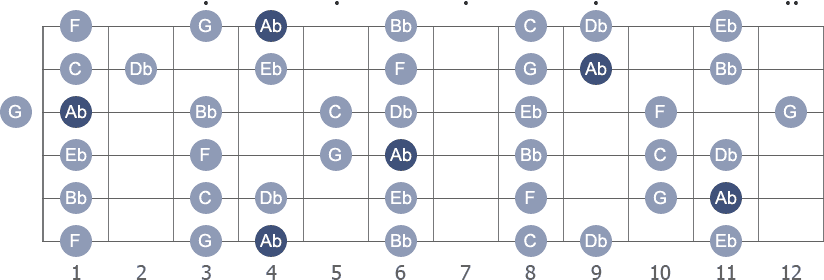
On a standard-tuned guitar, useful A♭ root notes include:
• Sixth string, fourth fret
• Fourth string, sixth fret
• First string, fourth fret
• Second string, ninth fret
• Third string, first fret
These root notes are excellent landmarks. When practicing the A flat major scale guitar pattern, pause on each A♭. This teaches your ear where the key center is.
A helpful memory method is to connect each note to its scale degree:
• A♭ is the first degree
• B♭ is the second degree
• C is the third degree
• D♭ is the fourth degree
• E♭ is the fifth degree
• F is the sixth degree
• G is the seventh degree
Scale degrees are useful because musicians often describe chords and melodies by function instead of note names.

How to Play the A Flat Major Scale Guitar Pattern
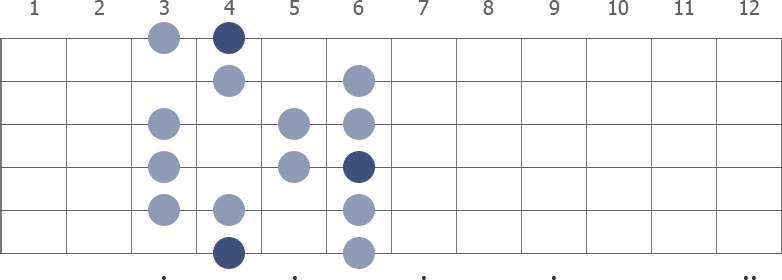
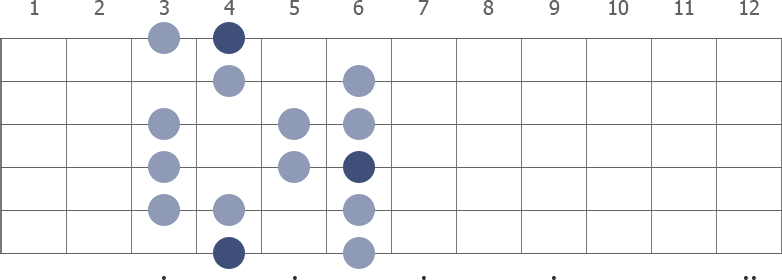
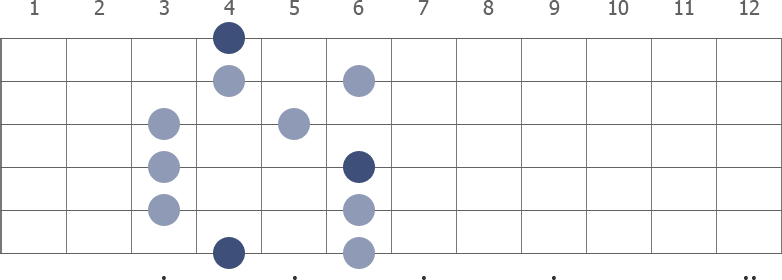
One practical way to play the A flat major scale guitar pattern is to start from A♭ on the sixth string at the fourth fret. This position keeps your hand near the middle of the neck, where the frets are comfortable and the notes are easy to see.
A simple two-octave route is:
• Start on A♭ at the sixth string, fourth fret
• Play B♭ at the sixth string, sixth fret
• Play C at the sixth string, eighth fret
• Move to D♭ at the fifth string, fourth fret
• Play E♭ at the fifth string, sixth fret
• Play F at the fifth string, eighth fret
• Move to G at the fourth string, fifth fret
• Play A♭ at the fourth string, sixth fret
You can then continue the scale on the higher strings by finding B♭, C, D♭, E♭, F, G, and the next A♭.
Use one finger per fret when possible:
• Index finger for the fourth fret
• Middle finger for the fifth fret
• Ring finger for the sixth fret
• Pinky for the eighth fret
Do not force this fingering if your hand feels tense. Good technique matters more than strict rules. Keep your thumb behind the neck, relax your wrist, and press only hard enough to make each note clear.
Practice the scale in three ways:
- Play it upward and downward with alternate picking.
- Play it in groups of three or four notes.
- Start from different scale degrees instead of always beginning on A♭.
Starting from different notes turns the scale into a more musical exercise. For example, begin on C, move through the scale, and finish on C. This creates a C minor sound because C is the third note of A♭ major.
A Flat Major Scale Guitar Positions
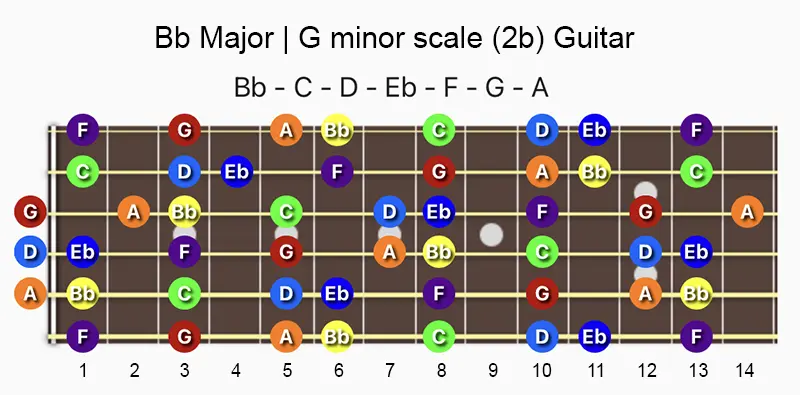
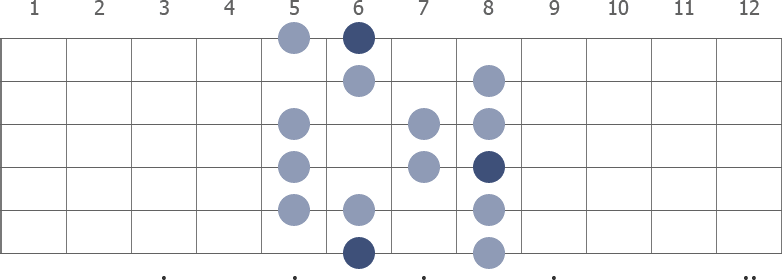
The A flat major scale guitar pattern is not limited to one fretboard shape. You can use the CAGED system to connect several positions across the neck.
Fourth-Fret Position
The fourth-fret position is often the easiest place to begin. The root A♭ appears on the sixth string at the fourth fret and on the first string at the fourth fret.
This position works well for:
• Basic scale practice
• Rock and pop melodies
• Connecting to an A♭ major barre chord
• Learning the locations of the root notes
First-Fret Position
Another useful location begins near the first fret. This area includes A♭ on the third string at the first fret. It can feel less comfortable because the first fret is close to the nut, but it gives you access to lower notes.
Use this position for:
• Lower-register melodies
• Chord fills
• Smooth movement between open-position shapes
• Connecting A♭ major to F minor ideas
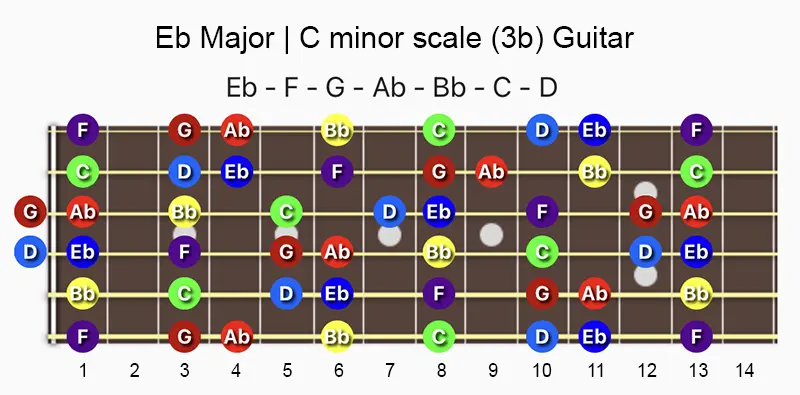
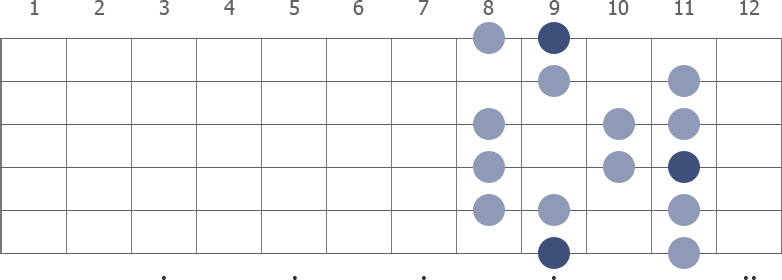
Ninth-Fret Position
The ninth-fret area contains another strong A♭ major scale shape. This position is useful for lead guitar because the notes sit in a comfortable range for bends and vibrato.
Many players find that the higher position produces a clear, singing tone. It also makes it easier to connect the scale to major pentatonic and minor pentatonic patterns.
When learning multiple positions, do not try to memorize all of them in one sitting. Learn one shape, locate every A♭ within it, and then connect that shape to the next position.
A Flat Major Scale Guitar Chords
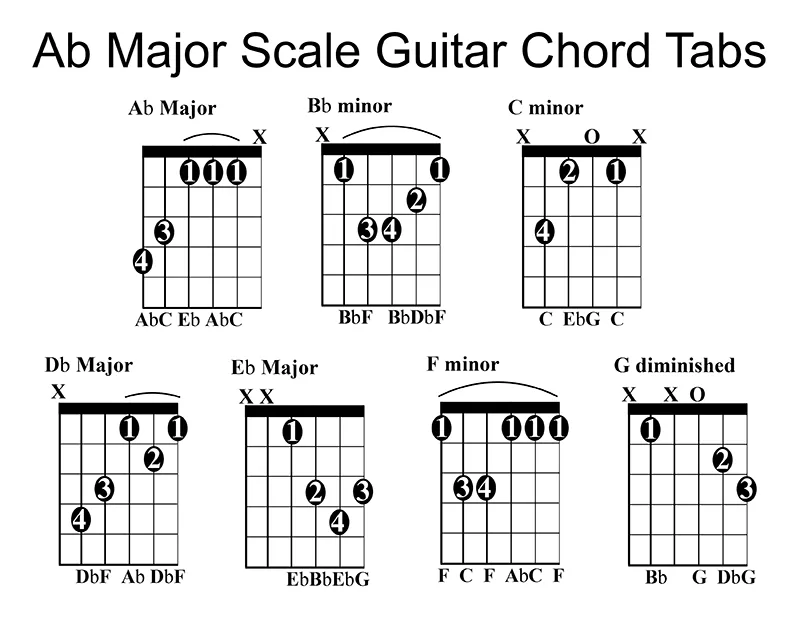
Each note in the A flat major scale can support a chord. These chords form the diatonic chord family of the key.
The basic chords are:
• I: A♭ major
• ii: B♭ minor
• iii: C minor
• IV: D♭ major
• V: E♭ major
• vi: F minor
• vii°: G diminished
The most important chords are often the I, IV, and V chords:
• A♭ major
• D♭ major
• E♭ major
Together, they create a strong major-key foundation. A common progression is:
A♭ – D♭ – E♭ – A♭
Another popular progression is:
A♭ – F minor – D♭ – E♭
This progression appears in many pop and worship settings because it moves smoothly while keeping a warm emotional tone.
The A flat major chord can be played as an E-shape barre chord at the fourth fret. Place your index finger across the fourth fret, then form an E major shape with your other fingers.
Barre chords can be tiring at first. A common mistake is squeezing the neck too hard. Try pulling your elbow slightly toward your body and keeping your index finger close to the fret. This often creates cleaner notes with less effort.
How to Practice the A Flat Major Scale Guitar
A good practice routine should build accuracy, timing, memory, and musical control. Playing the scale up and down for five minutes is useful, but it does not cover every skill.
Try this routine:
- Play the scale slowly with a metronome.
- Say the note names as you play.
- Locate each A♭ root note.
- Play the scale in reverse groups.
- Create a short melody using only the scale notes.
- End each phrase on A♭, C, or E♭.
- Move the same idea to another fretboard position.
Start at 60 beats per minute. Play one note per beat. Increase the tempo only when every note sounds clean and even.
Alternate picking is a strong default technique. Use a downstroke followed by an upstroke. If you are practicing legato, try hammer-ons and pull-offs between nearby notes. Sweeping can also work across several strings, but it is better learned after the notes are secure.
A practical lesson from many scale practice sessions is that speed often hides weak timing. A slow scale with a steady pulse builds more control than a fast scale with uneven notes.
Record yourself once or twice each week. Listen for buzzing, uneven volume, rushed notes, and unwanted string noise. A phone recording can reveal problems that are hard to notice while you are playing.
Using the A Flat Major Scale Guitar in Songs and Solos
The scale becomes useful when you use it to make music. You can play it over an A♭ major chord progression, but your phrasing matters more than simply running through the notes.
Try these ideas:
• Hold A♭ over the A♭ chord
• Use C to add a clear major sound
• Use E♭ over the V chord
• Use F when moving toward F minor
• Approach A♭ from G for a strong resolution
• Use B♭ and D♭ as passing tones
The A♭ major pentatonic scale is also useful. Its notes are:
A♭, B♭, C, E♭, and F
This five-note scale removes D♭ and G. The result is a simpler sound with fewer dissonant half-step movements. It works well for beginners, vocal-style melodies, country phrases, and pop solos.
For a blues-influenced sound, you can sometimes borrow notes from A♭ minor pentatonic. However, this changes the mood and introduces a different color. Use borrowed notes with intention, especially over major chords.
A good exercise is to create a four-note phrase, rest for one beat, and repeat it with a small change. This sounds more musical than playing every note in order. Space gives the listener time to hear your idea.
Common Mistakes When Learning the A Flat Major Scale Guitar
The A flat major scale guitar can seem harder than it really is. Most problems come from unclear note knowledge, tense technique, or practicing without a plan.
Avoid these common mistakes:
• Memorizing finger shapes without knowing the notes
• Ignoring the root notes
• Playing too fast too soon
• Using too much pressure
• Skipping the metronome
• Practicing only in one position
• Forgetting to mute unused strings
• Treating a scale as an exercise instead of a musical tool
One especially common error is confusing A♭ major with G♯ major. These keys are enharmonic, which means they use the same pitch in equal temperament. However, the note names and musical spelling differ.
A♭ major is normally written with four flats:
A♭, B♭, D♭, and E♭
G♯ major would require several double-sharps, so musicians almost always use A♭ major instead. The sound is the same on a standard guitar, but the written theory is not.
Another limitation is that guitar fingering depends on tuning. The patterns in this guide assume standard tuning: E, A, D, G, B, E. If you use drop tuning, open tuning, or a seven-string guitar, the shapes will change.
A Flat Major Scale Guitar Theory Tips
The A flat major scale is the relative major scale of F minor. Both keys use the same notes, but they have different tonal centers.
This means:
• A♭ major feels bright and resolved around A♭
• F minor feels darker and resolved around F
You can use this relationship when writing songs. A progression that begins and ends on A♭ will usually sound major. A progression that centers on F minor may sound minor, even though it uses the same seven notes.
The third note, C, is especially important. It is the major third of A♭, so it helps define the scale as major. If you replace C with C♭, the sound changes toward A♭ minor.
The fourth note, D♭, and seventh note, G, also deserve attention. G creates strong tension because it sits one half step below A♭. D♭ can sound stable over the IV chord and can also act as a smooth passing tone.
Understanding these functions helps you choose notes with purpose. You are no longer guessing across the fretboard. You are hearing how each note behaves.
Frequently Asked Questions About the A Flat Major Scale Guitar
What notes are in the A flat major scale on guitar?
The notes are A♭, B♭, C, D♭, E♭, F, and G. The scale repeats with A♭ at the next octave.
What is the easiest A flat major scale guitar position?
The fourth-fret position is a practical starting point because A♭ appears on the sixth and first strings at the fourth fret. It also connects well to the A♭ major barre chord.
Is A flat major the same as G sharp major?
They sound the same on a standard equal-tempered guitar, but they are spelled differently. A♭ major is the more practical and commonly used name because G♯ major would require multiple double-sharps.
What chords belong to A flat major?
The diatonic chords are A♭ major, B♭ minor, C minor, D♭ major, E♭ major, F minor, and G diminished. These chords come directly from harmonizing each note of the scale.
What is the A flat major pentatonic scale?
The A♭ major pentatonic scale contains A♭, B♭, C, E♭, and F. It removes D♭ and G, creating a simple sound that is useful for guitar solos and melodies.
How can I practice the A flat major scale guitar faster?
Start slowly with a metronome and increase the tempo only when your notes are clean. Practice note names, root locations, alternate picking, and short musical phrases instead of focusing only on speed.
Conclusion
The A flat major scale guitar is built from A♭, B♭, C, D♭, E♭, F, and G. Learn the note order, locate the root notes, practice the fourth-fret shape, and connect it to nearby CAGED positions. Then use its chords, pentatonic version, and scale degrees to create real melodies.
Spend a few minutes each day playing the scale with a metronome, naming the notes, and making short phrases over an A♭ progression. With steady practice, this once-unfamiliar key can become a natural part of your playing. Explore related major and minor scale patterns next, and share your favorite A♭ major practice idea in the comments.

Senior Music Reviewer
Alex Carter is a seasoned music reviewer with over a decade of experience in the world of sound and instruments. Passionate about helping musicians and enthusiasts make informed choices, he brings sharp insights and in-depth knowledge to every review. From classical instruments to modern gear, Alex combines technical expertise with a love for music to deliver content that resonates with readers.
As a Senior Music Reviewer and expert author on Tuneluma.com, Alex is dedicated to sharing honest evaluations, practical advice, and thoughtful commentary to guide readers in their musical journey.