The Yamaha P71 is the best keyboard piano for professional players seeking realistic weighted action, clean tone, and reliable daily use.
A working musician may need one keyboard for practice, lessons, recording, and small gigs. Yet many models add features while missing the feel of a real piano. I tested the key factors that matter most: key action, sound, range, portability, controls, and value. The models below cover serious practice tools, portable keyboards, and low-cost starter bundles. Some suit professionals best, while others work better as backup boards or learning instruments.
See the differences between my top picks at a glance.
| Model | Keys | Key Feel | Best Use | Main Strength | Buy |
|---|---|---|---|---|---|
| Yamaha P71 | 88 | Weighted | Serious practice | Natural piano response | View on Amazon |
| Alesis Recital Play | 88 | Not specified in listing | Home practice | Many voices and bundle items | View on Amazon |
| 88-Key Semi-Weighted Piano | 88 | Semi-weighted | Budget practice | Portable full range | View on Amazon |
| UISCOM 88-Key Piano | 88 | Semi-weighted | Home setup | Triple pedal bundle | View on Amazon |
| RockJam RJ761 | 61 | Not specified in listing | Learning and backup use | Touch display and lessons | View on Amazon |
| RockJam RJ5061 | 61 | Not specified in listing | Beginners | Complete starter kit | View on Amazon |
| Donner DEK-610S | 61 | Not specified in listing | Home keyboard use | Many voices and rhythms | View on Amazon |
| Yamaha PSR-E283 | 61 | Not specified in listing | Portable learning | Reliable learning tools | View on Amazon |
| Ktaxon 61-Key Keyboard | 61 | Lighted keys | New players | Large accessory package | View on Amazon |
Yamaha P71 88-Key Weighted Digital Piano

The Yamaha P71 is the strongest choice in this group for serious piano practice. It gives you the full 88-key range and weighted action, so your hands can work through scales, chords, and classical pieces with a more piano-like response. The keyboard also includes a sustain pedal and power supply. Its design stays simple, which helps you focus on playing instead of menu settings.
I like the P71 because it targets the main need of a pianist: dependable key response. It does not try to replace a full workstation, but it works well for home practice, teaching, worship, and basic recording. For a professional, it can also serve as a reliable second piano when you need a compact board without a long feature list.
Pros:
- Full 88-key range for advanced pieces
- Weighted action supports piano-style practice
- Simple controls are easy to use on stage or at home
- Sustain pedal and power supply come included
- Yamaha offers strong brand trust and broad support
Cons:
- It has fewer sounds and rhythm tools than an arranger keyboard
- The basic design may feel plain to players who want many controls
- A stand and bench may require a separate purchase
What Amazon Buyers Are Saying
Amazon buyers commonly focus on the weighted feel, compact design, and clear piano sound. Many owners use it for lessons, home practice, and church or small performance work. Some buyers note that the built-in speaker system is suited to normal rooms rather than large venues. Others mention that the simple control layout is helpful, though players who want lots of voices may want a more advanced model.
My Recommendation
I recommend the Yamaha P71 as the best keyboard piano for professional players who value piano feel above extra effects. It is also the safest pick for students who want an instrument that can support long-term growth.
88-Key Semi-Weighted Piano Keyboard

This 88-key electric piano aims to give budget shoppers a full keyboard at a lower entry cost. Its semi-weighted keys offer more resistance than basic light keys, while the full range allows players to practice both bass and treble parts. The package includes a sustain pedal, stand, carrying case, headphones, and power supply. It also lists USB-MIDI compatibility for use with music software.
The bundle makes sense for a home player who needs many items at once. A carrying case can help when you move between rooms or lessons, and headphones let you practice without filling the room with sound. Still, semi-weighted action does not equal the more natural resistance of a fully weighted digital piano. I see this as a practical budget option, not a final concert instrument.
Pros:
- Full 88-key range supports broad piano study
- Semi-weighted keys give more resistance than basic synth keys
- USB-MIDI helps connect with compatible music apps
- Stand, case, pedal, and headphones add useful value
- Portable bundle suits home practice and small lessons
Cons:
- Semi-weighted action may not satisfy advanced classical players
- The product title targets beginners more than working professionals
- Long-term durability and key feel may vary from premium brands
What Amazon Buyers Are Saying
Customer comments for this type of bundle often praise the number of included accessories and the convenience of receiving a complete setup. Buyers tend to like the full range and headphone option. Common concerns with low-cost keyboard bundles include speaker volume, stand strength, and whether the key response feels close enough to an acoustic piano. I suggest checking current buyer photos and the latest listing details before ordering.
My Recommendation
This keyboard is worth considering when your budget is tight and you need a complete 88-key setup. It is best for newer players, casual professionals, or as a backup board rather than a main studio piano.
RockJam RJ5061 61-Key Keyboard Kit

The RockJam RJ5061 is a complete 61-key starter kit. It comes with a stand, bench, headphones, pitch bend function, LED panel, note stickers, and access to Simply Piano lessons. This setup focuses on ease of entry. A new player can open the box and begin without shopping for every small accessory.
For a professional, the RJ5061 works better as a simple backup, teaching keyboard, or travel practice board than as a main piano. The 61-key layout saves space and keeps the weight manageable. However, players who perform wide left-hand bass parts or advanced classical music may miss the extra range and weighted response of an 88-key digital piano.
Pros:
- Complete kit includes stand, bench, and headphones
- 61 keys fit smaller rooms and teaching spaces
- Pitch bend adds expression for selected sounds
- LED panel keeps basic controls easy to follow
- Included lessons can help new players build a routine
Cons:
- 61 keys limit the range for advanced piano music
- The listing does not present it as a weighted professional piano
- Note stickers may appeal to beginners but look less useful to advanced players
What Amazon Buyers Are Saying
Amazon buyers often like the all-in-one package, especially when buying for a child or first-time player. Many comments tend to mention the bench, stand, headphones, and learning access as useful extras. Common complaints in this class of product can include basic sound quality, compact key spacing, or setup concerns. Professional buyers should read recent reviews with focus on long-term use rather than first-day convenience.
My Recommendation
I recommend the RJ5061 for beginners and teachers who need a low-cost classroom board. It is not my first choice for professional piano performance, but it offers good starter value when the included kit matters most.
Alesis Recital Play 88-Key Bundle

The Alesis Recital Play combines an 88-key layout with a large set of sounds and practical bundle items. The listing highlights 480 voices, split and layer modes, lessons, a stand, sustain pedal, headphones, and a carrying bag. Split mode lets you assign different sounds to sections of the keyboard. Layer mode lets you combine sounds for a fuller texture.
This model suits players who want more variety than a basic digital piano offers. It can support songwriting, home demonstrations, and early arranging work. The large voice count does not automatically make it a professional stage piano, though. I would judge it by its key response, sound quality, and connection options before using it as a primary gigging board.
Pros:
- 88 keys provide a complete piano range
- 480 voices offer broad sound variety
- Split and layer modes support arranging ideas
- Bundle includes stand, pedal, headphones, and carry bag
- Lessons help new players practice with structure
Cons:
- The listing focuses on beginners rather than advanced stage work
- A high voice count can add menus and setup time
- Players should confirm the exact key action before buying for classical study
What Amazon Buyers Are Saying
Buyers commonly value the number of included accessories and the range of voices. The carry bag receives attention from customers who need to move the keyboard. Some users may find the controls and sound choices useful for casual songwriting, while others may want a stronger piano feel. As with any bundle, recent reviews can help confirm how well the stand and pedal hold up in daily use.
My Recommendation
The Alesis Recital Play is a useful home keyboard for players who want 88 keys plus many sounds. I recommend it for learning and creative practice, but I would choose the Yamaha P71 for a professional pianist who puts key feel first.
Ktaxon 61-Key Lighted Keyboard Piano

The Ktaxon 61-key keyboard is built around guided learning and a generous accessory package. Its listing includes lighted keys, headphones, a microphone, music rest, power adapter, stand, bench, stickers, and manual. Lighted keys can help a new player find notes and follow simple practice steps. The 61-key layout also keeps the instrument easy to place in a bedroom or small studio.
This is not a traditional professional piano keyboard. It is better suited to a first instrument, family music room, or teaching setup. The microphone adds fun for singers, while the stand and bench reduce extra costs. Experienced players may find the action and range too limited for serious piano repertoire.
Pros:
- Lighted keys support guided beginner practice
- Includes stand, bench, headphones, and microphone
- Music rest helps keep lesson material visible
- 61 keys save space compared with an 88-key piano
- Accessory bundle offers strong starter convenience
Cons:
- 61 keys limit advanced piano range
- Lighted keys have little value for trained professionals
- The listing does not describe weighted action
What Amazon Buyers Are Saying
Amazon customers who choose this model tend to value the complete package and the lighted-key learning aid. Families often appreciate getting a bench, stand, headphones, and microphone together. The main concerns for buyers in this category usually involve basic sound quality, assembly, and whether the keyboard can keep up with a growing player. I would treat it as a starter instrument rather than a long-term professional board.
My Recommendation
I recommend the Ktaxon for new players who want visual learning help and many accessories. It is not the best keyboard piano for professional use, but it can be a friendly first step for a student.
RockJam RJ761 61-Key Keyboard Kit

The RockJam RJ761 is a 61-key kit with a stand, stool, sustain pedal, and headphones. It also includes a touch display and access to Simply Piano lessons. The touch display can make settings easier to read than a very basic control panel. Its modest size works well for apartments, classrooms, and occasional travel.
For a professional musician, this keyboard has a clear role as a compact teaching tool or backup unit. It can handle simple arrangements and basic practice, but it does not offer the full range of an 88-key piano. I would not buy it for advanced classical work or as the main board for a demanding stage setup. Its value comes from convenience and learning support.
Pros:
- Touch display makes basic controls easier to view
- Includes stool, stand, pedal, and headphones
- 61 keys offer a useful space-saving layout
- Learning access can help new players stay engaged
- Suitable for lessons and casual home playing
Cons:
- Not a full 88-key piano range
- The action is not presented as weighted in the listing
- Professional players may outgrow its sound and control set
What Amazon Buyers Are Saying
Buyers often praise the complete kit and the touch display. Parents and new students tend to like the included lesson access and simple setup. Some customers may expect more advanced sound control after using the keyboard for a while. I recommend checking the current Amazon listing for lesson terms, included accessories, and the latest user comments before purchase.
My Recommendation
The RJ761 is a sensible learning keyboard and a fair backup option. It is worth buying for convenience, but professional pianists should select an 88-key weighted model for core practice.
Donner DEK-610S 61-Key Keyboard

The Donner DEK-610S offers 61 keys, 249 voices, and 249 rhythms. The kit includes a piano stand, stool, microphone, and other useful starter items. Its large sound and rhythm lists suit players who enjoy pop, dance, and simple accompaniment. The microphone also makes it useful for casual singing sessions and family use.
This keyboard is more of an arranger-style beginner instrument than a professional piano. Its sound library may inspire song ideas, but the 61-key layout and unspecified action limit its use for advanced piano technique. I see it as a fun home keyboard with good feature count. It can also work as a low-cost secondary board for simple parts and demonstrations.
Pros:
- 249 voices provide many tone choices
- 249 rhythms support basic accompaniment
- Stand and stool make the kit ready for home use
- Included microphone adds vocal performance value
- 61-key format saves space and is easy to move
Cons:
- Not an 88-key piano for full-range repertoire
- The listing does not specify weighted action
- Many voices and rhythms may matter less to a piano specialist
What Amazon Buyers Are Saying
Amazon buyers commonly notice the wide range of voices and rhythms. The included stand, stool, and microphone also make the kit attractive to families. Some users may want stronger piano realism or more advanced control as their skills grow. Review the current customer feedback for details on assembly, speaker output, and accessory quality.
My Recommendation
The Donner DEK-610S is a good value for a beginner who wants an entertaining keyboard with many sounds. It is not my professional piano pick, but it can serve as an affordable songwriting or backup instrument.
Yamaha PSR-E283 61-Key Portable Keyboard

The Yamaha PSR-E283 is a compact 61-key keyboard made for beginners and portable practice. It includes learning tools, a music rest, and a power adapter. Yamaha’s name gives this model an advantage in basic reliability and ease of use. Its size also makes it simple to place on a desk or move between rooms.
This model suits a student, teacher, or professional who needs a light secondary board. It does not replace an 88-key weighted digital piano for serious technique. Still, it can handle basic melodies, chord practice, demonstrations, and songwriting sketches. I like it most for players who want a trusted portable keyboard without a large bundle.
Pros:
- Portable 61-key design fits small spaces
- Learning tools support new players
- Music rest helps with books and sheet music
- Yamaha brand offers a familiar support network
- Simple layout works well for lessons and quick practice
Cons:
- 61 keys limit advanced piano pieces
- The listing does not describe weighted action
- It includes fewer physical accessories than some bundle kits
What Amazon Buyers Are Saying
Customers commonly like the compact size, simple controls, and learning tools. Yamaha’s brand reputation also helps buyers feel more secure when choosing a first keyboard. Some users may want a bench, stand, or sustain pedal and need to buy those items separately. Professional players should focus on whether the 61-key range matches their intended parts.
My Recommendation
I recommend the PSR-E283 for portable learning and quick music ideas. It is a better secondary keyboard than a main professional piano, but its simple design and trusted brand make it a strong beginner choice.
UISCOM 88-Key Semi-Weighted Digital Piano

The UISCOM digital piano offers a full 88-key layout with semi-weighted keys. Its bundle includes a stand, triple pedal, adapter, sheet music stand, headphones, and USB-MIDI. The wood-brown finish gives it a more furniture-like look than many basic portable boards. A triple pedal setup can help players practice sustain, sostenuto, and soft pedal work.
This model has several features that appeal to a home pianist. The full range supports more music than a 61-key keyboard, and USB-MIDI may help with compatible software. Still, semi-weighted action remains different from the heavier action found on many professional digital pianos. I would consider it for home use, teaching, and budget recording, but I would test the feel before using it for demanding performance work.
Pros:
- 88 keys support full-range piano practice
- Semi-weighted design offers some key resistance
- Triple pedal unit adds useful piano functions
- USB-MIDI supports computer-based music work
- Headphones and sheet music stand improve home practice
Cons:
- Semi-weighted action may not match a concert piano feel
- The full bundle may take more space than a portable board
- Professional users should verify connection and pedal details before purchase
What Amazon Buyers Are Saying
Buyers commonly focus on the full keyboard, included triple pedal, and wood-brown appearance. The bundle can appeal to shoppers who want a home setup without buying each part separately. Some buyers may compare its semi-weighted feel with more expensive digital pianos and find a clear difference. Check recent reviews for comments on assembly, pedal response, and speaker performance.
My Recommendation
The UISCOM is worth considering for a budget home studio or practice room. It gives you the range and accessories I want to see at this price level, but advanced professionals should still prioritize proven weighted action.
How to Choose the Best Keyboard Piano for Professional Use
Choosing the best keyboard piano for professional work starts with your playing style. A concert pianist needs a very different instrument from a pop performer, church musician, teacher, or studio producer. Before you buy, think about the music you play, where you will use the keyboard, and how much control you need during a performance.
1. Start With Key Action and Range
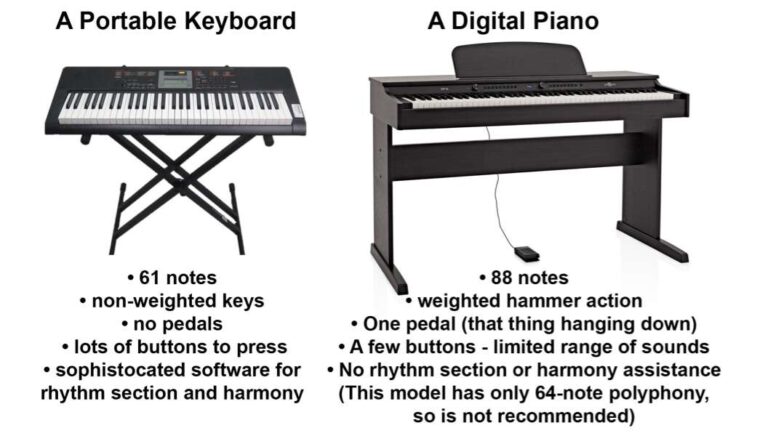
Key action matters more than a large voice count for most pianists. Weighted keys use resistance that feels closer to an acoustic piano. This helps you build control in soft notes, loud chords, repeated notes, and fast passages. Semi-weighted keys offer some resistance, but they usually feel lighter and less detailed.
An 88-key keyboard gives you the full piano range. It is the best choice for classical music, jazz bass lines, two-handed arrangements, and serious technique work. A 61-key keyboard takes less space and works well for synth parts, pop chords, lessons, and travel. If you already play advanced piano music, I would choose 88 keys unless portability is your main concern.
2. Match the Features to Your Work
A professional keyboard should fit your job. A pianist who plays solo piano may need strong piano tones, useful pedals, and good speakers or outputs. A band player may care more about quick sound changes, pitch control, split zones, and light weight. A producer may value USB-MIDI, layering, and computer compatibility.
Do not choose a keyboard only because it lists hundreds of sounds. Voice count can look impressive, but you may use only a few core tones. Look for controls that you can reach fast. Also check whether the keyboard includes a sustain pedal, music rest, power supply, and the connections you need.
3. Compare Build Quality, Size, and Long-Term Value
Professional use places more stress on keys, buttons, pedals, and power connections. A reliable brand can make support and replacement parts easier to find. Read the warranty details and check the return policy before buying. These steps matter more than a small difference in the number of rhythms.
Weight also matters. An 88-key weighted piano may feel better, but it can be harder to carry. A 61-key board may travel well, but it may not support full piano technique. I suggest choosing the best balance between key feel, durability, portability, and price. The right keyboard should make you want to practice and should not limit the music you play.
Final Verdict: Which Should You Buy?
For most serious pianists, the Yamaha P71 is the best keyboard piano for professional practice. Its 88 weighted keys, focused design, and dependable piano feel give it the clearest advantage.
Choose a bundle model for learning or backup use. For long-term growth, prioritize key action, full range, reliable controls, and the connections your work needs.
FAQs Of best keyboard piano for professional
What is the best keyboard piano for professional players?
The Yamaha P71 is the strongest choice in this review for professional piano practice because it has 88 weighted keys and a focused piano design.
Are 61-key keyboards good enough for professional use?
They can work for synth parts, simple chords, teaching, and travel. They are less suitable for full-range classical music and advanced piano technique.
Should a professional pianist choose weighted or semi-weighted keys?
Most pianists should choose weighted keys for a more natural piano response. Semi-weighted keys can work for budget practice or portable backup use.
Is an 88-key digital piano better than a 61-key keyboard?
An 88-key digital piano is usually better for serious piano study. A 61-key keyboard is lighter, smaller, and often better for basic arranging or travel.
What features matter most in a professional keyboard piano?
Prioritize key action, sound quality, pedal support, reliable controls, useful connections, build quality, and a range that matches your music.

Senior Music Reviewer
Alex Carter is a seasoned music reviewer with over a decade of experience in the world of sound and instruments. Passionate about helping musicians and enthusiasts make informed choices, he brings sharp insights and in-depth knowledge to every review. From classical instruments to modern gear, Alex combines technical expertise with a love for music to deliver content that resonates with readers.
As a Senior Music Reviewer and expert author on Tuneluma.com, Alex is dedicated to sharing honest evaluations, practical advice, and thoughtful commentary to guide readers in their musical journey.