Best Digital Piano For Beginners 2026: Top Beginner Picks
The best digital piano for beginners in 2026 balances realistic keys, clear sound, simple controls, and room to grow.
You may want to learn piano, but a full acoustic instrument can be costly, heavy, and hard to place at home. Perhaps your child has started lessons, or you want a quiet way to practice after work. A digital piano solves those problems with headphones, built-in sounds, and less upkeep. I tested this group with beginner needs in mind, including key feel, sound, size, setup, pedals, and long-term value. The right choice should feel inviting on day one and still support you when simple songs become more demanding.
88-Key Beginner Keyboard Piano Set

This 88-key beginner keyboard piano gives new players the full range of a standard piano. Its semi-weighted keys offer more resistance than a light toy keyboard, so finger control feels more natural. The set also includes a sustain pedal, stand, carrying case, headphones, and power supply. That makes it a practical starter bundle for someone who wants to play soon without buying several extras.
The USB-MIDI connection adds useful value for modern learners. I can connect the keyboard to compatible music apps, recording software, or a computer for lessons and practice tools. The included headphones help keep practice quiet in a shared home. Still, the semi-weighted action will not feel as firm or detailed as a true hammer-action digital piano.
Pros:
- Full 88-key range supports proper beginner technique
- Semi-weighted keys offer more control than basic spring keys
- Includes stand, pedal, headphones, case, and power supply
- USB-MIDI supports apps, lessons, and home recording
- Portable design works well for small rooms or travel
- Headphones allow quiet practice at night
Cons:
- Semi-weighted action is less realistic than hammer action
- Included accessories may feel basic compared with premium gear
- A full-size keyboard needs more floor space than a 61-key model
My Recommendation
I recommend this set for adults, teens, and families who want a complete first piano package. It is especially useful when the buyer needs a stand and headphones right away. The full key range gives a learner room to study proper pieces instead of outgrowing a small keyboard within a few months. For many shoppers, this is a strong value pick in the best digital piano for beginners 2026 category.
| Best for | Why |
|---|---|
| First-time adult players | Full range and useful accessories make setup simple. |
| Quiet home practice | Included headphones help reduce noise. |
| App-based learning | USB-MIDI works with compatible devices and software. |
61-Key Portable Keyboard With Mic

This 61-key keyboard piano focuses on ease, portability, and family fun. It has enough keys for basic lessons, simple chords, melodies, and many popular songs. Built-in speakers mean you can play without an external amplifier. The included microphone also gives children another way to explore rhythm and music.
Its lighter design is easier to move from a bedroom to a living room or take to a lesson. I see it as a friendly first step for a child or casual player who is not yet sure how serious the hobby will become. The main tradeoff is key range, since advanced piano pieces may require notes beyond 61 keys. The keys are also designed for general keyboard play rather than the touch of an acoustic piano.
Pros:
- Compact and easy to move around the home
- 61 keys cover basic beginner songs and exercises
- Built-in speakers make play simple and immediate
- Microphone adds vocal and family entertainment options
- Friendly choice for children and casual learners
- Usually needs less storage space than an 88-key piano
Cons:
- Limited range may restrict advanced piano pieces
- Light keys do not mimic a weighted acoustic action
- May not satisfy a serious student for long-term study
My Recommendation
This model suits young beginners, casual players, and gift buyers who want a simple musical starter instrument. I would choose it for a child who needs an engaging way to begin, especially when portability matters more than realistic piano feel. It can also work well in a small apartment. However, a student planning formal piano lessons should consider an 88-key weighted model instead.
| Best for | Why |
|---|---|
| Children starting music | The compact layout and microphone make practice inviting. |
| Small homes | The shorter keyboard stores and moves with less effort. |
| Casual players | Speakers provide quick play without extra equipment. |
Donner DEP-20 88-Key Weighted Piano

The Donner DEP-20 is a more piano-focused option for beginners who want weighted keys. Its 88-key layout matches the range of a traditional piano, while the weighted keyboard helps build finger strength and control. The furniture-style stand gives it a stable, permanent look in a practice room. A three-pedal unit adds sustain, sostenuto, and soft pedal functions for more complete technique.
This design makes the DEP-20 a better fit for structured lessons than a basic portable keyboard. The weighted response can help a student learn to play softly, firmly, and with more expression. I also like that the stand keeps the instrument at a steady playing height. It is less convenient to move, though, and buyers should measure their room before ordering.
Pros:
- 88 weighted keys support traditional piano study
- Three-pedal unit encourages proper pedal technique
- Furniture stand creates a stable playing position
- Full range reduces the chance of early upgrades
- Better suited to lesson books and classical pieces
- More piano-like feel than unweighted keyboards
Cons:
- Furniture design is not ideal for frequent moving
- Requires more space than a portable keyboard
- Sound and action may not match higher-priced digital pianos
My Recommendation
I recommend the DEP-20 for a beginner who plans to study for several years. It is also a good choice for parents who want a serious home instrument rather than a short-term toy. The weighted action and three pedals provide a stronger foundation for technique. Among affordable choices, it remains one of the most convincing candidates for the best digital piano for beginners 2026.
| Best for | Why |
|---|---|
| Formal piano lessons | Weighted keys and three pedals support correct habits. |
| Home practice rooms | The fixed stand feels stable and furniture-like. |
| Long-term beginners | The 88-key design leaves room to progress. |
61-Key Beginner Piano With Teaching Features

This 61-key digital piano is built around a simple and approachable learning experience. It includes a built-in speaker and microphone, which lets a new player start without extra gear. The 61-key layout offers enough room for beginner melodies and chord patterns. Teaching features can make early practice feel more like a game than a chore.
I would look closely at this model for a child, beginner singer, or family that wants a flexible keyboard. Its size is easier to manage than a full digital piano, and the controls should feel less intimidating for a new user. It is not the best choice for advanced classical work because it lacks the full 88-key range. The unweighted action also favors general music play over formal piano technique.
Pros:
- Teaching features help beginners stay engaged
- Built-in microphone supports singing and creative play
- 61 keys provide a useful balance of range and size
- Integrated speakers reduce setup time
- Portable enough for bedrooms, classrooms, or family rooms
- Approachable layout for young players
Cons:
- Not a full-size piano keyboard
- Unweighted keys offer limited realism
- Beginners may eventually need a more advanced instrument
My Recommendation
This keyboard is best for a young beginner who needs encouragement and variety. The microphone and teaching modes can help maintain interest during the first weeks, when motivation often rises and falls. I would not select it for a student already committed to classical piano. For a first musical gift, however, it offers useful features at a practical size.
| Best for | Why |
|---|---|
| Young children | Teaching tools make short practice sessions more fun. |
| Music and singing | The microphone supports both keyboard and vocal play. |
| Flexible storage | The 61-key body is easier to place than a full piano. |
Yamaha YDP105 88-Key Digital Piano

The Yamaha YDP105 is the most traditional-looking option in this group. It uses an 88-key weighted action and a dynamic piano response designed to reflect changes in playing force. Its upright cabinet looks at home in a living room, and the three-pedal unit supports standard piano technique. The package also includes a bench, which helps create a ready-to-play setup.
Yamaha has a long history of making acoustic and electronic instruments, and that experience shows in the straightforward design. The grand piano sound is aimed at players who want to focus on music instead of a long list of effects. I find this type of focused layout helpful for beginners because it removes clutter. The main drawback is price and size, since this is a serious home piano rather than a lightweight travel keyboard.
Pros:
- Weighted 88-key action supports proper technique
- Dynamic response rewards changes in touch
- Three pedals provide a complete piano setup
- Upright cabinet looks polished in a home
- Bench is included for a matched playing position
- Focused controls are easy for beginners to understand
- Suitable for beginner and intermediate study
Cons:
- Heavier and less portable than slab-style keyboards
- Costs more than entry-level portable models
- Fewer entertainment features than some arranger keyboards
My Recommendation
I recommend the Yamaha YDP105 for a beginner who wants a lasting home piano and values trusted piano design. It is a strong choice for serious students, families with a dedicated practice space, and adults who want an attractive instrument in the living room. The weighted action, dynamic response, bench, and three pedals make it feel complete from the start. If budget allows, this is my premium pick for the best digital piano for beginners 2026.
| Best for | Why |
|---|---|
| Serious piano students | Weighted action and full pedals support steady progress. |
| Living-room use | The upright cabinet has a clean, traditional look. |
| Beginner to intermediate growth | The design can remain useful after basic lessons. |
88-Key Portable Piano With Bluetooth

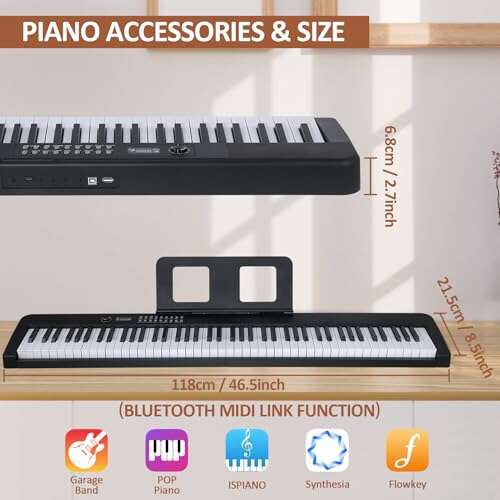
This portable 88-key piano aims to combine full piano range with useful modern extras. It includes a stand, sustain pedal, carrying case, headphones, and power adapter. Bluetooth can make it easier to play along with songs or use compatible wireless devices. USB-MIDI also gives the keyboard a role in home recording and digital lessons.
The bundle makes sense for a beginner who wants flexibility without buying a fixed furniture-style piano. I can imagine using it at home, packing it for a performance, or storing it after practice. The full key count is a major benefit for students who want to learn real piano pieces. Buyers should still confirm the exact Bluetooth function, since wireless audio and MIDI do not always work in the same way.
Pros:
- Full 88-key range works for beginner piano study
- Bluetooth adds convenient wireless practice options
- USB-MIDI connects with compatible apps and computers
- Includes case, headphones, stand, and sustain pedal
- Portable shape suits home, rehearsal, or stage use
- One purchase provides many important accessories
Cons:
- Portable stands can feel less solid than furniture cabinets
- Wireless features may require device compatibility checks
- Key feel may not equal a premium weighted digital piano
My Recommendation
This keyboard is best for a beginner who wants a full-size instrument that can move. It suits apartment players, performers, and students who use music apps or online lessons. The included case and headphones add real value because they remove common first-purchase costs. I consider it a versatile choice for shoppers comparing the best digital piano for beginners 2026 with portability in mind.
| Best for | Why |
|---|---|
| Portable full-size practice | The 88 keys come with a carrying case. |
| Online lessons | Headphones and USB-MIDI support quiet digital study. |
| Home performers | Bluetooth and a stand add flexible playing options. |
Donner DDP-95 88-Key Digital Piano

The Donner DDP-95 is designed for players who want many sounds and learning tools in a full-size digital piano. It has an 88-key weighted keyboard, a 4.3-inch LCD, recording functions, and wireless connection support. The listed library includes 610 tones and 600 rhythms, giving beginners plenty of ways to explore. Three teaching modes can also support guided practice.
This model is not only a piano; it is also an arranger-style instrument for creative play. I like that a learner can record a short idea, change the tone, or add a rhythm without needing other equipment. The display may make controls easier to understand than a panel with small labels. With so many features, new users may need time to learn the system, and the larger cabinet is better for a fixed home setup.
Pros:
- Weighted 88-key keyboard supports piano technique
- Large LCD helps with navigation and settings
- Many tones and rhythms encourage musical discovery
- Recording function lets beginners review their playing
- Three teaching modes support structured practice
- Wireless connection adds modern convenience
- Good choice for players who enjoy variety
Cons:
- Many functions may feel complex at first
- Furniture-style design is not easy to transport
- Arranger features may be unnecessary for classical-only students
My Recommendation
I recommend the DDP-95 for a beginner who wants both piano study and creative music tools. It works well for families, hobby musicians, and adults who may enjoy recording or playing with rhythms. The weighted keys keep piano practice at the center, while the extra sounds help prevent boredom. Choose a simpler model if you prefer a quiet, focused instrument with fewer controls.
| Best for | Why |
|---|---|
| Creative beginners | Tones, rhythms, and recording invite experimentation. |
| Guided home practice | The LCD and teaching modes make tasks clearer. |
| Growing hobby players | The full keyboard and large feature set offer room to explore. |
Vediya 88-Key Semi-Weighted Piano
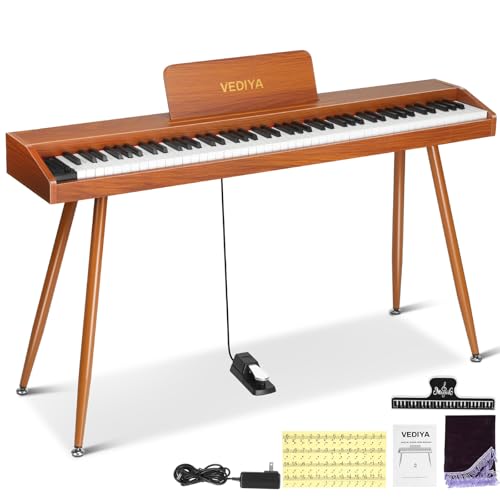
The Vediya digital piano offers a full 88-key layout in a simple, approachable design. Its semi-weighted action gives the keys more resistance than a basic keyboard while keeping the body fairly manageable. A sustain pedal is included, and USB-MIDI compatibility supports digital learning and recording. The brown finish gives it a warmer look than the usual black keyboard.
I see this as a practical middle ground for a buyer who wants full range but does not need a large furniture cabinet. The semi-weighted keys can help a new player begin noticing touch and control. It is also useful for someone who wants to connect a computer or tablet later. As with other semi-weighted models, it cannot fully replace the feel of a hammer-action piano.
Pros:
- 88 keys provide a complete piano range
- Semi-weighted action offers basic touch resistance
- USB-MIDI works with compatible learning systems
- Included pedal supports sustain technique
- Portable format is easier to move than a cabinet piano
- Brown finish offers a distinct home-friendly style
Cons:
- No true hammer action for advanced touch training
- May need a separate stand or bench depending on the setup
- Fewer built-in features than an arranger keyboard
My Recommendation
The Vediya is best for a beginner who wants 88 keys at a modest size and a simple feature set. It makes sense for adults who plan to practice at home but may move the instrument from time to time. USB-MIDI adds useful life as lessons become more digital. I would choose it over a 61-key keyboard when full range matters, but choose a weighted cabinet model for more serious piano training.
| Best for | Why |
|---|---|
| Budget-minded adults | It offers full range without a large furniture cabinet. |
| Computer-based learning | USB-MIDI supports compatible apps and recording tools. |
| Simple home practice | The controls and pedal keep the setup easy to use. |
RockJam RJ549 49-Key Keyboard

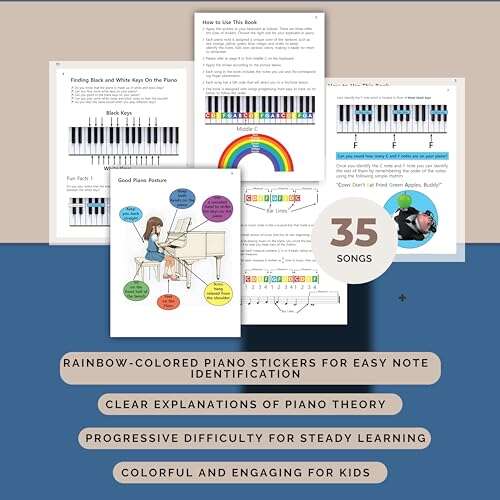
The RockJam RJ549 is the smallest and simplest option in this review. With 49 keys, it takes up little space and gives a new player a low-pressure way to try keyboard music. Note stickers can help children connect written notes with the keys. That visual aid is especially useful during the first stage of learning.
This is not a substitute for a full digital piano, but it can be a smart first step. I would consider it for a young child, a small desk, or a buyer who wants to test the hobby before spending more. The limited key count restricts two-handed pieces and makes it less suitable for formal piano training. It is best viewed as an entry keyboard, not a long-term classical instrument.
Pros:
- Very compact for small rooms and desks
- Note stickers can support early learning
- Simple layout feels less intimidating to children
- Easy first purchase for testing a new hobby
- Lightweight design is convenient to move
- Lower key count may suit basic melodies
Cons:
- 49 keys limit two-hand range and song choice
- Keys are not designed to reproduce acoustic piano feel
- Most serious students will outgrow it quickly
My Recommendation
I recommend the RJ549 for a child who is just exploring music or for a family with very limited space. The note stickers can make the first lessons feel less confusing. I would not buy it for an adult taking formal piano lessons or anyone who already knows they want to progress. Its value comes from low cost, small size, and easy access, not from advanced piano performance.
| Best for | Why |
|---|---|
| Very young beginners | Note stickers make the key layout easier to grasp. |
| Small desks | The 49-key body takes up little room. |
| Testing the hobby | It offers a low-risk way to begin playing. |
How I Choose the Best Digital Piano for Beginners
Choosing a beginner piano is not just about counting keys or chasing the lowest price. I first look at how the instrument will feel after the excitement of the first week fades. A good digital piano should make practice easy to start and rewarding to repeat. It should also match the learner’s goals, room, budget, and expected progress.
Key count matters
An acoustic piano has 88 keys, so an 88-key digital piano offers the most complete learning path. A full range matters when a student plays classical pieces, uses both hands widely, or follows formal lesson books. A 61-key keyboard can work well for basic songs, chords, and children who are just starting. A 49-key model is best for simple melodies and short-term exploration.
Many new buyers assume more keys always means better value. That is not quite true. A large keyboard that overwhelms a child or cannot fit the room may receive less use than a smaller one that stays ready to play. The best digital piano for beginners 2026 should fit the actual player, not an imaginary future musician.
Weighted versus semi-weighted keys
Key action is one of the most important differences between a keyboard and a digital piano. Unweighted keys are light and easy to press. They suit general music play, pop chords, and young beginners. Semi-weighted keys add some resistance and can feel more controlled.
Weighted or hammer-action keys aim to copy the heavier feel of an acoustic piano. They help students learn finger strength, touch, and dynamic control. A beginner does not need the most expensive action, but a serious student benefits from practicing on keys that respond more like a real piano.
Sound quality and speakers
Speakers should sound clear at a normal room volume. I listen for a piano tone that stays pleasant when notes are played softly and loudly. A harsh speaker can make practice tiring, even when the keys feel good. Headphone support is also important for apartments, shared homes, and late-night sessions.
Do not judge a piano only by the number of sounds. Hundreds of tones can be fun, but a strong main piano sound matters most for a new student. Extra sounds become more valuable when the player enjoys arranging, songwriting, or recording. For classical study, a clean piano voice and good touch response deserve priority.
Pedals and proper posture
A sustain pedal is useful from the start. It teaches a student to connect notes and shape phrases. Three pedals provide a more complete piano experience, though a beginner may use the sustain pedal most often during early lessons.
A stable stand or cabinet also matters. The player should sit at a comfortable height with relaxed shoulders and level wrists. A cheap stand that shakes can distract from practice. If a model does not include a bench, choose a firm seat at the right height instead of a soft couch.
Learning and connection features
USB-MIDI can connect the piano to a computer, tablet, or compatible learning app. This can help with lessons, notation, recording, and feedback. Bluetooth may support wireless audio or other connections, but the exact function can vary by model. I always advise checking the product manual and device requirements before assuming that every wireless feature works the same way.
Recording features can help a beginner hear timing problems that are hard to notice while playing. Teaching modes can also break practice into smaller tasks. Still, technology should support practice rather than replace it. A learner will improve through steady, focused playing, not by pressing every button on the panel.
What Size Digital Piano Should a Beginner Buy?
Choose 88 keys if the student plans to study piano seriously, take lessons, or play classical music. Choose 61 keys when space, weight, and price matter more than full range. Choose 49 keys only when the buyer wants a very small starter keyboard or a child’s first introduction to notes.
Room size can guide the decision. Measure the width, depth, and walking space around the instrument before buying. Remember that a bench and stand need space too. A portable 88-key model may fit a small room better than an upright cabinet, even though both have the same number of keys.
Weighted Keys or Light Keys for a First Piano?
For serious piano study, I favor weighted keys. They may feel harder at first, but that resistance teaches control and prevents a student from relying only on finger speed. Weighted keys also make the move to an acoustic piano less surprising. A player can learn to vary pressure, which creates more expressive sound.
Light keys still have a place. They are easier for small hands, simpler for casual play, and often cheaper. If the goal is to sing, make beats, play pop tunes, or explore music without formal lessons, an unweighted or semi-weighted keyboard may be the better fit. The best digital piano for beginners 2026 depends on the person who will use it every day.
Digital Piano Features I Would Skip at First
Beginners often pay more for features they rarely use. A huge sound library may look impressive, but most practice time will use one or two piano tones. Complex rhythm sections can also distract from learning notes and timing. I prefer spending more on key action, speakers, pedals, and a stable stand.
That does not mean extra features have no value. A child may practice longer with lesson modes or a microphone. An adult songwriter may need recording and MIDI. The smart approach is to identify the player’s main goal first, then pay for features that support it.
Setup Tips for a New Digital Piano
Place the piano where it is easy to reach. If it stays packed in a closet, practice becomes less likely. Use a firm bench and set the height so the forearms sit close to level with the keys. Keep the sustain pedal centered under the right foot.
Start with short sessions. Ten focused minutes can build a better habit than one long session each week. Practice scales, simple chords, and one small song section. Keep headphones nearby if noise may stop you from playing.
Protect the keyboard from drinks, direct sun, heat vents, and damp areas. Dust the surface with a soft, dry cloth. Do not pull a portable piano by its keys or leave cables where people can trip. Good care helps an entry-level instrument stay reliable.
Common Beginner Buying Mistakes
Buying by price alone
The cheapest keyboard may seem safe, but it can become frustrating if the keys feel poor or the sound is harsh. A slightly better model may cost less over time because the student keeps using it. Value comes from useful design, not just the lowest number.
Ignoring the stand
Playing on a dining table can place the keys too high. That can lead to tense wrists and poor posture. A proper stand or cabinet supports comfort and makes practice feel more like a real lesson.
Forgetting headphones
Many beginners stop practicing because they worry about bothering family members. Headphones remove that barrier. They also let a player focus on small mistakes without room noise getting in the way.
Choosing too many features
A crowded control panel may confuse a new player. Simple controls can be a benefit, especially for someone who wants to learn piano rather than produce full arrangements. Buy features that encourage the learner to sit down and play.
Are Digital Pianos Good for Adult Beginners?
Yes. Digital pianos are often excellent for adults because they offer volume control, headphone use, and a smaller footprint than an acoustic piano. Many adults also like USB-MIDI and recording features for online study. A weighted 88-key model can provide a solid foundation without tuning visits or a large acoustic cabinet.
Adults should be honest about their practice space and schedule. A portable keyboard may be more useful than an impressive piano that cannot stay set up. If the instrument is ready when free time appears, it becomes easier to build a habit. I would rather see a beginner use a simple keyboard often than own a premium piano that sits untouched.
Are Digital Pianos Good for Children?
Digital pianos can work very well for children, but the right size depends on age and lesson goals. A 61-key keyboard may feel friendly and manageable for a young child. If the child takes formal lessons and shows steady interest, an 88-key weighted piano is a better long-term choice.
Parents should check key height, bench position, and volume. Keep practice short and positive. A child does not need to play for an hour to make progress. A few minutes of careful work, repeated often, can grow into a strong musical habit.
How Much Should a Beginner Spend?
There is no single correct budget for every family. Low-cost keyboards can introduce a child to music, while mid-range 88-key models make more sense for formal study. Premium home pianos cost more but often offer better action, sound, cabinet quality, and long-term comfort.
I suggest dividing the budget by purpose. Spend first on the keys and overall playing feel. Then consider pedals, headphones, stand quality, and learning connections. Do not forget delivery, assembly, bench, and warranty details when comparing the final cost.