What Is The Difference Between Piano And Keyboard: Guide
A piano uses strings or digital modeling for rich tone, while a keyboard offers portable sounds, rhythms, and flexible controls.
Understanding what is the difference between piano and keyboard helps you choose the right instrument for your space, budget, and goals. Both use piano-style keys, but they differ in sound production, touch, features, size, and purpose. After comparing acoustic pianos, digital pianos, and electronic keyboards, the most important lesson is simple: the best choice depends on how you plan to play.
What Is the Difference Between Piano and Keyboard?
The main difference is how each instrument creates sound. An acoustic piano uses felt-covered hammers to strike metal strings. A keyboard uses electronic circuits, samples, or digital sound models to create piano tones and other sounds.
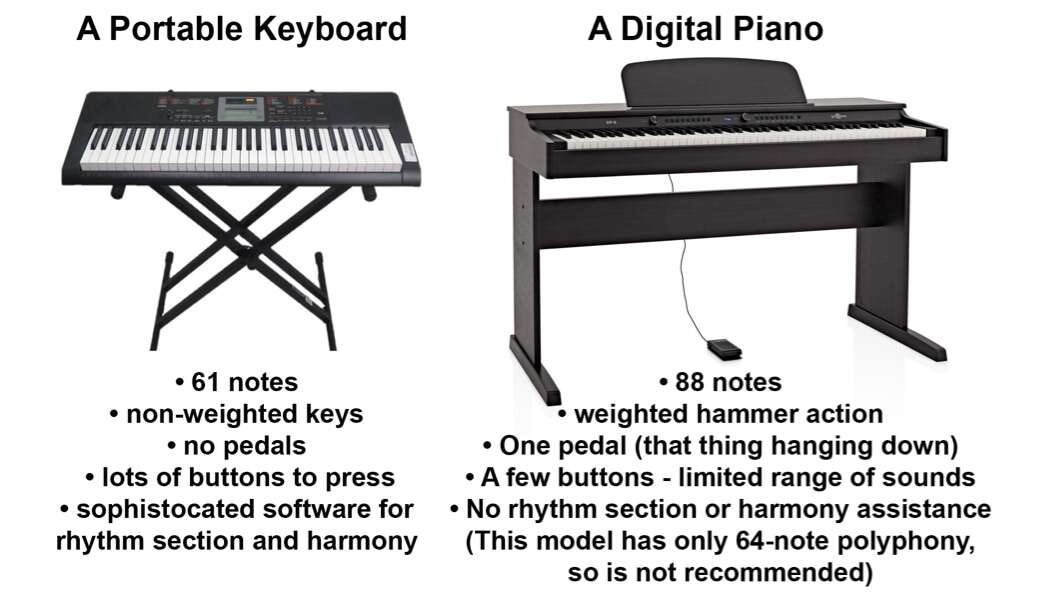
The word “piano” can mean an acoustic piano or a digital piano. A traditional piano usually has 88 keys, three pedals, and a large wooden body. A keyboard may have 49, 61, 76, or 88 keys, along with sounds such as organs, strings, drums, bass, and synthesizers.
Here is a simple comparison:
| Feature | Acoustic piano | Digital piano | Electronic keyboard |
|---|---|---|---|
| Sound source | Strings and hammers | Digital samples or modeling | Electronic samples and tones |
| Typical keys | 88 | Usually 88 | Often 49, 61, or 76 |
| Touch | Weighted and responsive | Weighted or semi weighted | Usually light or semi weighted |
| Main purpose | Piano performance | Piano practice and performance | Versatility, learning, and music production |
| Extra sounds | Very few | Some built in sounds | Many sounds and rhythms |
| Portability | Very low | Moderate to high | High |
| Maintenance | Regular tuning and service | Little maintenance | Little maintenance |
So, what is the difference between piano and keyboard in daily use? A piano focuses on realistic piano expression, while a keyboard focuses on variety, convenience, and electronic control.

How an Acoustic Piano Works
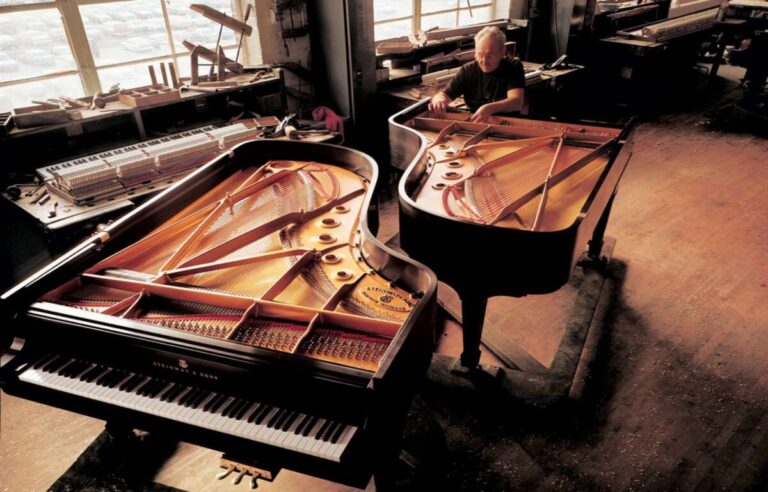
An acoustic piano creates sound through a mechanical chain. When you press a key, a lever moves a hammer toward a string. The hammer strikes the string, and the string vibrates inside the wooden soundboard.
The soundboard amplifies the vibration. The shape of the cabinet, the length of the strings, and the quality of the materials all affect the tone. Pressing a key softly creates a quiet sound, while pressing it with more force creates a louder and brighter sound.
An acoustic piano also responds to small changes in your fingers. This is one reason classical pianists value it. You can shape a note through touch, timing, pedal use, and hand control.
Most full size pianos have 88 keys. They also have pedals that control sustain and tone:
- The sustain pedal lets notes continue after you release the keys.
- The soft pedal changes the tone and reduces volume on many pianos.
- The sostenuto pedal sustains selected notes on some grand and upright pianos.
An acoustic piano does not need speakers or electrical power. However, it needs regular tuning because changes in humidity, temperature, and string tension can affect its pitch. Many piano technicians recommend tuning at least once or twice each year, though the ideal schedule depends on use and climate.
How a Keyboard Works
An electronic keyboard turns key presses into electrical signals. A small computer then uses those signals to trigger recorded or digitally modeled sounds. The sound comes through built in speakers, headphones, an amplifier, or a recording system.
Most keyboards offer more than a piano sound. You may find:
- Electric piano tones
- Organs
- Acoustic and electric guitars
- Brass and woodwind sounds
- Strings and orchestral layers
- Drum kits
- Synthesizer sounds
- Bass instruments
- Automatic accompaniment styles
Many keyboards also include rhythms, recording tools, lesson modes, displays, and USB or MIDI connections. MIDI allows the keyboard to send performance data to a computer, tablet, or music app. The data can control virtual instruments and recording software.
The keys on a keyboard are often lighter than piano keys. This makes fast playing and repeated notes easier for some users. However, light keys may not build the same finger strength or control needed for advanced acoustic piano playing.
When asking what is the difference between piano and keyboard, electronic design is a major part of the answer. A keyboard is more like a small music workstation, while a piano is built mainly to deliver an expressive piano experience.

Digital Piano Versus Electronic Keyboard
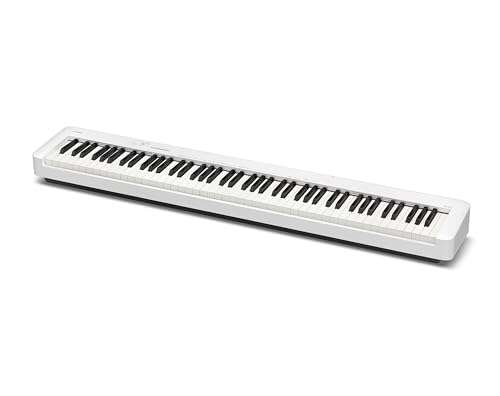
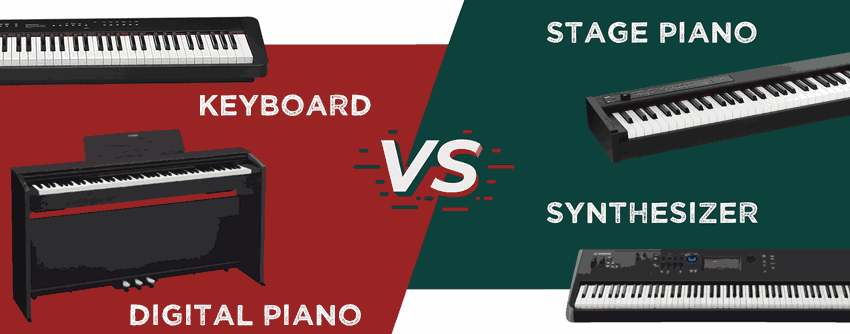
A digital piano sits between an acoustic piano and a basic keyboard. It uses digital sound, but it is designed to feel and sound more like a real piano.
Most digital pianos have:
- 88 full size keys
- Weighted or hammer action
- Touch sensitive controls
- Piano focused sounds
- Sustain and other pedal options
- Headphone support
- Built in speakers
Some digital pianos use graded hammer action. In this design, the lower keys feel heavier and the higher keys feel lighter, similar to the action of a grand piano. This can help students become comfortable with traditional piano technique.
A standard keyboard may have unweighted keys. These keys are lighter and often spring back quickly. That design works well for pop music, chord playing, sound selection, and basic melodies.
The terms can overlap. Some 88 key keyboards have excellent weighted action and piano sounds. Some compact digital pianos include drum patterns and many extra voices. Always check the key action, speaker quality, pedal support, and sound engine instead of relying only on the product label.
This overlap explains why what is the difference between piano and keyboard is not always a black and white question. The difference depends on whether you are comparing an acoustic piano with a basic keyboard, or a digital piano with a professional workstation keyboard.

Key Differences in Sound and Tone
An acoustic piano produces a natural tone that changes as the strings vibrate. The sound has complex overtones, resonance, and slight variations between notes. The room also affects the final result.
A digital piano reproduces piano sound through recordings or mathematical modeling. High quality digital instruments can sound very realistic, especially through good headphones or studio speakers. Still, the sound may respond differently from an acoustic piano when you change touch or use the pedals.
A keyboard can imitate a piano, but its main strength is variety. You can split the keyboard so one hand plays bass while the other plays piano. You can layer strings over a piano sound. You can also add rhythm patterns for practice or performance.
An acoustic piano is like a live singer whose voice changes with every phrase. A keyboard is more like a full band inside a compact box. Neither approach is automatically better. Each serves a different musical need.

Key Differences in Touch and Playing Feel
Touch is one of the most important factors when choosing between a piano and a keyboard. Piano keys usually have weight and resistance. That resistance helps you control volume and tone through finger pressure.
Weighted digital piano keys try to copy this experience. Some use real hammer mechanisms, while others use simpler counterweights and springs. The quality can vary widely, so try the instrument before buying when possible.
Keyboard keys are usually lighter. They may feel fast and easy for beginners, pop players, and electronic musicians. However, a very light action can feel unfamiliar when you later play an acoustic piano.
When I compare instruments for beginners, I suggest testing three things:
- Play the same scale slowly and quickly.
- Play soft notes, then loud notes, without changing your rhythm.
- Hold notes with the sustain pedal and listen for unwanted noise.
These simple tests reveal more than a long feature list. A good instrument should feel comfortable and help you control the sound.
Size, Portability, and Space
An acoustic piano takes up substantial space. An upright piano may fit against a wall, but it is still heavy and difficult to move. A grand piano requires even more room and careful placement.
A digital piano is usually smaller and easier to move. Some models have a furniture style cabinet, while others use a simple portable stand. A portable digital piano can work well in an apartment, classroom, church, or small performance space.
Keyboards are usually the easiest to transport. Many weigh less than a digital piano and can fit in a padded carrying case. This makes them useful for bands, music lessons, home recording, and travel.
If you live in an apartment, headphones can also reduce noise. Remember, though, that acoustic pianos still create vibration through the floor and walls, even when you play at a moderate volume.
Cost and Maintenance
The purchase price varies greatly. Entry level keyboards can be affordable, while professional workstations and premium digital pianos cost much more. Acoustic pianos also range from used upright models to expensive concert grands.
An acoustic piano has ongoing costs. These may include:
- Regular tuning
- Repairs to strings, hammers, and pedals
- Humidity control
- Moving and delivery
- Bench replacement or adjustment
Digital pianos and keyboards usually need less maintenance. You may need to replace a power adapter, sustain pedal, speaker, or key contact over time. They do not need traditional tuning, although their pitch settings can be adjusted electronically.
A used acoustic piano can look like a bargain but still need costly repairs. Before buying one, have a qualified piano technician inspect the action, soundboard, strings, pedals, and tuning stability.
Which Instrument Is Better for Beginners?
The right beginner instrument depends on your goals and home situation.
Choose an acoustic piano if you:
- Want traditional piano training
- Enjoy natural acoustic tone
- Have enough space
- Can manage tuning and maintenance
- Plan to study classical piano seriously
Choose a digital piano if you:
- Want realistic piano touch
- Need headphone practice
- Live in a small home
- Prefer low maintenance
- Want a long term practice instrument
Choose a keyboard if you:
- Want many instrument sounds
- Enjoy pop, rock, gospel, or electronic music
- Need a portable instrument
- Want built in rhythms and lessons
- Plan to connect to music software
For many new players, a digital piano offers the best balance. It provides 88 weighted keys and a focused piano design without the size and upkeep of an acoustic instrument.
One mistake I often see is buying a very small keyboard for piano lessons and then feeling limited a few months later. A 61 key keyboard may be fine for basic songs, but it cannot cover the full range of many piano arrangements. If piano is your main goal, an 88 key weighted instrument is usually the safer choice.
Can You Learn Piano on a Keyboard?
Yes, you can learn basic notes, chords, rhythm, and music reading on a keyboard. A keyboard can also help you develop hand coordination and practice songs at home.
The limitation is key action. If your keyboard has light, unweighted keys, it may not prepare you fully for the resistance and control of an acoustic piano. It may also have fewer than 88 keys, which limits the range of advanced pieces.
If you plan to move from keyboard to piano, practice dynamics from the start. Play scales and simple melodies at different volume levels. Also learn proper posture, relaxed wrists, finger control, and pedal technique.
A keyboard is a useful learning tool, but a weighted digital piano is usually better for students who want formal piano progress. This is another practical answer to what is the difference between piano and keyboard: both can teach musical skills, but they build touch skills in different ways.
Piano and Keyboard Features to Check
Do not choose an instrument based only on its number of sounds. Check the features that support your actual playing.