What Are The Names Of The Strings On A Violin: Easy Guide
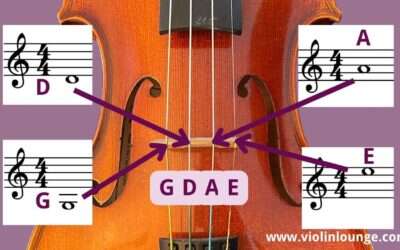
The four violin strings are G, D, A, and E, ordered from lowest pitch to highest.
If you are learning violin, knowing what are the names of the strings on a violin is one of the first skills to master. These four strings form the instrument’s basic map, help you read music, and guide your bow and finger placement. This guide explains their order, pitch, tuning, sound, string types, memory tricks, and common mistakes so you can build confidence from your first practice session.

What Are the Names of the Strings on a Violin?
The names of the strings on a violin are G, D, A, and E. From the thickest and lowest string to the thinnest and highest string, the order is:
- G string
- D string
- A string
- E string
The G string sits closest to your face when you hold the violin in playing position. The E string sits closest to the floor. This order is the same whether you play a full-size violin or a smaller student model.
A standard violin has four strings. Each string is tuned to a different open note. An open string sounds when you draw the bow across it without pressing a finger on the fingerboard.
The violin string order at a glance
| String | Open note | Relative pitch | Position |
|---|---|---|---|
| G | G3 | Lowest | Closest to your face |
| D | D4 | Low-middle | Second from the G string |
| A | A4 | High-middle | Second from the E string |
| E | E5 | Highest | Closest to the floor |
The numbers show scientific pitch notation. G3 is the lowest open violin string, while E5 is the highest. Most beginners do not need to memorize these numbers right away, but they help explain the exact pitch of each string.

How Are Violin Strings Tuned?
Violin strings are tuned in perfect fifths. This means each string is five scale steps above the string before it. The tuning moves upward like this:
G → D → A → E
For example, D is a perfect fifth above G. A is a perfect fifth above D, and E is a perfect fifth above A. This wide, balanced spacing gives the violin its bright sound and makes it possible to play across several strings with useful harmony.
The standard tuning frequencies are close to:
• G3: 196 Hz
• D4: 293.66 Hz
• A4: 440 Hz
• E5: 659.25 Hz
Many orchestras tune the A string to 440 Hz. Some professional ensembles use A=442 Hz or A=443 Hz for a slightly brighter sound. This small difference does not change the names of the strings on a violin.
Why does the violin use fifths?
Perfect fifths create a strong relationship between neighboring strings. They also allow violinists to play scales, chords, and double stops with a natural hand pattern.
The tuning is different from a guitar. Guitar strings usually move in fourths, with one major third between two strings. Violin tuning in fifths gives the instrument a wider range and supports its singing, flexible tone.
Which Violin String Is the Thickest?
The G string is usually the thickest string and has the lowest pitch. The E string is the thinnest and has the highest pitch. The D and A strings sit between them in both size and pitch.
String thickness affects more than pitch. It also affects the feel of the bow, the amount of pressure needed, and the color of the sound.
• The G string often sounds deep, warm, and rich.
• The D string has a smooth, full, and mellow tone.
• The A string often sounds clear, focused, and bright.
• The E string produces a sharp, brilliant, and penetrating sound.
These descriptions can vary by brand, material, violin, and playing style. A dark-sounding violin may make the E string feel less sharp, while a bright instrument may make it sound even more brilliant.
In my own practice, the G and D strings usually need a slower bow and more weight to speak well. The E string responds quickly, so too much pressure can make it squeak. This is a common lesson for new players: every string needs a slightly different bow approach.
What Does Each Violin String Do?
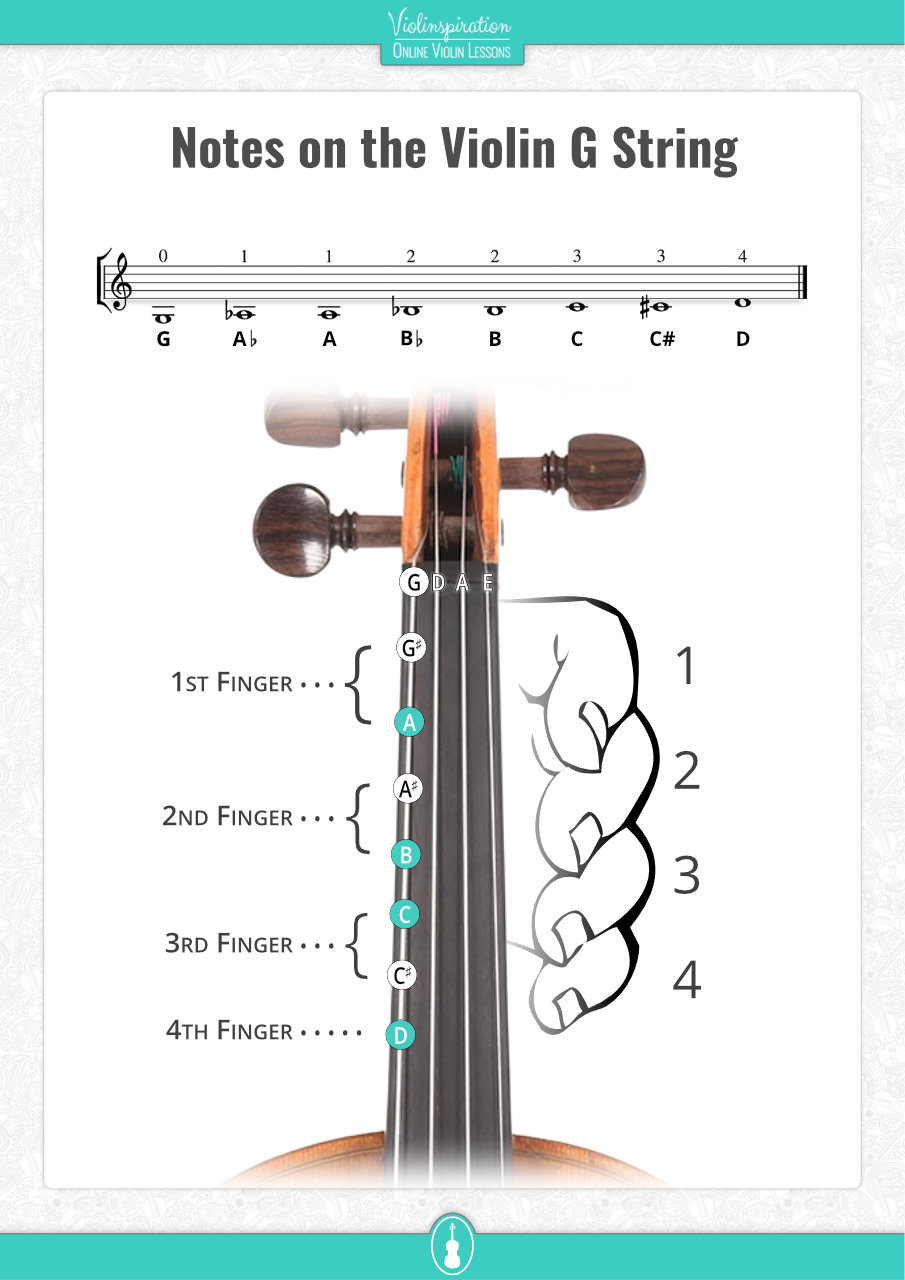
Each string has a different musical role. Violinists choose a string not only because it contains a certain note, but also because it gives that note a particular tone.
The G string
The G string is the lowest violin string. It gives low melodies a strong, warm voice and often supports dramatic or rich musical passages.
Because it is thick, the G string may respond more slowly than the other strings. Use a steady bow and allow the string time to vibrate. Pressing harder with the bow does not always create a better sound.
The D string
The D string is the second-lowest string. It is known for a warm tone and often feels comfortable for beginner scales and simple melodies.
The D string is also important in orchestral and chamber music. Many expressive passages sit naturally in the middle range created by the D and A strings.
The A string
The A string is the third string from the bottom. It is also the main reference string used for tuning in most orchestras.
Teachers often ask students to tune the A string first. The other strings can then be adjusted by listening to the perfect fifths between neighboring strings. The A string is bright but not as sharp as the E string.
The E string
The E string is the highest violin string. It has the smallest diameter and the brightest sound.
This string can project clearly over an orchestra. It can also squeak or whistle when the bow angle, speed, or pressure is not balanced. A clean bow path and light contact often help more than extra force.

How Do You Remember the Names of the Violin Strings?
A simple way to remember the names of the strings on a violin is to learn the order from low to high:
G, D, A, E
Some students use the phrase “Good Dogs Always Eat.” You can create any phrase that feels natural to you. The key is to remember that the order starts with the lowest string and ends with the highest.
You can also use a physical memory trick:
- Hold the violin in playing position.
- Find the string closest to your face.
- Say G.
- Move across the strings and say D, A, E.
- Repeat the order while touching each string.
Another helpful method is to connect each string with its open-string sound. Play G, then D, then A, and finally E. Listen as the pitch rises. Your ear will begin to recognize the pattern instead of relying only on memory.
A mistake I often see with new players is learning the names only from a diagram. A diagram helps, but touching and hearing each string makes the knowledge stick. Violin playing is physical, so your memory should be physical too.

How Do Violin Strings Differ in Material?
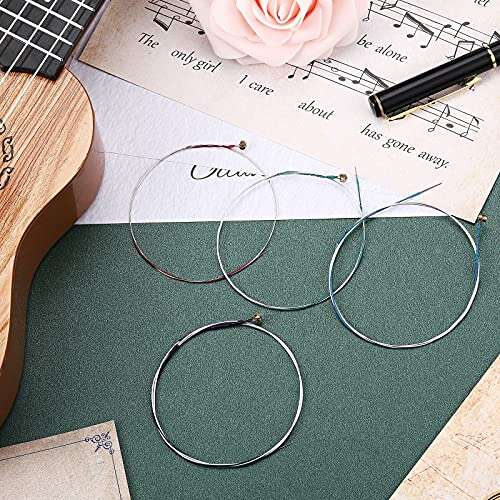
Violin strings can use different core materials and winding metals. The main types are gut, synthetic core, and steel core strings.
Gut strings
Gut strings are traditionally made with sheep intestine. Despite the name, they are not made from cow or cat gut.
Gut strings can produce a warm, complex tone. They are sensitive to temperature and humidity, however, and may need more frequent tuning. They are common in historical performance but are less common for beginners.
Synthetic core strings
Synthetic core strings use a manufactured fiber core. They often provide a warm sound with better tuning stability than gut strings.
Many student and professional violinists use synthetic core strings. They offer a useful balance of comfort, tone, response, and durability.
Steel core strings
Steel core strings use a metal center. They tend to respond quickly and hold their pitch well.
Steel strings can sound bright and direct. They are common on student instruments, fiddles, electric violins, and instruments that need a clear, strong response.
The string material does not change the names of the strings on a violin. A G string remains a G string whether its core is gut, synthetic, or steel.

How Do You Tune the Four Violin Strings?
Most violins use fine tuners, pegs, or both. Fine tuners make small pitch changes, while tuning pegs make larger adjustments.
Follow this basic process:
- Start with the A string.
- Compare it with a reliable tuner or tuning device.
- Adjust the A string until it reaches the correct pitch.
- Tune the D string to D.
- Tune the G string to G.
- Tune the E string to E.
- Check all four strings again.
Many teachers recommend tuning from a lower pitch upward. If you tune too high, loosen the string below the target pitch and raise it again. This method helps the peg and string settle more securely.
Turn the pegs slowly. They can be stiff, and a sudden movement may raise the pitch too far. If a peg slips often or feels difficult to turn, ask a teacher or violin repair professional for help.
Never force a peg. A broken string can cause a sharp snap, and a damaged pegbox can be costly to repair.
How can you tune without a digital tuner?
Experienced players can tune by listening to the perfect fifths between strings. For example, when G and D are both in tune, they produce a smooth, ringing relationship.
Beginners should use an electronic tuner, tuning app, piano, or another stable reference. Listening skills grow with practice, but a reliable pitch source helps prevent confusion.

Common Mistakes With Violin String Names
Learning what are the names of the strings on a violin sounds simple, but a few mistakes appear often.
Confusing low and high order
Some students memorize E, A, D, G because they see the strings from the opposite side of a diagram. Neither direction is wrong if it is clear, but beginners should know the standard low-to-high order: G, D, A, E.
Calling the E string the first string
In some music settings, the E string may be called the first string because it is the highest string. The G string may be called the fourth string because it is the lowest.
This numbering system can vary by teacher or book. If someone says “first string,” confirm whether they mean the E string.