What Are The Strings Of The Violin: A Simple Guide
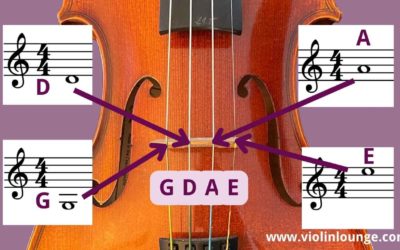
The violin has four strings: G, D, A, and E, tuned from low to high.
If you have ever looked at a violin and wondered what are the strings of the violin, the answer is simple at first but rich in detail. Each string has its own pitch, material, thickness, and role in the instrument’s sound. Understanding these parts helps beginners tune safely, choose better replacements, and hear why one violin sounds warm while another sounds bright.

What Are the Strings of the Violin?
What are the strings of the violin? A standard violin has four strings named G, D, A, and E. They are tuned in perfect fifths, which means each string is five scale steps above the one before it.
From lowest to highest, the strings are:
• G string: The thickest and lowest string
• D string: A warm, rich middle-low string
• A string: The central string used often for tuning
• E string: The thinnest and highest string
The strings run from the tailpiece, across the bridge, and along the fingerboard to the tuning pegs. When a player moves the bow across a string, the string vibrates. That vibration travels through the bridge and into the violin’s wooden body, where it becomes the sound you hear.
The exact tuning for a standard violin is:
• G3: About 196 Hz
• D4: About 293.66 Hz
• A4: 440 Hz
• E5: About 659.25 Hz
The A string is usually tuned first to 440 Hz. Players then tune the other strings by listening for the correct interval or by using a digital tuner.

Why Does a Violin Have Four Strings?
A violin has four strings because this layout gives players a wide range of notes while keeping the instrument small and easy to hold. The fifth-based tuning also makes many scales, chords, and finger patterns easier to play.
The lowest string, G, gives the violin depth. The D and A strings cover much of the middle range. The E string adds a clear, bright top range that can cut through an orchestra.
This design also supports several playing styles:
• Melodies can move across several strings
• Double stops allow two notes to sound at once
• Chords can use three or four strings
• Open strings add resonance and volume
• Shifting lets players reach higher notes on each string
When considering what are the strings of the violin, it helps to see them as four voices rather than four identical wires. The G string can sound dark and bold, while the E string may sound sharp, bright, and almost vocal.
What Are the Strings of the Violin Made Of?
What are the strings of the violin made of? Modern violin strings usually have a core made of steel, synthetic fiber, or gut. Some strings also have a thin metal winding around the core.
The main types are:
Gut strings
Gut strings are traditionally made from processed sheep intestine. They are not made from cat gut, despite the common myth. Gut strings have a warm, complex sound and respond gently under the bow.
They can be sensitive to temperature and humidity. They also stretch more than many modern strings, so they may need frequent tuning.
Synthetic-core strings
Synthetic-core strings use materials such as nylon-based or other advanced composite fibers. They aim to give players the warmth of gut with better tuning stability.
Many classical players choose synthetic strings because they offer a balanced sound. They are also common on student and professional violins.
Steel-core strings
Steel-core strings use a solid steel wire or a stranded steel center. They respond quickly and often produce a bright, focused tone.
Steel strings can be a practical choice for beginners, folk players, fiddlers, and electric violins. They are strong and usually hold their pitch well.
Wound strings
A string may have a core wrapped with aluminum, silver, tungsten, or another metal. The winding changes the string’s weight, feel, and tone.
A heavier winding can help create a lower pitch without making the string extremely thick. This is why the G, D, and A strings are often wound, while many E strings are plain steel.

What Are the Strings of the Violin Tuned To?
What are the strings of the violin tuned to? From lowest to highest, they are tuned to G, D, A, and E. These notes are separated by perfect fifths.
The standard tuning is:
- G3
- D4
- A4
- E5
The A string is the tuning reference. In an orchestra, the oboe often plays the A before the concertmaster tunes the violin section. In private practice, a tuner or tuning app can provide the same reference.
A violinist checks tuning in two ways:
• Open-string tuning: The player compares each open string with a tuner or another instrument.
• Relative tuning: The player compares neighboring strings by hearing perfect fifths.
A common mistake is turning the tuning peg too quickly. Violin strings can break if the pitch rises too far. Small adjustments are safer, especially when tuning the thin E string.

How Do the Strings Create Sound?
The strings create sound through vibration. The bow pulls and releases a string again and again, creating a regular vibration that produces a musical pitch.
The string alone is quiet. The bridge transfers its vibration to the violin’s top plate. The sound post then helps carry energy between the top and back plates. The hollow body amplifies and shapes the tone.
Several factors affect the final sound:
• String length affects pitch
• String thickness affects pitch and response
• String tension affects volume and feel
• String material affects color and warmth
• Bow pressure affects power and clarity
• The bridge and sound post affect projection
You can think of the violin body as a small wooden speaker. The string starts the sound, but the body gives that sound its character.

How Are the Strings Different From One Another?
The four strings differ in thickness, tension, pitch, and tone. The G string is usually the thickest. The E string is usually the thinnest and often has a plain steel design.
The G string often produces a deep and mellow tone. It is useful for expressive low passages and rich double stops. The D string has a warm middle-low sound and is central to many melodies.
The A string is bright but not as sharp as the E string. It is often used for tuning and for melodies in comfortable positions. The E string has the highest pitch and can sound brilliant, direct, and powerful.
Players also notice different bow responses. A thick G string may need more bow weight. A thin E string usually needs a lighter touch. Pressing too hard on the E string can make it whistle or sound harsh.

What Are the Strings of the Violin Used For?
What are the strings of the violin used for? Each string carries melodies, harmony, rhythm, and expressive effects. A player may use one string for a whole phrase or cross between strings for a smoother sound.
Open strings are useful because they ring freely. However, open strings can sound different from fingered notes. A player may finger a note on a neighboring string to create a more even tone.
Strings also support common techniques:
• Legato: Smooth notes played with connected bow strokes
• Detaché: Separate notes with clear bow strokes
• Spiccato: Bouncing the bow lightly on the string
• Tremolo: Rapid repeated bow movement
• Pizzicato: Plucking the string with a finger
• Double stops: Playing two strings at once
• Harmonics: Lightly touching the string to create a high, pure tone
The choice of string can affect how easy these techniques feel. A responsive string may help with fast passages, while a warmer string may suit slow, lyrical music.
How Often Should You Replace Violin Strings?
Most violinists replace their strings every six to twelve months. Players who practice for many hours each day may need new strings every few months. A casual player may use the same set for a year or longer.
Replace violin strings sooner if you notice:
• Fraying or broken winding
• A rough spot under the fingers
• Trouble keeping the string in tune
• A dull or weak tone
• A string that feels stiff or uneven
• Visible rust on a steel winding
Strings do not always fail suddenly. Often, the sound slowly loses energy. A string may still look fine but feel tired and less responsive.
In my practical experience with string selection, one common mistake is waiting until a string breaks. A fresh set often improves tuning, comfort, and tone before any failure occurs. It is wise to keep one spare set and at least one spare E string in your case.
How to Change Violin Strings Safely
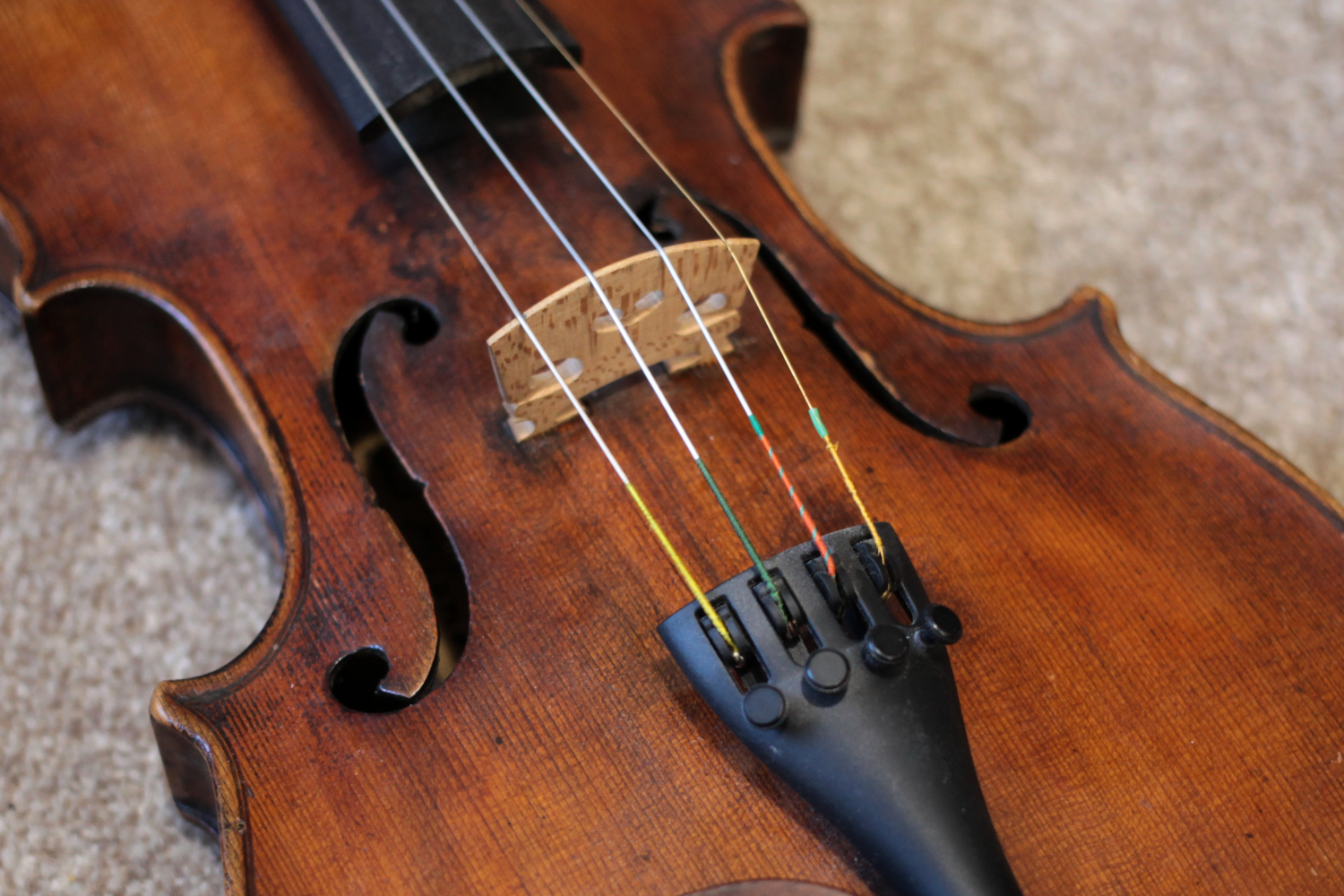
Changing violin strings is a useful skill, but it requires care. The bridge is not glued to the violin, so removing all four strings at once can allow it to fall or lean.
Follow these steps:
- Replace one string at a time.
- Loosen the old string slowly.
- Check that the bridge remains upright.
- Place the new string in the correct peg and tailpiece slot.
- Wind the string neatly toward the inside of the pegbox.
- Keep the coils close together without overlapping.
- Bring the string up to pitch in small steps.
- Check the bridge again as the tension rises.
- Stretch the new string gently with clean fingers.
- Retune several times during the first day.
Do not pull a string sharply. Excessive stretching can damage the string or cause it to snap. Keep your face and eyes away from the peg area while tightening.
If the bridge moves, the fine tuners feel loose, or the string will not stay in place, ask a violin teacher or repair professional for help.
How Should You Choose Violin Strings?
The best violin strings depend on the instrument, playing style, budget, and sound you want. There is no single set that works perfectly for every violin.
Consider these factors:
• Beginner players often benefit from stable, easy-to-use strings.
• Classical players may prefer a warm and balanced synthetic set.
• Folk players may like the quick response of steel strings.
• Soloists may choose strings with strong projection.
• Bright violins may benefit from warmer strings.
• Dark-sounding violins may benefit from more focused strings.
Avoid changing several variables at once. If you change the strings, bridge, bow, and setup together, it becomes hard to know what caused the difference.
A useful approach is to ask a teacher or violin shop to recommend a set based on your instrument. Keep notes about each set. Write down the brand, gauge, sound, comfort, and how long the strings lasted.
String price also matters, but the most expensive option is not always the best match. A reasonably priced set that suits your violin can sound better than a premium set that does not fit its character.
Common Problems With Violin Strings
Violin strings can create problems when they are worn, poorly fitted, or exposed to harsh conditions. Many issues are simple to fix.
Strings go out of tune
New strings stretch during the first few days. Old strings may also lose stability. Tune slowly and check the bridge position.
The E string whistles
The E string may whistle when the bow moves from another string. Use less bow pressure, a smoother bow change, or a different E string design.
The string sounds scratchy
Scratchy sound can come from too much bow pressure, poor bow contact, dirty strings, or an uneven bow. Wipe rosin dust from the strings with a dry, soft cloth.
The string breaks often
A string may break because of sharp edges at the bridge, nut, fine tuner, or peg. If the same place causes repeated breaks, have the violin inspected.
The violin sounds dull
Old strings are a common cause. A dirty bow, poor setup, loose bridge, or damaged sound post may also reduce the sound.
Never use household oil, water, or cleaning chemicals on violin strings. These products can damage the finish and affect the wood.
How to Care for Violin Strings
Good care can extend string life and protect the violin. Wipe the strings after each playing session to remove rosin and skin oil.
Use these simple habits:
• Wash and dry your hands before playing.
• Wipe strings with a clean, dry microfiber cloth.
• Keep the violin in a protective case.
• Avoid extreme heat, cold, and damp air.
• Do not leave the violin in a parked car.
• Check the bridge after tuning.
• Replace strings before they become badly worn.
Humidity matters because wood expands and contracts with moisture changes. A stable indoor environment is usually safer than a dry heater room or a damp storage area.
A violin case should close securely and hold the instrument without pressure. If the instrument has a serious crack, loose bridge, or open seam, take it to a qualified luthier rather than trying a home repair.
What Are the Strings of the Violin Compared With Viola and Cello Strings?
What are the strings of the violin compared with viola and cello strings? Violin strings are shorter and higher in pitch than viola, cello, and double bass strings.
A viola usually has C, G, D, and A strings. A cello usually has C, G, D, and A strings as well, but its strings are much longer, thicker, and lower in pitch.
The violin’s standard string order is G, D, A, and E. The viola and cello do not use an E string as their highest standard string. Their larger bodies and longer strings create deeper sounds.
Violin strings must not be placed on another instrument unless the string maker specifically designs them for that use. The scale length, tension, and fitting can differ greatly.
Frequently Asked Questions About What Are the Strings of the Violin
What are the strings of the violin called?
The four violin strings are called G, D, A, and E. They are named from the lowest-pitched string to the highest-pitched string.
What are the strings of the violin tuned to?
The strings are tuned to G3, D4, A4, and E5. Each neighboring string is separated by a perfect fifth.
Which violin string is the thickest?
The G string is usually the thickest string on a violin. It also has the lowest pitch and often uses a wound design.
Which violin string is the thinnest?
The E string is normally the thinnest violin string. It is often made from plain steel, although some E strings have special coatings or other designs.
What are violin strings made from?
Violin strings may use gut, synthetic fiber, or steel for their core. The core may also have a metal winding made from materials such as aluminum, silver, or tungsten.
How long do violin strings last?
Violin strings often last six to twelve months for regular players. Heavy practice, sweat, climate, and playing style can shorten their useful life.
Can a violin use any type of string?
No. Strings should match the violin’s size and design. A teacher, luthier, or trusted violin shop can help you choose a safe and suitable set.
Conclusion
The four strings of the violin are G, D, A, and E, arranged from low to high. Their materials, thickness, tension, and winding shape the instrument’s tone and response. Gut, synthetic-core, and steel strings each offer different benefits, so the right choice depends on your violin and playing style.
Learn to tune slowly, replace strings before they fail, and keep them clean after every session. These small habits can make the instrument feel easier and sound more alive. Try a suitable string set with guidance from a teacher or luthier, then share your experience or explore more violin care resources.

Senior Music Reviewer
Alex Carter is a seasoned music reviewer with over a decade of experience in the world of sound and instruments. Passionate about helping musicians and enthusiasts make informed choices, he brings sharp insights and in-depth knowledge to every review. From classical instruments to modern gear, Alex combines technical expertise with a love for music to deliver content that resonates with readers.
As a Senior Music Reviewer and expert author on Tuneluma.com, Alex is dedicated to sharing honest evaluations, practical advice, and thoughtful commentary to guide readers in their musical journey.