What Is The Highest Note On A Piano: Highest Key Explained
The highest note on a standard piano is C8, the C above the seven-octave range.
If you have ever wondered what is the highest note on a piano, the answer is clear: C8. This note sits at the far right of a standard 88-key piano and vibrates at about 4,186 hertz. Understanding its pitch, place on the keyboard, sound, and musical use can make the piano’s full range much easier to grasp.

What Is the Highest Note on a Piano?
The highest note on a standard piano is C8. It is the last key on a modern 88-key piano and appears as a white key at the far right of the keyboard.
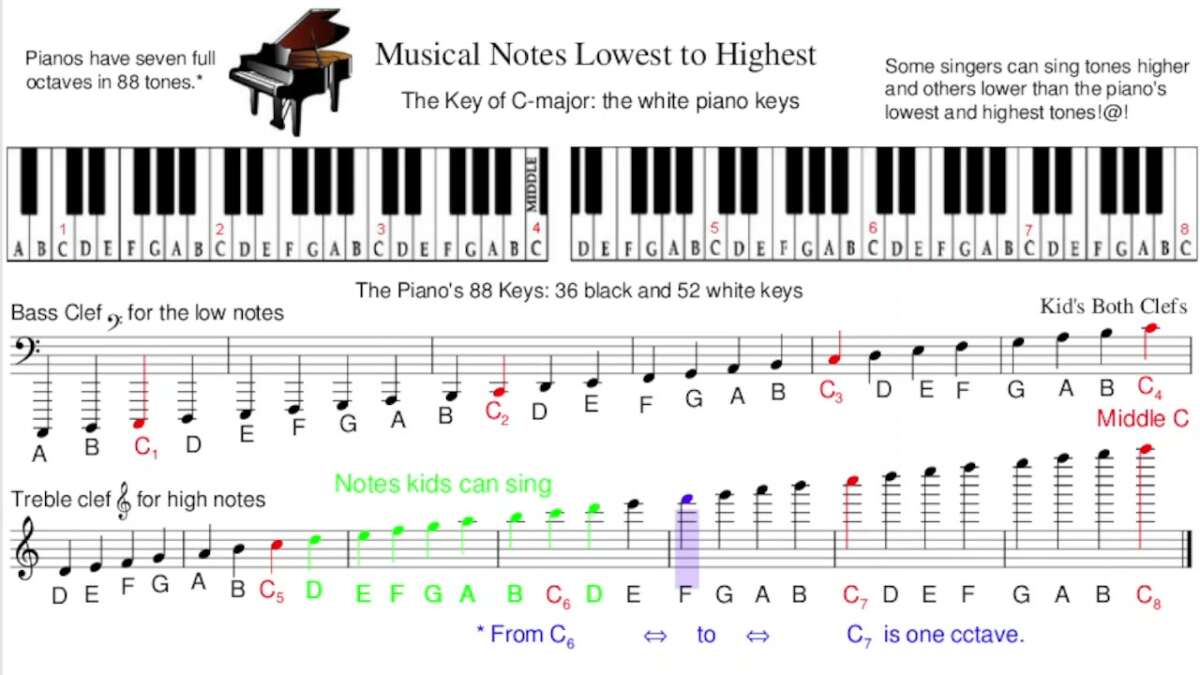
The number “8” refers to the octave. In scientific pitch notation, C8 is the C note in the eighth octave. It is one octave above C7 and two octaves above middle C, which is known as C4.
C8 has a frequency of about 4,186.01 Hz when the piano is tuned to the common A440 standard. This means the A above middle C is tuned to 440 vibrations per second.
The highest note on a piano is much higher than most notes used in everyday piano music. Composers often use the upper range for bright melodies, sparkling effects, and moments of excitement.

Where Is C8 on the Piano?
C8 is easy to find because it is the final key on a standard piano. Stand in front of the keyboard and move toward the right. The last white key is C8.
You can identify it by looking at the black keys:
- Find the final group of two black keys.
- The white key immediately to the right of that group is B7.
- The next white key is C8.
A standard 88-key piano begins at A0 and ends at C8. Its layout includes:
• 52 white keys
• 36 black keys
• 7 full octaves plus a minor third
• A total range from A0 to C8
The highest note on a piano is therefore not a black key. It is the final white key at the top of the keyboard.
One common mistake is to count the keys from the left and assume the final note is B7. That is not correct. The keyboard begins with A, then B, and reaches C at the very end.
How High Is C8 in Frequency?
C8 has a frequency of approximately 4,186 Hz in equal temperament. Frequency measures how many times a sound wave vibrates each second.
For comparison:
• A0 vibrates at about 27.5 Hz.
• Middle C, or C4, vibrates at about 261.63 Hz.
• A4 is commonly tuned to 440 Hz.
• C8 vibrates at about 4,186.01 Hz.
Each octave doubles the frequency of the note before it. This is why C8 is much higher than middle C, even though both notes have the same letter name.
The highest note on a piano can sound sharp, clear, and almost bell-like. Its tone is less warm than the middle register because the strings are shorter and thinner. The sound also fades quickly compared with the lower notes.
Piano tuning can affect the exact frequency. A piano tuned slightly above or below A440 will produce a C8 that is also slightly higher or lower than 4,186 Hz.

Why Does the Highest Note on a Piano Sound So Bright?
The tone of a piano depends on the length, thickness, and tension of each string. High notes use short, thin strings that vibrate quickly. This creates a bright sound with strong upper harmonics.
Low piano notes use long, thick strings. They move more slowly and create deeper tones. Think of the difference between a large bass drum and a small bell. The bass drum creates a broad, low sound, while the bell produces a quick and bright ring.
The highest note on a piano also has a shorter sustain. When you press C8, the note may fade in only a few seconds. This is normal and does not usually mean the piano has a problem.
Several features shape the sound of C8:
• Short string length produces a high pitch.
• Thin string thickness allows fast vibration.
• High string tension supports the upper frequency.
• The small soundboard area gives the note less resonance.
• The felt hammer creates a clear attack.
In a concert hall, C8 may sound delicate rather than loud. A pianist often uses it with light touch so it blends with the rest of the music.

How Does C8 Compare With the Highest Notes on Other Instruments?
The highest note on a piano is high, but other instruments can reach higher pitches. A piccolo, for example, can play notes above C8 in some musical settings. Certain electronic instruments and special instruments can also go beyond the standard piano range.
A piano remains unique because it covers a very wide range in one instrument. Its 88 keys reach from deep bass notes to the high C8 without requiring a change of instrument.
Here is a simple comparison:
• Standard piano: A0 to C8
• Violin: commonly reaches around E7, with skilled players going higher
• Piccolo: can reach above C8 in advanced music
• Human soprano voice: often reaches around C6, though some singers go higher
• Standard MIDI keyboard: range depends on its design and software
These comparisons explain why the highest note on a piano is impressive but not the highest pitch humans can produce with instruments.

Do All Pianos Have C8 as Their Highest Note?
No. Most modern acoustic pianos have 88 keys and end at C8, but some pianos have different ranges.
Some compact pianos have fewer than 88 keys. Their highest note may be lower than C8. Many digital pianos also use 88 keys, but smaller keyboards may have 61, 73, or 76 keys.
A few large concert grand pianos extend below the normal A0. For example, some models add extra bass keys and reach down to C0. However, they usually still end at C8.
This distinction matters. The highest note on a piano may remain C8 even when the instrument has more than 88 keys. Extra keys are often added to the low end, not the high end.
Before buying or comparing a piano, check these details:
• The total number of keys
• The lowest note
• The highest note
• Whether the keyboard uses standard pitch names
• Whether the instrument is acoustic or digital
A keyboard with 88 weighted keys will often have the same A0 to C8 range as an acoustic piano, but this should still be confirmed in the product specifications.