What Is A Resonator Guitar: Complete Beginner’s Guide
A resonator guitar uses a metal cone to amplify string vibrations and create its bright, gritty, soulful sound.
If you have ever heard blues, bluegrass, country, or slide guitar with a sharp metallic voice, you may have wondered what is a resonator guitar. This unique instrument blends the feel of an acoustic guitar with the power of a mechanical speaker. In this guide, you will learn how resonator guitars work, where they came from, how they sound, and how to choose, play, and maintain one.
What Is a Resonator Guitar?
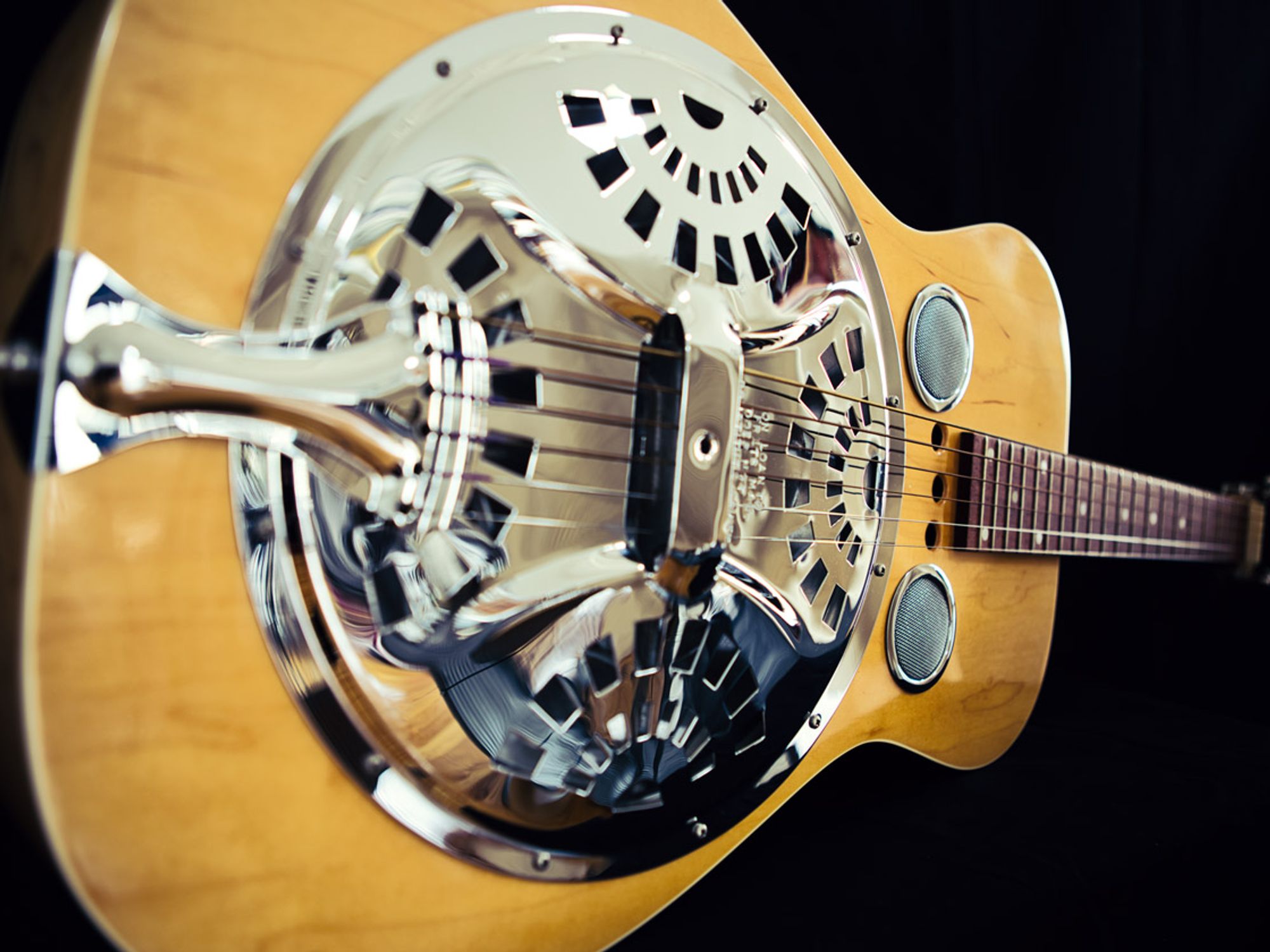
A resonator guitar is an acoustic guitar that uses one or more metal cones to project sound. These cones sit beneath the bridge and act much like a built-in acoustic amplifier. Instead of relying only on the wooden top to move air, the guitar sends string energy into the cone.
The result is a loud, clear, and often metallic tone. Depending on the design, a resonator guitar can sound warm and woody, sharp and nasal, or deep and powerful.
Most resonator guitars have:
• A metal or wooden body
• One or more spun aluminum cones
• A special bridge that transfers vibration to the cone
• A cover plate over the resonator assembly
• A distinctive sound hole pattern
• A standard guitar neck and fretboard
So, what is a resonator guitar in simple terms? It is an acoustic guitar with a metal speaker-like cone built into its body.
The cone does not use electricity. It creates volume through mechanical vibration. When you pluck a string, the bridge moves. That movement shakes the cone, and the cone pushes more air than a normal acoustic guitar top.

How Does a Resonator Guitar Work?
A resonator guitar works through a chain of vibrations. The strings transfer energy to the bridge. The bridge sends that energy to the metal cone, and the cone turns the energy into audible sound.
A standard acoustic guitar uses its soundboard as the main vibrating surface. A resonator guitar still uses wood or metal for tone and support, but the cone plays the central role in sound projection.
The main parts include:
The resonator cone
The cone is a thin, spun aluminum disk. It is shaped somewhat like a speaker cone. Its light weight lets it respond quickly to string vibration.
The bridge
The bridge rests on or connects to the cone. It transfers the movement of the strings into the resonator system. Small changes in bridge design can affect volume, sustain, and tone.
The spider bridge
A spider bridge has several legs that spread across the top of the cone. This design is common in square-neck resonator guitars and produces a broad, ringing sound.
The biscuit bridge
A biscuit bridge uses a small wooden disk in the center of the cone. It is common in National-style, round-neck resonators and often gives a direct, punchy tone.
The cover plate
The cover plate protects the cone and bridge. It also affects the guitar’s appearance and can slightly influence its response.
The sound holes
Resonator guitars may have f-shaped sound holes, circular holes, or openings around the cover plate. These openings let the cone move air and shape the guitar’s voice.
A useful way to picture the system is to imagine a drum with a metal skin. The strings excite the cone, and the cone gives the sound extra focus and power.

The History of Resonator Guitars
The resonator guitar became popular in the United States during the late 1920s and early 1930s. Guitar makers wanted to create louder instruments for bands, radio performances, and public stages.
Before electric guitars became common, acoustic players needed more volume. A standard wooden guitar could struggle against horns, drums, and other instruments. The resonator design offered a clever mechanical solution.
John Dopyera played a major role in the development of the instrument. He helped create early resonator guitars and co-founded the National String Instrument Corporation. Later, the Dobro brand became strongly linked with wooden-bodied resonator guitars.
The name “Dobro” is often used casually for many resonator guitars. Technically, Dobro is a brand name, not a general name for every resonator instrument.
Resonator guitars became deeply connected with:
• Delta blues
• Country music
• Bluegrass
• Hawaiian guitar
• Gospel
• Folk music
• Roots rock
• Americana
The instrument also influenced slide guitar culture. Its strong midrange and long sustain allow slide notes to remain clear, even in a busy musical setting.
What Does a Resonator Guitar Sound Like?
A resonator guitar often has a bright, metallic, focused sound. Many players describe it as:
• Barking
• Nasal
• Raw
• Woody
• Punchy
• Ringing
• Metallic
• Vocal-like
The exact sound depends on the body material, cone, bridge, strings, playing position, and setup.
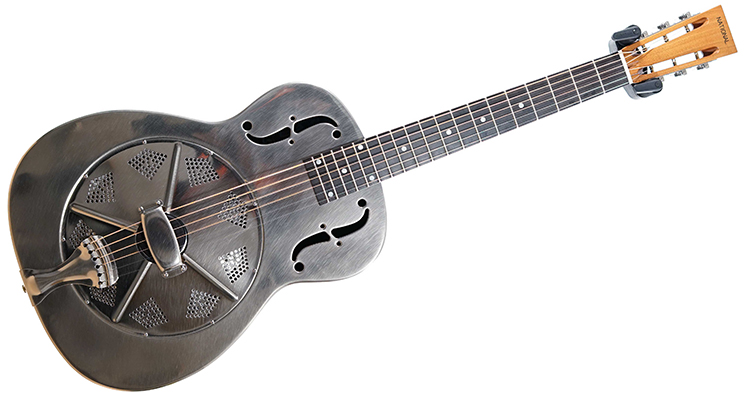
A metal-bodied resonator often sounds sharp and cutting. It can work well for blues leads and aggressive slide playing. A wood-bodied resonator usually sounds warmer and more like a traditional acoustic guitar, while still keeping the resonator’s distinctive edge.
If you ask what is a resonator guitar supposed to sound like, there is no single answer. Some have a smooth, rich voice. Others sound rough, loud, and almost horn-like.
The playing method also changes the tone. A resonator played with a slide can sound haunting and vocal. Played with fingers, it may sound crisp and percussive. Played with a flat pick, it can produce strong rhythm parts with plenty of attack.
In my experience with resonator setups, the biggest surprise for new players is how much the instrument responds to touch. A light hand can create a soft, sweet tone. A harder attack can make the guitar bark.

Types of Resonator Guitars
Resonator guitars come in several forms. The best type depends on your music, posture, tuning, and preferred technique.
Round-neck resonator guitars
A round-neck resonator has a neck shaped like a normal acoustic guitar. You hold it against your body and play it in the standard position.
This type works well for:
• Fingerstyle blues
• Standard chord playing
• Bottleneck slide
• Folk and country rhythm
• Open tunings
A round-neck model is often the easiest choice for guitarists who already play standard acoustic guitar.
Square-neck resonator guitars
A square-neck resonator has a wide, squared neck. You play it flat across your lap, with the strings facing upward.
Players often use a steel bar instead of pressing strings to the fretboard. This style is common in bluegrass and Hawaiian music.
Square-neck guitars usually use open tunings, such as:
• G major
• D major
• E major
• A major
They are not designed for normal fretting in the same way as a round-neck guitar.
Metal-body resonators
Metal-body resonators often have a loud, cutting voice. Common body metals include steel, brass, and aluminum.
They are popular in blues because their tone can cut through a small band. They also respond well to slide techniques and strong rhythmic playing.
Wood-body resonators
Wood-body resonators combine a wooden guitar body with a metal cone. They often produce a warmer and more balanced tone than metal-body models.
A wood-body resonator may suit players who want one guitar for both regular chords and slide work.
Single-cone resonators
A single-cone guitar uses one large cone. It often has a direct, raw tone with strong attack.
Single-cone designs are common in blues and roots music. They can sound less polished, but that rough quality is part of their appeal.
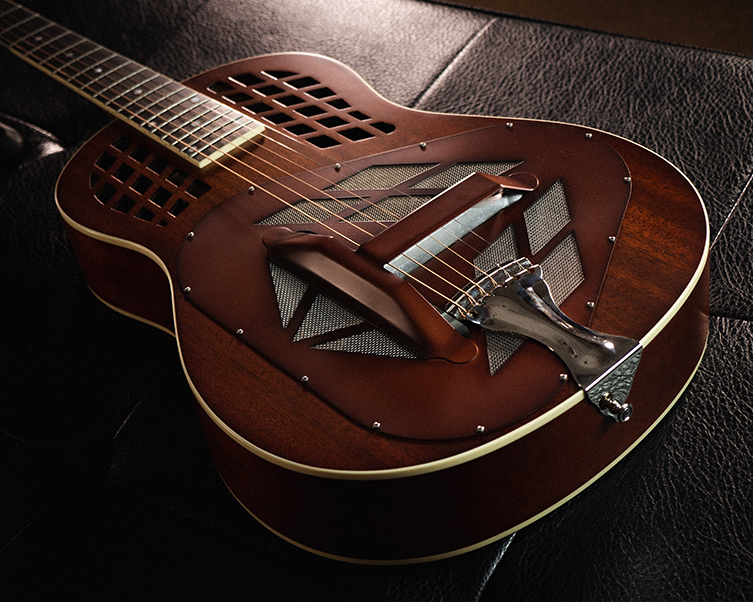
Tri-cone resonators
A tri-cone guitar uses three smaller cones. A T-shaped bridge connects the cones and spreads string vibration across them.
Tri-cone models often have more complex overtones and a smoother, wider sound. They can be excellent for fingerstyle playing and traditional blues.
Resonator Guitar vs. Acoustic Guitar
A resonator guitar and a standard acoustic guitar share many features. Both use strings, a neck, a bridge, and a hollow body. The key difference is how they create and project sound.
A standard acoustic guitar relies mainly on its wooden soundboard. A resonator guitar relies mainly on a metal cone.
Here is a simple comparison:
| Feature | Resonator guitar | Standard acoustic guitar |
|---|---|---|
| Main sound source | Metal cone | Wooden soundboard |
| Tone | Bright, focused, metallic | Warm, balanced, woody |
| Volume response | Strong projection | Depends on body size and design |
| Common styles | Blues, bluegrass, slide | Folk, pop, rock, singer-songwriter |
| Slide playing | Naturally strong | Smooth but less cutting |
| Maintenance | Cone needs careful care | Traditional acoustic setup |
A resonator guitar is not automatically louder in every situation. Some modern acoustic guitars project very well. However, a resonator produces a different kind of volume, with strong midrange focus and a sharper attack.