Best Digital Piano For Music Production: Top Picks
The best digital piano for music production balances realistic keys, clean MIDI control, useful sounds, and easy computer setup.
You may know the moment: a melody arrives, but your old keyboard feels stiff, sounds thin, or fights your recording software. A good digital piano fixes that gap. It gives your hands a real piano feel while sending clean notes to a computer, tablet, or DAW. I tested these choices by looking at key action, MIDI use, sound quality, size, extras, and value. Some are best for new players, while others suit producers who need 88 keys and a more natural touch.
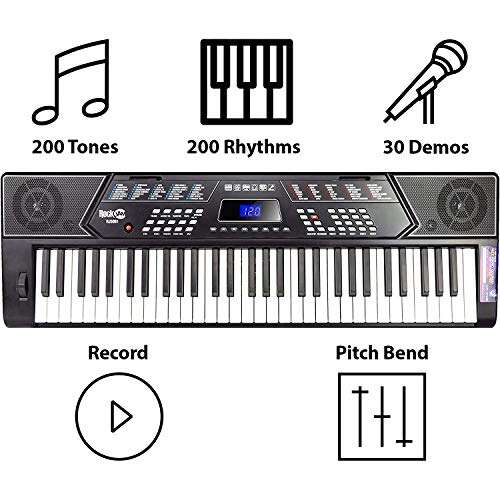
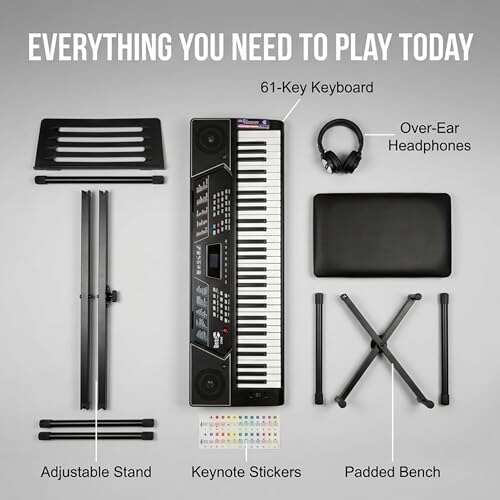
RockJam RJ5061 61-Key Keyboard Kit

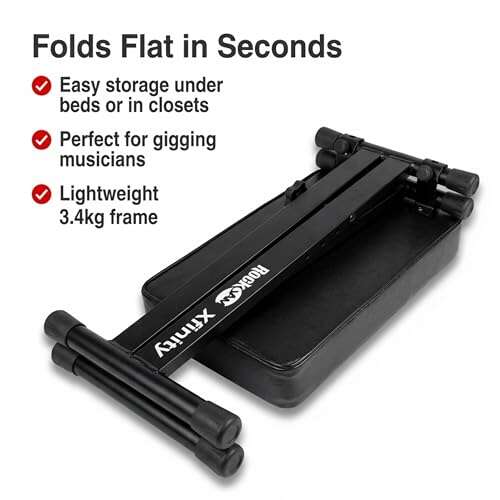
The RockJam RJ5061 is a friendly starter kit for anyone who wants a keyboard, seat, stand, and headphones in one box. Its 61 keys give you enough range for chords, bass lines, and simple piano parts. The layout also leaves more room on a small desk than a full 88-key board. For a new producer, that smaller footprint can make it easier to keep a laptop, audio interface, and speakers nearby.
This is not a weighted digital piano, so it does not copy the push and return of an acoustic piano. Still, the lighter action works well for beat making, synth parts, pop chords, and basic learning. I like the package value because you can start at once without shopping for a stand or bench. It is a sensible choice for a bedroom setup, a child, or a first home studio with a tight budget.
Pros:
- Complete kit with stand, bench, and headphones
- 61 keys offer a useful middle ground for small studios
- Light key action suits synths, pads, and pop chords
- Headphones support quiet practice and late-night recording
- Simple layout feels friendly to new players
- Portable size fits rooms with limited floor space
Cons:
- Keys are not weighted like an acoustic piano
- Limited range compared with an 88-key controller
- Included furniture may feel basic for heavier use
My Recommendation
I recommend the RJ5061 for beginners who want the best digital piano for music production on a very small budget. It works best for loops, chords, simple lessons, and first MIDI experiments. Choose it if you value a complete starter bundle more than realistic piano action. Its all-in-one design offers good value, and availability is usually strong through major online retailers.
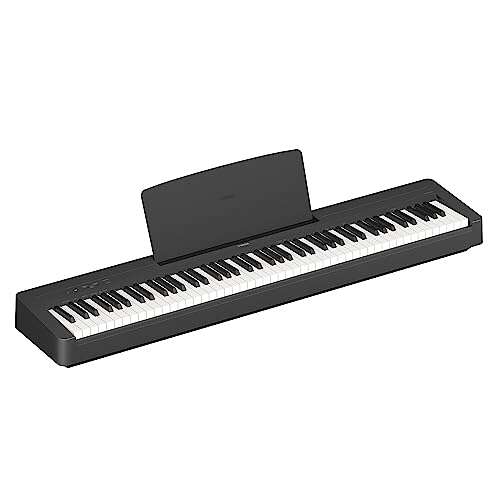
Yamaha P145BT 88-Key Digital Piano
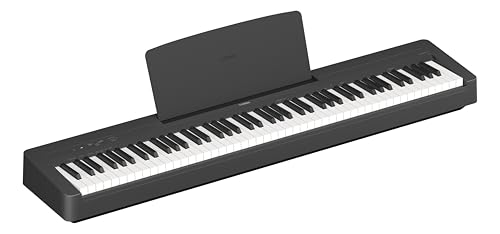
The Yamaha P145BT is the strongest piano-first choice in this group. It gives you a full 88-key layout and weighted action, so your fingers can practice real piano movement. That matters in production because touch affects the mood of a part. A soft press can make a pad or piano line gentle, while a firm strike can add weight without forcing you to edit every note.
Yamaha built this model for home practice, but it can also serve as a clean MIDI keyboard in a studio. Bluetooth makes wireless play and audio use more convenient with compatible devices, while the USB connection handles modern computer workflows. The compact body saves space compared with a traditional console piano. I would pick it for songwriters who want a natural piano feel first and software control second.
Pros:
- 88 weighted keys support full piano range
- Natural touch helps create expressive MIDI performances
- Compact design suits apartments and home studios
- Built-in speakers allow quick practice without extra gear
- Bluetooth adds flexible device use
- Yamaha offers a trusted name and consistent build quality
Cons:
- Heavier action may feel slow for fast synth parts
- Fewer knobs and pads than a dedicated MIDI controller
- May need an audio interface for a larger studio rig
My Recommendation
The Yamaha P145BT is my top pick for a pianist who also produces music. It is the best digital piano for music production when key feel, full range, and long-term playing skill matter most. It suits songwriters, teachers, classical players, and producers who record piano-led tracks. The price is higher than basic keyboards, but the weighted action and dependable design make the investment easier to justify.
88-Key Semi-Weighted Piano Bundle

This 88-key bundle aims to give beginners a broad setup at a low cost. It includes a music stand, power supply, sustain pedal, stand, carrying case, headphones, and USB-MIDI support. That range of extras removes many small costs that can surprise a new player. The 88-key format also lets you play bass with your left hand and melody with your right without running out of room.
The semi-weighted action sits between a light keyboard and a true hammer-action piano. It gives your fingers more resistance than a basic portable board, though it will not feel as deep or refined as Yamaha’s weighted system. Bluetooth can help with compatible devices, and USB-MIDI makes it useful with a DAW. I see it as a flexible learning and production starter rather than a professional stage piano.
Pros:
- Full 88-key range for piano practice and arrangement
- Semi-weighted keys offer more control than light action
- USB-MIDI supports computer-based music production
- Bundle includes stand, case, headphones, and pedal
- Good fit for beginners who need many accessories
- Portable case makes moving the keyboard easier
Cons:
- Action is not equal to a true hammer-action piano
- Included headphones and stand may be entry-level
- Sound and control depth may limit advanced users
My Recommendation
This bundle suits a new producer who wants one purchase to cover lessons, practice, and MIDI work. It may be the best digital piano for music production for students who need 88 keys but cannot spend heavily on separate gear. It is also useful for families who want a complete home setup. Expect practical value, not luxury action or deep workstation control.
JIKADA 61-Key Portable Keyboard

The JIKADA 61-key keyboard focuses on simple play and easy learning. Its 61 keys provide enough room for most beginner songs, chord patterns, and basic production parts. The compact design is easy to move between a desk, bedroom, and rehearsal space. Three teaching modes make it more approachable for someone still learning note names and hand position.
Its light action is better suited to casual playing, simple beats, and electronic sounds than serious piano technique. For production, the key benefit is speed: you can place it beside a computer and begin building ideas without a large furniture-style instrument. I would not choose it for advanced piano recording, but it can help a new musician turn short ideas into full demos. It also makes a useful second keyboard for travel or mobile work.
Pros:
- Portable 61-key format saves desk and floor space
- Three teaching modes help new players learn
- Simple controls reduce setup stress
- Light keys work well for synth and pop parts
- Affordable option for first-time keyboard buyers
- Easy to move for lessons or small performances
Cons:
- No weighted piano action
- 61 keys cannot cover every full piano arrangement
- Less suitable for demanding studio players
My Recommendation
I recommend the JIKADA to beginners, children, and casual creators who need a small and simple instrument. It can be the best digital piano for music production when portability and a low entry price matter more than deep piano realism. Use it for learning, sketching, and electronic music. Its value is strongest as an easy first step, not as a final studio keyboard.
Best Choice Products 88-Key Piano

The Best Choice Products 88-key piano brings a full-size layout into a modern desk-style frame. Its weighted keys offer more resistance than a light keyboard, and the three-pedal unit supports common piano techniques. The metal legs give it a more permanent look than a portable controller. For a home studio, that can make the instrument feel like a real part of the room rather than another device on a folding stand.
MIDI support and a headphone jack make it practical for music production and quiet work. The full range helps when you split bass, chords, and melody across both hands. Its larger design takes more space, so measure your room before ordering. I like this model for producers who want a home piano feel and do not need to carry the keyboard to every session.
Pros:
- 88 weighted keys encourage expressive piano playing
- Three-pedal setup supports sustain and soft pedal work
- Desk design looks neat in a home studio
- MIDI connection supports DAW recording
- Full-size range handles complex arrangements
- Headphone output supports quiet practice
Cons:
- Desk frame takes more room than a portable keyboard
- Not ideal for frequent transport
- Built-in sounds may not replace professional piano plug-ins
My Recommendation
This piano is best for home producers, adult learners, and songwriters who want a permanent 88-key setup. It may be the best digital piano for music production for users who value weighted keys and a clean furniture-style design. It offers strong practical value when you need a piano for both recording and daily practice. Check the current package details before buying, since included accessories can vary by listing.
Ktaxon 88-Key Digital Piano Set

The Ktaxon 88-key set targets buyers who want a full keyboard without paying for a premium digital piano cabinet. The full range gives you room for low bass notes, wide chords, and high melodies. Its set format can also reduce the work of finding a matching stand and basic accessories. This makes it attractive for a first apartment studio or a shared family music room.
For production, the main appeal is the broad key layout and the chance to use the instrument as a MIDI source, depending on the exact connection setup. The action is aimed at accessible home use rather than professional piano performance. I suggest checking the listed specifications for connectivity before purchase, especially if USB-MIDI is central to your workflow. When matched with a laptop and a good piano plug-in, it can become a useful songwriting tool.
Pros:
- Full 88-key range supports traditional piano parts
- Set format may include useful starter accessories
- Good option for home practice and songwriting
- Large layout helps with two-handed playing
- Black finish blends with many studio spaces
- Often costs less than established-brand alternatives
Cons:
- Action may feel less refined than Yamaha or premium models
- Buyers should confirm MIDI details before ordering
- Full-size body is not ideal for travel
My Recommendation
The Ktaxon is suited to budget-minded adults and beginners who want 88 keys for practice and home production. It can be the best digital piano for music production for a buyer who plans to use software instruments and wants a full layout at a lower cost. I would choose it over a 61-key board when piano range matters. Review the current Amazon listing closely for included parts and connection details.
Alesis Recital Play 88-Key Keyboard

The Alesis Recital Play gives beginners a full 88-key board in a straightforward package. It is designed to make piano practice less intimidating, with a clear layout and controls that do not overwhelm a new user. The wide range also supports lessons, scales, and two-handed songs. For a young player or new songwriter, it provides a familiar place to build daily habits.
In a production setup, it can serve as a basic keyboard for piano parts and MIDI work when connected through a compatible interface or computer setup. Its approachable design matters because complicated gear can slow creativity. The sound engine is more focused on practical home use than on deep sound design. I see it as a good bridge between learning piano and making simple tracks.
Pros:
- 88 keys give beginners a full piano layout
- Simple control panel is easy to understand
- Useful for lessons, practice, and basic song demos
- Full range supports scales and two-hand technique
- Beginner-friendly design reduces setup time
- Alesis is a known name in entry-level music gear
Cons:
- May not offer the touch depth of premium weighted models
- Advanced producers may want more controls
- Portable design may need a separate stand
My Recommendation
The Recital Play is best for new piano students who also want to explore recording. It is a practical choice for the best digital piano for music production if your work centers on basic piano parts, lessons, and simple arrangements. Choose it for ease rather than advanced studio control. It delivers useful entry-level value and leaves room to upgrade later as your skills grow.
Alesis Recital 88-Key Semi-Weighted Piano

The Alesis Recital is a popular entry-level 88-key digital piano for learners and home musicians. Its semi-weighted keys give a little more resistance than a basic keyboard, which can make practice feel more controlled. The full layout helps you learn proper spacing across the piano. It also gives producers enough range for bass, chords, and melody without changing octaves often.
This model works well when you need a simple instrument that can move from practice to recording. It does not try to act like a large workstation with dozens of knobs and menus. Instead, it keeps the focus on playing, which can help you capture a clean first take. Pair it with a DAW and quality virtual instruments when you want a wider palette of sounds.
Pros:
- 88 semi-weighted keys offer a useful practice feel
- Full range works well for piano-based production
- Simple design suits first-time owners
- Can support learning and home recording in one unit
- Portable body is easier to move than a cabinet piano
- Strong value for students and casual producers
Cons:
- Semi-weighted action is not true hammer action
- Sound selection may feel limited for advanced production
- Some users may need extra stands or accessories
My Recommendation
I recommend the Alesis Recital to students, hobby producers, and songwriters who want 88 keys without a premium price. It may be the best digital piano for music production for someone who needs a balanced mix of practice feel, range, and simplicity. It is especially useful in a starter studio with a laptop and headphones. Its value remains strong when you plan to add software sounds later.
How to Choose the Best Digital Piano for Music Production
The right piano depends on how you make music. A pianist may care most about weighted action, while a beat maker may prefer light keys and quick control. Before buying, decide whether you will record piano parts, control software instruments, learn piano, or do all three. That answer will narrow the field faster than a long list of extra sounds.
Key Action
Key action describes how the keys respond under your fingers. Weighted and hammer-action keys feel closer to an acoustic piano. They help players shape volume and emotion through touch. Semi-weighted keys add some resistance but usually feel lighter and less detailed.
Light keys can work well for synth leads, organ parts, and fast electronic patterns. They also reduce the size and weight of a keyboard. If you already play piano, you may notice the difference at once. If you mainly produce electronic music, light or semi-weighted action may feel faster and more comfortable.
88 Keys or 61 Keys?
An 88-key piano covers the full standard piano range. It gives you space for deep bass notes and high melodies at the same time. This helps when you record classical parts, film music, jazz, or wide arrangements. It also supports proper lessons and long-term piano growth.
A 61-key keyboard takes less room and costs less in many cases. It works well for pop, hip-hop, electronic music, and basic songwriting. You can shift the octave when you need more range. For a small desk studio, that trade-off may be worth it.
MIDI and Computer Connection
MIDI sends note, timing, velocity, and control data to your computer. It does not send the piano sound itself. That data lets a DAW play a virtual piano, synth, bass, or orchestral plug-in. The MIDI Association explains that MIDI is a communication system, so compatibility depends on the ports and software in your setup.
Look for USB-MIDI if you want a direct computer connection. Traditional five-pin MIDI may need an interface. Bluetooth can add convenience, but wireless features vary by device and app. I always suggest checking the exact connection list before buying, since product names do not tell the whole story.
Velocity Sensitivity
Velocity sensitivity lets the keyboard respond to how hard you press a key. This feature is vital for expressive piano and realistic virtual instruments. Without it, every note may play at a similar level. Your music can then sound flat, even when your playing feels emotional.
Weighted action does not automatically mean perfect velocity response. A good producer should test how smoothly soft, medium, and hard hits translate into the DAW. You can also adjust velocity curves in many music apps. Still, a responsive keyboard gives you a better starting point and can reduce editing time.
Sustain Pedal Support
A sustain pedal keeps notes ringing after you lift your fingers. It is almost essential for piano parts, slow chords, and many cinematic sounds. Some low-cost keyboards include a basic pedal, while others sell it separately. Check whether the pedal uses a standard input before adding one to your cart.
Polarity can also matter. Most modern keyboards detect pedal polarity at startup, but not every model behaves the same way. A three-pedal unit offers more piano control, yet a single sustain pedal is enough for many producers. Do not pay for extra pedals if you mainly create short MIDI patterns.
Built-In Sounds and Speakers
Built-in sounds are useful for quick ideas. You can play without opening a computer or loading a plug-in. Speakers also help with casual practice and family use. They are less important if you always record through headphones or studio monitors.
A digital piano’s internal sound is not a complete measure of its production value. Many producers use virtual instruments because they offer better mixing control, mic choices, room sounds, and effects. In that case, clean MIDI behavior matters more than having hundreds of built-in tones.
Size, Weight, and Studio Space
Measure your desk or stand before ordering. An 88-key model needs a long, stable surface and enough space for your knees. A console-style piano stays in one place and looks tidy, but it is hard to move. A slim portable piano fits more rooms and works better for mobile sessions.
Weight also affects daily use. If you must lift the keyboard often, a lighter model may inspire more practice. A heavy instrument can feel stable during play, but it may become a chore in a small apartment. The best digital piano for music production should fit your real life, not just your wish list.
Sound and Recording Workflow
Think about the full signal path. You may play the keys, send MIDI to a DAW, choose a virtual piano, add effects, and monitor through headphones. Each step affects the final result. A keyboard with simple controls can still produce excellent tracks when the rest of the setup is strong.
For direct audio recording, you need an audio output that matches your interface. For MIDI recording, you need stable data and low delay. Latency often comes from the computer, driver, or audio buffer rather than the keys alone. Lower buffer settings can reduce delay, but they also ask more from the computer.
Build Quality and Daily Use
Look at the key edges, controls, pedal socket, and power connection. These parts receive the most use. A sturdy keyboard should not slide or flex when you play strong chords. A reliable power supply also matters because a loose connection can stop a session at the worst time.
Read recent buyer feedback with care. I look for repeated comments about dead keys, noisy adapters, broken pedals, or poor support. One angry review may show a rare problem. A repeated pattern deserves attention. Also check the seller, return window, warranty, and current package contents.
| Best for | Why |
|---|---|
| Full piano practice | Choose an 88-key weighted model such as the Yamaha P145BT. |
| Small bedroom studio | A 61-key keyboard saves space for a laptop and audio gear. |
| Low-cost starter setup | A bundle with a stand, pedal, and headphones lowers extra costs. |
FAQs Of best digital piano for music production
Is an 88-key piano better for music production?
It is better for full piano parts, lessons, and two-handed arrangements. A 61-key model can be better for small desks, travel, and electronic music. Choose based on your playing style and available space.
Do I need weighted keys to produce music?
No. Weighted keys help with realistic piano expression, but light keys work well for synths, organs, bass, and pads. If piano is your main instrument, weighted action usually feels more natural.
Can a digital piano connect to a DAW?
Many models can send MIDI through USB or traditional MIDI ports. MIDI lets your DAW record your notes and play software instruments. Confirm the exact ports and operating system support before buying.
Should I use built-in sounds or piano plug-ins?
Built-in sounds are fast and convenient. Piano plug-ins often offer more control, better room detail, and more mix options. Many producers use both, depending on the session.
What is the best digital piano for music production on a budget?
The Alesis Recital and the full 88-key bundle offer useful value for new producers. The RockJam RJ5061 costs less and includes helpful accessories, but it has only 61 light-action keys.
Final Verdict: Which Should You Buy?
The Yamaha P145BT is the best digital piano for music production for most piano-led producers. Its 88 weighted keys, compact build, and trusted design support both expressive playing and MIDI work.
For a lower budget, choose an Alesis or a complete 88-key bundle. Match the key feel, size, and MIDI ports to your workflow, then let your hands lead the music.

Senior Music Reviewer
Alex Carter is a seasoned music reviewer with over a decade of experience in the world of sound and instruments. Passionate about helping musicians and enthusiasts make informed choices, he brings sharp insights and in-depth knowledge to every review. From classical instruments to modern gear, Alex combines technical expertise with a love for music to deliver content that resonates with readers.
As a Senior Music Reviewer and expert author on Tuneluma.com, Alex is dedicated to sharing honest evaluations, practical advice, and thoughtful commentary to guide readers in their musical journey.