How Far I’ll Go Piano Sheet Music: Easy Guide
How Far I’ll Go piano sheet music helps beginners and skilled players bring Moana’s powerful theme to life at the keyboard.
Finding the right How Far I’ll Go piano sheet music is about more than downloading a page. You need a legal edition that matches your skill level, preferred key, arrangement style, and performance goal. This guide explains where to find it, how to choose a version, and how to practice the song with confidence.
What Is How Far I’ll Go Piano Sheet Music?
How Far I’ll Go is a song from Disney’s 2016 animated film Moana. Lin-Manuel Miranda wrote the song, and Auliʻi Cravalho performed the movie version as the voice of Moana. Alessia Cara also recorded a pop version for the film’s end credits.
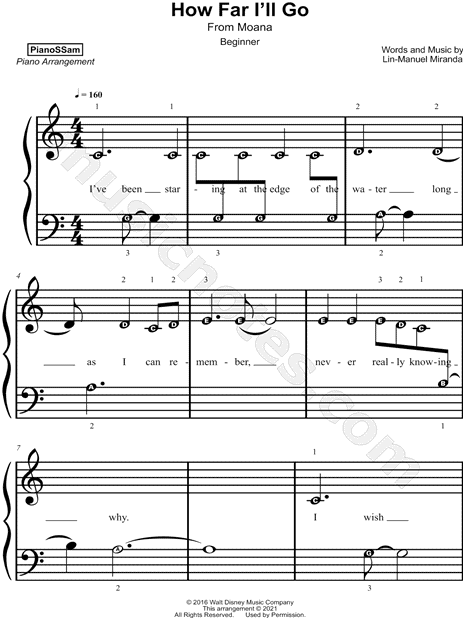
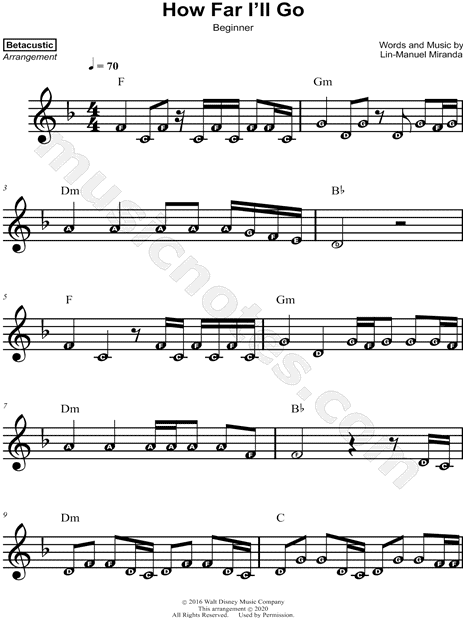
How Far I’ll Go piano sheet music turns the vocal melody, chords, rhythm, and musical structure into a keyboard arrangement. Some versions show only the melody and chord symbols. Others include a full piano accompaniment with both hands.
You may see several formats when searching:
• Easy piano arrangements with simple chords and a small hand span
• Beginner piano versions with letter names or finger numbers
• Piano vocal arrangements with melody, lyrics, and chord symbols
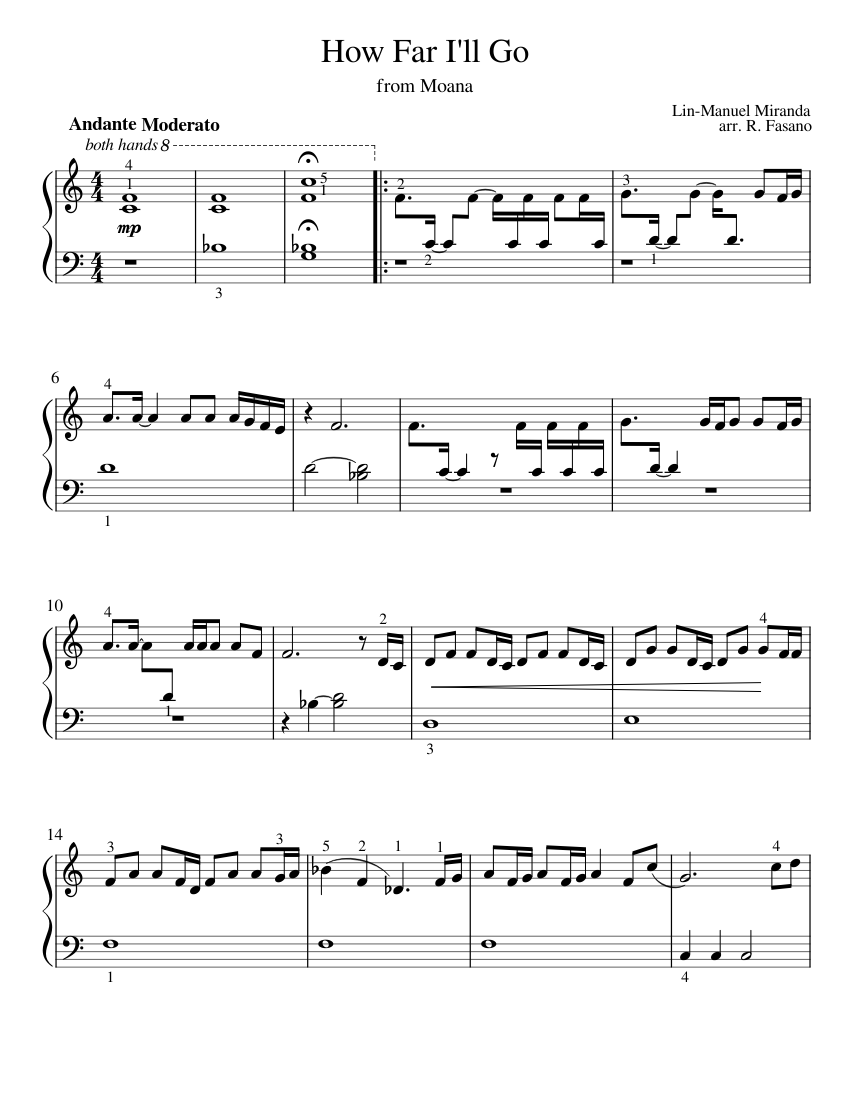
• Intermediate arrangements with fuller harmony and moving bass lines
• Advanced concert arrangements with richer textures and more dramatic endings
• Digital PDF editions for instant use on a tablet or computer
The best choice depends on how you want to play. A beginner may need a simple arrangement, while a singer may prefer piano vocal sheet music with the melody and lyrics included.
Where to Find Legal How Far I’ll Go Piano Sheet Music
You can usually find licensed How Far I’ll Go piano sheet music through reputable digital music stores, traditional music retailers, and official publisher catalogs. These services often provide previews, skill ratings, page counts, and details about the arrangement.
Look for editions from trusted sheet music platforms and authorized Disney music sources. A legal purchase supports the writers, arrangers, publishers, and performers who make this music available.
Before buying, check these details:
• The exact song title and version
• The arranger’s name
• The instrument listed as piano or keyboard
• The stated difficulty level
• Whether lyrics and chord symbols are included
• The original key or available key options
• The number of pages
• Whether printing is allowed
• Whether the file works on your device
Free sheet music websites can be risky. Some upload copyrighted arrangements without permission. Files may also contain poor notation, missing pages, incorrect notes, or unsafe downloads.
A good rule is simple: if a site offers a popular Disney song for free without clear licensing information, use caution. Legal sheet music is often inexpensive, and it gives you a cleaner, more reliable resource.

How to Choose the Right Arrangement
Choosing How Far I’ll Go piano sheet music is similar to choosing the right pair of shoes. The arrangement should fit your current ability, not the level you hope to reach someday.
Beginner arrangements
Beginner versions often use:
• Simple blocked chords
• Repeated left-hand patterns
• A clear right-hand melody
• Fewer accidentals
• Shorter passages
• Limited movement across the keyboard
These editions are useful for new players. They let you learn the song’s shape without facing large jumps or thick chords.
Intermediate arrangements
Intermediate piano sheet music may include:
• Broken chords
• Wider left-hand movement
• More detailed rhythm
• Passing notes
• Chord inversions
• More changes in volume and expression
This level often sounds closer to the film recording. It is a good choice if you can read both clefs and play basic chords with steady timing.
Advanced arrangements
Advanced editions may use richer harmony, octave passages, wide stretches, and dramatic musical changes. They can sound impressive, but they may require strong sight-reading skills and good control of balance between the hands.
Do not judge a piece only by its title. Two arrangements of How Far I’ll Go can feel completely different. Read the preview pages before buying, if one is available.
Key, Range, and Transposition
The original vocal recording may not sit comfortably in every singer’s range. This matters if you plan to sing while playing How Far I’ll Go piano sheet music.
A piano arrangement may appear in the original key or in a simplified key. Some digital editions allow transposition. This feature changes the key while keeping the notes and chord relationships consistent.
Consider these points:
• Choose a lower key if the melody feels too high
• Choose a higher key if the melody lacks energy in your voice
• Use the original key when you want to match the film version
• Use a simpler key if you are still learning basic chords
• Check whether the arrangement includes a transposition option
Transposition is not a sign of weakness. Professional musicians change keys often to fit a singer, instrument, or performance setting.
If you are playing only the instrumental part, the key is still important. Some keys use more black keys and may feel less familiar to a new pianist. Other keys may require more careful attention to accidentals.

How to Read the Music
Before playing How Far I’ll Go piano sheet music from start to finish, study the page. A few minutes of preparation can prevent many wrong notes.
Start with the musical map:
- Find the key signature.
- Check the time signature.
- Look for the starting note and chord.
- Mark repeated sections.
- Notice dynamic signs such as piano and forte.
- Identify rests and pauses.
- Look for accidentals.
- Circle any large jumps or difficult chords.
The right hand often carries the main melody. The left hand supports it with bass notes, chords, or patterns. The melody should usually sound clear, even when the accompaniment is busy.
Many players make the mistake of playing both hands with equal force. That can make the tune hard to hear. Think of the melody as the singer and the left hand as the band behind the singer.
A Simple Practice Plan
A steady plan will help you learn How Far I’ll Go piano sheet music faster than repeated full play-throughs. Start with small sections and add detail over time.
Step 1: Listen before you play
Listen to the version you want to perform. Notice the mood, phrasing, tempo, and changes in intensity. The recording can help you understand the emotional path of the song.
Step 2: Practice each hand alone
Play the right-hand melody slowly. Then practice the left-hand chords or bass pattern. This helps you learn the shape of each part before combining them.
Step 3: Use a slow tempo
A metronome can help you keep a steady beat. Start at a speed where you can play without stopping. Increase the tempo only after the notes feel secure.
Step 4: Join short sections
Combine two or four measures at a time. Repeat them until your hands can move without hesitation. Then connect that section to the next one.
Step 5: Add expression
Once the notes are comfortable, add dynamics and phrasing. Let the quieter parts feel gentle. Build energy in the stronger sections without hitting the keys too hard.
Step 6: Record yourself
A phone recording can reveal problems that are hard to notice while playing. Listen for uneven rhythm, unclear melody, rushed pauses, and sudden changes in volume.
In practical piano teaching, one pattern appears often: players improve more from focused practice than from long practice. Ten careful minutes can be more useful than thirty distracted minutes.
Common Mistakes to Avoid
How Far I’ll Go piano sheet music has a wide emotional range, so technical mistakes can affect the whole performance. Fortunately, most problems are easy to fix when you notice them early.
• Playing too fast before learning the notes
• Ignoring the key signature
• Using the wrong fingering every time
• Allowing the left hand to overpower the melody
• Skipping rests and held notes
• Practicing only from the beginning
• Looking down at the keys for every note
• Treating dynamics as optional
• Buying an arrangement that is too difficult
• Downloading an unlicensed or incomplete file
One common mistake is copying the recording too closely. The movie version has a singer, orchestra, studio effects, and production choices that a solo pianist does not have. Your goal is not to imitate every sound. Your goal is to express the song clearly on your instrument.
Another mistake is choosing an advanced arrangement because it looks more impressive. A simpler arrangement played with good rhythm and feeling will usually sound better than a difficult arrangement full of pauses and errors.
How to Make the Arrangement Sound Better
Even a simple How Far I’ll Go piano sheet music arrangement can sound rich with thoughtful playing. Musical detail often matters more than technical difficulty.
Try these ideas:
• Keep the melody slightly louder than the accompaniment
• Use the sustain pedal with care
• Lift the pedal when harmony changes
• Shape each phrase toward its main note
• Keep repeated chords even
• Relax your wrists during larger movements
• Use a gentle touch in reflective sections
• Build volume gradually instead of making sudden jumps
• Pause briefly where the music suggests a breath
The sustain pedal can connect sounds, but too much pedal can blur the harmony. Change it when the chord changes, unless the arrangement clearly calls for a different effect.
If you play for an audience, think about storytelling. The song begins with uncertainty and grows toward confidence. Your tempo, volume, and tone should help that journey feel natural.
Piano Vocal, Easy Piano, and Lead Sheet Versions
Not all How Far I’ll Go piano sheet music serves the same purpose. Knowing the difference can save you time and money.
Piano vocal sheet music
This format usually includes the vocal melody, lyrics, and piano accompaniment. It works well for singers who want to perform while a pianist plays.
Easy piano sheet music
This version simplifies the accompaniment and may reduce large chords or fast patterns. It is often the best starting point for new players.
Lead sheet
A lead sheet normally shows the melody and chord symbols. It gives you freedom to create your own accompaniment, but it may feel too basic if you want a complete piano solo.
Full piano solo
A piano solo arrangement places the melody and accompaniment together. It may sound fuller and more dramatic, but the difficulty can vary greatly between arrangers.
Read the product description closely. The word “piano” alone does not tell you whether the file contains a solo arrangement, a vocal part, or only chord symbols.
Can You Use It for Performance or Teaching?
You can practice and perform a legally purchased arrangement according to the license terms attached to that edition. Personal use and public sharing are not always treated the same way, so read the retailer’s conditions.
Do not upload the PDF to a social media group, email it to many people, or sell printed copies unless you have permission. If you create a video performance, the platform may handle some licensing issues, but responsibility can vary by location and use.
Teachers can use How Far I’ll Go piano sheet music in lessons when the copy is properly licensed. Some publishers offer educational licenses or classroom options. When in doubt, contact the publisher or retailer before making multiple copies.
Copyright rules differ across countries. This article provides general information, not legal advice. The safest approach is to use an authorized edition and follow its stated terms.
A Practical Buying Checklist
Use this checklist before purchasing How Far I’ll Go piano sheet music:
- Confirm that the arrangement is for piano.
- Check the difficulty rating.
- Preview at least one page.
- Compare the key with your vocal range.
- Decide whether you need lyrics.
- Check the arranger and publisher.
- Confirm the file format.
- Review printing and download limits.
- Make sure the notation is clear.
- Buy from a reputable, licensed seller.
If you are unsure between two editions, choose the one that you can play with a relaxed posture and steady beat. The best sheet music is not always the longest or most complex version.
You can also ask a piano teacher to review a preview page. An experienced teacher may spot awkward fingering, sudden difficulty jumps, or a mismatch between the arrangement and your goals.
Frequently Asked Questions About How Far I’ll Go Piano Sheet Music
Is How Far I’ll Go piano sheet music available for beginners?
Yes, beginner arrangements are available in many music stores and digital catalogs. Look for simple chords, a clear melody, and an easy or early beginner difficulty label.
Can I find How Far I’ll Go piano sheet music for free?
Some free versions may be available through authorized educational or public-domain resources, but the song itself is protected by copyright. Avoid downloading unauthorized copies, and verify the license before using any free file.
What key is How Far I’ll Go written in?
The key can vary by arrangement and recording. Check the key signature on the specific edition, because piano solo, vocal, easy piano, and pop versions may use different keys.
How long does it take to learn the song on piano?
The time depends on your experience, the arrangement, and how often you practice. A beginner may learn a simple version in several weeks, while an advanced arrangement may take much longer.
Should I use the movie version or the pop version?
Choose the movie version if you want to follow Moana’s story and vocal style. Choose the pop version if you prefer Alessia Cara’s sound, but confirm that the sheet music matches the recording you want.
Do I need to read music to play the song?
Traditional sheet music requires basic music reading, but some editions include chord symbols, finger numbers, or simplified notation. Learning note names and rhythm will give you more freedom in the long term.
Can I transpose the song for my voice?
Yes, if the arrangement supports transposition or you know how to move the chords to another key. Digital sheet music may offer built-in transposition, while printed music may require a teacher or musician to rewrite it.
Conclusion
The right How Far I’ll Go piano sheet music can make learning feel exciting instead of overwhelming. Choose a legal edition that fits your level, check the key and format, and practice in short sections with a clear melody and steady rhythm.
Start with an arrangement you can play well today. Then build toward a fuller version as your skills grow. Explore licensed sheet music options, try the practice plan, and share your favorite arrangement or performance goal in the comments.

Senior Music Reviewer
Alex Carter is a seasoned music reviewer with over a decade of experience in the world of sound and instruments. Passionate about helping musicians and enthusiasts make informed choices, he brings sharp insights and in-depth knowledge to every review. From classical instruments to modern gear, Alex combines technical expertise with a love for music to deliver content that resonates with readers.
As a Senior Music Reviewer and expert author on Tuneluma.com, Alex is dedicated to sharing honest evaluations, practical advice, and thoughtful commentary to guide readers in their musical journey.