Best Bass Guitar Strings For Beginners: Easy Buying Guide
The best bass guitar strings for beginners are comfortable, durable nickel-wound sets with a familiar medium-light gauge.
You may have just bought your first bass, only to find that the strings feel stiff, sound dull, or hurt your fingers. That is normal, but the right set can make practice much easier. I tested the key traits that matter most to new players: feel, tone, tuning stability, price, and fit. This guide compares the best bass guitar strings for beginners, plus a few products that look similar but are not made for a standard electric bass.
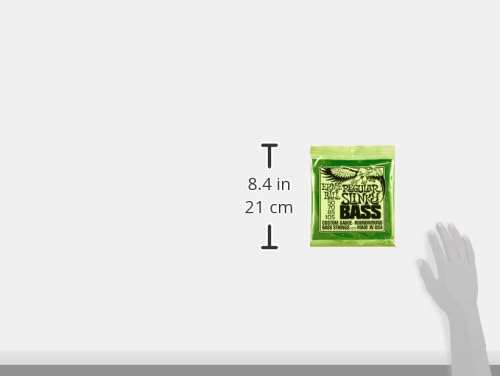
Ernie Ball Regular Slinky Bass Strings

Ernie Ball Regular Slinky bass strings are one of the safest picks for a new player. The 50-105 gauge feels full without being overly hard to fret. Nickel-plated steel wraps give the strings a clear, balanced voice. They work well for rock, pop, blues, country, and basic home practice.
I like this set because it gives beginners a familiar starting point. The tension feels stable, yet the strings still bend and slide with some ease. The standard long-scale design fits many full-size basses, but you should still check your bass manual before ordering. The sound starts bright and settles into a warm punch after some playing time.
Pros:
- Balanced 50-105 gauge suits many new players
- Comfortable nickel-plated steel feel
- Clear tone with solid low-end punch
- Reliable choice for common four-string basses
- Useful for many music styles
- Easy to find and replace
Cons:
- May feel firm to players with small hands
- Not the best choice for a very dark, mellow tone
- May need more frequent changes after heavy sweating
CashBeat Stainless Steel Bass Strings

CashBeat stainless steel bass strings offer a bright and lively sound at a budget price. Stainless steel usually gives more attack than nickel-plated steel. That extra snap can help a beginner hear each note clearly. This four-string set uses small ball ends, so compatibility matters before you install it.
These strings may suit a player who wants a sharper tone for slap, rock, punk, or modern pop. They can also help a bass cut through a small practice mix. However, stainless steel can feel rougher under the fingers than nickel. I suggest wiping the strings after each session, especially if your hands sweat, because sweat can shorten string life.
Pros:
- Bright tone makes notes easy to hear
- Good attack for rock and slap styles
- Four-string set fits many standard basses
- Budget-friendly option for regular changes
- Small ball ends suit compatible instruments
- Useful for players who want more treble detail
Cons:
- May feel rougher than nickel strings
- Can sound too bright for jazz or mellow music
- Small ball ends may not fit every bass bridge
Ernie Ball Super Slinky Bass Strings

Ernie Ball Super Slinky strings use a lighter 45-100 gauge. That makes them one of the easiest sets here for pressing notes. The nickel-wound construction gives a smooth feel and a bright, balanced tone. Beginners often enjoy this set because it reduces the hand strain that can make early practice feel like work.
The lighter gauge also makes bends, slides, and simple vibrato more comfortable. I would look closely at neck relief and action after changing from heavier strings, since lighter tension can slightly alter setup. These strings suit a player who wants a soft touch and quick progress. They are especially helpful for younger players and anyone with sensitive fingertips.
Pros:
- Easy 45-100 gauge feels gentle on fingers
- Good choice for younger or smaller-handed players
- Supports bends and slides with less effort
- Smooth nickel feel works well for long practice
- Clear tone remains useful across many styles
- Trusted and widely available string design
Cons:
- Less low-end weight than a heavier set
- May feel too loose for hard pick players
- Can need a setup check on some basses
YOYODOGS Nickel-Wound Bass Strings

YOYODOGS nickel-wound bass strings target new players who want an easy-to-press set. The product listing presents regular and medium gauge options, so read the selected option with care. Nickel winding usually feels smoother than stainless steel. It also gives a balanced sound that fits lessons, practice tracks, and casual playing.
This set may be useful when you want a low-cost spare in your gig bag. A spare set can save a practice session when an old string breaks. I would not buy any unlisted gauge without checking the package and your bass scale first. For beginners, the main appeal is simple: a familiar metal feel, a general-purpose tone, and a lower entry price.
Pros:
- Beginner-friendly nickel-wound surface
- Designed as a four-string replacement set
- Regular and medium options offer some choice
- Useful as an affordable backup set
- General tone suits basic lessons and practice
- Easy-to-press design may reduce early finger pain
Cons:
- Exact gauge must be confirmed before purchase
- Long-term tone life may vary by use
- May not offer the same consistency as premium brands
GLARRY Beginner Bass Guitar Kit
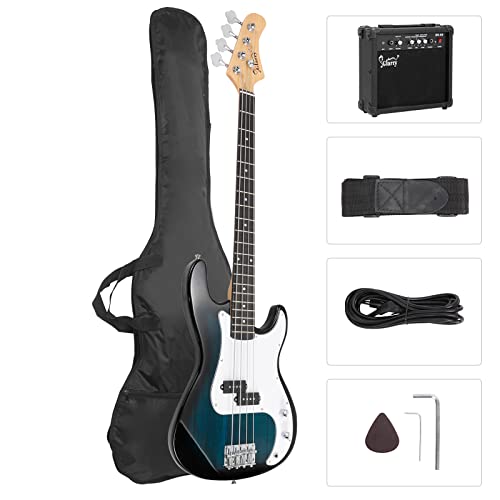
The GLARRY kit is not a replacement string set. It is a full-size electric bass package with a bass, amplifier, cable, strap, bag, and other accessories. I included it because many beginners search for bass strings when they actually need a complete starter setup. The kit can put the basic tools in one box.
This product may help a first-time player start without choosing every item alone. Still, the included strings should be treated as starter strings, not the main reason to buy the kit. You may want to replace them after the bass arrives, once you confirm the scale length and bridge design. Check the bass carefully, tune it slowly, and inspect the setup before long practice sessions.
Pros:
- Provides a bass and practice amp together
- Includes useful starter accessories
- Can simplify a first bass purchase
- Full-size design suits many adult beginners
- Good option for home practice
- Lets players test bass before buying upgrades
Cons:
- Not a standalone bass string product
- Included strings may be basic
- Small practice amps may lack deep volume
- Setup quality can vary between instruments
Ernie Ball Earthwood Extra Light Strings

These Ernie Ball Earthwood strings are acoustic guitar strings, not electric bass strings. Their 10-50 gauge and 80/20 bronze construction suit a six-string acoustic guitar. They will not provide the correct tension, length, or magnetic response for a standard electric bass. I would not use them as the best bass guitar strings for beginners.
This product belongs in an acoustic guitar guide. I mention it to prevent a common online shopping mistake. Product pages can show the word “guitar,” while the instrument type changes the entire string design. If you own an acoustic guitar as well as a bass, these strings may offer a bright, clear acoustic tone, but keep them in a separate gear list.
Pros:
- Suitable for compatible six-string acoustic guitars
- Extra-light gauge feels easy on acoustic guitar fingers
- 80/20 bronze offers a bright acoustic voice
- Recognizable Ernie Ball product line
- Useful for acoustic beginners
Cons:
- Not made for electric bass
- Too short and light for standard bass use
- Wrong string type for bass pickups
Ernie Ball Power Slinky Bass Strings

Ernie Ball Power Slinky bass strings use a heavier 55-110 gauge. They create a firm feel and strong fundamental note. That extra mass can help players who use a pick, tune down, or want a thick rock tone. The nickel-plated steel wrap keeps the top end useful without making the sound overly sharp.
For most first-time bassists, these strings may feel harder than needed. They demand more finger pressure and can make a high-action bass feel even tougher. I recommend them for beginners who already know they prefer heavy tension or lower tunings. If you choose this set, check the nut slots and setup, since a large gauge can affect the instrument.
Pros:
- Full 55-110 gauge produces strong low-end weight
- Firm feel suits pick players
- Useful for some down-tuned setups
- Nickel winding gives a balanced metal feel
- Good projection for rock and heavy styles
- Can hold a steady feel during hard playing
Cons:
- Harder for beginners to fret
- May increase hand fatigue during long practice
- Can require a setup change
- Too heavy for players seeking a soft touch
Ernie Ball Earthwood Acoustic Bass Strings
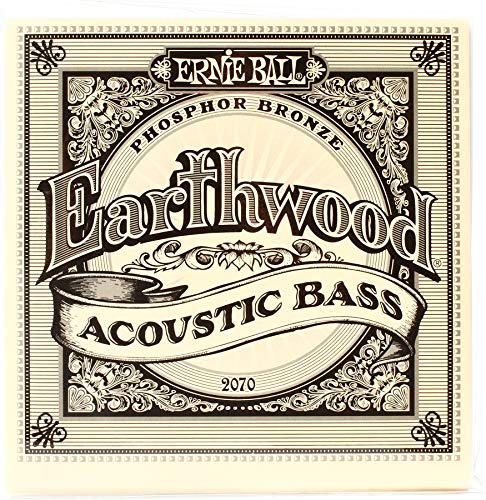
Ernie Ball Earthwood Slinky strings are made for acoustic bass guitars. Their phosphor bronze wrap gives an acoustic bass a warm, full, and ringing voice. The 45-95 gauge is lighter than many electric bass sets. That can feel comfortable, but acoustic bass bridges and scale lengths still require a proper match.
This set makes sense if your instrument is an acoustic bass with a sound hole and acoustic-style bridge. It is not my first choice for a normal solid-body electric bass. The bronze wrap may not behave as expected with a magnetic electric bass pickup. Check your instrument manual before ordering, because “acoustic bass” and “electric bass” use different string needs.
Pros:
- Designed for compatible acoustic bass guitars
- Phosphor bronze creates a warm, rich acoustic tone
- 45-95 gauge offers a lighter acoustic bass feel
- Useful for unplugged practice and songwriting
- Recognizable product from a major string maker
Cons:
- Not the right set for most electric basses
- Bronze tone may not suit electric pickups
- Instrument scale and bridge fit must be checked
BELFORT Phosphor Bronze Acoustic Strings

BELFORT phosphor bronze strings are for a six-string acoustic guitar. They are not bass guitar strings, even though the word “bass” may appear in some broad music searches. Phosphor bronze is chosen for acoustic guitar warmth and shimmer. The six-string format also makes the product clearly different from a four-string bass set.
I would only consider this set for an acoustic guitar owner. It cannot replace the strings on a typical electric bass. Checking the number of strings, gauge, scale, and instrument type is the best way to avoid a costly mistake. This product may be affordable, but a low price does not make an incorrect string set useful.
Pros:
- Made for compatible six-string acoustic guitars
- Phosphor bronze gives a warm acoustic tone
- Useful for basic acoustic guitar maintenance
- Six-string format suits standard acoustic guitars
- May work well as a budget spare set
Cons:
- Not designed for electric bass guitar
- Wrong number of strings for most basses
- Will not provide correct bass scale or tension
Ernie Ball Regular Slinky Electric Strings

Ernie Ball Regular Slinky electric strings are made for a six-string electric guitar. Their 10-46 gauge is much lighter than a normal bass set. They are too short, too thin, and built for a different instrument. For that reason, they are not among the best bass guitar strings for beginners.
This is another product I would keep out of a bass shopping cart. It may be a good choice for an electric guitar player who wants a familiar nickel-wound set. It cannot create the low-end tension that a bass neck and pickup system need. Always look for the word “bass” and confirm the gauge before you buy.
Pros:
- Suitable for compatible six-string electric guitars
- Popular 10-46 electric guitar gauge
- Smooth nickel-plated steel feel
- Bright, familiar electric guitar tone
- Easy to find for guitar maintenance
Cons:
- Not made for any standard bass guitar
- Too light and short for bass use
- Incorrect string tension can cause poor results
My Recommendation
For most new electric bass players, I recommend the Ernie Ball Regular Slinky 50-105 set. It offers the best mix of comfort, tuning stability, tone, and availability. If finger comfort is your top concern, choose the Ernie Ball Super Slinky 45-100 set. If you want a bright sound and your bridge accepts small ball ends, CashBeat stainless steel strings offer a low-cost alternative.
The Power Slinky set is better for players who want heavy tension or lower tuning. YOYODOGS can work as a budget spare, but confirm the gauge first. The GLARRY kit is for a full starter setup, not a string-only purchase. The acoustic and electric guitar sets listed above are not suitable replacements for a standard bass. That distinction matters more than a low price.
| Best for | Why |
|---|---|
| Most first-time electric bass players | Ernie Ball Regular Slinky offers a balanced 50-105 gauge, smooth feel, and broad tone. |
| Soft fingers and long practice | Ernie Ball Super Slinky uses a lighter 45-100 gauge that needs less fretting pressure. |
| Bright tone on a budget | CashBeat stainless steel strings add attack and may cost less than many premium sets. |
How I Choose the Best Bass Guitar Strings for Beginners
String choice can feel confusing because brands use several names for similar products. I start with the instrument, not the package color. A standard four-string electric bass needs bass strings with the correct length, gauge, ball end, and winding. A six-string acoustic guitar set cannot replace them.
I also study gauge. Gauge means the thickness of each string, measured in thousandths of an inch. A 45-100 set has a .045-inch first string and a .100-inch low string. A 55-110 set has more metal and more tension. Thick strings often sound strong, while light strings usually feel easier to play.
Most beginners should start in the light or medium range. A medium set gives a good center point. It does not feel like a cable, but it does not flop around like an ultra-light set. This is why the 50-105 range remains such a useful starting place.
Nickel-Wound or Stainless Steel?
Nickel-plated steel is the easy default. It feels fairly smooth under the fingers. It also gives a balanced tone with clear mids and useful top end. Many players find nickel strings comfortable during the first months of learning.
Stainless steel strings sound brighter and more direct. They can make attack easier to hear. This helps with fingerstyle timing and picked lines. The trade-off is a rougher feel for some players. If your fingers are tender, nickel may be the kinder first step.
Neither material is automatically better. Your amp, pickups, playing hand, and music style all change the result. I tell beginners to choose nickel first unless they already know they want a sharp, modern sound.
What Gauge Should a Beginner Use?
A 45-100 set is light and easy to fret. It works well for gentle fingerstyle and players who want less hand strain. A 50-105 set gives a little more body and tension. It is my usual starting point for a full-size four-string electric bass.
A 55-110 set feels heavy. It can work well for hard picking, rock, or down-tuned music. It may also make a new player press too hard. That can slow learning and cause sore fingers.
Gauge also affects setup. When you change to a much lighter or heavier set, the neck may respond to the new pull. The bridge and truss rod may need adjustment. Do not force a large string through a narrow nut slot. Ask a qualified repair shop if you are unsure.
Short Scale and Long Scale Bass Strings
Scale length is the distance from the nut to the bridge saddle. Common basses use long-scale strings, but short-scale basses need shorter strings. The right gauge alone does not guarantee a fit.
Measure from the ball end to the point where the string reaches the tuner post. The outer silk wrap should not sit across the nut or bridge saddle. That can cause poor tuning and weak contact. Your bass maker often lists the correct string length in the manual.
This check is vital for beginners. A string may look close to the right size but still fail to fit well. When in doubt, buy the same scale type that came on your bass. Then try other gauges after you understand your setup.
How Often Should a Beginner Change Bass Strings?
There is no single schedule. A casual player may keep a set for many months. A player who practices every day may notice dull tone within a few weeks. Sweat, dirt, playing force, and climate all affect string life.
Change strings when they sound flat, feel rough, look rusty, or refuse to stay in tune. Do not wait for a break. Old strings can make a beginner think the bass, amp, or technique is the problem.
Wipe each string with a clean, dry cloth after playing. Clean hands also help. Store the bass away from strong heat and damp air. These simple habits can stretch the useful life of the best bass guitar strings for beginners.
How to Install Bass Strings Safely
Take a photo before removing the old set. This gives you a clear view of the string path. Remove one string at a time if your bass maker recommends that method. It keeps the neck tension more stable.
Feed the new string through the bridge. Pull it toward the tuner and leave extra length for two or three neat wraps. Bend the string at the tuner post, then wind it down in clean coils. Keep each wrap below the last one.
Stretch the string gently after tuning. Pull it a little above the fingerboard, then tune again. Repeat until the pitch settles. Do not yank hard. A steady stretch protects the string and reduces tuning trouble.
Common Beginner Buying Mistakes
The biggest mistake is buying guitar strings instead of bass strings. Guitar sets often use numbers like 10-46. Bass sets often start around 40 or 45 and go past 100. Those numbers are not interchangeable.
The second mistake is ignoring the number of strings. A four-string bass needs a four-string set. A five-string bass needs a set with a low B string. Do not assume that one extra string can come from another package.
The third mistake is choosing only by price. Cheap strings can be useful, but a poor fit wastes money. A trusted set that feels good may help you practice more often. More practice is the best upgrade a beginner can buy.
Why Fresh Strings Help You Learn
Fresh strings give stronger pitch and clearer attack. That makes it easier to hear wrong notes. It also helps you match a teacher, tuner, or backing track.
Old strings can feel sticky. They may have dead spots. They may also produce uneven volume from note to note. A beginner needs a clear response, much like a learner needs a clean road.
Fresh strings will not fix poor action or bad technique. Still, they remove one common barrier. When the bass feels smooth and sounds alive, picking it up becomes easier.
FAQs Of best bass guitar strings for beginners
What are the best bass guitar strings for beginners?
For most new electric bass players, I suggest nickel-wound strings in a 45-100 or 50-105 gauge. Ernie Ball Super Slinky suits players who want an easier feel. Ernie Ball Regular Slinky suits players who want a balanced, standard feel.