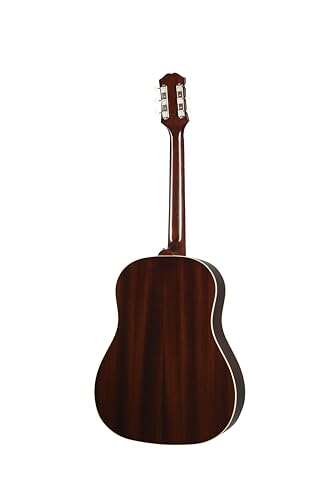
Yes, you can bring a guitar on a plane, either as a carry-on, checked bag, or purchased cabin seat.
Knowing how to bring a guitar on a plane can save you money, stress, and damage to your instrument. Airline size limits, cabin space, security rules, and guitar case quality all matter. This guide explains the safest options, what US regulations say, and how to prepare before you reach the airport.
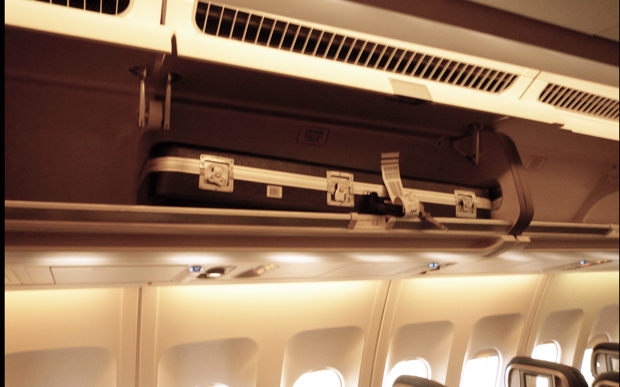
Can You Bring a Guitar on a Plane?
Yes, most airlines allow guitars on flights. You may usually transport one in one of three ways:


• As a carry-on item in the overhead bin
• As checked baggage in a hard case
• In a purchased passenger seat beside you
The best choice depends on the guitar’s size, the airline’s policy, and available cabin space. A small travel guitar may fit more easily than a full-size acoustic guitar, while a hard-shell electric guitar case may be too large for some overhead bins.
In the United States, federal law generally requires airlines to accept musical instruments as carry-on or checked baggage when space and safety rules allow. The guitar must fit in an approved storage area, or you may buy a seat for it.
However, this does not mean every guitar will fit in every cabin. Airlines can apply size, weight, and booking rules. Always check your airline’s current policy before your trip.

How to Bring a Guitar on a Plane as a Carry-On
Bringing a guitar into the cabin is often the safest option. You keep control of the instrument and reduce the risk of rough handling, lost luggage, or damage from baggage equipment.
A guitar may count as your carry-on item. Some airlines may let you bring a small personal item as well, but the guitar can replace your standard carry-on bag. This depends on the airline and the available storage space.
Before you travel, check these points:
• The guitar should be inside a case or gig bag.
• The case must fit in the overhead compartment or another approved storage area.
• The instrument must not block an aisle, exit, or safety area.
• The guitar should not exceed the airline’s carry-on size or weight limits.
• You may need to board early to find overhead space.
A soft gig bag is easier to carry and may fit into tight spaces. A hard case offers much better protection, especially for a valuable vintage guitar. For air travel, a strong case with a firm neck support and secure latches is usually the safer choice.
A useful rule is to measure the complete packed guitar. Do not measure only the instrument. Include the case, handles, wheels, pockets, and exterior fittings.


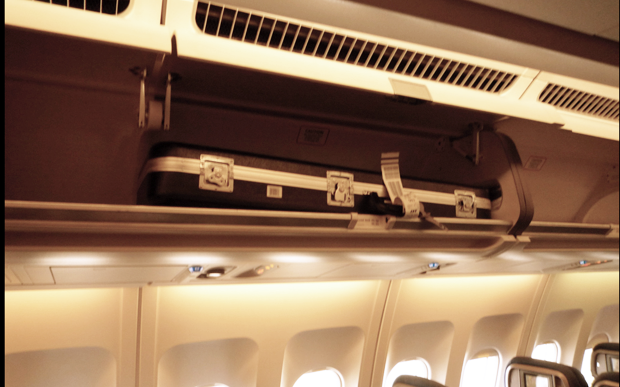
Can a Guitar Fit in an Overhead Bin?
Many standard guitars can fit in an overhead bin, but this is never guaranteed. A full-size guitar case is often longer than the published carry-on limit, even when it can physically fit in some aircraft bins.
Aircraft types also make a difference. A guitar may fit in the larger overhead bins on a wide-body plane but not in the smaller bins on a regional jet. Smaller commuter aircraft often have limited space and may require gate-checking.
To improve your chances:
- Choose a flight with a larger aircraft when possible.
- Avoid busy travel periods, such as holiday weekends.
- Check in online and arrive early.
- Ask the gate agent about cabin storage before boarding.
- Board when your group is called.
- Place the guitar carefully in the bin without forcing it.
Never push a guitar case into a compartment that is too small. Pressure can bend the neck, crack the case, or damage tuning hardware.
Some travelers place the guitar vertically in the overhead bin. Others lay it flat, depending on the bin design. Follow crew instructions, and make sure the case is stable before the bin door closes.

Can You Buy a Seat for Your Guitar?
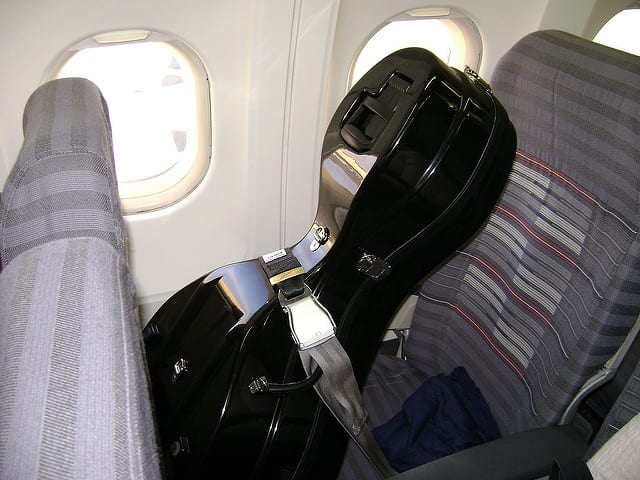
Yes, buying an extra seat is one of the most secure ways to bring a guitar on a plane. This option is useful for expensive, fragile, oversized, or unusual instruments that cannot fit safely in the overhead compartment.
The guitar must usually be secured in an approved seat belt or restraint system. It cannot block an emergency exit or extend into the aisle. The airline may also require advance notice and specific booking details.
When booking an extra seat, contact the airline directly. Ask about:
• The correct name format for the instrument’s reservation
• Maximum size and weight limits
• Approved seat placement
• Restraint requirements
• Check-in procedures
• Whether the guitar may travel in a hard case or must be removed from it
Buying a seat can cost more than checking the guitar. Still, it may be worth the price for a rare, expensive, or irreplaceable instrument. Think of it like giving your guitar its own ticket and safety belt.
Do not assume that a second ticket automatically guarantees approval. Airline rules differ, so written confirmation or a clear note in the booking can prevent confusion at the airport.

Can You Check a Guitar as Baggage?
You can usually check a guitar, but this option carries more risk. Checked baggage may be moved by conveyor belts, loaded into cargo holds, and handled by several airport workers.


If you must check the guitar, use a strong, airline-quality hard case. A thin gig bag offers little protection against impact, compression, or temperature changes.
Before checking your guitar:
• Loosen the strings slightly to reduce neck tension during temperature changes.
• Add padding around the headstock and neck.
• Prevent the instrument from moving inside the case.
• Remove tuners, capos, pedals, and other loose items.
• Lock or secure the case if the airline permits it.
• Photograph the guitar and case before handing it over.
• Record the serial number and keep proof of ownership.
Do not loosen the strings until they become completely slack. A small reduction in tension is usually enough. Excessive loosening can allow parts to move inside the case.
Many experienced musicians use a hard case with thick interior padding and a suspended neck support. This design helps keep the guitar away from the outer walls of the case.
If your guitar is valuable, check whether your travel insurance or homeowner’s insurance covers musical instruments. Airline liability limits may not cover the full replacement value.

How to Protect a Guitar During Air Travel
The guitar case is your main defense. A good case should fit the instrument closely without pressing against the body or neck.
For extra protection, place soft clothing around empty spaces. Avoid hard objects near the guitar’s finish. A folded shirt can help reduce movement, but it should not press heavily on the soundboard.
Pay special attention to the headstock. It is one of the most vulnerable parts of many guitars. Add soft padding beneath the headstock so it does not rest directly on the case floor.
You should also protect the guitar from sudden temperature changes. Cold cargo holds and warm airport ramps can affect wood, glue, finish, and tuning stability. Let the guitar reach room temperature before opening the case after a cold flight.
Here is a simple protection checklist:
• Use a fitted hard case for checked travel.
• Support the neck and headstock.
• Add light padding, not heavy pressure.
• Loosen the strings slightly.
• Keep a humidity pack with the guitar when appropriate.
• Mark the case with your name and contact details.
• Carry valuable accessories in your personal bag.
From the travel guidance and airline policies I have reviewed, one lesson appears again and again: poor case protection causes more trouble than the flight itself. A strong case is often the best money you can spend before a music trip.



Guitar Airline Rules in the United States
US airline rules are shaped by federal requirements, but each airline still sets its own procedures. The Federal Aviation Administration recognizes musical instruments as special carry-on items under applicable conditions.
In general, an airline must allow a small musical instrument in the cabin when it can be safely stored. If the instrument is too large for the cabin, the airline may allow it as checked baggage or permit you to buy a seat.
The US Department of Transportation has also explained rules for transporting musical instruments. These rules do not guarantee that a guitar can occupy an overhead bin when the bin is full. Safety and available space still control the final decision.
Policies may vary in these areas:
• Carry-on dimensions
• Weight limits
• Oversized baggage fees
• Extra-seat purchases
• Gate-check procedures
• Regional aircraft restrictions
• International connections
The Transportation Security Administration generally allows guitars through airport security, but officers may inspect the instrument or case. Security staff have the final say during screening.
Airline policies can change. Check the airline’s official website and contact the carrier if your guitar is expensive, oversized, or traveling on multiple airlines.

What Happens at Airport Security?
A guitar case may need to pass through the standard security checkpoint. You may be asked to remove the guitar from its case so officers can inspect it.
Allow extra time. Do not place the guitar on the conveyor belt until security staff tell you to do so. Keep all small accessories together, since picks, tuners, batteries, and tools can become separated during screening.
The TSA may permit most guitar accessories, but sharp tools and certain equipment can face restrictions. For example, a multi-tool, large wire cutter, or other sharp object may need to go in checked baggage.
A smooth security process usually looks like this:
- Tell the officer that you are traveling with a musical instrument.
- Follow instructions about opening or removing the guitar.
- Keep the case near you at all times.
- Check every pocket before leaving the screening area.
- Repack the instrument carefully before walking away.
Security rules can differ at international airports. Check the rules for every country on your route, not only your departure airport.
Should You Loosen Guitar Strings Before Flying?
Many players loosen the strings slightly before air travel, especially when checking the instrument. This can reduce stress on the neck and bridge during temperature changes.


You do not need to remove the strings. Turn each tuning peg enough to lower tension while keeping the strings attached and organized.
For a cabin guitar, string adjustment is less important because the instrument stays in a more stable environment. Still, temperature changes can occur between the terminal, aircraft, and outdoor ramp.
After landing, allow the guitar to rest before tuning it. A guitar may sound sharp, flat, or unstable after travel. This does not always mean damage has occurred.
Inspect the instrument for:
• Cracks in the body or finish
• A loose bridge
• Neck movement
• Broken tuning machines
• Split seams
• Loose interior braces
If you notice serious damage, photograph it immediately and report it to the airline before leaving the airport.
Common Mistakes to Avoid
Travelers often focus on the guitar but forget the airline process. A few simple mistakes can create major problems at the gate.
Avoid these errors:
• Assuming every aircraft has room for a guitar
• Using a weak gig bag for checked baggage
• Arriving late and losing overhead space
• Relying only on a phone conversation with an airline employee
• Forgetting that a connecting airline may have different rules
• Packing expensive pedals or accessories inside checked luggage
• Failing to label the case
• Ignoring regional jet restrictions
• Trying to force an oversized case into an overhead bin
One practical lesson is to create a backup plan. If the crew cannot accept the guitar in the cabin, know whether you will gate-check it, check it at the counter, or use a purchased seat.
Keep the airline’s policy, booking details, and customer service number available. Clear preparation is much more useful than arguing at the gate.
Best Travel Option for Different Guitars
The right method depends on the instrument and the trip.
Acoustic guitar
A standard acoustic guitar may work as a carry-on on some flights. Use a hard case if you plan to check it, and measure the full case before traveling.
Electric guitar
An electric guitar is often shorter than an acoustic guitar, but its case may still be bulky. Remove or protect the tremolo arm, tuning accessories, and other loose parts.
Classical guitar
Classical guitars can be delicate because of their lighter construction. A well-padded case and careful temperature control are important.


Bass guitar
A bass is usually longer than a standard guitar. It may require an extra seat or checked baggage in a strong hard case.
Vintage or custom guitar
For an expensive instrument, a purchased seat is often the safest choice. If that is not practical, use a professional flight case and confirm insurance coverage.
A Simple Pre-Flight Guitar Checklist
Use this checklist 24 to 48 hours before departure:
• Read the baggage policy for every airline on your itinerary.
• Measure the packed guitar case.
• Decide whether it will be a carry-on, checked bag, or cabin-seat item.
• Contact the airline about oversized or valuable instruments.
• Inspect the case latches, hinges, wheels, and handle.
• Photograph the guitar and note its serial number.
• Pack tools and restricted accessories correctly.
• Add your name and contact information to the case.
• Arrive early enough to speak with a gate agent.
• Keep a backup plan for gate-checking.
This process takes only a few minutes, but it can prevent a rushed decision at the airport.
Frequently Asked Questions About Can You Bring a Guitar on a Plane
Can you bring a guitar on a plane as a carry-on?
Yes, you can usually bring a guitar on a plane as a carry-on if it fits safely in an approved storage area. It may count as your main carry-on item, and cabin space is not guaranteed.
Does a guitar count as a carry-on bag?
Usually, yes. Many airlines treat a guitar as a carry-on item, although some policies provide special rules for musical instruments.
Can you bring a guitar on a plane without a hard case?
You may be allowed to carry it in a soft gig bag, but this offers less protection. A hard case is strongly recommended for checked baggage or valuable instruments.
Can you bring a guitar on a plane and put it in the overhead bin?
Yes, if the guitar case fits and space is available. Do not force the case into the bin, and ask the crew for help if the aircraft has limited storage.
Is it better to check a guitar or carry it on?
Carrying it into the cabin is usually safer because you control the instrument. Checking it can work with a strong hard case, but it creates a greater risk of impact, delay, or loss.
Can you buy a seat for a guitar on a plane?
Yes, many airlines allow an instrument to travel in a purchased passenger seat. You must follow the airline’s size, weight, restraint, and booking rules.
Can you bring a guitar on a plane internationally?
Often, yes, but international airlines and countries may have different rules. Check every airline and airport on your route before departure.
Conclusion
Can you bring a guitar on a plane? In most cases, yes. Your main choices are carrying it into the cabin, checking it in a strong hard case, or purchasing a separate seat.
The safest plan is to review the airline’s current rules, measure the packed case, arrive early, and protect the guitar from movement and temperature changes. For a valuable or fragile instrument, cabin travel or an extra seat may be worth the added cost.
Prepare your guitar like you would prepare for a performance: check every detail, plan for surprises, and avoid last-minute choices. Review your airline’s policy today, then share your own guitar travel tips or experience in the comments.

Senior Music Reviewer
Alex Carter is a seasoned music reviewer with over a decade of experience in the world of sound and instruments. Passionate about helping musicians and enthusiasts make informed choices, he brings sharp insights and in-depth knowledge to every review. From classical instruments to modern gear, Alex combines technical expertise with a love for music to deliver content that resonates with readers.
As a Senior Music Reviewer and expert author on Tuneluma.com, Alex is dedicated to sharing honest evaluations, practical advice, and thoughtful commentary to guide readers in their musical journey.