Best 88 Weighted Key Digital Piano For Beginners: Top Picks
The Yamaha P71 is the best 88 weighted key digital piano for beginners who want simple, reliable piano practice.
Starting piano can feel hard when your keyboard has tiny keys, weak speakers, or no real key resistance. An 88-key digital piano solves that problem by matching the range of an acoustic piano and giving your fingers room to learn proper spacing. I tested these models by looking at key feel, sound, setup, pedals, learning value, and daily comfort. The best 88 weighted key digital piano for beginners should feel natural without making the first lesson feel like a chore.
88 Key Semi-Weighted Piano Package

This 88-key electronic keyboard aims to give beginners a complete starter package at a low entry cost. Its semi-weighted keys offer more resistance than a light, springy keyboard, so new players can begin learning finger control. The full key range also leaves room for both simple songs and more advanced pieces later.
The bundle includes a music stand, power supply, sustain pedal, carrying case, headphones, and USB-MIDI support. Bluetooth adds a useful way to play along with a phone or tablet, although buyers should confirm the exact Bluetooth function before ordering. I like this package for students who need nearly everything in one box and want to practice quietly with headphones.
Pros:
- Full 88-key range for beginner lessons
- More affordable starter package
- Includes sustain pedal and music stand
- Headphones support quiet practice
- Carrying case helps with transport
- USB-MIDI works with compatible music apps
Cons:
- Semi-weighted keys do not feel like a true acoustic piano
- Sound and key response may be less refined than established brands
- Beginners may need to check setup details carefully
Donner DEP-20 Weighted Digital Piano

The Donner DEP-20 is one of the strongest value choices in this guide. It has 88 full-size weighted keys, which makes it a better fit for students who want to build habits that transfer to an acoustic piano. The weighted action gives each note a firmer feel and encourages controlled finger movement.
Its design stays fairly simple, which is helpful for a first instrument. The included sustain pedal and power supply cover the basics, while built-in sounds can keep practice from becoming dull. I would choose this model for a beginner who wants a serious starting point but does not need a large furniture-style cabinet.
Pros:
- Full-size 88-key weighted keyboard
- Good value for traditional piano study
- Compact design fits many rooms
- Includes a sustain pedal
- Simple controls are easy for new players
- Useful choice for lessons and home practice
Cons:
- Basic speaker and cabinet design
- May not include the extras found in larger bundles
- Weighted action is not the same as premium hammer action
Yamaha P71 88-Key Weighted Piano

The Yamaha P71 is my top pick for most beginners because it focuses on the part that matters most: playing piano. Its 88 weighted keys provide a more familiar response than an unweighted keyboard, and Yamaha’s voice quality gives practice a polished, musical sound. The control layout is clean, so a student can sit down and start playing without sorting through dozens of menus.
This model includes a sustain pedal and power supply, making it ready for basic home practice. Its portable shape also works well for apartments, lessons, and small music rooms. It does not offer a large library of tones or a built-in display, but that restraint can help beginners stay focused instead of chasing features.
Pros:
- Trusted Yamaha sound and build quality
- 88 weighted keys support proper piano technique
- Simple controls reduce distractions
- Portable body is easy to move
- Includes sustain pedal and power supply
- Strong choice for long-term beginner study
Cons:
- Limited sound selection compared with feature-heavy keyboards
- No furniture stand included in the basic package
- May cost more than some entry-level alternatives
88 Key Semi-Weighted Keyboard Bundle

This keyboard is built around convenience. It uses a full 88-key layout and includes a sustain pedal, power supply, stand, carrying case, headphones, and USB-MIDI compatibility. That package can save a new player from buying several accessories one at a time.
The semi-weighted action is best for casual learning, basic chords, songwriting, and home entertainment. I would not select it for a student who already knows they want serious classical training, because the key feel may not provide the same resistance as a hammer-action piano. Still, its broad bundle makes it attractive for adults who want an easy way to start.
Pros:
- Complete accessory bundle for quick setup
- Full 88-key layout
- Headphones allow private practice
- USB-MIDI supports computer and tablet use
- Carrying case helps with travel
- Good fit for casual adult learners
Cons:
- Semi-weighted keys offer less piano-like resistance
- Accessory quality may vary by item
- Not the best match for advanced classical technique
Donner DEP-20 With Furniture Stand

This version of the Donner DEP-20 adds a furniture stand and three-pedal unit, giving it a more permanent home-piano feel. The 88 weighted keys make it suitable for beginners who want to learn scales, chords, and two-hand pieces with a familiar layout. The stand also places the keyboard at a more natural playing height than a table can provide.
The three pedals are useful as a student advances beyond simple songs. A full pedal setup can support sustain, soft playing, and more controlled expression, depending on the model’s pedal functions. I see this package as a practical middle ground: it offers more of a piano setup than the portable version while keeping the cost and controls beginner-friendly.
Pros:
- 88 weighted keys for traditional piano practice
- Furniture stand creates a stable setup
- Three-pedal unit supports expressive playing
- Good choice for a dedicated practice corner
- More comfortable than playing on a loose table
- Can grow with a committed beginner
Cons:
- Less convenient to move than the portable version
- Requires more floor space
- Assembly may take time and care
Donner DDP-95 Digital Piano

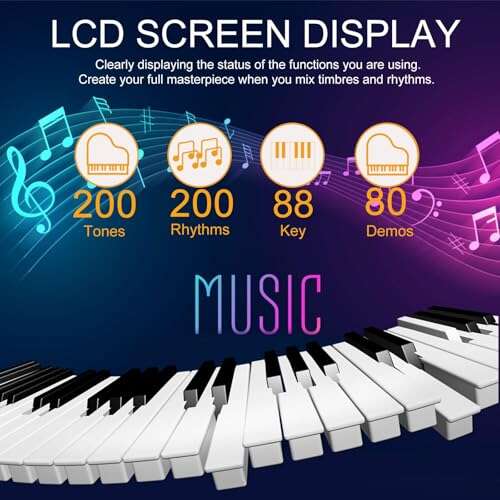
The Donner DDP-95 takes a different approach from the stripped-down Yamaha P71. It combines an 88-key weighted keyboard with a display, recording features, wireless connection, many tones, and a large rhythm library. Those tools can make practice feel more like a guided music session, especially for beginners who enjoy variety.
The three teaching modes are helpful for families, students, and players who want to split or layer sounds while learning. A 4.3-inch LCD can make settings easier to see than a row of tiny buttons. I would choose this model for a beginner who wants both a piano and a creative keyboard, but buyers should remember that more features also mean more setup time.
Pros:
- 88 weighted keys support proper technique
- Large tone and rhythm selection
- Built-in recording encourages self-review
- LCD screen makes controls easier to manage
- Teaching modes add structure to practice
- Wireless connection adds modern flexibility
Cons:
- More features may distract a very young beginner
- Large sound libraries do not replace a teacher
- Furniture-style instruments can be harder to relocate
Yamaha P45B Portable Digital Piano
The Yamaha P45B is a dependable portable digital piano for beginners who want a focused practice tool. It has 88 weighted keys, built-in speakers, a music rest, USB connectivity, and a sustain foot switch. Yamaha’s approach is clear: provide a familiar piano range, useful core sounds, and a design that does not overwhelm the player.
This model suits homes where the instrument must move after each practice session. It can also work well for teachers, church musicians, and students who travel between rooms or lessons. The P45B does not include a full cabinet or a large entertainment feature set, but its clean layout helps keep attention on rhythm, tone, and technique.
Pros:
- Reliable Yamaha brand reputation
- Weighted 88-key layout
- Portable design for small spaces
- Built-in speakers support immediate practice
- USB connectivity supports compatible devices
- Simple controls suit first-time players
Cons:
- Stand is usually a separate purchase
- Limited onboard features compared with arranger keyboards
- Basic package may offer fewer accessories
UISCOM Wooden Desk Digital Piano

The UISCOM home digital piano is designed to look more like a piece of furniture than a portable keyboard. Its 88 weighted keys and wooden desk frame may appeal to families who want a permanent instrument in a living room or study. The triple-pedal design also gives a beginner space to explore more expressive piano technique.
A fixed setup can encourage regular practice because the piano stays ready to play. That small convenience matters: when a keyboard lives in a box, practice often becomes another task. I would consider this model for a home-focused student who values appearance and a stable station more than easy transport.
Pros:
- Full 88-key weighted keyboard
- Wooden desk design suits a home room
- Triple-pedal setup supports expression
- Stable furniture-style playing position
- Encourages a regular practice routine
- More polished appearance than a bare keyboard stand
Cons:
- Not ideal for frequent moving
- Needs more room than a portable digital piano
- Assembly and delivery require extra planning
MSTNE 88-Key Piano Bundle

The MSTNE package is made for a beginner who wants a ready-to-play setup rather than a keyboard alone. It combines an 88-key semi-weighted design with an adjustable stand, piano bench, carrying case, sustain pedal, and headphones. That is a useful mix for an adult learner or family that wants to begin without shopping for every small accessory.
The bench is a practical extra because correct sitting height can make lessons more comfortable. The case gives the keyboard some flexibility if the player later moves it to another room or takes it to a class. Because the action is described as semi-weighted, I would place it closer to casual learning and general music use than strict classical study.
Pros:
- Includes an adjustable stand and bench
- Full 88-key playing range
- Headphones support quiet practice
- Carrying case adds portability
- Sustain pedal is included
- Convenient all-in-one beginner package
Cons:
- Semi-weighted action is less realistic than hammer action
- Bundle takes more time to assemble
- May be less suitable for advanced classical goals
My Recommendation
After comparing these instruments, I would start with the Yamaha P71 for most beginners. It gives a new player the right mix of full range, weighted action, clear sound, simple controls, and dependable brand support. The Donner DEP-20 is my value alternative, while the Donner DDP-95 is better for students who want rhythms, recording, teaching modes, and many extra sounds.
For a quiet apartment, the Yamaha P71 or P45B makes the most sense because the portable design is easy to place and store. For a dedicated home music corner, the Donner DEP-20 with furniture stand or the UISCOM model feels more complete. If your top goal is a low-cost bundle with a bench, stand, headphones, and case, the MSTNE package deserves a close look.
| Best for | Why |
|---|---|
| Most first-time piano students | Yamaha P71 offers simple controls, weighted keys, and trusted sound. |
| Best value with a home setup | Donner DEP-20 with furniture stand adds stable support and three pedals. |
| Creative learners and families | Donner DDP-95 adds tones, rhythms, recording, wireless features, and teaching modes. |
How I Chose These Beginner Digital Pianos
A good beginner piano must do more than make noise. It should help the player build habits that still work on an acoustic piano. I gave the most weight to the key count, key response, control layout, sound quality, pedal support, and ease of setup.
I also looked at the way each model fits real homes. A portable piano helps in a small apartment, while a furniture model can make a practice area feel more inviting. Accessories matter too, but I never let a free bench or case outweigh poor key feel.
Why 88 Weighted Keys Matter
An acoustic piano has 88 keys. A full-size digital piano matches that range, so the student can learn music in its original position. This matters when a lesson moves from middle C to the deep bass or high treble.
Weighted keys add resistance under the fingers. That resistance helps the player learn control, balance, and strength. It also makes soft and loud playing easier to understand. A light keyboard can be fun, but it may not prepare a beginner as well for an acoustic piano.
Not all weighted actions feel the same. Some use simple resistance, while others use hammer-style mechanisms that better copy an acoustic piano. A beginner does not always need the most costly action, but a student planning classical lessons should choose the most natural key feel within the budget.
Weighted, Semi-Weighted, and Hammer Action Explained
Weighted keys use resistance to create a firmer piano feel. Semi-weighted keys use lighter resistance and often feel closer to a general keyboard. Hammer action tries to copy the movement of hammers inside an acoustic piano.
For simple songs, pop chords, and casual practice, semi-weighted keys can work well. They often come in affordable bundles with stands, cases, and headphones. For formal piano lessons, weighted or hammer-action keys are usually the safer choice.
I tell new buyers to think about their next two years, not just their first two weeks. If the student may study classical music, choose full-size weighted keys now. This can prevent an upgrade later and gives the hands a more useful training surface.
What Beginners Should Check Before Buying
Key feel
Key feel is the first thing I check. A key should move with clear resistance and return without feeling loose. Since online buyers cannot always try the action first, the product description, warranty, and return policy deserve close attention.
Sound and speakers
A piano sound should feel pleasant at low volume and remain clear when several notes play together. Built-in speakers are useful for daily practice, but headphones can offer more detail and privacy. A bright sound may cut through a room, while a softer sound can feel easier on the ears during long sessions.
Sustain pedal
The sustain pedal is not just an extra. Beginners use it to connect notes and create a fuller sound. A basic single pedal works for early lessons, while a three-pedal unit offers more control as the player improves.
Size and stand
Measure the room before ordering. An 88-key piano is wide, and a furniture stand needs even more space. A portable model can sit on a sturdy stand or table, but the playing height must support a straight back and relaxed shoulders.
Headphone support
Headphone output is a major benefit for families and apartment dwellers. It lets a student practice early in the morning or later at night. Check that the piano uses a headphone plug that matches your headphones, or plan to use a small adapter.
USB and wireless features
USB-MIDI can connect a digital piano to compatible learning apps, notation tools, and recording software. Wireless features may support audio playback or other functions, but the exact use differs by model. I recommend checking the manual or current listing details before buying based on Bluetooth alone.
Portable Piano or Furniture-Style Piano?
A portable digital piano is usually easier to move, store, and carry to lessons. It also gives renters more freedom. The Yamaha P71, Yamaha P45B, and portable Donner DEP-20 fit this style.
A furniture-style piano stays in one place and often looks more natural in a living room. It may include a fixed stand and three pedals. The Donner DEP-20 furniture package and UISCOM model suit buyers who have a dedicated space.
Neither design wins for every home. I prefer portable models when space is tight. I prefer furniture styles when a family wants the piano to remain ready all day. The best choice is the one that makes practice easy to start.
How Much Should a Beginner Spend?
Set a budget around the student’s goal. A low-cost semi-weighted bundle can make sense for casual playing or a child who is still testing the hobby. A weighted model usually offers better long-term value for a student taking regular lessons.
Remember to include the stand, bench, headphones, and pedal in the final cost. Some packages include these items, while others sell them separately. A low advertised price can rise after adding the basics.
I also recommend leaving room for a proper bench. A chair that is too high or too low can make a beginner tense. Good posture does not need to be fancy, but it does need to be stable.
Tips for a Better First Month
Start with short practice sessions. Ten to twenty focused minutes can build more skill than one long session filled with breaks. Use a metronome at a slow speed and raise the tempo only when the notes feel even.
Learn hand position before chasing fast songs. Play simple five-finger patterns, scales, and basic chords. These small exercises are like learning letters before writing a story.
Use headphones when you need privacy, but listen through the built-in speakers sometimes too. Speakers help you hear how the piano fills a room. That change can reveal uneven notes that headphones hide.
Record a short practice clip once a week if the piano supports recording or a compatible device. Listening back can show timing problems and progress. It also gives beginners proof that small daily gains add up.
Common Buying Mistakes to Avoid
The most common mistake is choosing a keyboard by the number of sounds alone. Hundreds of tones cannot fix keys that feel poor for piano practice. If piano is the main goal, key action should come first.
Another mistake is ignoring room size. A large cabinet may look beautiful online but become hard to place at home. Measure the wall, doorway, and floor area before selecting a furniture-style model.
Some buyers also expect built-in lessons to replace a teacher. Learning modes can guide practice, but they cannot always correct posture, hand shape, or tension. Use them as tools, not as the whole learning plan.
Finally, check what arrives in the box. A product title may mention a pedal or stand, but packages can differ by version. Read the current listing, confirm seller details, and keep the packaging until you know the piano works well.
FAQs Of best 88 weighted key digital piano for beginners
Is an 88-key digital piano too large for a beginner?
No. It may take more room than a small keyboard, but the full layout teaches proper spacing from the start. A portable model can help when floor space is limited.
Are weighted keys better than semi-weighted keys?
Weighted keys are usually better for piano study because they offer a more realistic response. Semi-weighted keys can still suit casual players, pop practice, and buyers who want a lower-cost bundle.
Does a beginner need three pedals?
No. A sustain pedal is enough for early practice. Three pedals become more useful when the student studies advanced pieces and wants more control over tone and expression.
Can I use headphones with a digital piano?
Most digital pianos in this guide support quiet practice with headphones. Check the headphone jack size and use an adapter if needed. Headphones are especially useful in shared homes and apartments.
Should I buy a Yamaha or Donner beginner piano?
Choose Yamaha for a simple, focused instrument with a strong brand reputation. Choose Donner if you want more features or accessories at a value price. Compare key feel, warranty, included items, and room needs before deciding.
Final Verdict: Which Should You Buy?
The Yamaha P71 is my best overall pick because its weighted 88-key layout, clear sound, simple controls, and reliable design suit most new players. The Donner DEP-20 is the best value alternative.
Choose the best 88 weighted key digital piano for beginners based on key feel, space, and practice goals. A piano that is easy to use is more likely to become a lasting musical habit.

Senior Music Reviewer
Alex Carter is a seasoned music reviewer with over a decade of experience in the world of sound and instruments. Passionate about helping musicians and enthusiasts make informed choices, he brings sharp insights and in-depth knowledge to every review. From classical instruments to modern gear, Alex combines technical expertise with a love for music to deliver content that resonates with readers.
As a Senior Music Reviewer and expert author on Tuneluma.com, Alex is dedicated to sharing honest evaluations, practical advice, and thoughtful commentary to guide readers in their musical journey.