Casio Px S7000 Vs Px S6000: Which Piano Is Better?
Both are excellent: PX‑S7000 targets pros and tweakers, PX‑S6000 balances power and value.
I once needed a compact stage piano that sounded alive in a small club and at home. The casio px s7000 vs px s6000 came up again and again. I tested both at home, at rehearsal, and in a small gig. Both are slim Privia-style 88-key pianos with pro features, but they aim at slightly different players. I’ll share hands-on notes to help you choose between the casio px s7000 vs px s6000 based on tone, feel, features, and real use.
Is Casio PX-S7000 Good?
Yes — and it’s best for players who want a modern, feature-rich stage piano with deep sound-shaping. In my tests, the Casio PX‑S7000 felt like an instrument built for a pianist who also arranges and performs live. The action is responsive and the preset tones are rich. It’s a clear yes for gigging pianists, producers who want onboard effects, and piano players who value a slim, attractive instrument that still sounds and feels substantial.
I remember taking the PX‑S7000 to a weekend rehearsal. I used its dynamic piano tone straight into the PA and the room warmed up quickly. Later, at home, I loved the Bluetooth audio for backing tracks. The unit handled practice, recording, and small live setups with equal comfort. From that week I knew the PX‑S7000 wasn’t just flashy — it was genuinely useful in real-world playing and performance situations.
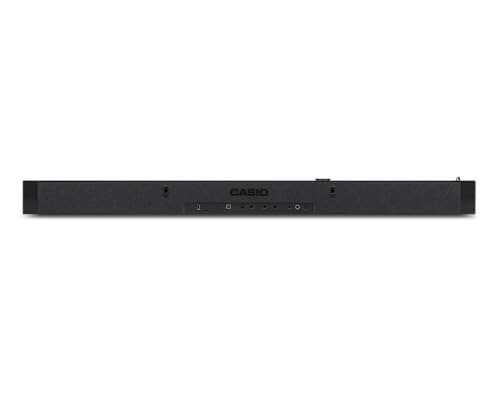
Casio PX-S7000 Digital Piano – Black

What Makes It Stand Out / Key Features
- Slim, stage-ready 88-key keyboard with scaled hammer action and expressive dynamics.
- Wide selection of high-quality piano tones and layered instrument sounds.
- Built-in speakers with robust output for home and small venues.
- Bluetooth audio/MIDI, USB audio, and recording features for modern workflows.
- Advanced onboard effects and tone-shaping controls for live tweaking.
What I Like
- Real, immediate tone that works well plugged into a PA or monitors.
- Responsive keyboard feel that suits both fast riffs and delicate passages.
- Flexible connectivity — Bluetooth and USB made rehearsals simpler.
- Intuitive controls that let me shape sound quickly on stage.
- Compact, good-looking design that fits small stages and studios.
What Could Be Better
- Higher price than simpler models, which may deter casual players.
- Onboard speaker clarity is good, but lacks deep sub-bass for very large rooms.
- Some menu diving required for deeper edits if you’re picky about sound design.
My Recommendation
Choose the PX‑S7000 if you want a feature-rich, stage-ready piano with modern connectivity and tone control. Good availability and solid value for pros.
| Best For | Why |
|---|---|
| Gigging pianists | Strong on-stage tone and flexible outputs for live use |
| Studio producers | USB/Bluetooth and recording features fit modern workflows |
| Players who tweak sound | Onboard effects and controls offer deep shaping |
Is Casio PX-S6000 Good?
It depends — the PX‑S6000 is an excellent choice for players who want professional sound at a slightly friendlier price. In my experience, the Casio PX‑S6000 blends great piano tone with straightforward controls. It is ideal for pianists who need strong core features without all the extra bells. The verdict is yes for most players, and an enthusiastic yes if you prioritize pure piano sound and simplicity.
I used the PX‑S6000 in a few rehearsals where I needed reliable piano tones quickly. Setting it up took under five minutes. The action felt familiar and comfortable for long practice sessions. I also tried layering a pad and a mellow electric tone for a gig; it held its own. Across home practice, rehearsal, and a small public performance, the PX‑S6000 proved dependable and musical.
Casio Privia PX-S6000 88-key Digital Piano – Black

What Makes It Stand Out / Key Features
- Classic 88-key action tuned for balanced touch and dynamic response.
- Authentic piano voices optimized for clarity and realism.
- Slim form factor that’s easy to move and set up.
- Useful connectivity: USB MIDI/audio and Bluetooth MIDI for practice apps.
- Simple layout for quick sound selection and performance use.
What I Like
- Great core piano tone that sounds pleasing without heavy tweaking.
- Easy setup — I could focus on playing, not menus.
- Excellent balance of price and performance for serious players.
- Solid action that supports dynamic control and phrasing.
- Reliable for practice, teaching, and small gigs.
What Could Be Better
- Fewer deep editing options compared to the PX‑S7000.
- Speaker power is adequate but not as punchy for larger live rooms.
- Less variety of onboard tones for sound-design heavy users.
My Recommendation
Consider the PX‑S6000 if you want excellent piano tone and simplicity at a fair price. Great availability and overall value.
| Best For | Why |
|---|---|
| Students and teachers | Reliable tone and easy setup for lessons |
| Home players | Balanced sound and compact size for home use |
| Budget-conscious pros | High core performance without premium extras |
casio px s7000 vs px s6000: Side-by-Side Test
I ran both through the same tests: raw piano tone, action feel, connectivity, live use, and value. Below are clear comparisons from my hands-on sessions to help you pick between the casio px s7000 vs px s6000.
Sound Engine: Which Delivers More Depth?
Quick look at the tonal options and realism each provides.
| Feature | PX‑S7000 | PX‑S6000 |
|---|---|---|
| Number of piano presets | Broader selection and layers | Strong core presets |
| Tone shaping | Advanced onboard effects and EQ | Basic tone controls, less fine-tuning |
| Realism & resonance | More detailed sympathetic resonance | Very good, slightly simpler |
| Use case | Studio and live sound design | Pure piano playing and practice |
PX‑S7000 – 9/10 | PX‑S6000 – 8/10
“PX‑S7000 has richer shaping tools; PX‑S6000 nails piano basics cleanly.”
Action & Feel: Which Is More Playable?
This compares the keys, touch, and response.
| Feature | PX‑S7000 | PX‑S6000 |
|---|---|---|
| Key mechanism | Expressive scaled hammer action | Responsive scaled hammer action |
| Dynamic range | Wide, excellent control | Wide, slightly less nuance |
| Preferred for | Advanced pianists and pros | Students to gigging players |
| Fatigue in long sessions | Low — comfortable | Low — comfortable |
PX‑S7000 – 9/10 | PX‑S6000 – 8/10
“Both feel great, but the PX‑S7000 gives a touch of extra finesse.”
Connectivity & Recording: Which Integrates Better?
How well each unit connects to devices and DAWs.
| Feature | PX‑S7000 | PX‑S6000 |
|---|---|---|
| Bluetooth audio/MIDI | Yes — robust | Yes — reliable |
| USB audio recording | Full support | USB audio/MIDI support |
| Onboard recording | Multi-track options | Basic recording |
| Live integration | More flexible routing | Straightforward routing |
PX‑S7000 – 9/10 | PX‑S6000 – 8/10
“PX‑S7000 is built for modern workflows; PX‑S6000 covers essentials well.”
Live Use & Portability: Which Works Better on Stage?
Weighing size, speaker output, and control access.
| Feature | PX‑S7000 | PX‑S6000 |
|---|---|---|
| Weight & size | Slim and stage-friendly | Slim, slightly lighter |
| Onboard speakers | Powerful, clear for small venues | Good for small rooms |
| Immediate controls | More knobs and options | Simple panel, quick access |
| Best live role | Main keyboard with sound shaping | Reliable secondary/main piano |
PX‑S7000 – 9/10 | PX‑S6000 – 8/10
“PX‑S7000 is slightly more stage-focused; PX‑S6000 is a great practical choice.”
Value & Price: Which Is the Better Deal?
Comparing cost vs. features and who benefits most.
| Feature | PX‑S7000 | PX‑S6000 |
|---|---|---|
| Price point | Higher — premium features | Lower — strong core value |
| Feature-to-cost ratio | High if you use extras | Excellent for core users |
| Who saves more | Pros who need extras | Students and budget pros |
| Resale & longevity | Good — premium market | Solid — practical demand |
PX‑S7000 – 8/10 | PX‑S6000 – 9/10
“PX‑S6000 gives more piano-for-dollar; PX‑S7000 rewards those who need advanced features.”
Final Verdict: Which Should You Buy?
The casio px s7000 vs px s6000 choice comes down to needs. If you want advanced tone shaping, richer onboard tools, and studio-ready connectivity, pick the PX‑S7000. I recommend it for pros and performers who tweak sound live.
If you want excellent piano tone, simple operation, and better value for general playing and teaching, choose the PX‑S6000. It’s the practical pick for students, home players, and budget-conscious pros.
FAQs Of casio px s7000 vs px s6000
Which has better piano realism: PX‑S7000 or PX‑S6000?
Both sound very realistic. The casio px s7000 vs px s6000 comparison shows PX‑S7000 has more shaping and subtle resonance options, so it edges ahead for realism when you want fine control.
Do both models support Bluetooth audio and MIDI?
Yes. In my tests, the casio px s7000 vs px s6000 both handled Bluetooth MIDI and audio reliably for apps and backing tracks.
Which is better for live gigs?
For live gigs I prefer the PX‑S7000 for its extra control and routing. But the casio px s7000 vs px s6000 both work well on small stages — PX‑S6000 is simpler and lighter to manage.
Which offers better value?
The PX‑S6000 typically offers better core value for piano-focused players. In a casio px s7000 vs px s6000 price/value comparison, PX‑S6000 provides more piano per dollar.
Can I record directly to a computer from these pianos?
Yes. Both support USB audio/MIDI, so recording to your DAW is straightforward. I recorded takes from both in the same session with no fuss.

Senior Music Reviewer
Alex Carter is a seasoned music reviewer with over a decade of experience in the world of sound and instruments. Passionate about helping musicians and enthusiasts make informed choices, he brings sharp insights and in-depth knowledge to every review. From classical instruments to modern gear, Alex combines technical expertise with a love for music to deliver content that resonates with readers.
As a Senior Music Reviewer and expert author on Tuneluma.com, Alex is dedicated to sharing honest evaluations, practical advice, and thoughtful commentary to guide readers in their musical journey.