Best Keyboard For Child To Learn Piano: Top Picks & Tips
Best overall: RockJam 61-Key bundle — sturdy, full-size starter keyboard for kids to learn piano.
Imagine a parent trying to pick a first instrument for a curious child. You want something sturdy, simple, and fun that teaches real skills. The right keyboard removes friction. It makes learning feel like play and helps a child stick with music.
QMG Rainbow Piano Stickers & Book

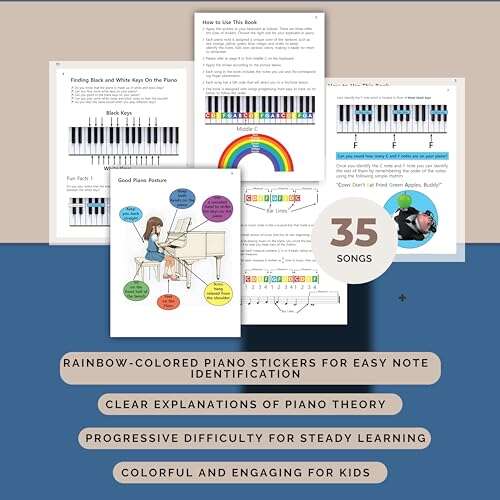
These QMG rainbow stickers pair a colorful keyboard label set with a beginner-friendly lesson book. I found the stickers easy to read, and the book uses color-coded notes that match the keys. The package is aimed at very young learners and helps bridge the gap between seeing notes and playing them. It makes early practice painless and child-friendly.
Beyond stickers, the book offers simple songs and a gentle lesson flow. I liked the step-by-step feel and short practice tasks. Families can get quick wins and feel progress each week. It’s an easy add-on to almost any keyboard.
Pros:
- Color-coded system that simplifies note recognition
- Easy-to-follow beginner songs for quick wins
- Stickers are removable and fit many key counts
- Book and stickers sold together for convenience
- Great for building early confidence and motivation
Cons:
- Stickers may peel on textured keys
- Book is basic for older beginners
My Recommendation
This kit is best if your child is very young or new to music. I recommend it as a low-cost way to make the piano approachable. It pairs well with any starter keyboard so the child can learn notes visually. If you want the best keyboard for child to learn piano, add this as a learning aid rather than the main instrument.
| Best for | Why |
|---|---|
| Young beginners | Simple colors make note matching easy and intuitive. |
| Low-cost learning | Combines stickers and a starter book in one purchase. |
| Any basic keyboard | Stickers fit common key sizes for quick setup. |
Multicolor Piano Keyboard Stickers
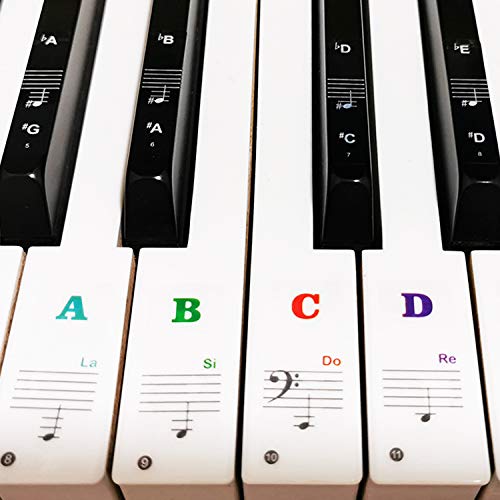
These bold large-letter stickers are made for clarity. I used them on different keyboards and they stuck well to smooth keys. The letters are large, so kids learn note names faster. The multicolor layout keeps things visually engaging.
They support a wide range of key counts from 37 to 88. I liked that they’re removable, which protects resale value of a piano or keyboard. The stickers are a simple, low-effort boost for early practice. They pair well with beginner lessons or apps.
Pros:
- Fits many keyboard sizes from 37 to 88 keys
- Large, bold lettering that’s easy to read
- Removable without damaging keys
- Bright colors help memory and engagement
- Affordable and quick to install
Cons:
- May not match textured or curved keys perfectly
- Not a teaching tool by itself
My Recommendation
These stickers are ideal when you want fast results with minimal fuss. I recommend them for parents who buy a keyboard for a child to learn piano and want immediate visual help. They are a great supplement to lessons or teaching apps. Use them until note-reading is more confident, then remove.
| Best for | Why |
|---|---|
| Visual learners | Bold letters speed up note recognition. |
| Families with multiple keyboards | One pack fits several common key counts. |
| Budget buyers | Inexpensive, effective enhancement. |
Play It! Children’s Songs Level 1

This songbook focuses on fun and fast wins. I used it with beginners and it delivers short, recognizable tunes. The arrangements are simple and encourage practice. Kids enjoy playing songs they already know.
The layout supports steady progress and keeps practice short. I like that it builds both playing and reading skills. It’s a good companion for a starter keyboard for child to learn piano. The book helps translate practice into real songs quickly.
Pros:
- Known children’s songs kids recognize
- Simple arrangements for quick success
- Encourages consistent short practice sessions
- Good for building motivation and momentum
- Works with almost any beginner keyboard
Cons:
- Limited to beginner-level songs
- No interactive audio included
My Recommendation
Choose this book if your child thrives on playing familiar tunes. I recommend pairing it with a reliable beginner keyboard for child to learn piano so songs sound full and clear. It suits kids who respond to instant rewards and quick wins. The book adds musical meaning to practice time.
| Best for | Why |
|---|---|
| Song-motivated kids | Includes tunes they already love to play. |
| Short practice sessions | Simple songs keep focus and momentum. |
| Any starter keyboard | Arrangements work on small and full keyboards. |
Raimy 37-Key Kids Keyboard

The Raimy 37-key keyboard is compact and portable. I found it perfect for preschoolers and early-elementary kids. It has simple buttons and bright colors to attract attention. The battery option makes it easy to move from room to room.
Sound quality is fine for practice and play but not pro-level. It’s a toy-grade build but good for early skill development. I often recommend it as a first step before investing in a larger model. It helps children get comfortable with keyboards.
Pros:
- Portable size for young hands and travel
- Simple controls that kids understand quickly
- Battery or adapter power options
- Lightweight and easy to store
- Affordable entry point for curious kids
Cons:
- Limited key range compared to full keyboards
- Not weighted keys; less realistic feel
My Recommendation
I recommend the Raimy if your child is just exploring music. I often suggest it as the first keyboard for child to learn piano when you want a low-cost test. It’s great for short sessions and playful introduction. Once interest grows, move to a fuller keyboard for more learning depth.
| Best for | Why |
|---|---|
| Exploratory play | Small, safe, and fun for early toddlers. |
| Portability | Batteries allow practice anywhere. |
| Budget-conscious families | Low cost to test musical interest. |
Beginner Piano Book for Kids
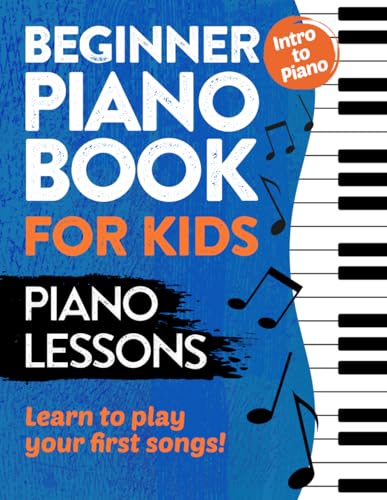
This beginner piano book breaks lessons into short steps. I liked the clear explanations and child-friendly language. Each chapter leads to a simple song or exercise. The structure supports steady skill building.
It pairs well with stickers or apps for multisensory learning. I often use it alongside a keyboard for child to learn piano and watch progress. The exercises focus on hand position and basic reading. Parents can guide practice without being musical experts.
Pros:
- Clear, step-by-step lessons for novices
- Focus on technique and early reading
- Short exercises that fit kids’ attention spans
- Works with both acoustic and digital keyboards
- Good for parents who teach at home
Cons:
- May feel slow for musically advanced kids
- No accompanying audio tracks
My Recommendation
I recommend this book for parents who want a guided curriculum. I often pair it with a mid-range keyboard for child to learn piano so lessons sound rewarding. It’s ideal when you plan weekly practice with clear goals. The value is high for at-home learning.
| Best for | Why |
|---|---|
| At-home teachers | Lessons are clear for non-musical parents. |
| Steady learners | Builds skills step-by-step with exercises. |
| Beginners of all ages | Works on small or full keyboards. |
61-Key Digital Kids Keyboard

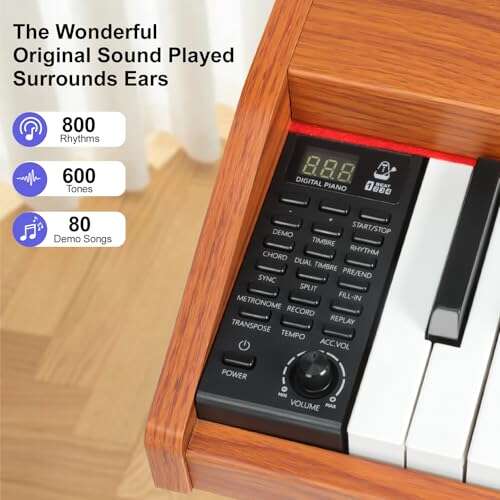
This 61-key digital keyboard gives a balance of size and function. I appreciate the built-in speakers and microphone for duet-style play. The key count is enough for most beginner songs. It feels solid for the price point.
The keyboard usually includes demo songs and rhythms that keep kids engaged. I recommend it for families who want a practical learning tool that also entertains. It’s a strong contender for the best keyboard for child to learn piano when you need value and features. It bridges the gap between toy and true instrument.
Pros:
- 61 keys for real song practice
- Built-in speaker and mic for fun play
- Multiple voices and demo songs
- Good balance of price and features
- Works well with beginner lesson books
Cons:
- Keys are not fully weighted for adult feel
- Plastic build may show wear over years
My Recommendation
I recommend this 61-key model for families who want a practical learning instrument. I often call it the best keyboard for child to learn piano when budget and usability both matter. It supports real songs, lessons, and some performance fun. For lasting learning, pair it with a method book or app.
| Best for | Why |
|---|---|
| Balanced learners | 61 keys cover most beginner repertoire. |
| Family use | Speakers and mic make practice social. |
| Value seekers | Good features at a reasonable price. |
RockJam 61-Key Piano Bundle

The RockJam bundle is a popular starter kit for children. I like that it includes a stand, bench, headphones, and stickers. It’s almost a classroom-in-a-box for new players. The keyboard itself offers 61 keys and useful beginner features.
Out of the box, it’s ready for lessons and practice. I used it in my teaching setup and found it reliable. For many families, this is the best keyboard for child to learn piano because it removes the setup guesswork. You get a complete kit for a one-off price.
Pros:
- Complete bundle with stand and bench included
- Headphones and stickers make practice private and easy
- 61 keys suitable for real songs and lessons
- Good value compared to buying pieces separately
- Trusted brand with consistent build quality
Cons:
- Bench may be small for older kids
- Assembly required for stand and accessories
My Recommendation
I often recommend the RockJam bundle as the top starter kit. If you want the best keyboard for child to learn piano with everything included, this bundle is a smart pick. I value its convenience and consistent performance. It’s an excellent first full-size option that grows with your child.
| Best for | Why |
|---|---|
| Complete starters | Includes stand, bench, headphones, stickers. |
| Lesson-ready | 61 keys and accessories suit formal learning. |
| Gift buyers | All-in-one package simplifies gifting. |
LEIEILUK Silicone Piano Labels

These silicone key labels are reusable and gentle on keys. I appreciate that they come in full 88-key coverage for pianos and keyboards. The silicone gives a tactile feel that some kids find engaging. Storage box keeps the set tidy when not in use.
I used them on a weighted keyboard and they peeled off easily with no residue. The rainbow colors help match notes to lessons and apps. For families serious about long-term learning, they are a durable option. They are a practical choice for consistent practice.
Pros:
- Reusable silicone, gentle on keys
- Full 88-key coverage for pianos
- Storage box included for neatness
- Good tactile feedback for kids
- Durable and washable material
Cons:
- May feel bulky on some keyboards
- Can shift if not placed carefully
My Recommendation
Choose these silicone labels if durability matters to you. I recommend them when you want a long-term labeling solution for the best keyboard for child to learn piano. They work for both digital and acoustic pianos. They keep keys protected and make practice consistent.
| Best for | Why |
|---|---|
| Long-term learners | Durable and reusable for many practice sessions. |
| Families with acoustic pianos | 88-key coverage fits full-size instruments. |
| Mess-free storage | Storage box keeps labels organized. |
Learn Piano For Kids: 76 Lessons

This course-style book bundles lessons, songs, theory, and activities. I liked the variety and multimedia approach. It keeps kids engaged with games and video tutorials. The scope makes steady progress measurable.
I recommend it for families who want a structured curriculum. It pairs well with apps and a real keyboard for practice. If you want a method that feels modern and interactive, this is a top choice. It supports learning beyond the basics.
Pros:
- Comprehensive lesson plan for beginners
- Includes songs, theory, and games
- Video tutorials support visual learners
- Good for both home and lesson settings
- Progress tracking keeps motivation high
Cons:
- Requires parent involvement to follow videos
- Can feel structured for very casual learners
My Recommendation
Pick this lesson set if you want a full curriculum at home. I believe it pairs best with a solid keyboard for child to learn piano so lessons translate into real playing. It’s a higher-value option for committed learners. Expect steady improvement with consistent use.
| Best for | Why |
|---|---|
| Structured learners | Clear lesson path and progress tracking. |
| Interactive learners | Videos and games support multiple styles. |
| Committed practice | Comprehensive content for long-term growth. |
QMG Color Piano Stickers & Guide
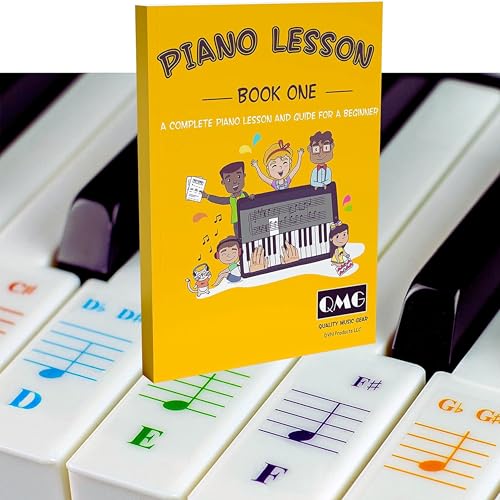
This QMG set matches stickers with a full color guidebook. I like the clarity in the guide and the matching stickers. The approach ties note names, positions, and simple songs together. It’s a practical combo for absolute beginners.
The printing quality is good and the stickers fit straight keys well. I used the guidebook for quick lesson planning and found it helpful. The pairing reduces guesswork for parents. It’s an easy, ready-made starter kit idea.
Pros:
- Combined sticker and guidebook approach
- Good print quality and visual clarity
- Designed for straight-key keyboards
- Helps parents plan short lessons
- Affordable and ready to use
Cons:
- Guidebook is basic for advanced learners
- Stickers may need careful placement
My Recommendation
I recommend the QMG combo for parents who want a clear starting system. I often suggest it to families that need the best keyboard for child to learn piano plus an easy guide. The guide and stickers work together to speed learning. It’s a solid, low-stress option for beginners.
| Best for | Why |
|---|---|
| Guided beginners | Book and stickers teach in tandem. |
| Parents needing structure | Clear lesson guidance simplifies teaching. |
| Starter keyboards | Designed to fit common key types. |
FAQs Of best keyboard for child to learn piano
What key count is best for a child starting piano?
I recommend at least 61 keys for a child starting piano. Sixty-one covers most beginner songs and scales. It gives room to grow without the size and cost of 88 keys.
Should a beginner kid have weighted keys?
Not necessarily. I suggest semi-weighted or touch-sensitive keys for older children. True weighted keys mimic an acoustic piano and help technique. For toddlers, lighter keys are fine to build interest first.
Do stickers or labels help learning?
Yes. Visual labels speed up note recognition and reduce frustration. I use stickers to bridge early learning and then remove them as reading improves. Silicone labels last longer and are reusable.
Is a full bundle worth it for beginners?
Often yes. Bundles like the RockJam give a stand, bench, and headphones so practice is comfortable and private. Bundles remove the hassle of buying accessories separately. I call them great value for new learners.
How often should a child practice?
I suggest short daily sessions — 10 to 20 minutes for young kids. Consistency beats marathon sessions. Short, focused practice builds habits and keeps enjoyment high.
Final Verdict: Which Should You Buy?
If you want an all-in-one starter, the RockJam 61-Key Piano Bundle gives the best balance of features, accessories, and value. It’s my top pick as the best keyboard for child to learn piano because it’s ready for lessons right away.
For low-cost entry, choose a 37-key or sticker/book combo. For long-term learning, pick a 61-key digital keyboard or full 88-key with silicone labels. Match the choice to your child’s age and commitment level.

Senior Music Reviewer
Alex Carter is a seasoned music reviewer with over a decade of experience in the world of sound and instruments. Passionate about helping musicians and enthusiasts make informed choices, he brings sharp insights and in-depth knowledge to every review. From classical instruments to modern gear, Alex combines technical expertise with a love for music to deliver content that resonates with readers.
As a Senior Music Reviewer and expert author on Tuneluma.com, Alex is dedicated to sharing honest evaluations, practical advice, and thoughtful commentary to guide readers in their musical journey.