Where Are Steinway Pianos Made: Factory Locations
Steinway pianos are made in Steinway factories in New York, USA, and Hamburg, Germany.
The answer to where are Steinway pianos made is simple, but the details matter. Steinway & Sons operates two historic production sites, and each has its own methods, materials, and sound traditions. This guide explains the differences between New York and Hamburg Steinways, how to identify a piano’s origin, and what that location means for quality, tone, and value.
Where Are Steinway Pianos Made Today?
Steinway pianos are made in two main factories:
• Astoria, Queens, New York, USA
• Hamburg, Germany
These factories build Steinway & Sons grand pianos and upright pianos. Both facilities follow Steinway’s core designs and quality standards, but they are not identical. Each factory has developed its own techniques over many decades.
The New York factory serves the American market and preserves many traditional American piano-making methods. The Hamburg factory serves much of Europe and other international markets. It is also known for its refined finish work and a tonal style that many musicians describe as clear, focused, and colorful.
When people ask where are Steinway pianos made, they often expect one country as the answer. In reality, the correct answer depends on the individual instrument. The nameplate, serial number, and factory records can help confirm where a specific Steinway was built.
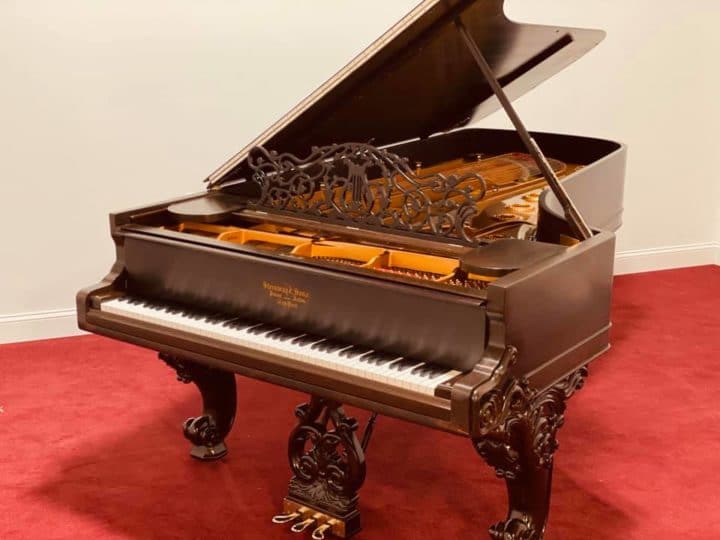
The Steinway Factory in New York
The New York Steinway factory is in Astoria, Queens. It is closely linked to the company’s American roots and remains one of the best-known piano factories in the United States.
Heinrich Engelhard Steinway founded Steinway & Sons in New York in 1853. The company grew from a small family business into one of the most respected piano makers in the world. The factory moved into its large Queens complex during the late 19th century, and the site became known as Steinway Village.
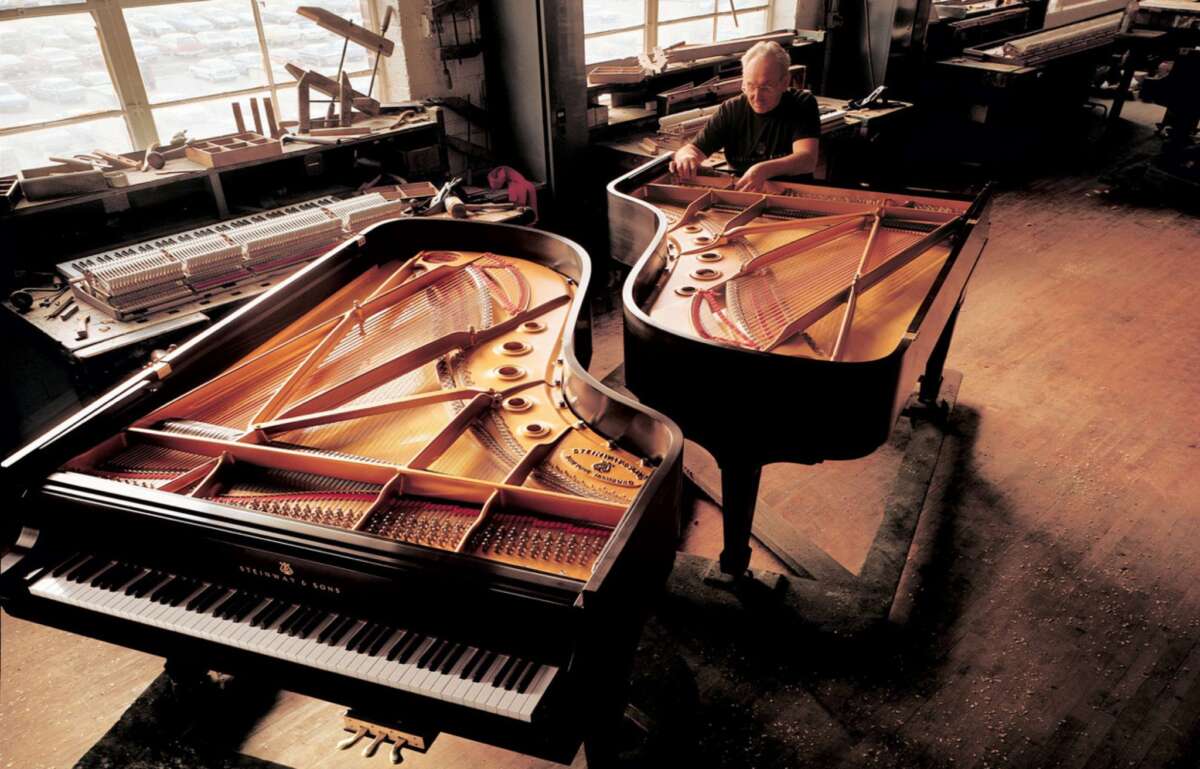
The New York factory produces Steinway grand pianos and upright pianos. Craftspeople carry out many stages of production by hand, including:
• Rim construction
• Soundboard fitting
• String installation
• Action regulation
• Voicing
• Cabinet finishing
• Final inspection
A Steinway rim is one of the piano’s most important structural parts. It is made from layers of wood that are bent and laminated into a strong curve. This rim supports the soundboard, bridges, and cast-iron plate.
New York Steinways are often associated with a powerful bass, a broad tone, and strong projection. However, no two pianos sound exactly alike. The model, age, maintenance history, room, and technician can affect the result as much as the factory location.

The Steinway Factory in Hamburg
The Hamburg factory is located in Hamburg, Germany. It opened in 1880 and became Steinway’s main European production center.
Hamburg Steinways are made with the same overall design philosophy used by the company worldwide. Still, the factory has its own traditions in wood selection, finishing, voicing, and assembly. These details help explain why experienced players may hear differences between New York and Hamburg instruments.
Many Hamburg Steinways have a clear and singing treble. Their tone is often described as balanced, precise, and elegant. This does not mean every Hamburg piano sounds the same, or that one factory always produces a better instrument. A well-maintained New York Steinway can sound exceptional, while a poorly regulated Hamburg piano may disappoint.
The Hamburg plant makes several well-known models, including concert grands, salon grands, baby grands, and upright pianos. The exact model range may change over time, so buyers should confirm current specifications with an authorized dealer.
The answer to where are steinway pianos made therefore includes Germany as well as the United States. A Hamburg-made piano is not an imitation or a secondary product. It is a genuine Steinway & Sons instrument built at one of the company’s primary factories.

New York Steinways vs. Hamburg Steinways
The difference between New York and Hamburg Steinways is real, but it should not be exaggerated. Both factories build instruments under the Steinway & Sons name, and both aim to meet demanding performance standards.
The main differences may include:
• Tonal character: New York instruments may offer broad power, while Hamburg instruments may sound more focused and transparent.
• Voicing style: Factory voicing can shape the way the piano responds across its range.
• Materials: Wood, felt, finishes, and other parts may vary according to local production practices and supply.
• Cabinet details: Some design and finish features differ between American and European models.
• Market availability: Buyers usually find the factory that serves their region more easily.
• Individual condition: Regulation, humidity, repairs, and use can change the sound more than the factory label.
A concert pianist may prefer one factory because of touch or tonal color. Another pianist may prefer the opposite. The best choice is personal, especially when buying a used instrument.
When comparing two Steinways, play both in the same room if possible. Use the same music, listen from the audience area, and test soft playing as well as loud playing. A piano that sounds impressive under the fingers may sound very different several feet away.

Are All Steinway Pianos Made in the United States or Germany?
No. The Steinway brand family includes more than Steinway & Sons instruments.
Steinway & Sons pianos are made in New York and Hamburg. However, Steinway also sells other brands, including Boston and Essex pianos. These instruments are designed for Steinway and produced through separate manufacturing partnerships.
Boston pianos are designed by Steinway & Sons and manufactured in Japan by Kawai. Essex pianos are designed by Steinway & Sons and manufactured in China through Pearl River. They are not the same as a Steinway & Sons piano made in New York or Hamburg.
This distinction is important when shopping online. A listing may use the word “Steinway” while actually describing a Boston or Essex piano. Read the full brand name carefully.
Here is a basic comparison:
| Brand | Design connection | Main manufacturing location |
|---|---|---|
| Steinway & Sons | Original Steinway brand | New York and Hamburg |
| Boston | Designed by Steinway & Sons | Japan |
| Essex | Designed by Steinway & Sons | China |
If your question is specifically where are steinway pianos made, the answer refers to Steinway & Sons instruments, not every piano connected with the Steinway brand group.

How to Tell Where a Steinway Piano Was Made
You can often identify a Steinway piano’s origin by checking several details. Do not rely on a seller’s description alone, especially when buying a vintage or used instrument.
Check the fallboard and plate
The name “Steinway & Sons” appears on the piano, but the visible logo may not clearly state the factory. Some instruments include location details on the plate, soundboard, or interior markings.
Open the lid and inspect the piano carefully. Look for factory labels, stamps, and serial numbers. Avoid removing parts or scraping finishes, since this can reduce the instrument’s value.
Find the serial number
A Steinway serial number can help identify the approximate production year. On many grand pianos, the number appears near the cast-iron plate or inside the piano. On uprights, it may appear in a different location.
A serial number can help confirm:
• Approximate manufacture date
• Model and production period
• Whether the piano is old or relatively new
• Whether the instrument may have been rebuilt
The number alone may not prove the factory location. For a formal answer, contact Steinway & Sons, an authorized dealer, or a qualified piano historian.
Review the paperwork
Original invoices, factory documents, service records, and export papers can provide useful evidence. A reputable seller should explain the piano’s history clearly.
Be cautious if a seller says a piano is “Hamburg-style” or “New York-style.” Those phrases may describe tone or parts, not the place where the piano was built.
Does the Factory Location Affect Sound?
Yes, factory location can influence sound, but it is only one factor.
Each factory may use slightly different processes for voicing, regulation, finishing, and material preparation. These choices can create broad tonal patterns. Yet the final voice of a piano also depends on the individual instrument.
Important factors include:
• Piano model and size
• Age and playing history
• Soundboard condition
• Hammer wear
• String condition
• Regulation quality
• Room size and acoustics
• Climate and humidity
• Skill of the local technician
A nine-foot concert grand will usually project more power than a five-foot-seven-inch baby grand, regardless of factory. A recently rebuilt piano may also sound different from its original factory voice.
Humidity deserves special attention. Wood expands and contracts with moisture changes. Extreme conditions can affect tuning, action movement, soundboard stability, and glue joints. Keeping a piano in a stable indoor climate helps protect its tone and structure.
In practical terms, a well-regulated piano in a good room is often more enjoyable than a prestigious piano that has been neglected. Factory origin matters, but condition matters more when you are choosing a used instrument.
What Makes Steinway Manufacturing Special?
Steinway pianos are known for their complex construction and long production process. A quality piano is not made by assembling a few simple parts. It is a carefully balanced system in which the rim, soundboard, bridges, strings, hammers, action, and cabinet must work together.
Several features are central to the Steinway design:
• Laminated wood rims provide strength and support.