How Do You Clean Ivory Piano Keys: Safe Care Guide
Clean ivory piano keys with a soft cloth, minimal moisture, mild soap, and no harsh chemicals or soaking.
Knowing how do you clean ivory piano keys can protect an old piano from stains, cracks, and costly damage. Genuine ivory is porous and delicate, so it needs a gentler method than modern plastic keys. This guide explains how to identify ivory, clean it safely, remove yellowing, avoid common mistakes, and know when to call a piano technician.

What Makes Ivory Piano Keys Different?
Ivory piano keys are made from a natural material that once came from elephant tusks. Many older pianos, especially those made before the mid-1950s, may have ivory keytops. Newer pianos almost always use plastic, resin, or another synthetic material.
Ivory has tiny pores. These pores can absorb oils, dirt, and moisture from your hands. The surface may also crack, chip, or loosen with age. This is why learning how do you clean ivory piano keys starts with using less moisture, not more.
Plastic keys can often handle a damp cloth with little risk. Ivory keys cannot. Water may seep into the seams, soften old glue, stain the keybed, or cause the ivory to lift.
How to Tell If Piano Keys Are Ivory
You should identify the key material before cleaning. Look for these signs:
• Ivory keys may have a fine grain or faint lines across the surface.
• Older ivory keytops often have a visible seam between the front and rear sections.
• Ivory can develop a warm cream or yellow color over time.
• Plastic keys usually look uniform and have no natural grain.
• Some ivory keytops have small cracks, chips, or uneven edges.
• Ivory may feel slightly warmer and less smooth than plastic.
Age alone does not prove that the keys are ivory. Some old pianos have plastic keys, and some replacement keytops may look like ivory. If you are unsure, ask a qualified piano technician before using any cleaner.

Supplies You Need to Clean Ivory Piano Keys
The safest answer to how do you clean ivory piano keys begins with simple tools. You do not need a strong polish or special chemical product.
Gather these supplies:
• Several clean, soft white cotton cloths
• A clean microfiber cloth for dry dusting
• Distilled water
• A small bowl
• A mild, unscented liquid soap
• A soft toothbrush for narrow seams
• A dry towel
• A small fan, used from a safe distance if needed
Use white cloths because colored fabric may transfer dye to old ivory. Choose a soap with no bleach, fragrance, ammonia, alcohol, or added polish.
Avoid paper towels. They can leave lint and may feel rough on aged ivory. Also avoid abrasive pads, melamine sponges, furniture polish, and household glass cleaner.
A piano technician may use specialized products in a workshop. However, these products should not be used at home unless the label clearly states that they are safe for ivory keytops.
How Do You Clean Ivory Piano Keys Safely?
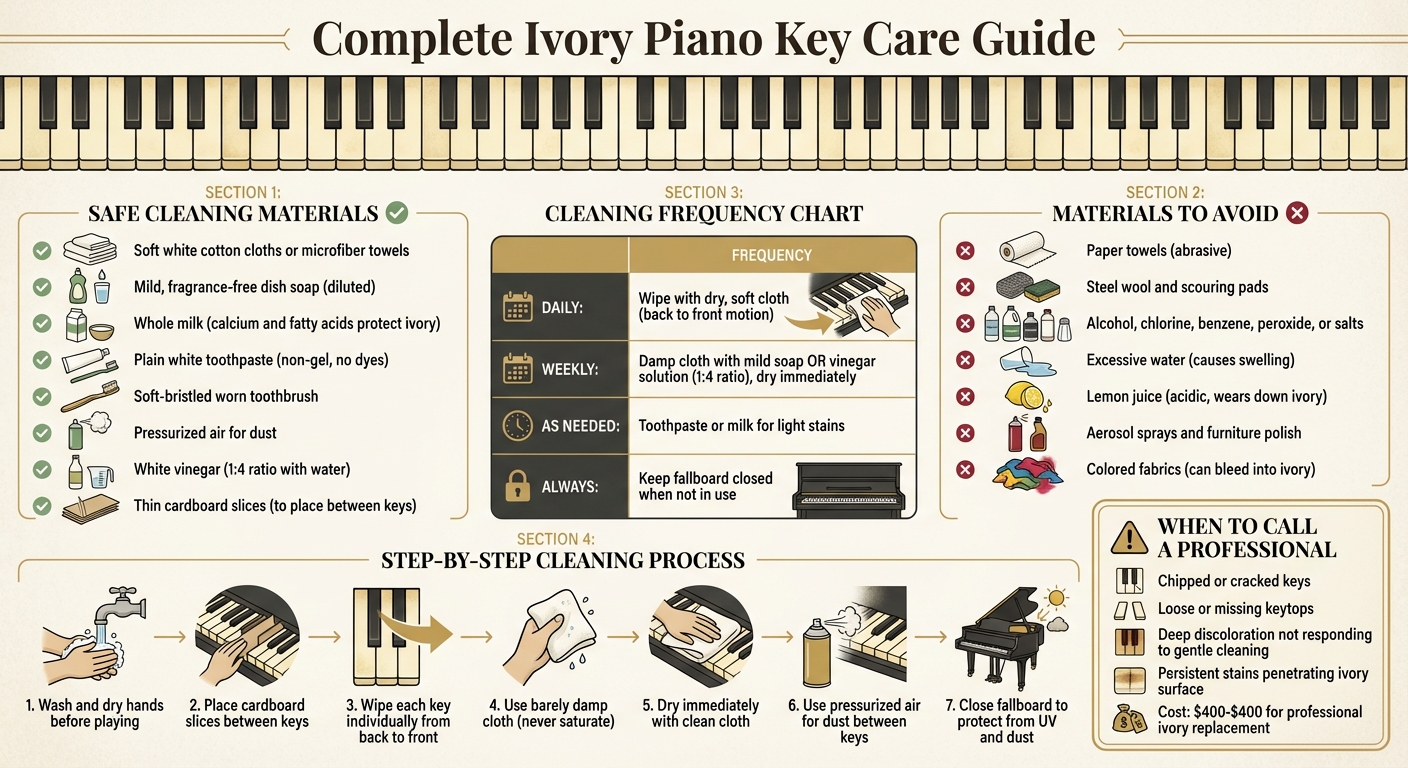
The best method is slow, gentle, and controlled. Clean a few keys at a time so you can check the surface as you work.
1. Prepare the piano
close the piano lid and remove objects from the top. Wash and dry your hands before touching the keys. Oils from your skin can add another layer of dirt during the cleaning process.
Make sure the room is well lit. Good light helps you see cracks, loose keytops, and dirt in the gaps. Never clean ivory keys near an open window during damp weather.
2. Remove Loose Dust
Use a dry microfiber cloth to wipe each key. Move from the back of the key toward the front. Do not push dust into the narrow spaces between keys.
You can also use a soft brush to lift dust from the seams. Do not use a vacuum nozzle directly on the keys. Suction may loosen a fragile ivory keytop or pull dust into the action.
3. Make a Mild Cleaning Solution
Add one or two drops of mild soap to a bowl of distilled water. The mixture should be weak, not thick or bubbly.
Dip a soft white cloth into the solution, then wring it out very well. The cloth should feel slightly damp, never wet. This small amount of moisture is central to how do you clean ivory piano keys without causing damage.
4. Wipe One Key at a Time
Wipe the surface with gentle strokes. Start at the back and move toward the front edge. Use a separate part of the cloth for each key when possible.
Do not scrub hard. Stubborn marks may be old discoloration, worn ivory, or a damaged surface rather than simple dirt. Scrubbing can remove the thin outer surface and leave a dull patch.
5. Clean the Front Edges Carefully
The front edge of each key often collects skin oil and dirt. Use the barely damp cloth to wipe this area. Keep moisture away from the gaps and sides.
If dirt remains in a narrow seam, use a soft toothbrush that is almost dry. Brush lightly and stop if the ivory begins to move or flake.
6. Dry Each Key at Once
Use a clean, dry cloth immediately after wiping each key. Do not leave the keyboard damp while you clean another section.
Leave the piano open for a short time so the surface can air-dry. Avoid hair dryers, heaters, and direct heat. Sudden heat can dry old ivory too fast and increase the risk of cracks.
7. Test Before Cleaning the Full Keyboard
Always test your method on one less noticeable key. Wait several minutes and check for color change, dullness, stickiness, or lifted edges.
If the test area looks different, stop. A piano technician can inspect the keytops and suggest a safer method.

How Do You Clean Ivory Piano Keys With Stubborn Stains?
Small stains may come from hand oils, dust, food, drink, or old cleaning products. Do not assume that every dark mark can be removed safely. Some marks are part of the ivory’s age.
For a light surface stain, repeat the mild soap method once. Use a fresh, barely damp cloth and very light pressure. Allow the key to dry fully before deciding whether the stain has improved.
Do not use these common stain removers:
• Bleach
• Hydrogen peroxide
• Ammonia
• Nail polish remover
• Rubbing alcohol
• Acetone
• Baking soda paste
• Whitening toothpaste
• Abrasive cream cleaners
These products may whiten one area while damaging the surrounding ivory. They can also weaken old glue, remove the natural finish, or leave a rough surface that attracts more dirt.
If a stain is deep, yellow, brown, or uneven, it may require professional restoration. A technician may remove and refinish a keytop, replace it, or recommend leaving the mark alone to preserve the original material.

How Do You Clean Yellowed Ivory Piano Keys?
Ivory often turns yellow as it ages. This change can result from oxidation, limited light exposure, smoke, dust, and natural changes in the material. Yellowing does not always mean the keys are dirty.
Many piano professionals recommend controlled exposure to indirect or gentle natural light for mild yellowing. The keyboard may be opened in a bright room for a limited period, but direct, intense sunlight can cause heat damage and uneven color.
Use caution with this approach:
• Do not leave the piano in a hot window.
• Do not expose the keys to strong sunlight for hours without checking them.
• Do not use ultraviolet lamps at home.
• Do not expect dark stains to disappear.
• Do not try to bleach the ivory.
Light may slowly reduce mild yellowing, but it cannot restore badly stained, cracked, or chemically damaged ivory. Results also vary from one key to another. Professional conservators may use controlled methods, but home experiments can cause permanent color changes.
A slightly creamy color is often normal for old ivory. Perfectly white keys may not be realistic, and aggressive whitening may reduce the value of an antique piano.

How Do You Clean Ivory Piano Keys Without Loosening Them?
Moisture and pressure are the two main risks. Old ivory keytops may be held in place with glue that has weakened over many years.
Keep these rules in mind:
• Never pour cleaner onto the keyboard.
• Never spray cleaner directly on a key.
• Never soak a cloth until it drips.
• Never press down hard on a loose keytop.
• Never insert a sharp tool under the ivory.
• Never clean deep into the key gaps with a wet cotton swab.
If an ivory key moves, clicks, or lifts when touched, stop cleaning that area. A technician can remove the key safely and repair the surface without damaging the wooden key beneath it.
One lesson from many piano cleanups is simple: a loose keytop rarely becomes safer with more wiping. Gentle cleaning helps stable ivory, but movement is a repair issue.
Common Mistakes to Avoid
People often search how do you clean ivory piano keys after trying a product that caused a problem. The most common mistakes are easy to prevent.
Using Too Much Water
Water can enter the gaps and reach the wooden key or old adhesive. Even a small amount may cause swelling, staining, or loose keytops.
Using Harsh Chemicals
Strong chemicals may react with ivory and create pale spots, dark spots, or a rough texture. They may also damage nearby painted surfaces.
Scrubbing With an Abrasive
A rough sponge can remove grime, but it can also remove part of the ivory. The key may look cleaner at first and worse after the surface becomes uneven.
Cleaning Every Key With One Dirty Cloth
A dirty cloth spreads oil from one key to the next. Rotate the cloth often, especially when cleaning a keyboard used by several people.
Ignoring the Piano’s Condition
A dusty but stable keyboard is usually simple to clean. A keyboard with cracks, loose pieces, mold, or water damage needs a more careful inspection.
Cleaning While Wearing Hand Lotion
Hand cream leaves a film on ivory. Wash your hands with plain soap and dry them well before cleaning or playing.

How Do You Keep Ivory Piano Keys Clean?
Regular care is safer than heavy cleaning. Wipe the keys with a dry, soft cloth after playing if the keyboard sees frequent use.
Ask everyone who plays to wash and dry their hands first. Keep food, drinks, lotions, and tobacco smoke away from the piano. These small habits reduce the need for deep cleaning.
Control the room environment as well. Most pianos do best with steady temperature and moderate humidity. Rapid changes can affect the wood, strings, soundboard, glue, and ivory keytops.
A piano humidity system may help in homes with very dry or damp conditions. Ask a piano technician to assess the room before buying one. Humidity control cannot repair existing cracks, but it may reduce future stress.
Clean the keys lightly every few weeks or as needed. Arrange professional piano service at regular intervals, especially for an older instrument.

When Should You Call a Piano Technician?
Home cleaning is suitable for light dust and mild surface grime. Professional help is safer when the piano has structural or cosmetic damage.
Contact a qualified technician if you notice:
• Cracked or chipped ivory
• Loose or lifting keytops
• Black mold or a musty smell
• Water stains
• Sticky or uneven keys
• Deep yellow or brown discoloration
• Previous chemical damage
• Missing ivory sections
• Keys that bind or fail to return
A technician can identify the key material, inspect the glue, and test the action. They can also advise whether cleaning, polishing, replacement, or conservation is the best choice.
There may also be legal concerns with original ivory. Do not remove, sell, ship, or replace ivory keytops without checking current federal, state, and local rules. Laws vary, and documentation may matter for antique instruments.
A Simple Cleaning Checklist
Use this short checklist when you need to remember how do you clean ivory piano keys.
-
Confirm that the keys may be ivory.
-
Wash and dry your hands.
-
Dust the keys with a soft, dry cloth.
-
Mix a tiny amount of mild soap with distilled water.
-
Dampen a white cloth and wring it almost dry.
-
Test one key first.
-
Wipe gently from back to front.
-
Dry each key right away.
-
Keep moisture away from seams.
-
Stop if a keytop moves, cracks, or changes color.
This method may seem slow, but slow cleaning protects the instrument. An old piano is more like a small piece of furniture and history than a disposable household item.
Frequently Asked Questions About How Do You Clean Ivory Piano Keys
Can I use vinegar to clean ivory piano keys?
It is best to avoid vinegar. Its acidity may affect old finishes, adhesives, or already fragile ivory. Use a barely damp cloth with a tiny amount of mild soap instead.
Can I use rubbing alcohol on ivory piano keys?
No. Rubbing alcohol can dry the surface, damage old coatings, and leave uneven marks. It may also affect the glue beneath the keytop.
How do you clean ivory piano keys that are yellow?
First remove surface dust and grime with a gentle, barely damp cloth. Mild yellowing may respond to controlled natural light, but deep discoloration should be assessed by a piano technician.
Can I use toothpaste to whiten ivory piano keys?
Do not use toothpaste. It contains abrasives and may scratch or thin the ivory. Whitening products can also create bright patches that look worse than natural aging.
How often should ivory piano keys be cleaned?
Lightly dust the keys as needed, especially after frequent playing. Use a damp cleaning method only when surface dirt requires it, since repeated moisture is not ideal for old ivory.
What should I do if an ivory keytop is loose?
Stop cleaning that key and avoid pressing or lifting it. A piano technician should remove and repair the keytop because further handling may crack the ivory or damage the wooden key.
Are all old piano keys made of ivory?
No. Many older pianos use plastic keytops, while some have replacement materials. Look for grain, seams, and natural aging, but ask a technician if you are not certain.
Conclusion
The safest way to clean ivory piano keys is to use a soft cloth, very little moisture, mild soap, and gentle pressure. Avoid bleach, alcohol, abrasives, sprays, soaking, and aggressive whitening methods. Clean slowly, dry each key at once, and stop if the ivory is cracked or loose.
With careful handling and stable room conditions, an older piano can remain clean without losing its character. Test your method on one key first, and contact a qualified piano technician when the damage goes beyond surface dirt.

Senior Music Reviewer
Alex Carter is a seasoned music reviewer with over a decade of experience in the world of sound and instruments. Passionate about helping musicians and enthusiasts make informed choices, he brings sharp insights and in-depth knowledge to every review. From classical instruments to modern gear, Alex combines technical expertise with a love for music to deliver content that resonates with readers.
As a Senior Music Reviewer and expert author on Tuneluma.com, Alex is dedicated to sharing honest evaluations, practical advice, and thoughtful commentary to guide readers in their musical journey.