What Are Licks In Guitar: Simple Beginner Guide
A guitar lick is a short musical phrase that adds style, emotion, and personality to a song or solo.
If you have ever heard a guitarist play a catchy blues phrase, a fast rock run, or a soulful bend, you have heard a lick. Learning what are licks in guitar helps you understand how players build solos, connect ideas, and develop a unique sound. This guide explains guitar licks in simple terms, with examples, practice tips, common mistakes, and ways to use licks creatively.
What Are Licks in Guitar?
A guitar lick is a short group of notes that sounds complete or memorable. A player may use it in a solo, between vocal lines, during an introduction, or as a repeated part of a song.
Think of a lick as a musical sentence. It may last only a few seconds, but it can still show rhythm, technique, mood, and style. A lick can include bends, slides, hammer-ons, pull-offs, vibrato, muted notes, or simple single-note picking.
When people ask, “What are licks in guitar?” they often want to know how licks differ from full solos. The answer is simple: a lick is one small musical idea, while a solo usually combines many ideas into a longer performance.
A lick does not need to be fast or difficult. A slow three-note phrase can be just as powerful as a long sweep-picking passage. In fact, many famous guitar parts use space, tone, and timing more than speed.

Guitar Licks vs. Riffs, Solos, and Fills
Several guitar terms sound similar, so it helps to separate them. Understanding these differences makes it easier to study songs and write your own music.
Guitar lick
A lick is a short musical phrase. It often appears in different songs and keys, especially in blues, rock, jazz, country, and metal.
For example, a guitarist may learn a blues lick in A, move it to C, and use it over another twelve-bar blues progression. The notes stay related, but the key changes.
Guitar riff
A riff is usually a repeated musical idea that helps define a song. It may use chords, single notes, or both.
The opening guitar part of a rock song is often called a riff because it returns many times. A lick may appear once during a solo, while a riff often acts as part of the song’s main foundation.
Guitar solo
A solo is a longer musical passage played by one instrument. It may contain several licks, chord tones, scales, pauses, and repeated themes.
A strong solo is not just a chain of random licks. It gives each phrase a place and creates a sense of direction.
Guitar fill
A fill is a short phrase used to answer or support another instrument. Guitar fills often appear between vocal lines.
A fill may be a lick, but its purpose is different. A fill responds to the singer or band, while a lick is simply a reusable musical phrase.
| Guitar term | Main purpose | Common use |
|---|---|---|
| Lick | A short musical idea | Solos and improvisation |
| Riff | A repeated song idea | Intros, verses, and hooks |
| Solo | A longer featured passage | Instrumental sections |
| Fill | A response or connection | Spaces between vocal lines |
What Do Guitar Licks Sound Like?
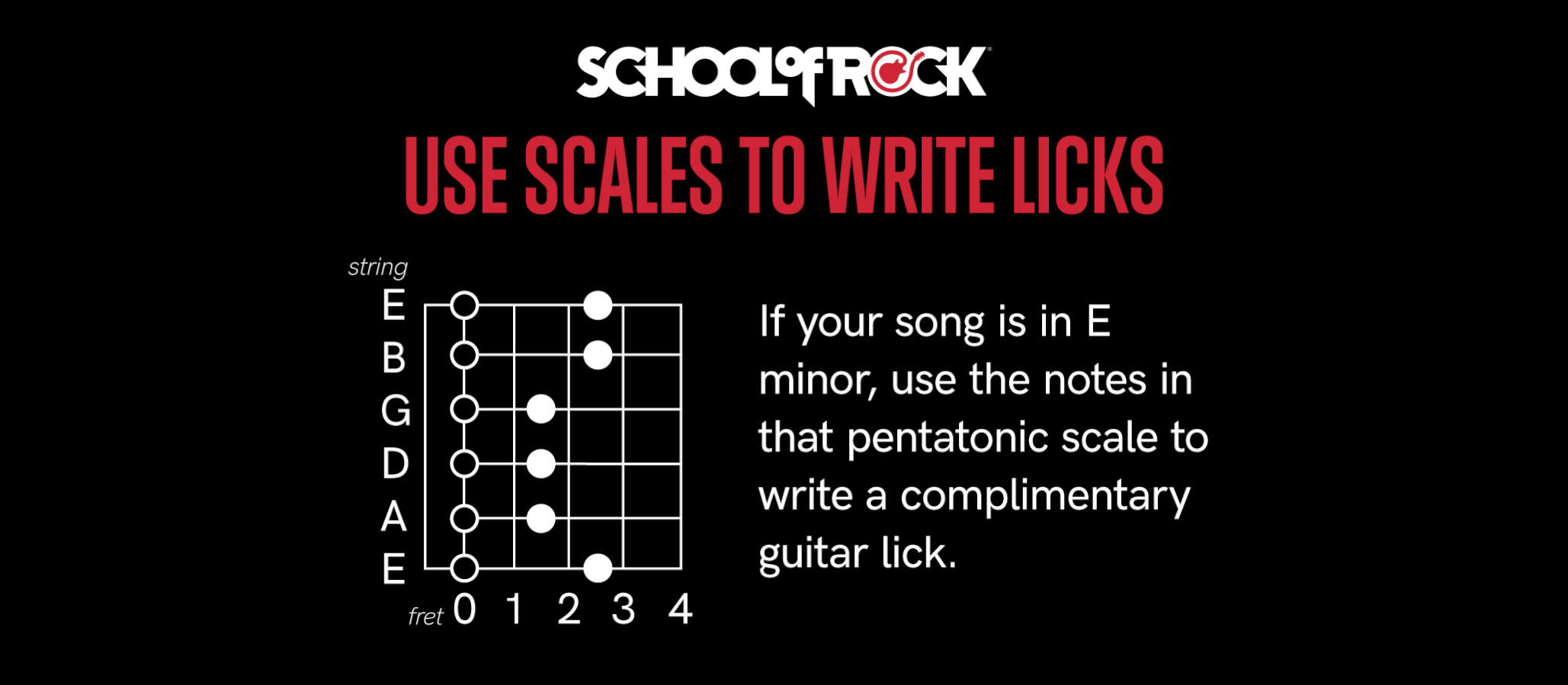
Guitar licks can sound very different depending on the genre, scale, rhythm, and playing technique. A blues lick may use a bent note and a minor pentatonic scale. A country lick may use open strings, hybrid picking, and quick hammer-ons.
Here are a few common examples:
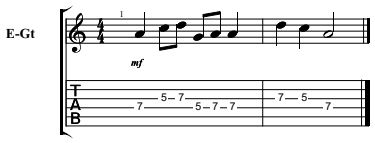
• A blues lick may move from the fifth fret of the B string to the seventh fret, then bend the note slightly.
• A rock lick may use fast alternate picking and notes from the A minor pentatonic scale.
• A country lick may combine an open string with fretted notes on a higher string.
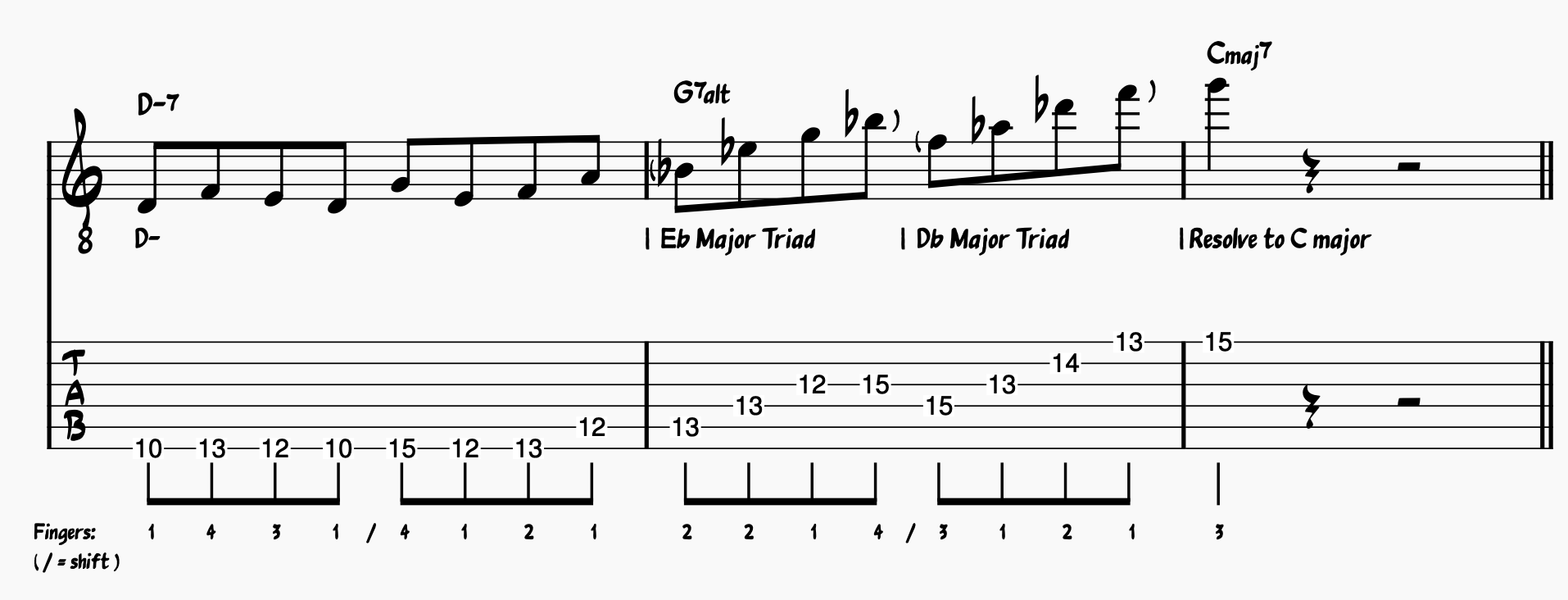
• A jazz lick may outline the notes of a seventh chord and use chromatic passing notes.
• A metal lick may use palm muting, low-string patterns, and rapid alternate picking.
The key point is that a lick has a recognizable shape. You can often hum it, remember it, and play it again later.
A lick can also be clean or distorted, acoustic or electric, simple or complex. The sound comes from both the notes and the way you play them. A bend played with feeling may say more than ten notes played without control.
Why Are Guitar Licks Important?
Learning what are licks in guitar is useful because licks give you practical building blocks for playing music. Instead of trying to invent a full solo from nothing, you can learn short phrases and connect them.
Guitar licks help you develop several important skills:
• They improve finger control and picking accuracy.
• They teach you how scales sound in real music.
• They help you understand rhythm and phrasing.
• They introduce useful techniques such as bends and slides.
• They give you ideas for improvising.
• They help you recognize the style of different guitar players.
• They make practice more musical and less repetitive.
Many new players practice scales up and down but struggle to use those scales in a song. Licks solve part of this problem. They show how scale notes become real musical phrases.
A lick also teaches you to listen. You must hear whether a bend reaches the right pitch, whether a slide is smooth, and whether the phrase fits the beat. That listening skill is central to becoming a better guitarist.

Common Types of Guitar Licks
There is no single correct type of lick. Different styles use different note choices, rhythms, and techniques.
Blues licks
Blues licks often use the minor pentatonic scale and blues scale. Common features include string bends, vibrato, slides, and pauses.
A typical blues phrase may bend the seventh fret on the G string, release the bend, and finish on a strong note from the chord. The emotional sound comes from the bend and timing, not just the fret numbers.
Rock licks
Rock licks often use pentatonic patterns, repeated motifs, and strong rhythmic accents. Players may add distortion, wide vibrato, and fast position changes.
Rock guitar licks can be simple and direct. A two-note phrase with a powerful bend may work better than a long run if it supports the song.
Country licks
Country guitar licks often use major pentatonic ideas, double-stops, open strings, chicken picking, and quick slides.
Many country phrases combine rhythm and lead guitar. The player may strike two notes together, bend one note, and keep another note steady.
Jazz licks
Jazz licks often outline chord tones rather than staying on one scale. They may include chromatic notes, arpeggios, swing rhythms, and complex chord changes.
Jazz players often transpose a lick into several keys. This builds fluency and helps the phrase fit different progressions.
Metal licks
Metal licks may use alternate picking, legato, tapping, sweeping, tremolo picking, and unusual scales. Speed is common, but clear rhythm and clean technique remain more important.
A fast metal lick that sounds unclear will not serve the music. Start slowly and increase speed only when every note is controlled.

How to Learn Guitar Licks Effectively
The best way to learn what are licks in guitar is to study each phrase in small parts. Do not rush to play the whole lick at full speed.
Use this process:
-
Listen to the lick several times. Focus on its rhythm, mood, and accents.
-
Find the first note and learn one small section.
-
Practice the phrase slowly with a metronome.
-
Pay attention to bends, slides, vibrato, and picking direction.
-
Repeat the section until it feels relaxed.
-
Add the next section and connect both parts.
-
Play the lick in time with a backing track.
-
Move the lick to another key when possible.
-
Change the ending or rhythm to make it your own.
Tablature can show you where to place your fingers, but it may not show the exact feel of a bend or vibrato. Use your ears as the final guide. If a tab says to bend a note, listen for how far the note rises. A half-step bend and a whole-step bend create very different sounds.
One useful practice method is to play a lick five times slowly, five times at medium speed, and five times near your target speed. Stop if tension builds in your wrist or hand.

How to Use Guitar Licks in Improvisation
A common mistake is to play learned licks one after another without listening to the backing track. This can make a solo sound copied or disconnected.
Use licks as ideas, not as fixed sentences. Try these approaches:
• Play only the first half of a lick, then create your own ending.
• Change the rhythm while keeping the same notes.
• Start the lick on a different beat.
• Leave a short pause after the phrase.
• Repeat the lick with a different final note.
• Play the lick in a new position.
• Change the mood by using clean tone, distortion, or a different attack.
• Answer one lick with another phrase.
Good improvisation works like a conversation. One phrase makes a statement, and the next phrase responds. Silence gives the music room to breathe.
For example, play a short A minor pentatonic lick, pause for two beats, and then answer it with a higher phrase. This sounds more musical than filling every moment with notes.
How to Create Your Own Guitar Licks
You do not need advanced theory to write a useful lick. Start with a small scale shape and focus on rhythm.
Try this simple method:
-
Choose a key, such as A minor.
-
Use the A minor pentatonic scale.
-
Pick three or four notes.
-
Create a short rhythm using those notes.
-
Add one technique, such as a slide or bend.
-
End on a note that sounds stable.
-
Record the phrase on your phone.
-
Listen again and remove any notes that feel unnecessary.
Rhythm often makes a basic lick sound original. You can use the same four notes in many ways by changing the beat, note length, or order.
Another useful idea is to copy the shape of a phrase without copying its exact notes. For example, take the rhythm of a vocal line and play it on guitar. This creates a natural, memorable lick.
Guitar Licks and Music Theory
You can learn licks by ear, but basic music theory helps you understand why they work. You do not need to read complex notation or memorize every scale.
Start with these concepts:
• Key: The main tonal center of the song.
• Scale: A group of notes that provides musical options.
• Chord tones: Notes that belong to the current chord.
• Root note: The note that names the chord or key.
• Tension: A note that sounds like it wants to move.
• Resolution: A note or chord that feels settled.
A lick usually sounds strongest when important notes match the chord playing underneath. If the band plays an A7 chord, notes from A7, such as A, C-sharp, E, and G, may sound especially stable.
This does not mean every note must belong to the chord. Passing notes can add movement and emotion. The important skill is knowing which notes feel settled and which create tension.
Learning the minor pentatonic scale is a useful starting point for blues and rock. Later, explore major pentatonic, natural minor, blues scale, modes, arpeggios, and chord-tone targeting.
Common Mistakes When Learning Guitar Licks
Many players know what are licks in guitar but struggle to use them well. The problem is often not a lack of talent. It is usually a practice issue.
Avoid these mistakes:
• Playing too fast before the notes are clean.
• Ignoring the rhythm and focusing only on fret numbers.
• Skipping bends and vibrato details.
• Learning too many licks without using them in music.
• Playing every lick in the same key.
• Never practicing with a metronome or backing track.
• Using tabs without listening to the original phrase.
• Forgetting to relax the hands and shoulders.
One of the most important lessons is that accuracy comes before speed. Slow practice builds control. Fast practice only makes mistakes happen faster.
Also, do not judge a lick by technical difficulty alone. A simple phrase with good timing can sound professional, while a difficult phrase with poor rhythm can sound weak.
How Many Guitar Licks Should You Learn?
There is no ideal number of guitar licks to learn. Ten licks that you can use in several keys are more valuable than one hundred phrases you cannot remember or control.
A balanced practice plan might include:
• Two blues licks.
• Two rock licks.
• Two major-key licks.
• Two rhythm guitar fills.
• Two licks based on chord tones.
Learn each phrase deeply. Know where it fits, what chord supports it, and how to change it.
Keep a simple lick journal. Write down the key, scale, technique, and backing track that work with each phrase. Recording yourself also helps you notice timing problems that may not be obvious while playing.
Are Guitar Licks Copyrighted?
A short guitar lick may be too simple or too common to receive copyright protection by itself, but copyright law can be complex. A substantial, distinctive part of a recorded song may raise legal issues when copied without permission.
For practice, learning famous licks is normal and useful. Problems may arise when someone copies a recognizable recording or song section and presents it as original work.
When writing and releasing music, use learned licks as study material. Change the rhythm, notes, phrasing, and structure. Build a new musical idea rather than copying a complete signature passage.
If you plan to release commercial music, consult a qualified copyright professional for advice about a specific passage. General online guidance cannot replace legal advice.
A Simple Guitar Lick Practice Routine
You can practice licks in 20 minutes.
-
Warm up for three minutes with slow chromatic exercises.
-
Review one familiar lick for four minutes.
-
Learn a new lick slowly for five minutes.
-
Play both licks over a backing track for five minutes.
-
Change the key or rhythm for two minutes.
-
Record one final take and listen back.
Keep the routine relaxed. If your hand hurts, stop and check your posture, grip, and wrist angle. Pain is not a sign of effective practice.
A short daily session often works better than one long session each week. Consistency helps your ear, fingers, and sense of timing grow together.
Frequently Asked Questions About What Are Licks in Guitar
What are licks in guitar?
Guitar licks are short musical phrases played as part of a solo, fill, or song section. They often use techniques such as bends, slides, vibrato, hammer-ons, and pull-offs.
Are guitar licks the same as guitar riffs?
No. A lick is usually a short phrase that may be used in different musical settings, while a riff is often a repeated idea that helps define a song. Some riffs can also function as licks, but the terms describe different roles.
Do beginners need to learn guitar licks?
Yes. Beginner guitar licks can teach rhythm, scales, finger movement, and basic techniques in a musical way. Start with short phrases that use three to five notes.
How do I practice guitar licks?
Learn the lick slowly, listen closely to the rhythm, and copy every bend or slide. Then use it with a metronome, backing track, and different keys.
Can I create my own guitar licks?
Yes. Choose a scale, select a few notes, and create a rhythm that feels natural. Add one technique and record the result so you can improve it.
Why do my guitar licks sound unnatural?
Your timing, phrasing, or note choices may not match the chord progression. Try leaving more space, targeting chord tones, and listening to the backing track instead of focusing only on finger patterns.
Should I memorize guitar licks in every key?
You do not need to memorize every lick in every key at first. However, moving useful licks to other keys improves fretboard knowledge and makes them easier to use with different songs.
Conclusion
Guitar licks are short musical ideas that help players solo, fill space, express emotion, and develop their own voice. They are different from riffs, fills, and full solos, but they can work together to create strong guitar parts.
Learn each lick slowly, understand its rhythm, use it over real chords, and change it until it feels like your own. Start with one simple phrase today, record yourself, and explore more guitar lessons and backing tracks to keep building your sound.

Senior Music Reviewer
Alex Carter is a seasoned music reviewer with over a decade of experience in the world of sound and instruments. Passionate about helping musicians and enthusiasts make informed choices, he brings sharp insights and in-depth knowledge to every review. From classical instruments to modern gear, Alex combines technical expertise with a love for music to deliver content that resonates with readers.
As a Senior Music Reviewer and expert author on Tuneluma.com, Alex is dedicated to sharing honest evaluations, practical advice, and thoughtful commentary to guide readers in their musical journey.