How Many Strings On Bass Guitar: Complete Guide
Most bass guitars have four strings, but five-, six-, and extended-range models are also common.
If you are asking how many strings on bass guitar are standard, the answer is four. Still, the right number depends on your music style, hand comfort, tuning needs, and playing goals. This guide explains each bass string setup in clear terms, so you can choose with confidence instead of guessing at the music store.
How many strings on bass guitar are standard?
A standard bass guitar has four strings. This design is the main choice for rock, pop, blues, country, funk, jazz, and many other styles.
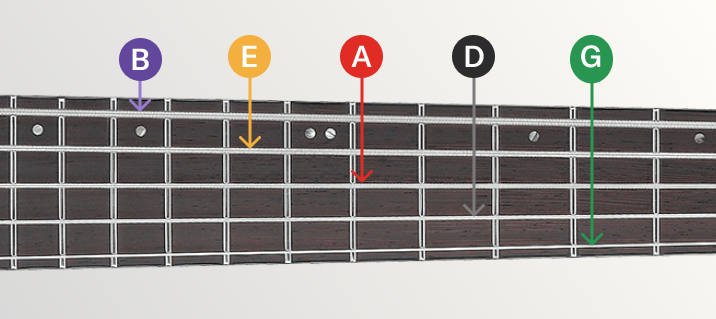
The four strings are usually tuned from the lowest pitch to the highest:
• E string: E1
• A string: A1
• D string: D2
• G string: G2
This tuning is similar to the lowest four strings of a guitar, but the bass sounds one octave lower. The thicker strings and longer neck create the deep tone that supports a band.
When people ask how many strings on bass guitar are typical, they usually mean a four-string bass. It is the most common setup for beginners and remains the preferred choice for many professional players.
Why do most bass guitars have four strings?
Four strings offer a strong balance between range, comfort, and simplicity. The neck is usually narrower than a five- or six-string bass, which makes fretting and muting easier.
A four-string bass also fits the needs of most songs. Standard E-A-D-G tuning reaches low enough for many rock and pop lines while giving players enough high range for fills, chords, and melodic parts.
There is also a long musical tradition behind the design. The modern electric bass developed from the double bass, which commonly uses four strings. Early electric bass models kept this familiar format because it worked well for players, builders, and bands.
The main benefits of a four-string bass include:
• A comfortable neck for most hand sizes
• Simple note layouts
• Easy access to beginner lessons and tabs
• Lower purchase and maintenance costs
• Clear string spacing
• Less weight than many extended-range basses
In my experience, new players often worry that four strings will limit them. In reality, four strings teach the most important skills: timing, muting, note choice, groove, and tone control.

Different types of bass string setups
The number of strings on a bass changes its range and playing feel. There is no single setup that is best for every player.
Four-string bass
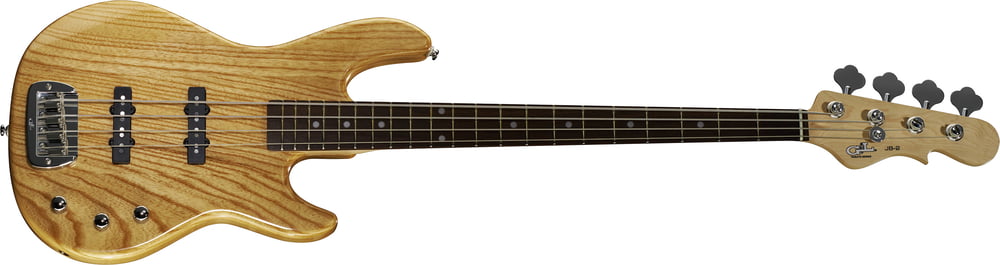
The four-string bass is the standard choice. It normally uses E-A-D-G tuning and works well for most genres.
This setup is ideal for:
• Beginners
• Classic rock and pop
• Blues and country
• Funk and soul
• Players who want a lighter instrument
• Musicians who prefer simple fretboard movement
A four-string bass can also be tuned down. For example, a player may use D-A-D-G tuning for songs in drop D. Some players tune all strings down by a whole step to D-G-C-F.
Five-string bass
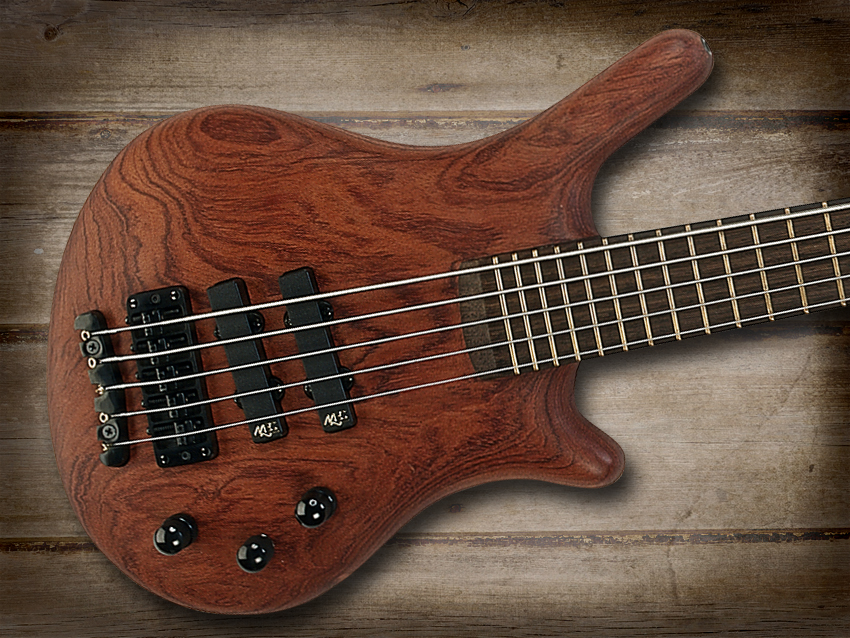
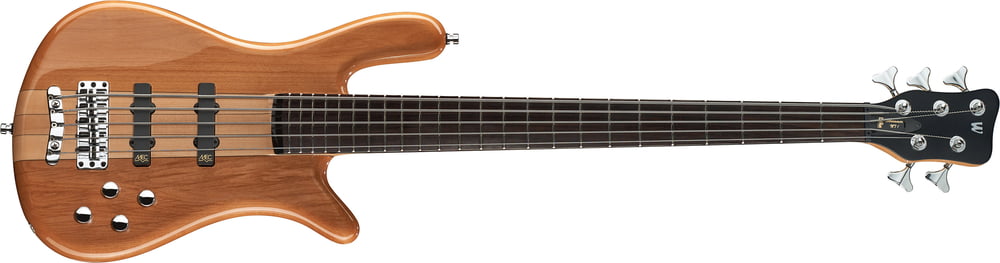
A five-string bass usually adds a low B string below the standard E string. Its tuning is commonly B-E-A-D-G.
That low B gives the player five extra semitones below low E. This range is useful in metal, gospel, modern pop, worship music, R&B, and studio work.
A five-string bass can reduce the need to shift positions. For example, instead of moving up the E string to play a low C, you can play that note on the low B string. This can make some lines smoother and more efficient.
The tradeoff is a wider neck. The low B string also needs careful muting because it can create unwanted noise if it vibrates freely.
Six-string bass
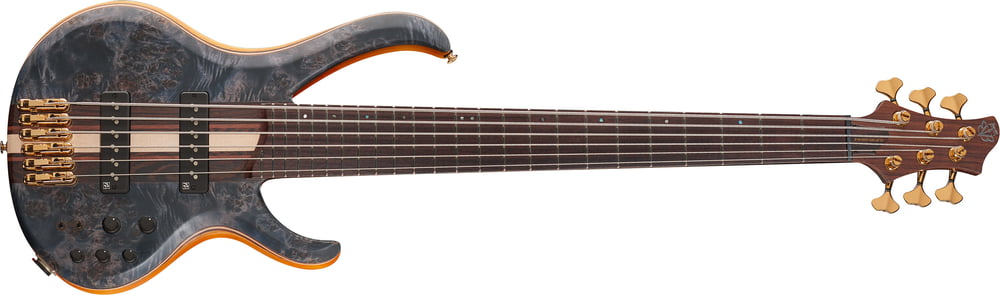
A six-string bass usually adds both a low B string and a high C string. The common tuning is B-E-A-D-G-C.
This setup provides a wide range for solo bass, jazz, progressive music, fusion, and chord-based playing. The high C string lets players reach upper notes without moving far up the neck.
A six-string bass is not simply a “better” version of a four-string model. It is more like a larger musical canvas. It gives you more colors, but it also demands stronger muting and greater awareness of string spacing.
Seven-string and extended-range basses
Seven-string basses and other extended-range models are less common. They may add another low string, another high string, or both.
These instruments are often used in progressive metal, experimental music, solo performance, and technical playing. They can offer a huge range, but they are usually heavier, wider, and more costly.
For most players, an extended-range bass is useful only when the music truly requires it. More strings do not automatically create better tone or better musicianship.
How many strings on bass guitar should a beginner choose?
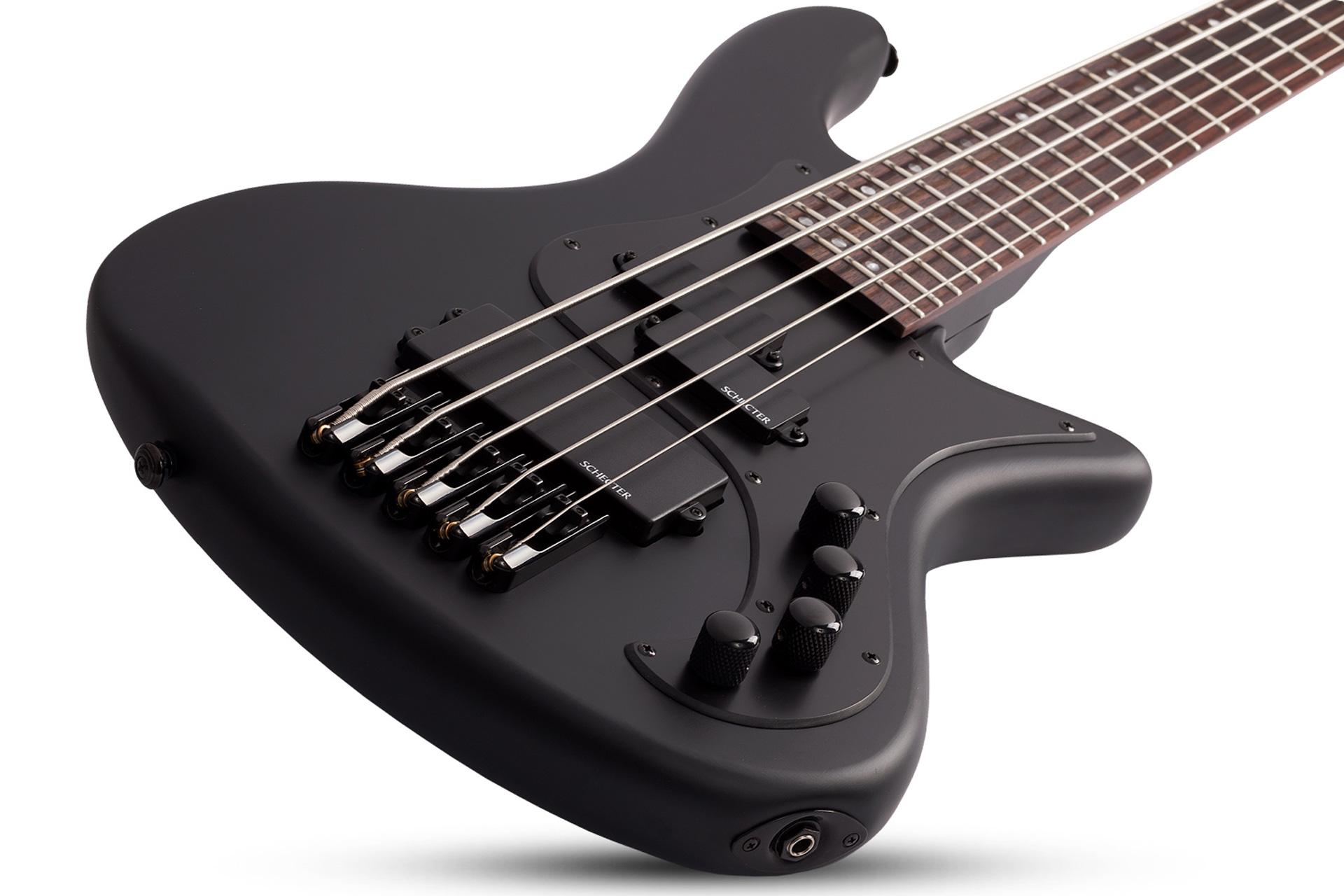
Most beginners should start with a four-string bass. It has enough range for thousands of songs and usually makes basic technique easier to learn.
A four-string neck gives your fretting hand more room. The string spacing also makes it easier to learn clean notes, slides, bends, and simple muting.
A five-string bass can still be a good beginner instrument if you expect to play songs with low B notes. However, you must learn to mute the extra string from the start.
When deciding how many strings on bass guitar you need as a beginner, consider these questions:
• What music do you want to play?
• Do your favorite songs use low notes below E?
• Does the wider neck feel comfortable?
• Can you mute unused strings without effort?
• Is the instrument easy for you to hold for 30 minutes?
• Can your amplifier reproduce the low notes clearly?
Try both four- and five-string basses if possible. Play standing up, not only while seated in a store. A bass may feel comfortable for two minutes but tiring after a full rehearsal.
Four-string versus five-string bass
The biggest difference is range. A four-string bass starts at low E, while a common five-string bass starts at low B.
A five-string bass can be more flexible for modern arrangements. It allows you to play low notes without retuning and may reduce large jumps across the fretboard.
A four-string bass often feels faster and more open. Many players find it easier to slap, pluck, and move across the strings because the neck is narrower.
Here is a simple comparison:
| Feature | Four-string bass | Five-string bass |
|---|---|---|
| Common tuning | E-A-D-G | B-E-A-D-G |
| Lowest standard note | E1 | B0 |
| Neck width | Narrower | Wider |
| Weight | Usually lighter | Often heavier |
| Best for | Most styles | Low tunings and wide range |
| Beginner ease | Very high | Moderate |
Neither instrument is superior in every situation. A skilled player can create a powerful bass line on four strings, while another player may feel more creative with five.
How string count affects bass technique
The number of strings changes how you use both hands. More strings give you more options, but they also create more chances for unwanted noise.
Muting is the most important skill on a multi-string bass. Your fretting hand should often touch unused higher strings, while your plucking hand controls lower strings.
For example, when playing the A string on a five-string bass:
• The thumb can rest on the low B string
• The fretting hand can lightly touch the D and G strings
• The plucking finger can avoid striking the B string
• The player can stop the note cleanly after its intended length
Players who move from four strings to five often make one common mistake: they play extra notes by accident. The solution is not to press harder. It is to relax, slow down, and practice controlled movement.
A useful practice routine is:
- Play one note on each string.
- Stop the note with both hands.
- Listen for string noise.
- Repeat with a metronome.
- Increase the speed only when the sound stays clean.
This routine may feel slow, but it builds the control needed for professional playing.

Does a bass guitar with more strings sound better?
More strings do not automatically make a bass sound better. Tone depends on the instrument, strings, pickups, amplifier, technique, setup, and the player’s hands.
A five-string bass may produce a deep, powerful low B. However, that note can sound weak or unclear through a small amplifier that cannot reproduce low frequencies well.
A six-string bass may offer a bright, singing high register. Yet the extra range does not matter if your music stays within the normal four-string register.
Your sound also depends on setup details such as:
• String gauge
• Pickup height
• Neck relief
• Bridge adjustment
• Intonation
• Playing position
• Amplifier settings
Good technique often makes a larger difference than extra strings. A well-played four-string bass can sound more musical than a poorly controlled six-string bass.
Bass string count and music genres
Different styles often favor different bass setups, but these are preferences rather than strict rules.
Rock and pop
Four-string basses remain extremely common in rock and pop. Their direct tone and familiar neck layout suit steady eighth-note lines, riffs, and melodic parts.
Five-string basses are also useful in modern pop. Producers may want low notes that match electronic kick drums or extended vocal ranges.
Metal
Metal players often choose four-, five-, or six-string basses. A five-string bass is useful for low tunings, while a four-string bass may provide a tighter feel for fast picking.
Some metal players use four strings tuned lower than standard. In that case, the correct string gauge and setup become very important.
Jazz and fusion
Four-string basses are traditional in jazz, but five- and six-string basses are popular among players who need a wider range.
A six-string bass can support chords and solo lines more easily. Still, its wider neck requires accurate left-hand technique.
Gospel, R&B, and worship music
Five-string basses are especially common in these styles. The low B string helps players reach deep notes while staying in one position.
That extra range can also make transitions between chords smoother. The player can connect notes without making large shifts along the neck.

How to choose the right bass string count
Choosing how many strings on bass guitar depends on your needs, not on what looks most advanced.
Use this simple process:
- List the songs and styles you want to play.
- Check whether those songs use notes below low E.
- Visit a music store and compare neck widths.
- Play while standing with a strap.
- Test the low strings for clarity and comfort.
- Consider the cost of strings, setup, and accessories.
- Choose the simplest instrument that meets your musical needs.
A four-string bass is usually the safest first purchase. A five-string bass makes sense when you need low range or want to avoid frequent retuning.
A six-string bass is best for players who already have solid technique and a clear reason to use the extra high C string. Buying one only because it has more strings can lead to a heavy instrument that rarely gets used to its full potential.

Common mistakes when choosing a bass
Many players focus only on how many strings on bass guitar has. That is important, but it is not the only factor.
Avoid these common mistakes:
• Buying a five-string bass without testing the neck
• Ignoring the weight of the instrument
• Using very light strings for deep tunings
• Forgetting that low notes need a suitable amplifier
• Assuming extra strings improve technique
• Neglecting proper setup and intonation
• Choosing appearance over comfort
One practical lesson is clear: comfort affects practice time. If a bass feels painful or awkward, you are less likely to pick it up each day.
Also, do not assume that every five-string bass has the same low-end quality. A well-made bridge, stable neck, good pickups, and correct setup all matter. Test several instruments when possible.
Bass tuning beyond the standard setup
String count and tuning work together. A four-string bass can use alternate tunings, and a five-string bass can also be tuned in different ways.
Common four-string tunings include:
• E-A-D-G: standard tuning
• D-A-D-G: drop D tuning
• D-G-C-F: whole-step-down tuning
• C-G-C-F: lower tuning for heavy music
Common five-string tuning is B-E-A-D-G. Some players use higher or lower tunings based on the song, scale length, and string tension.
When tuning down, thicker strings can help maintain a firm feel. Very loose strings may create poor intonation, fret buzz, and an unclear attack.
Always check the neck, bridge, and intonation after making a major tuning change. A professional setup can protect the instrument and make it easier to play.
Frequently Asked Questions About How Many Strings on Bass Guitar
How many strings does a normal bass guitar have?
A normal bass guitar has four strings. The strings are usually tuned E-A-D-G from the lowest pitch to the highest.
Is a five-string bass harder to play?
A five-string bass can feel harder at first because it has a wider neck and an extra string to mute. With steady practice, many players adjust quickly and enjoy the added low range.
Should a beginner buy a four-string or five-string bass?
A four-string bass is the best starting point for most beginners. Choose a five-string model if you know you need low B notes or prefer its wider musical range.
What is the lowest string on a five-string bass?
The lowest string on a standard five-string bass is usually low B. It sits below the low E string found on a standard four-string bass.
Can a four-string bass play the same notes as a five-string bass?
A four-string bass can play many of the same notes by moving higher up the neck or tuning down. However, it cannot reach the standard low B without alternate tuning or a special setup.
Are six-string basses good for beginners?
Six-string basses can work for beginners, but they are often wider, heavier, and more complex. Most new players find it easier to build core skills on a four-string instrument.
Does the number of bass strings affect the scale length?
The string count does not determine scale length, but many five- and six-string basses use long or extra-long scales. A longer scale can improve low-string tension and clarity, though it may feel harder to reach.
Conclusion
Most bass guitars have four strings, and that setup remains a powerful choice for beginners and professionals. Five-string basses add a low B, six-string basses add both low and high range, and extended-range models serve more specialized styles.
The best answer to how many strings on bass guitar you need depends on your music, technique, comfort, and tuning goals. Start with the simplest instrument that supports your sound, test it in person, and give your hands time to adjust.
Try a four-string and a five-string bass side by side, then choose the one that makes you want to practice. Explore more bass guides, share your preferred string count in the comments, and keep building your groove one note at a time.

Senior Music Reviewer
Alex Carter is a seasoned music reviewer with over a decade of experience in the world of sound and instruments. Passionate about helping musicians and enthusiasts make informed choices, he brings sharp insights and in-depth knowledge to every review. From classical instruments to modern gear, Alex combines technical expertise with a love for music to deliver content that resonates with readers.
As a Senior Music Reviewer and expert author on Tuneluma.com, Alex is dedicated to sharing honest evaluations, practical advice, and thoughtful commentary to guide readers in their musical journey.