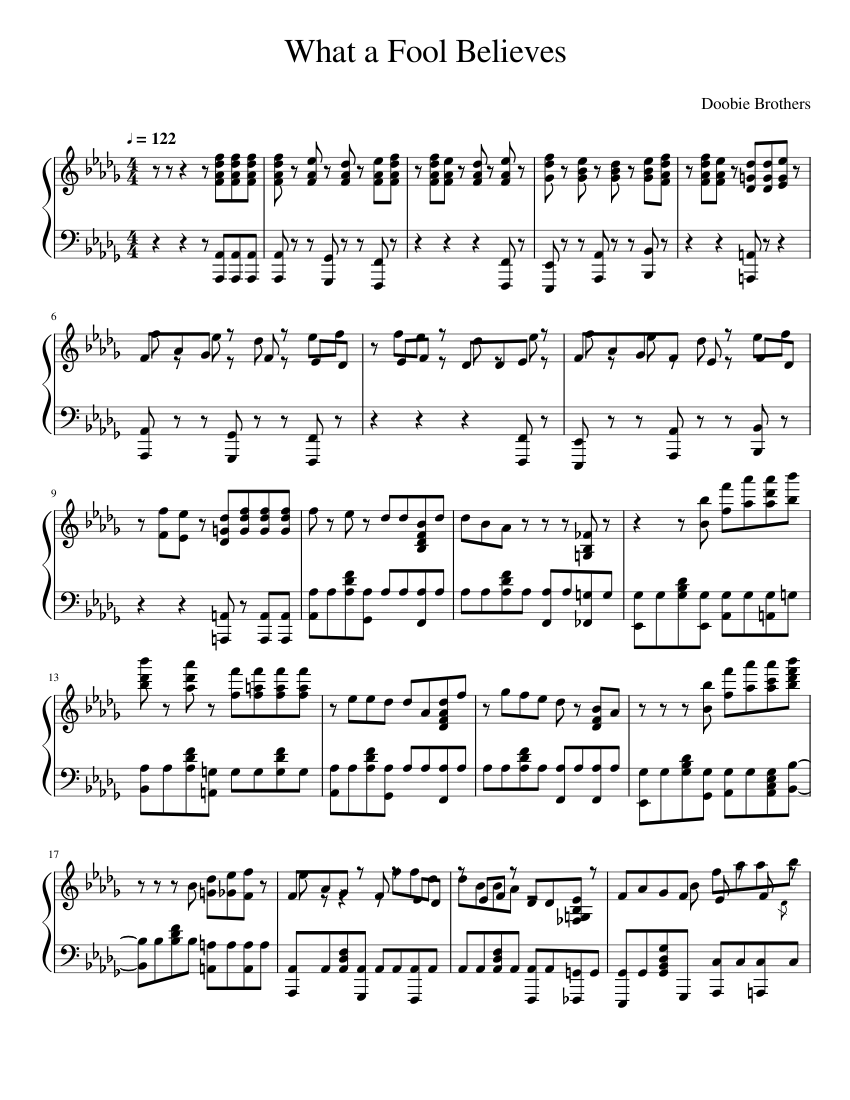
If you are learning “What a Fool Believes” on piano in the United States, the best place to start is with its smooth major-7th and minor-7th chords. The Doobie Brothers recording has a rich electric-piano sound, but you can play the main harmony on any standard piano or digital keyboard.
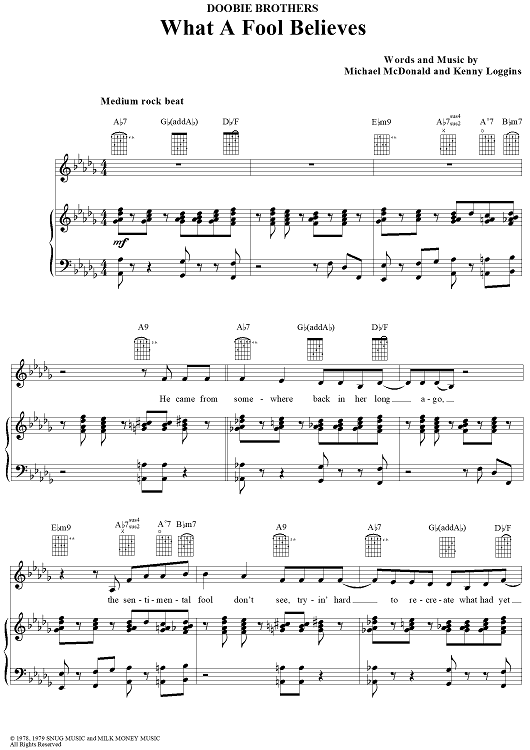
This guide explains the song’s key, chord shapes, rhythm, voicings, and practice steps. It focuses on the main piano part without printing copyrighted lyrics or full sheet music.

What key is “What a Fool Believes” in?
“What a Fool Believes” is commonly played in B major. The original recording features a polished keyboard sound associated with an electric piano, while the harmony uses extended chords that give the song its soft, colorful tone.


The song was written by Michael McDonald and Kenny Loggins. The Doobie Brothers released it on the 1978 album Minute by Minute, and it became a major hit in the United States in 1979.
Some chord charts transpose the song to make it easier for guitar or piano players. That is why you may see versions in C, A, or other keys. If you want to play along with the original recording, B major is a useful starting point.
Main chord family
The central chords are built from the B major scale:
| Scale degree | Basic chord | Common extended form |
|---|---|---|
| 1 | B major | Bmaj7 |
| 2 | C-sharp minor | C#m7 |
| 3 | D-sharp minor | D#m7 |
| 4 | E major | Emaj7 |
| 5 | F-sharp major | F#7 |
| 6 | G-sharp minor | G#m7 |
| 7 | A-sharp diminished | A#m7♭5 |
The recording does not sound like a simple beginner pop song because the chords often use seventh notes, suspended tones, and smooth bass movement.
The most important idea is this: do not play every chord as a plain triad. The added seventh notes help create the song’s relaxed and sophisticated sound.

The main piano chords
A practical starting progression uses these chords:
Bmaj7 C#m7 D#m7 Emaj7
This pattern is not a complete transcription of every section. It is a useful harmonic framework for learning the song’s sound and hand movement.
Bmaj7
Notes:
B – D# – F# – A#
A comfortable right-hand fingering is:
1 – 2 – 3 – 5
You can play B in the left hand and the remaining chord tones in the right hand.


C#m7
Notes:
C# – E – G# – B
This chord follows Bmaj7 smoothly. Notice that the note B is shared with Bmaj7. Holding common tones where possible makes the change sound connected.
D#m7
Notes:
D# – F# – A# – C#
Keep the shape compact. Avoid jumping across the keyboard unless you are deliberately playing a bass line.
Emaj7
Notes:
E – G# – B – D#
Emaj7 brings a bright but mellow color. It also connects well back to Bmaj7 because several notes are shared between the chords.
F#7
Notes:
F# – A# – C# – E
F#7 creates tension. It often works as a dominant chord that leads back toward B or another chord in the progression.
G#m7
Notes:
G# – B – D# – F#
G#m7 is useful for adding movement between the main B-major chords. It also gives the progression a warmer, more reflective sound.

Easy piano voicings for a smooth sound
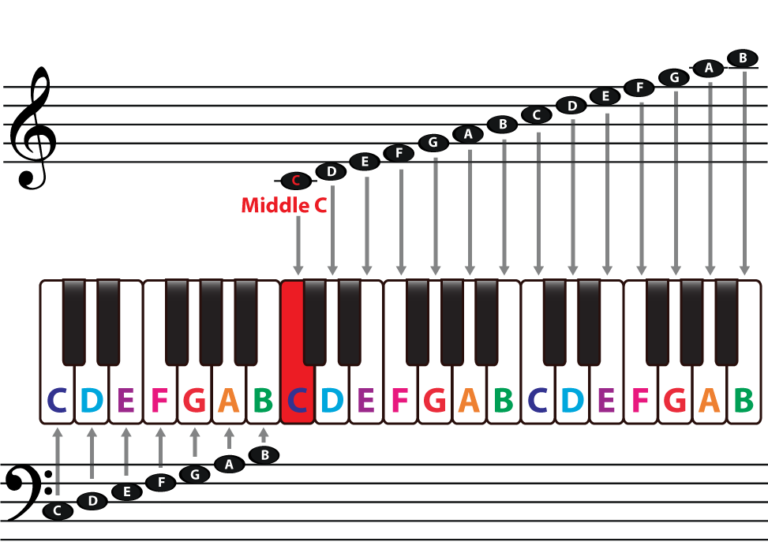
The easiest way to make the song sound more like the recording is to use close, efficient voicings. A voicing is the order and spacing of the notes in a chord.
Do not move your hand to a new position for every chord. Instead, choose inversions that keep the notes near one another.
Try this right-hand sequence:
Bmaj7:  A# – B – D# – F#
C#m7:   B  – C# – E  – G#
D#m7:   C# – D# – F# – A#
Emaj7:  D# – E  – G# – B
These shapes keep the upper notes close together. The result is smoother than playing every chord in root position.


For the left hand, begin with single bass notes:
B C# D# E
Once that feels easy, try octaves. Use a light touch, especially if your keyboard has weighted keys. The left hand should support the harmony rather than overpower the right hand.
A simple two-hand layout
Use this basic plan:
- Left hand: single bass note or octave
- Right hand: seventh-chord voicing
- Pedal: light use at each chord change
- Tempo: slow practice first, then move toward the recording
For example:
Left hand:   B        C#       D#       E
Right hand:  Bmaj7    C#m7     D#m7     Emaj7
This version is suitable for a beginner who knows basic chords. It will not reproduce every studio detail, but it captures the harmonic character.

How to play the rhythm
The rhythm is more important than playing many notes. “What a Fool Believes” has a relaxed groove, but the keyboard part must stay steady.
Start with four even counts per bar:
1 2 3 4
Play the chord on beat 1. Then listen for the song’s syncopated movement and add gentle chord hits between the main beats.
A safe practice pattern is:
Count:  1   2   3   4
Play:   X       X
After that feels stable, try:
Count:  1   &   2   &   3   &   4   &
Play:   X       -   X       -   X
Do not rush the offbeat notes. The groove should feel laid back, not loose.
Use the sustain pedal carefully
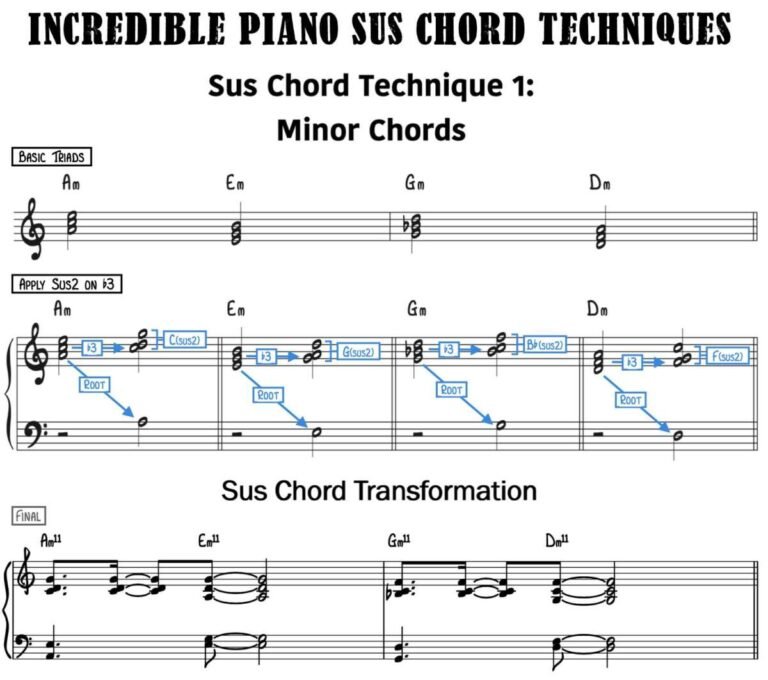
The sustain pedal can make the chords sound full, but too much pedal will blur the harmony. Change the pedal when the chord changes.
A useful method is:
- Play the chord.
- Press the sustain pedal.
- Move to the next chord.
- Release and quickly press the pedal again.
If the bass notes sound muddy, remove the pedal and practice with your fingers alone. Clean timing matters more than a large sound.


A step-by-step practice method
Follow this sequence if you are new to the song.
1. Learn the chord shapes
Practice Bmaj7, C#m7, D#m7, and Emaj7 without a rhythm. Say the chord names aloud as you play them.
The goal is to recognize each shape without stopping to count every note.
2. Practice the bass notes
Play only the left-hand roots:
B – C# – D# – E
Keep a steady pulse. If the bass line is uneven, the full arrangement will also feel uneven.
3. Add the right hand
Play one chord per bar. Use a metronome at a slow speed, such as 60 beats per minute.
Do not increase the speed until you can change chords without pauses.
4. Add inversions
Move the right hand into nearby positions. Avoid large jumps. Smooth chord changes are a key part of the song’s sound.
5. Add rhythm
Begin with beat 1. Then add selected offbeats. Keep the left hand simple while the right hand learns the syncopation.
6. Play with the recording
Use the original recording only after the chord changes feel secure. If you cannot keep up, slow the track with a practice app or return to the metronome.
Listening for the keyboard part can be difficult because the recording also contains bass, drums, vocals, guitar, and studio effects. Focus on the chord movement rather than trying to copy every sound at once.
Beginner, intermediate, and advanced versions
The best arrangement depends on your current piano level.
| Player level | Recommended approach | Main goal |
|---|---|---|
| Beginner | Root notes plus basic seventh chords | Learn the progression |
| Intermediate | Inversions, octaves, and syncopation | Match the groove |
| Advanced | Extended voicings and bass movement | Recreate the studio feel |
Beginner version
Use root notes in the left hand and simple seventh chords in the right hand. Play slowly and keep the rhythm steady.


You may simplify the chords at first:
B C#m D#m E
Then add the seventh notes:
Bmaj7 C#m7 D#m7 Emaj7
This is a good way to avoid overload.
Intermediate version
Use left-hand octaves and right-hand inversions. Add chord hits on offbeats, but do not fill every space.
You can also use a light bass approach:
Root – fifth – root – fifth
For B, that would be:
B – F# – B – F#
Keep the pattern quiet and even.
Advanced version
Advanced players can explore:
- Major-ninth voicings
- Minor-ninth voicings
- Rootless right-hand shapes
- Passing bass notes
- Inner-note movement
- Electric-piano-style dynamics
For example, Bmaj7 can become Bmaj9:
B – D# – F# – A# – C#
Use extended chords only when they support the sound. More notes do not automatically make the arrangement better.

Why the song sounds harder than its chord chart
The chord names are only part of the arrangement. The song feels sophisticated because of several details working together:
- Seventh chords add color.
- Close voicings create smooth voice leading.
- The rhythm uses syncopation.
- The keyboard sound has a soft attack.
- The bass and drums shape the groove.
- The singer’s phrasing leaves space between lines.
This means a basic chord chart may be technically correct but still sound unlike the recording.
The practical lesson is simple: learn the harmony first, then work on touch, timing, and tone. Trying to copy the complete studio sound before you can change chords cleanly usually slows progress.


Keyboard tone and equipment
You do not need a vintage electric piano to learn the song. A standard acoustic piano, digital piano, or keyboard can play the harmony.
If your keyboard has sound presets, try:
- Electric piano
- Suitcase electric piano
- Stage electric piano
- Soft tine piano
- Clean studio keyboard
Use moderate effects. A little tremolo, chorus, or reverb may create a wider sound, but too much can hide timing problems.
If you use a digital keyboard, set the volume low enough that you can hear both hands clearly. Headphones can help with practice, but take breaks if the sound feels tiring.
The original recording contains production choices that a solo piano cannot duplicate exactly. A clean acoustic-piano arrangement is still musically valid.

Common mistakes when learning “What a Fool Believes” on piano
Playing only plain major and minor triads
Triads can outline the song, but they miss much of its color. Add the seventh notes once the basic progression is comfortable.
Using root-position chords for every change
Root position creates large jumps. Inversions keep the hand near the same area and make the progression smoother.
Playing too many notes
The song has space. Constant fills can weaken the groove. Let the chords breathe.
Pressing the sustain pedal too long
Long pedal changes can blend several chords into one unclear sound. Change the pedal with the harmony.
Practicing at full speed too soon
Slow practice reveals uneven changes. Build speed only after the rhythm stays steady.
Ignoring the left hand
The left hand does not need to be busy, but it needs to be reliable. A steady bass gives the right hand freedom.

Troubleshooting guide
| Problem | Likely cause | Useful fix |
|---|---|---|
| Chords sound muddy | Too much pedal or low notes too close together | Use less pedal and move the right hand higher |
| Changes feel slow | Large jumps or unfamiliar shapes | Use inversions and practice two chords at a time |
| Rhythm feels stiff | Playing every note with equal force | Use a lighter touch on offbeats |
| Song sounds too plain | Only using triads | Add seventh chords and closer voicings |
| You lose the beat | Left hand is not steady | Practice bass notes alone with a metronome |
| Recording feels different | Arrangement includes bass, drums, and production | Focus on harmony first, then add groove and tone |
If a chord feels uncomfortable, reduce the arrangement. Play the bass note in the left hand and only three notes in the right hand. Comfort and control are better than forcing a complex shape.

Is “What a Fool Believes” suitable for beginners?
Yes, the basic chord progression is suitable for a beginner who knows simple major and minor chords. The full recording is more challenging because of its rhythm, chord extensions, and smooth voice leading.
A beginner should start with:
- Root notes in the left hand.
- Basic chords in the right hand.
- One chord per bar.
- Slow metronome practice.
- Seventh chords after the progression feels secure.
An intermediate player can usually add inversions and syncopation. An advanced player may enjoy recreating the electric-piano texture and bass movement.
The song is a good study piece because it teaches a valuable lesson: a small group of chords can sound rich when the voicing and rhythm are carefully shaped.

Where to find legal sheet music and chord resources
For a precise piano arrangement, use a licensed sheet-music source or an authorized digital score. Look for an arrangement that clearly states:
- The key
- The difficulty level
- Whether it matches the original recording
- Whether it is a piano solo or chord chart
- The publisher or licensing information
Free chord pages may contain errors, simplified versions, or transposed keys. Compare the chord names with the recording, and check whether the chart includes seventh chords.
Avoid copying or sharing unauthorized scans of copyrighted sheet music. You can learn the harmony from a legal chart while still building your own arrangement.

Frequently asked questions
What is the easiest key for “What a Fool Believes” on piano?
B major is a common key for the original recording, but C major may feel easier for some beginners because it has no sharps or flats. Transpose the song only if the new key helps you play with better control.
What are the main chords in “What a Fool Believes”?
A useful starting group is Bmaj7, C#m7, D#m7, and Emaj7. Other chords and passing movements may appear in different sections or arrangements.
Does the song use an acoustic piano?
The recording is strongly associated with an electric-piano keyboard sound. You can still practice and perform it on acoustic piano, digital piano, or another keyboard.
Can I play the song with basic triads?
Yes. Basic major and minor chords can help you learn the form. For a closer sound, add the seventh notes and use smooth inversions.
How can I make my piano version sound more like the recording?
Focus on close voicings, a relaxed rhythm, light pedal, and a soft electric-piano tone. The bass and drums also create much of the original groove, so a solo piano will not sound identical.
Conclusion
To play “What a Fool Believes” on piano, begin with the B-major chord family and learn the core movement from Bmaj7 through C#m7, D#m7, and Emaj7. Then improve the sound with close inversions, a steady left hand, light pedal, and controlled syncopation.
Start simply. Once the chords feel natural, add seventh notes, richer voicings, and an electric-piano tone. That step-by-step approach will help you capture the song’s character without needing to copy every detail of the studio recording.

Senior Music Reviewer
Alex Carter is a seasoned music reviewer with over a decade of experience in the world of sound and instruments. Passionate about helping musicians and enthusiasts make informed choices, he brings sharp insights and in-depth knowledge to every review. From classical instruments to modern gear, Alex combines technical expertise with a love for music to deliver content that resonates with readers.
As a Senior Music Reviewer and expert author on Tuneluma.com, Alex is dedicated to sharing honest evaluations, practical advice, and thoughtful commentary to guide readers in their musical journey.