What A Beautiful Name Piano Chords: Easy Piano Guide
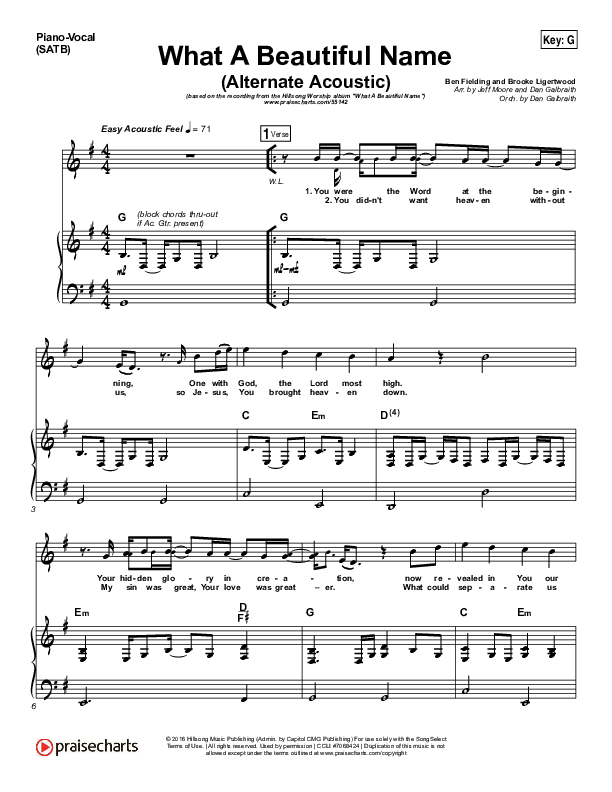
What a Beautiful Name piano chords are simple, worshipful, and easy to play in the common key of D.
What a Beautiful Name piano chords create a warm sound with only a few basic shapes. This guide explains the main chord progression, left-hand patterns, inversions, playing tips, and easy transpositions so you can lead or enjoy the song with confidence.
What Key Is What a Beautiful Name In?
The most common piano arrangement of What a Beautiful Name is played in the key of D major. This key works well for many singers and gives the song a bright, open sound.
The main chords are:
• D major
• A major
• B minor
• G major
• F-sharp minor
• A suspended 4
• D over F-sharp
The core What a Beautiful Name piano chords are easy to learn because they use familiar major and minor triads. You can play a simple version with only D, A, Bm, and G.
The song has a gentle verse, a rising pre-chorus, a strong chorus, and a spacious bridge. Each part uses repetition, so learning the chord flow is often more useful than memorizing every bar at once.

What a Beautiful Name Piano Chords Chart
Here is a simplified chord chart for What a Beautiful Name in D major. This chart avoids song lyrics and focuses on the harmony.
Intro and Verse
A common verse pattern is:
| Chord | Suggested timing |
|---|---|
| D | 1 measure |
| A/C# | 1 measure |
| Bm7 | 1 measure |
| G | 1 measure |
You can also replace A/C# with A if the slash chord feels difficult. The simpler pattern becomes:
D | A | Bm | G
The slash chord A/C# means you play an A major chord with C-sharp as the lowest bass note. This creates a smooth bass line from D down to C-sharp and then to B.
Pre-Chorus
A useful pre-chorus progression is:
G | A | Bm | A/C#
Some arrangements may use:
G | A | Bm | D/F#
Both versions lead naturally into the chorus. The exact chord placement can vary between live performances, so listen closely to the recording or use an authorized chart when matching a specific arrangement.
Chorus
The main chorus progression is commonly:
D | A | Bm | G
This four-chord loop is the heart of many What a Beautiful Name piano chords arrangements. It sounds full even when played with simple triads.
For a richer sound, try:
Dadd2 | A | Bm7 | G2
These added notes give the chords more space. They are especially useful when you play without a full band.
Bridge
A common bridge movement uses:
Bm | A | G | D/F#
You may also hear:
Bm7 | A | G2 | D/F#
The bridge often feels more emotional because the harmony moves through the minor chord first. Keep the sound open and avoid playing too many notes.

How to Play the Chords on Piano
Start with the right-hand chord shapes. Use the following notes:
• D major: D, F-sharp, A
• A major: A, C-sharp, E
• B minor: B, D, F-sharp
• G major: G, B, D
• F-sharp minor: F-sharp, A, C-sharp
• B minor 7: B, D, F-sharp, A
• D over F-sharp: F-sharp in the bass with a D major chord above it
If you are new to piano, play each chord in root position first. Root position means the chord notes appear in their normal order. Once the changes feel comfortable, use inversions to reduce hand movement.
For example, you can play:
• D as D, F-sharp, A
• A as C-sharp, E, A
• Bm as D, F-sharp, B
• G as D, G, B
These shapes keep your hand near the center of the keyboard. Smooth movement matters more than playing large chords.
A Simple Left-Hand Pattern
For a beginner arrangement, play one bass note with the left hand and the full chord with the right hand.
Example:
- Left hand plays D.
- Right hand plays D, F-sharp, and A.
- Left hand plays A.
- Right hand plays C-sharp, E, and A.
- Continue through Bm and G.
For a softer worship style, play the bass note on beat one and the chord on beats two, three, and four. You can also hold the chord for the full measure.

Easy Piano Arrangement for Beginners
The easiest version of What a Beautiful Name piano chords uses four chords:
D | A | Bm | G
Practice this progression slowly. Play each chord for four steady counts.
Count:
- D
- A
- Bm
- G
Repeat the pattern until your hand changes feel natural. Do not rush to add fills or complex rhythms. A steady pulse will sound better than a busy part with mistakes.
Beginner Practice Plan
Use this simple routine:
- Practice the four chords separately.
- Change between D and A.
- Change between A and Bm.
- Change between Bm and G.
- Play the full loop for five minutes.
- Add a slow melody only after the chords feel secure.
A metronome can help. Start around 60 beats per minute, then increase the speed by small steps. Music educators often recommend slow, accurate repetition because it builds reliable motor patterns.
Two-Hand Beginner Pattern
Try this pattern in 4/4 time:
• Beat 1: Play the bass note.
• Beat 2: Play the chord.
• Beat 3: Play the bass note again.
• Beat 4: Play the chord again.
This gives the song a calm pulse without making the arrangement too difficult. Use a light touch and allow the sustain pedal to connect the harmony.

Intermediate Piano Voicings and Inversions
Once the basic What a Beautiful Name piano chords feel comfortable, add inversions. Inversions make the chord changes smoother and reduce large jumps across the keyboard.
Try these right-hand shapes:
• D: F-sharp, A, D
• A: E, A, C-sharp
• Bm7: F-sharp, A, B, D
• G2: G, A, D
The G2 chord replaces the third, B, with the second, A. This creates a gentle and modern worship sound.
You can also add the ninth to D:
• Dadd2: D, E, F-sharp, A
Use added tones with care. If your arrangement includes a bass player or guitar, too many low notes may make the sound muddy. Keep richer voicings in the middle and upper register.
Smooth Voice Leading
Voice leading means moving each note by the smallest possible distance. For example, moving from D to A does not require your whole hand to jump. Keep common notes in place when possible.
A smooth progression might look like this:
• D: F-sharp, A, D
• A: E, A, C-sharp
• Bm7: F-sharp, A, B, D
• G: G, B, D
This approach makes What a Beautiful Name piano chords sound polished without requiring advanced technique.
Worship Piano Rhythm and Dynamics
The chords are only one part of the arrangement. Rhythm and dynamics shape the emotional impact of the song.
Begin the verse quietly. Use whole notes or gentle broken chords. As the song builds, increase volume and add more frequent chord strikes.
A useful dynamic plan is:
• Verse: Soft, sustained chords
• Pre-chorus: Gradually increase movement
• Chorus: Wider chords with a stronger pulse
• Bridge: Start gently, then build
• Final chorus: Full, confident sound
Avoid playing every chord loudly from the start. A worship arrangement works like a story. It needs space at the beginning so the larger sections can grow.
Simple Arpeggio Pattern
For each chord, play the notes in this order:
- Bass note
- Middle chord note
- Top chord note
- Middle chord note
For D, you might play D, A, F-sharp, A. Repeat the shape slowly. This pattern works well for a reflective verse.
Keep the rhythm even. If the pattern feels stiff, relax your wrist and let the fingers move with less force.

Using the Sustain Pedal
The sustain pedal can make What a Beautiful Name piano chords sound smooth and spacious. However, too much pedal can blur the harmony.
Change the pedal when the chord changes. A simple method is:
- Press the chord.
- Press the sustain pedal.
- Change to the next chord.
- Lift and quickly press the pedal again.
This technique is called pedal changing. It lets the new chord sound clean while preserving warmth from the previous chord.
If the room has a strong echo, use less pedal. In a small room, a dry and clear sound may work better than a long wash of sound.
Transposing What a Beautiful Name
You may need to transpose What a Beautiful Name if D does not fit the singer’s range. Transposing means moving every chord by the same number of half steps.
Common alternative keys include:
Key of C
The basic progression becomes:
C | G | Am | F
This key is often comfortable for beginners because it uses many white keys.
Key of E
The basic progression becomes:
E | B | C#m | A
This key may suit a higher vocal range, but the use of sharps can feel less familiar to new pianists.
Key of G
The basic progression becomes:
G | D | Em | C
This is another friendly key for piano and guitar players.
When transposing, keep the chord relationships the same. The pattern is more important than the letter names:
I | V | vi | IV
In D major, that pattern is D, A, Bm, and G. In C major, it is C, G, Am, and F.
Common Mistakes to Avoid
Many players learn the chord names but still struggle to make the song sound musical. These common mistakes are easy to fix.
• Playing too loudly: Start softly and leave room for the song to grow.
• Ignoring inversions: Large jumps can interrupt the flow.
• Using too much pedal: Blurred chords reduce clarity.
• Adding complex chords too early: Learn the basic progression first.
• Losing the pulse: A steady tempo matters more than fancy fills.
• Changing keys without checking the singer: The new key must support the vocal range.
• Copying a live version exactly: Live arrangements often include extra passing chords and instruments.
One practical lesson I have found useful when working through worship piano charts is to separate accuracy from expression. First, learn the chord changes. Then shape the sound with touch, timing, and dynamics.
Do not judge your playing by how many notes you use. A simple, well-timed chord can support a room better than a complex chord played without control.
How to Practice What a Beautiful Name Piano Chords
Practice in short sessions. Ten focused minutes can be more useful than one long session filled with tension.
Use this weekly plan:
Day One: Chord Shapes
Learn D, A, Bm, and G in root position. Say the chord names aloud as you play.
Day Two: Chord Changes
Practice D to A, A to Bm, and Bm to G. Use a slow metronome.
Day Three: Inversions
Find the nearest inversion for each chord. Keep your right hand in one small area.
Day Four: Rhythm
Try sustained chords, repeated quarter notes, and a simple arpeggio.
Day Five: Full Arrangement
Play the verse, pre-chorus, chorus, and bridge with clear dynamics.
Record yourself if possible. Listening back can reveal uneven timing, excessive pedal, or sudden changes in volume that are hard to notice while playing.
What a Beautiful Name Piano Chords for Playing With Others
When playing with a worship team, your role is to support the singer and the overall arrangement. You do not need to fill every space.
If a guitarist is playing full chords, use lighter piano voicings. Play higher notes, soft pads, or simple rhythmic accents. If the band is quiet, you can provide more of the harmony.
Before rehearsal, confirm:
• The key
• The tempo
• The arrangement order
• The ending
• Any repeated chorus or bridge
• Whether the band uses a capo or transposed chart
Communication prevents confusion. A chord chart may show the correct harmony but not the exact rhythm used by a particular group.
Frequently Asked Questions About What a Beautiful Name Piano Chords
What are the easiest What a Beautiful Name piano chords?
The easiest chords are D, A, B minor, and G. These four chords cover the main progression and work well for a beginner arrangement.
What key is What a Beautiful Name usually played in?
What a Beautiful Name is commonly played in D major. Some singers and worship teams transpose it to C, E, or G major to fit the vocalist’s range.
Can beginners play What a Beautiful Name on piano?
Yes. Beginners can start with whole-note chords and a simple D, A, Bm, G loop. Add inversions, arpeggios, and richer voicings only after the basic changes feel comfortable.
What does A/C# mean in the chord chart?
A/C# means play an A major chord with C-sharp as the lowest note. This slash chord creates a smoother bass movement than a standard A chord.
How can I make the chords sound more advanced?
Use inversions, added tones, and seventh chords such as Dadd2, G2, and Bm7. Keep the voicings close together and avoid adding too many low notes.
How do I choose the right key for singing?
Choose a key that lets the singer reach the highest notes without strain. Test the chorus first, since it often determines whether the full song feels comfortable.
[CodeImg? no, FAQ says no placeholder; remove. Need no placeholder after FAQ.]
Conclusion
What a Beautiful Name piano chords are approachable because the main progression uses four familiar chords: D, A, Bm, and G. Start with simple shapes, build steady timing, and then add inversions, suspended tones, arpeggios, and careful pedal work.
The best arrangement is not always the most complex one. Play with control, listen to the singer, and let the dynamics carry the emotion. Practice the chord loop today, try another key if needed, and explore more worship piano resources as your confidence grows.

Senior Music Reviewer
Alex Carter is a seasoned music reviewer with over a decade of experience in the world of sound and instruments. Passionate about helping musicians and enthusiasts make informed choices, he brings sharp insights and in-depth knowledge to every review. From classical instruments to modern gear, Alex combines technical expertise with a love for music to deliver content that resonates with readers.
As a Senior Music Reviewer and expert author on Tuneluma.com, Alex is dedicated to sharing honest evaluations, practical advice, and thoughtful commentary to guide readers in their musical journey.