Should I Learn Violin Or Viola: Find Your Best Fit
If you live in the United States and are choosing an instrument for school orchestra, private lessons, or community music, the violin is usually the easier starting point for finding teachers, student instruments, and beginner music. However, the viola may be the better choice if you love a warm, deep sound and want to play an important role in ensembles with less competition for players.
Neither instrument is universally better. The right choice depends on the sound you enjoy, your comfort with each instrument, the teachers available near you, and whether you want to join a school or youth orchestra.
A simple rule can help:
- Choose violin if you want the brightest sound, the widest beginner music selection, and the most common school-orchestra path.
- Choose viola if you prefer a darker sound, enjoy harmony and inner parts, and do not mind learning a less common instrument.
- If you are unsure, hold both instruments with help from a teacher and listen to short solo and ensemble examples before you decide.

Violin vs. viola: What is the difference?
The violin and viola belong to the same string family and use similar playing skills. Both are played with a bow, both rest under the chin, and both require the player to press the strings with the left hand.
The main differences are size, tuning, sound, clef, and musical role.
| Feature | Violin | Viola |
|---|---|---|
| Typical sound | Bright, clear, focused | Warm, rich, mellow |
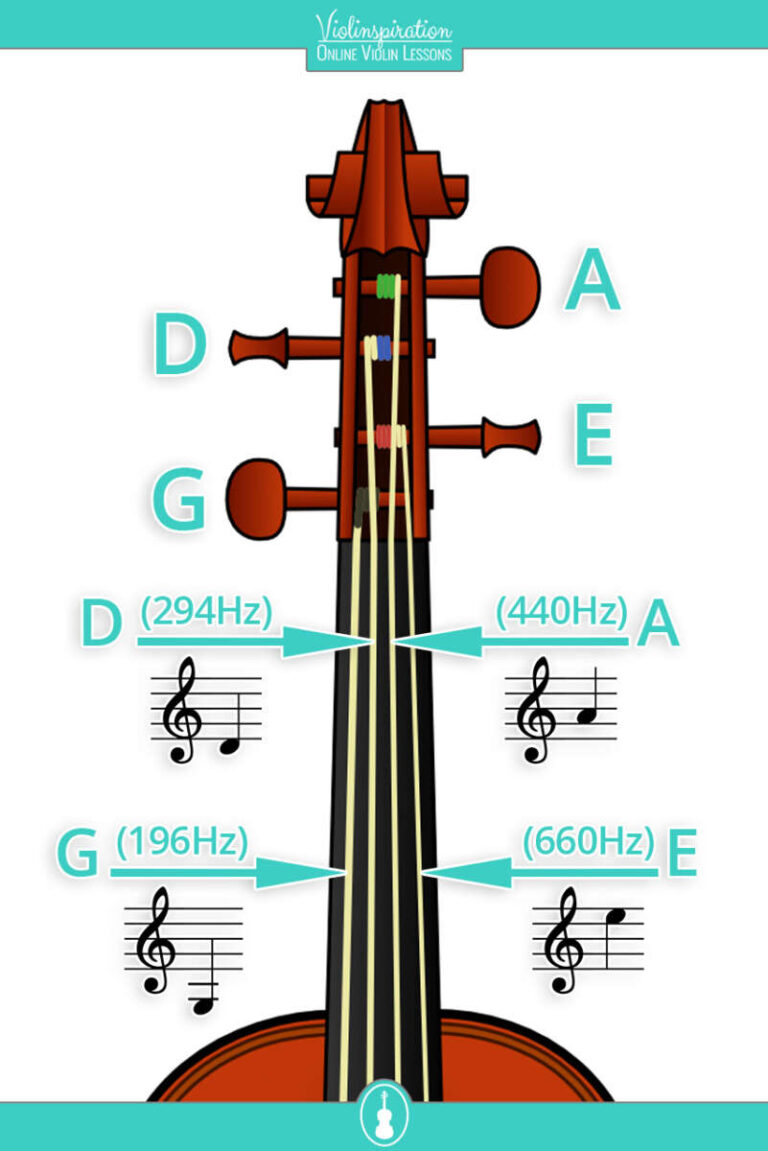
| Open-string tuning | G–D–A–E | C–G–D–A |
| Highest open string | E | A |
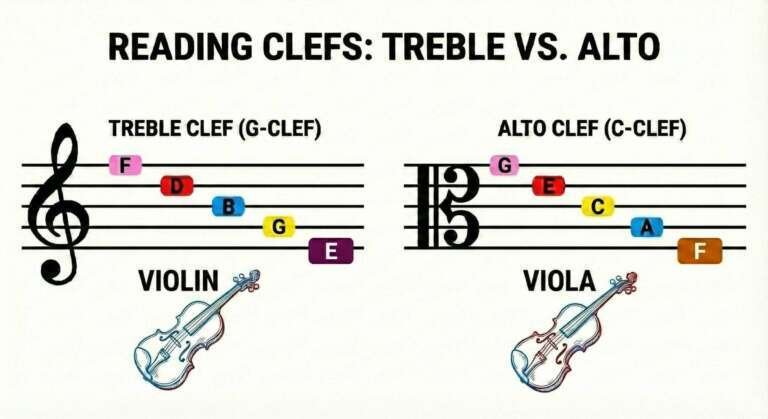
| Main clef | Treble clef | Alto clef |
| Common ensemble role | Melody and high parts | Harmony, inner parts, and counter-melody |
| Beginner availability | Very common | Less common |
| Physical demand | Usually lighter and smaller | Usually larger and somewhat heavier |
The viola is tuned one-fifth lower than the violin. Three strings match the violin—G, D, and A—but the viola adds a lower C string instead of the violin’s high E string. This lower tuning gives the viola its deeper tone.
A viola is not simply a large violin. Its body, strings, bow, setup, and playing position are designed for a lower range. Some violas are compact, while others are quite large. A qualified teacher should help you choose a safe size.
The two instruments also read different music. Violinists mainly use treble clef, while violists mainly use alto clef. Alto clef may look unfamiliar at first, but most students can learn it with regular practice.

Which instrument is easier to learn?
For most beginners, the violin is easier to begin studying because more teachers, method books, school programs, and online lessons focus on it. That does not mean the violin is easy. Both instruments require careful posture, bow control, ear training, and steady practice.
The viola can feel harder at first because it is larger and uses alto clef. A new violist may also need more strength and reach in the left hand. These challenges often become manageable when the instrument fits well and the student receives good instruction.
Why the violin may feel easier
The violin often has these beginner advantages:
- More local teachers and youth programs
- More rental choices in U.S. music stores
- A larger supply of beginner method books
- More familiar notation for students who already read piano music
- A smaller body that may feel easier for young players
- More online demonstrations and practice resources
The violin also has a large beginner community. If you attend a U.S. public school orchestra program, you are more likely to find several violin sections and classmates who can answer basic questions.
Why the viola may be a good beginner instrument
The viola may suit you if:


- You prefer low or middle musical sounds
- You enjoy supporting a melody rather than always playing it
- You like harmony and rich chords
- You want a clear place in a school or community orchestra
- You are willing to learn alto clef
- You can find a teacher who regularly teaches viola
A common myth says that students who are not good enough for violin should switch to viola. That is not a sound reason to choose it. Viola requires strong musical skills, accurate rhythm, good pitch, and careful bow control. Choose it because you like its sound and role—not because someone presents it as an easier version of violin.

Which instrument sounds better?
The violin and viola do not sound better or worse than each other. They have different sound colors, and your preference matters more than general opinion.
The violin has a bright, clear sound that can rise above a large orchestra. It often carries melodies and high musical lines. A strong violin sound may feel lively, direct, and expressive.
The viola has a lower, rounder sound. It often fills the space between the high violins and the low cellos. Many listeners describe it as warm, dark, deep, or human. These descriptions are subjective, but they help explain why some players feel strongly drawn to the instrument.
Try this listening test:
- Listen to a solo violin playing a slow melody.
- Listen to a solo viola playing a similar melody.
- Listen to a string quartet and focus on the middle voice.
- Notice which sound you would enjoy hearing and making every day.
- Ask a teacher to play both instruments in person.
Phone recordings can mislead you because microphones and speakers change tone. If possible, hear both instruments in a quiet room and from several feet away.
Your sound will also depend on the instrument’s setup, strings, bow, room, and playing technique. A low-cost beginner instrument with poor setup may sound harsh, even when the instrument type is right for you.

Should I choose violin or viola for school orchestra?
For most U.S. students, violin offers the broadest school-orchestra path. Many elementary, middle, and high school programs have large violin sections and established beginner materials.
Viola can offer a different advantage: orchestras need balanced sections, and there may be fewer violists than violinists. A student who becomes a reliable violist can be valuable in school orchestra, chamber groups, youth orchestras, and community ensembles.
That does not guarantee special treatment or a better seat. Musical progress still depends on practice, attendance, listening, rhythm, and teamwork. The practical benefit is that a good violist may find ensemble opportunities with less direct competition for places.
Before choosing, contact the music teacher at your school. Ask:
- Does the program accept beginning violists?
- Are viola lessons or section classes available?
- Does the school provide instruments or recommend rental shops?
- Can students switch instruments later?
- What sizes are suitable for the age group?
- Are private lessons required or strongly recommended?
If the school has no viola teacher, you may still learn viola with a private instructor. However, local support should influence your decision. Regular guidance is more useful than choosing an instrument based only on its reputation.


Which instrument is better for adults?
Adults can learn either instrument successfully. Age does not decide the answer, although hand size, shoulder comfort, schedule, and past musical experience matter.
The violin may be more convenient for adults because it is easier to find teachers, books, ensembles, and rental instruments. It may also feel less tiring during the first months because it is generally smaller and lighter.
The viola may appeal to adults who want a lower sound or who already understand music notation. Adult beginners sometimes enjoy playing harmony and ensemble parts rather than focusing on the main melody.
If you have neck, shoulder, wrist, or hand pain, do not push through it. Stop, check your setup, and speak with your teacher. Pain can result from poor posture, a badly fitted shoulder rest or chin rest, excessive practice time, or an instrument that is too large. Persistent pain may require advice from a qualified medical professional.
A trial lesson is especially useful for adults. Ask to play open strings, simple finger patterns, and short bow strokes on both instruments. The goal is not to sound polished. The goal is to compare comfort, reach, and enjoyment.

Is viola harder than violin?
The viola is not automatically harder, but it presents different early challenges.
The larger body can require more reach. The thicker strings may need a slightly different bow approach. Alto clef adds a new reading skill. At the same time, some players find the viola’s wider spacing and lower sound comfortable and natural.
The violin presents its own difficulties. Its high register makes inaccurate pitch easy to hear, and its smaller size does not remove the need for precise bow control. Violinists often face strong competition in school and audition settings.
The most useful comparison is not “Which instrument is easiest?” but:
Which instrument can I hold comfortably, hear clearly, and practice consistently?
A well-fitted viola with a good teacher may be easier for you than a violin that feels uncomfortable. An instrument that inspires regular practice will usually produce better progress than one chosen only because it is popular.

How much practice does a beginner need?
A beginner usually benefits from short, regular practice rather than rare, long sessions. For many children, 10 to 20 focused minutes most days can be a reasonable starting point. Adults may choose longer sessions if their body remains relaxed and their attention stays focused.
Your teacher may set a different plan based on age, goals, school work, and experience. Practice should include:


- Setting up the instrument correctly
- Open-string bow exercises
- Left-hand finger patterns
- Slow work with a metronome
- Review of assigned music
- Listening for clean tone and accurate pitch
- A short, enjoyable piece
Do not judge progress only by the number of songs you can play. Early success may look like a straighter bow, less tension, a cleaner note, or a steady rhythm.
If practice leads to sharp pain, numbness, tingling, or continuing soreness, stop and ask for help. Normal beginner fatigue is different from pain. More practice cannot fix a position that is unsafe or an instrument that does not fit.
What should you rent or buy first?
For most beginners in the United States, renting is safer than buying at once. A rental lets you test the instrument, change sizes, and learn whether you enjoy playing before making a larger purchase.
Choose a shop or program that offers:
- Correct sizing by a trained staff member
- A playable instrument with professional setup
- A return or size-exchange policy
- Repair support
- A bow, case, and basic accessories
- Clear insurance or damage terms
Avoid buying the cheapest violin or viola online without guidance. A poorly adjusted bridge, bad strings, or weak bow can make the instrument difficult to play. The result may feel like a lack of talent when the real problem is setup.
For children, size changes are common. A teacher should check the instrument as the student grows. Never choose a full-size violin or viola simply because it may last longer if the student cannot hold it comfortably.
A qualified teacher should check:
- Whether the fingers reach the strings without strain
- Whether the instrument rests securely
- Whether the bow can move freely
- Whether the shoulders and wrists stay relaxed
- Whether the student can turn the head naturally

A simple decision guide
Use this guide if you still cannot decide.
| If this describes you… | Start with… | Why |
|---|---|---|
| You want the most common school-orchestra option | Violin | More programs and materials are available |
| You love bright, high sounds | Violin | Its range and tone fit that preference |
| You love warm, low sounds | Viola | Its lower C string creates a deeper tone |
| You want to play harmony and inner parts | Viola | That is a common ensemble role |
| You need many nearby teachers | Usually violin | Violin instruction is more widely offered |
| You are choosing for a young child | Teacher-guided choice | Fit and comfort matter most |
| You already play piano or read treble clef | Either | Music reading transfers, but viola adds alto clef |
| You want to join a school orchestra | Ask the school first | Local instruments and teachers vary |
If two choices still seem equal, choose the instrument whose sound makes you want to practice. Motivation is a practical factor, not a minor one.

Can you switch from violin to viola later?
Yes. Many players move from violin to viola, and some learn both. The left-hand patterns are related, but the instruments are not identical.
A violinist moving to viola must adjust to:
- A larger instrument
- Wider finger spacing
- A lower range
- Alto clef
- Different bow weight and contact
- A darker sound concept
A violist moving to violin must adjust to the smaller spacing, higher range, and more direct response of the violin. The change may feel strange for a while.


Do not switch on your own because a part feels difficult. Speak with your teacher and identify the reason for the change. Switching may help if you truly prefer the other instrument, but it will not remove the need for practice.

Common mistakes when choosing between violin and viola
Choosing by size alone
A bigger instrument is not always better for a taller student, and a smaller instrument is not always best for a younger student. Fit depends on arm reach, hand size, posture, and comfort.
Assuming viola is a “backup” instrument
The viola has its own sound, technique, literature, and professional traditions. Treating it as a second-choice instrument can reduce motivation and respect for the role.
Buying before taking a lesson
A teacher can identify poor setup and incorrect size before you spend money. One lesson may prevent an expensive mistake.
Ignoring local support
A beautiful instrument choice may become frustrating if you cannot find instruction, repairs, or ensemble opportunities nearby.
Practicing through pain
Soreness, numbness, or sharp pain is a warning. Stop and correct the cause with a teacher or qualified professional.
Expecting quick, perfect sound
Bowed strings often sound rough at first. Bow pressure, speed, contact point, and left-hand pitch take time to coordinate. Early progress is measured in control, not perfection.
Frequently asked questions
Is violin or viola better for a beginner?
Neither is best for everyone. Violin is often the more practical choice because it has more teachers, materials, and school programs. Viola may be better if you strongly prefer its lower tone and can receive suitable instruction.
Is viola easier on the ears than violin?
Some listeners find the viola’s lower tone softer or less piercing, but this depends on the instrument, player, room, and volume. Both instruments can be loud at close range. Protect your hearing around loud rehearsals and take breaks when needed.
Can a small person play viola?
Yes, but the viola must fit properly. Violists use a range of instrument sizes, and a teacher can help select one that allows relaxed posture and safe reach.
Do violinists earn more than violists?
Income depends on training, location, ensemble, teaching work, auditions, and many other factors. Instrument choice alone does not determine earnings. Do not choose an instrument based on an assumed career salary.
Can I teach myself violin or viola?
You can learn basic facts and exercises from books or videos, but a teacher is strongly useful at the beginning. Posture, bow hold, instrument fit, and intonation are hard to judge alone. A few early lessons can prevent habits that later take much longer to change.
Final recommendation
Choose violin if you want the widest access to U.S. teachers, school programs, beginner music, and rental options. Choose viola if its warm, lower sound attracts you and you enjoy the idea of supporting the musical center of an ensemble.
The best next step is simple: book a trial lesson on both instruments before buying one. Ask the teacher to check your size, play a short example, and let you compare the sound and comfort. Then rent a properly fitted instrument for several weeks and see which one makes you want to pick it up again.
Sources for further reading
- The American String Teachers Association — teacher and string-education resources
- National Association for Music Education — music education information in the United States
- The Library of Congress Music Division — public music resources and recordings
- The Metropolitan Opera’s instrument education resources — orchestral instrument and ensemble context

Senior Music Reviewer
Alex Carter is a seasoned music reviewer with over a decade of experience in the world of sound and instruments. Passionate about helping musicians and enthusiasts make informed choices, he brings sharp insights and in-depth knowledge to every review. From classical instruments to modern gear, Alex combines technical expertise with a love for music to deliver content that resonates with readers.
As a Senior Music Reviewer and expert author on Tuneluma.com, Alex is dedicated to sharing honest evaluations, practical advice, and thoughtful commentary to guide readers in their musical journey.