How To Play Enter Sandman Drums: Easy Drum Guide
Learn the song’s four-on-the-floor pulse, signature fills, and dynamics before adding full-speed power.
Learning how to play “Enter Sandman” drums is a great way to build timing, stamina, and control. The song sounds huge, but its core parts are clear once you separate the groove, fills, and song sections. This guide breaks down the playing approach used by Lars Ulrich and gives you a practical path from slow practice to a confident performance.
Understand the Drum Style in “Enter Sandman”
“Enter Sandman” is built around a steady rock groove in 4/4 time. The drum part is not extremely complex, but it depends on strong timing, sharp accents, and careful control of energy.
The original recording sits at about 123 beats per minute. That tempo feels quick at first, but it is still manageable when you practice with a metronome and build speed in small steps.
When learning how to play “Enter Sandman” drums, focus on these main traits:
• A steady kick drum pulse
• Strong backbeats on beats two and four
• Tight eighth-note hi-hat patterns
• Large crash cymbal accents
• Short fills that lead into new sections
• Clear changes in volume and intensity
The best approach is to think of the song as a series of energy levels. The verse feels controlled and tense. The chorus opens up and feels wider. The bridge and breakdown create contrast before the final push.

Set Up Your Drum Kit
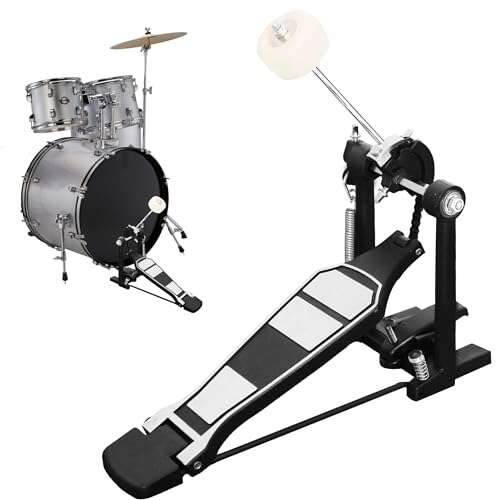
A good setup makes learning how to play “Enter Sandman” drums easier. You do not need a large kit. A standard five-piece kit is enough.
Use the following setup:
• Bass drum for the main low pulse
• Snare drum for the backbeat
• Closed hi-hat for the steady time pattern
• Crash cymbal for major accents
• Floor tom for heavier fills and transitions
• Rack toms for short movement between sections
Set your snare at a height that allows your stick to strike the center without forcing your wrist down. Keep your hi-hat close enough to play comfortably, but not so low that it touches your snare hand.
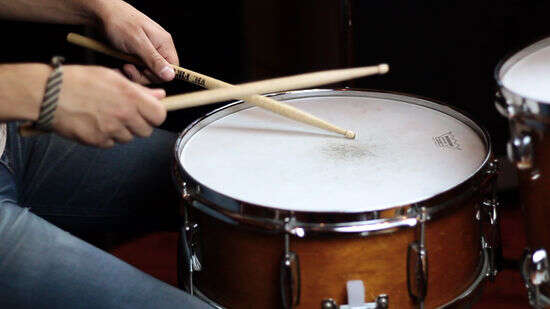
Use medium or heavy sticks if you want a strong rock sound. However, do not hit harder than needed. A relaxed grip gives you better control and helps prevent wrist and shoulder pain.
If you use an electronic kit, choose a rock or arena-style kit sound. Keep the effects moderate. Too much reverb can hide timing problems and make the groove harder to judge.

Learn the Main Verse Groove
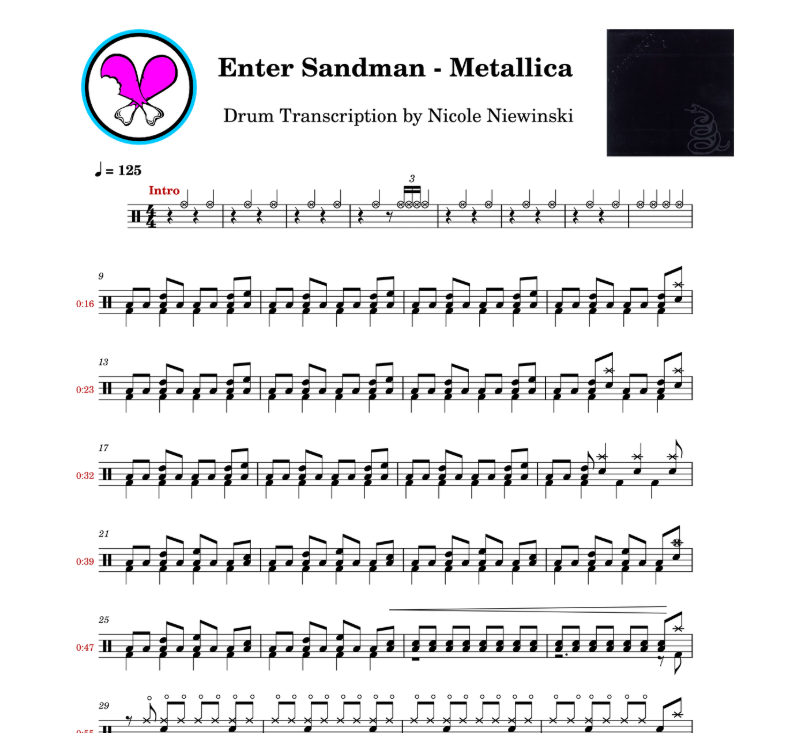
The verse groove is the foundation of how to play “Enter Sandman” drums. Start with the basic time pattern before adding fills or cymbal crashes.
Count:
1 and 2 and 3 and 4 and
Play closed hi-hat notes on each count and each “and.” Place the snare on beats two and four. Keep the kick drum steady and let the groove breathe.
A useful practice pattern looks like this:
• Hi-hat: steady eighth notes
• Snare: beats two and four
• Kick: beat one, with added hits that support the guitar riff
• Crash: use only when the section calls for a strong accent
The goal is not to play every note with the same force. Keep the hi-hat controlled. Make the snare clear. Let the kick support the guitar without rushing ahead of it.
Many new players make the verse sound too busy. They add extra kicks or open the hi-hat too often. That can weaken the heavy feel. In this song, restraint creates power.
When practicing how to play “Enter Sandman” drums, loop the verse for five minutes. Do not add fills until you can keep the groove steady without tension.
Play the Chorus With More Power
The chorus needs a wider sound than the verse. This is where many players increase the size of the beat by moving from a closed hi-hat to crash cymbals or a more open cymbal pattern.
Keep the snare firmly on beats two and four. Make the backbeat strong, but do not crush the drum. A good rock snare sound comes from speed, consistency, and a clean stroke.
Use these ideas for the chorus:
• Crash on the main downbeats
• Keep the kick aligned with the guitar accents
• Strike the snare with more confidence
• Open the sound without speeding up
• Return to a controlled groove at the end of the section
The most important skill here is dynamic control. The chorus should feel bigger because of sound and space, not because every note becomes chaotic.
A common lesson from practicing this song is that volume does not equal intensity. You can create a powerful chorus with consistent strokes and strong accents while keeping your body relaxed.

Master the Intro and Opening Feel
The intro creates suspense before the full groove arrives. It has a spacious feel, so do not rush the pauses. Let each hit land with purpose.
Listen closely to the relationship between the drums, guitar, and bass. The opening is not just a count-in to the verse. It sets the mood for the entire song.
To practice the intro:
- Listen to the recording several times without playing.
- Tap the pulse with your foot.
- Identify where the drum accents land.
- Practice the accents alone at a slow tempo.
- Add the main groove after the intro feels steady.
The key question is not only “What drum does Lars hit?” Ask, “What role does each hit play?” Some hits mark the riff. Others build tension. This mindset helps you perform the part musically rather than simply copying motions.

Practice the Pre-Chorus Transition
The pre-chorus builds toward the chorus. Your job is to increase energy while keeping the tempo stable.
Use slightly stronger cymbal notes, clearer kick accents, and a gradual rise in intensity. Avoid suddenly playing as loud as the chorus too early.
A smooth transition may include:
• More open hi-hat sound
• Stronger quarter-note accents
• A short tom movement
• A crash on the first beat of the chorus
• A controlled pause before the next section
Practice the pre-chorus and chorus together. Many players can play each part alone but lose the beat when connecting them.
When learning how to play “Enter Sandman” drums, transitions deserve special attention. A song often feels professional because the sections connect smoothly, not because each section is technically difficult.
Add the Signature Drum Fills
The fills in “Enter Sandman” are short and direct. They help the song move from one section to another. You do not need to play long, complex solos.
Start with simple movements across the snare and toms. Keep the fill connected to the beat. A fill should sound like a sentence ending with punctuation. It should lead somewhere.
Good practice steps include:
• Play the groove for three bars
• Add a simple fill in the fourth bar
• Land clearly on beat one
• Repeat the pattern until it feels natural
• Gradually match the recording’s speed and shape
Keep your strokes even as you move around the kit. Do not let the toms become louder or slower than the snare unless that change is intentional.
One mistake I often see in practice rooms is filling every open space. That takes away from the song’s weight. In this track, a short fill can be more effective than a flashy one.
Understand the Bridge and Breakdown
The bridge and breakdown sections create a darker, heavier mood. The groove may feel more spacious, but the pulse must remain firm.
Play fewer notes if the section calls for space. Use strong accents and let the silence work for you. A pause before a hit can make that hit feel much larger.
For the breakdown, focus on:
• Staying locked to the guitar riff
• Placing accents together with the band
• Keeping the kick drum controlled
• Allowing cymbals to ring when appropriate
• Avoiding extra fills between major hits
This section teaches an important rock drumming lesson: silence is part of the rhythm. If you fill every pause, the breakdown loses its weight.
When you learn how to play “Enter Sandman” drums, record yourself during this section. Listen for rushed accents and uneven pauses. A phone recording can reveal problems that are hard to notice while playing.
Build Your Practice Routine
A focused practice routine will help you learn how to play “Enter Sandman” drums faster than random repetition. Divide the song into small sections and work from simple to complex.
Try this 30-minute routine: