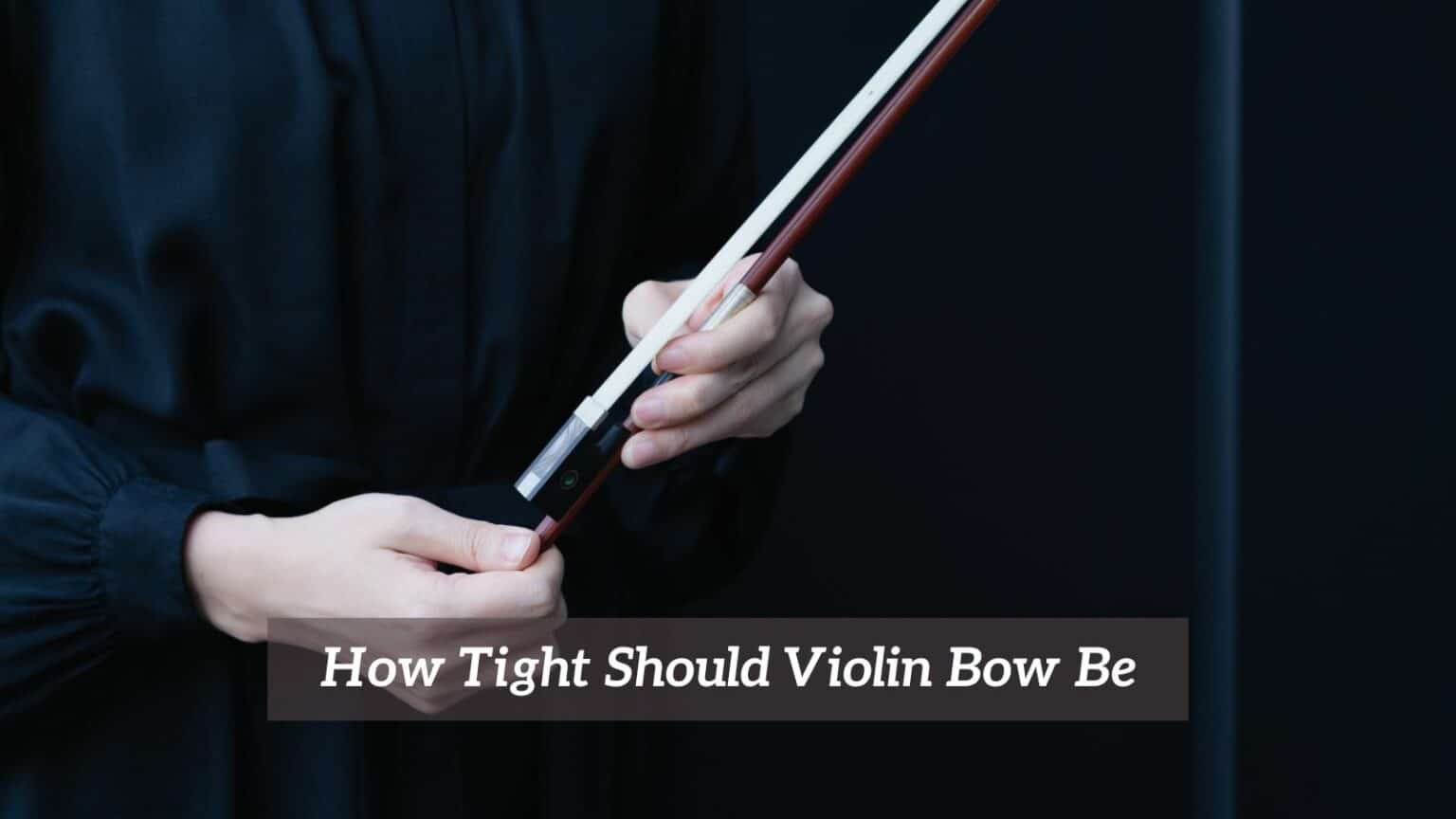
A violin bow should look straight, balanced, and well made. In the United States, a standard full-size bow is usually about 29 inches long, with a slim curved stick, a flat ribbon of horsehair, a fitted frog at the handle, and a shaped tip at the other end. The hair should be clean and evenly spread, while the stick should have no major cracks, bends, or loose parts.
A good-looking bow is not always a good-playing bow. Still, its shape and condition can reveal many problems before you play it. This guide explains each part, shows what normal wear looks like, and helps you decide when a bow needs a repair shop.

The Basic Shape of a Violin Bow
A violin bow has five main visual parts: the stick, hair, frog, tip, and button. These parts work together to keep the bow balanced and allow the player to control sound, speed, and pressure.
From end to end, a violin bow should have:
- A rounded or octagonal stick
- A gradual curve, called the camber
- A narrow head or tip
- A flat, even ribbon of hair
- A frog that slides along the stick
- A metal winding and thumb leather near the frog
- A button at the very end
A full-size violin bow is commonly close to 74 centimeters, or 29 inches, long. Smaller bows for children are shorter. The size should match the violin and the player, so a child should not use a full-size bow simply because it looks more professional.
What the bow should look like from the side
When the hair is loose, the stick should show a smooth curve. The middle of the stick normally sits closer to the hair than the two ends. This curve is the bow’s camber.
The curve should be gradual, not sharp. It should not look twisted, kinked, or flat in one section. A small difference in shape can affect how the bow grips the string and how easily it springs back.
What the bow should look like from above
The stick should run in a straight line from the frog to the tip when viewed from above. It should not bend to the left or right.
A side curve can be normal. A sideways bend is usually a problem. It may come from heat, dampness, age, poor storage, or uneven hair tension.

What Each Part of a Violin Bow Should Look Like
Each bow part has a clear visual job. Learning these parts makes it easier to spot damage and explain a repair to a violin shop.
The stick
The stick is the long shaft of the bow. It may be:
- Round
- Octagonal
- Made from pernambuco
- Made from brazilwood
- Made from carbon fiber
- Made from another composite material
A wooden stick should have a smooth finish and a clean, even shape. Fine bows may show beautiful grain, but attractive wood does not prove that the bow plays well.
A round stick is not automatically better than an octagonal stick. The shape reflects the maker’s design and can affect weight, stiffness, and feel. The player should judge the bow by its balance and response, not by shape alone.
A carbon-fiber bow may have a very uniform surface. That is normal. It may also have printed markings or a modern finish rather than visible wood grain.
The hair
The hair should form a flat ribbon from the frog to the tip. It should look full and even, with no large gaps.
Most violin bows use horsehair. White hair is common, while some bows use dark or mixed hair. Color alone does not tell you whether the hair is good. The hair should be clean, secure, and evenly tensioned.
Look for these healthy signs:
- Hair that stays in one broad ribbon
- No loose clumps
- No large empty spaces
- No heavy dirt or oil
- No broken hair near the frog or tip
- Similar tension across the ribbon
A few broken hairs are normal during use. A large number of broken hairs, uneven hair, or a narrow ribbon suggests that the bow may need a rehair.
The frog
The frog is the block held by the player’s hand. It is often made from ebony and may include:
- A metal slide
- A pearl eye
- A heel plate
- A ferrule
- A mortise that holds the hair
- A thumb leather or synthetic grip
The frog should slide smoothly along the stick. It should not wobble from side to side. The metal parts should be secure, and the pearl eye should not be loose.
Some older bows have ivory or other protected materials. Do not assume that an old-looking part is legal to sell or transport. Rules can vary in the United States and across international borders.
The tip and tip plate
The tip is the pointed end of the bow. It supports the hair and protects the stick.
A normal tip should look firm and symmetrical. The tip plate may be made from bone, ivory on older bows, or a modern synthetic material. It should not be badly cracked, crushed, or separating from the head.
The tip is one of the most fragile parts of the bow. Never tap it against a music stand, chair, or hard surface.
The button and winding
The button is the small end piece behind the frog. Turning it changes the hair tension.
The button should turn smoothly without grinding or sticking. The winding in front of the frog should be tight and even. The thumb leather should protect the stick and give the hand a stable place to rest.
Loose winding is a repair issue, but it does not always mean the bow is ruined. A qualified bow repairer can often replace or reset it.

How the Bow Should Look When It Is Tightened
A violin bow should look different when the hair is loose and when it is ready to play.
Before playing, turn the button until the hair is tight enough to form a clear gap from the stick. The hair should not touch the stick in the middle during normal playing. At the same time, the stick should not become nearly straight or bend sharply outward.
As a general guide, the hair should sit several millimeters below the stick at the middle. This is not an exact measurement for every bow. Bow design, hair amount, humidity, and playing style all affect the correct tension.
Use these signs:
| Visual sign | What it may mean |
|---|---|
| Hair still touches the stick | The bow is too loose for playing |
| Stick becomes almost straight | The bow may be over-tightened |
| Stick bends strongly away from the hair | Too much tension or a poor camber |
| Hair spreads evenly | Normal condition |
| Hair gathers into a thin line | Uneven hair, dirt, or a rehair need |
| One side pulls more than the other | Twisted hair or a structural problem |
The bow should never be tightened as far as possible. Excess tension can weaken the stick, pull the head out of shape, or damage the mortises that hold the hair.
Loosen the hair after every playing session. Leaving it tight can shorten the bow’s useful life.
How to Check Whether a Violin Bow Is Straight
You can perform a basic visual check at home. This check can reveal obvious problems, but it cannot replace an inspection by a bow maker or violin repair specialist.
Step 1: Loosen the hair
Turn the button until the hair is slack. Do not force the button if it feels stuck. A stuck button may need professional attention.
Step 2: Hold the bow at eye level
Look from the frog toward the tip. Keep the stick at eye level and compare it with a straight background, such as a door frame.
The stick should not drift sharply to either side. A slight visual difference may come from the angle of your eyes, so check it from more than one position.
Step 3: Check the side curve
Turn the bow sideways. The camber should flow smoothly from end to end. The center usually curves toward the hair side.
Watch for:
- A flat spot
- A sudden bend
- A sharp kink
- A curve that changes direction
- A tip that sits unusually high or low
Step 4: Check the hair ribbon
Look down the length of the hair. It should remain broad and centered. The hair should not twist like a rope.
If the hair is uneven, do not try to straighten it by pulling individual strands. Uneven hair may need a professional rehair.
Step 5: Check the frog and tip
Make sure the frog moves smoothly and the tip is not loose. Look for cracks around the head, frog, and mortises.
Stop the inspection if you see a crack in the stick or head. Do not tighten the bow to “test” it. A damaged bow can fail under tension.

What a Good Violin Bow Should Look Like in Your Hand
A good bow should feel balanced, stable, and easy to guide. It should not feel as if the tip is dragging your hand down or the frog is pulling backward.
Most violinists hold the bow near the frog, so the balance point matters. Many full-size bows balance somewhere around the lower third of the stick, but the exact point varies. A heavier bow is not automatically stronger or better.
When you play an open string, the bow should:
- Stay reasonably stable
- Make a clear sound without extreme pressure
- Move smoothly at slow and fast speeds
- Recover after changes in direction
- Allow controlled contact near the tip and frog
A bow may look perfect and still feel stiff, weak, heavy, or hard to control. Sound and handling are more useful than appearance alone.
A simple playing test should include:
- Slow bows near the middle.
- Long bows from frog to tip.
- Short strokes near the middle.
- Gentle changes in direction.
- A few notes on each string.
Listen for rattling, scratchy response, poor grip, and sudden changes in volume. If possible, have the player use their own violin. A bow can respond differently on different instruments.
Common Signs of Damage or Poor Condition
Some problems are easy to see. Others appear only when the bow is tightened or played.
Cracks
Cracks are the most serious visual warning. Pay special attention to:
- The head
- The stick near the head
- The frog area
- The end of the stick
- The mortise openings
A repaired crack is not always a reason to reject a bow. The location, quality, and age of the repair matter. A repair shop should inspect the bow before you buy or use it regularly.
A twisted hair ribbon
The hair should lie flat. If one edge rises or the ribbon twists, the hair may be uneven or the bow may have a problem with its mortises.
Do not put water on the hair to fix it. Water can damage the stick, loosen glue, or create new tension problems.
A loose tip
The tip should not rock or move. A loose tip can allow the hair to pull against the head and cause more damage.
A loose frog
A small amount of movement may come from worn parts. A frog that rattles or shifts noticeably needs attention.
A rough button
The button should turn with steady resistance. If it skips, grinds, or becomes hard to turn, the screw or eyelet may be worn.
Excessive wear near the grip
The area under the thumb may show wear from normal use. Deep grooves, exposed wood, or loose winding can change the player’s grip and may require replacement of the leather or winding.
How a Violin Bow Should Look When You Buy One
When buying a bow in the United States, inspect it in person if possible. Photos can hide sideways bends, repaired cracks, uneven hair, and worn fittings.
Use this short checklist:
- Is the stick straight from frog to tip?
- Is the side camber smooth?
- Does the hair form an even ribbon?
- Does the frog slide without wobbling?
- Does the button turn smoothly?
- Is the tip secure?
- Are there cracks or open seams?
- Has the bow been recently rehaired?
- Does it balance well on your violin?
- Can a qualified shop inspect it before purchase?
Ask for the bow’s material and repair history. If the seller claims that a bow is made by a famous maker, ask for documentation. Appearance alone cannot prove authorship or value.
A bow stamped with a name is not necessarily made by that person. Stamps can be copied, reused, or applied by a shop. Provenance and expert inspection matter more than a label.
A simple condition guide
| Condition | Typical visual signs | What to do |
|---|---|---|
| Ready to use | Straight stick, even hair, secure fittings | Test it and maintain it |
| Needs routine service | Dirty hair, loose winding, worn thumb leather | Ask a shop for a quote |
| Needs a rehair | Sparse, stretched, dirty, or uneven hair | Avoid judging the bow until it is rehaired |
| Needs repair | Loose tip, cracked fitting, stuck button | Have a professional inspect it |
| High risk | Stick crack, severe bend, crushed head | Do not tighten or play it |
The cost of repairs can change the true value of a bow. A low purchase price may not remain low after a rehair, tip repair, straightening, or crack repair.

What a Violin Bow Should Not Look Like
Avoid using a bow that has any of these signs:
- A sharp kink in the stick
- A severe sideways bend
- A cracked head
- A loose or crushed tip
- Hair that is badly twisted
- A frog that will not move
- A button that cannot turn
- Glue coming away from the head
- A stick that touches the hair when properly tightened
- A stick that looks almost straight under normal tension
Do not try to fix a bent wooden bow with heat, water, steam, or household tools. Bow straightening and camber work require controlled heat and specialist skill. An incorrect repair can cause permanent damage.
Do not use oil, furniture polish, alcohol, or household cleaner on the stick. These products can harm varnish, fittings, or the hair.

Violin Bow Maintenance That Preserves Its Shape
Basic care helps a bow keep its proper appearance and function.
After playing:
- Wipe rosin dust from the stick with a soft, dry cloth.
- Loosen the hair fully.
- Store the bow in its case.
- Keep the case away from direct heat and strong sunlight.
- Avoid leaving the bow in a hot car.
- Keep food, drinks, and oily hands away from the hair.
Do not touch the hair more than needed. Skin oil can reduce its grip on the strings.
Have the bow checked when the hair becomes uneven, the bow feels different, the button sticks, or the fittings loosen. Rehair timing depends on use, hair condition, climate, and playing demands. A bow does not need a rehair merely because a certain number of months has passed.
In humid regions of the United States, wood can absorb moisture and change shape. In dry areas, wood and fittings may shrink or develop cracks. A stable case environment helps, but no case can remove every climate risk.
Frequently Asked Questions
Should a violin bow be perfectly straight?
No. A violin bow normally has a smooth camber, or lengthwise curve. It should look straight from above but curved from the side. A sharp bend, twist, or sideways curve is not normal.
Should the bow hair touch the stick?
The hair may touch the stick when the bow is loose. During normal playing tension, it should usually remain separated from the stick at the middle. If it still touches after careful tightening, ask a repair professional to inspect it.
Is white horsehair better than black horsehair?
Not automatically. Hair color does not by itself prove quality. Clean, strong, evenly fitted hair matters more than color.
How tight should violin bow hair be?
Tighten the hair until it forms a clear gap from the stick and feels stable for playing. Do not tighten until the stick is nearly straight. Always loosen the hair after playing.
Can I straighten a violin bow at home?
Do not try to straighten a wooden bow with heat, water, steam, or tools. A trained bow maker or violin repair specialist should handle bends, camber changes, and cracks.
How can I tell if a bow is too old to use?
Age alone does not decide whether a bow is usable. A well-maintained old bow may work very well, while a newer bow may have serious damage. Check its structure, hair, fittings, balance, and playing response.
Final Checklist
A healthy violin bow should have:
- A smooth side curve
- A straight path from frog to tip when viewed from above
- Even, flat hair
- A secure tip
- A stable frog
- A button that turns smoothly
- No serious cracks
- No sharp bends or twists
- Comfortable balance in the player’s hand
The best next step is simple: loosen the hair, inspect the bow from both directions, and test it gently on your violin. If you see a crack, severe bend, loose tip, or stuck button, stop and take it to a qualified violin or bow repair shop.

Senior Music Reviewer
Alex Carter is a seasoned music reviewer with over a decade of experience in the world of sound and instruments. Passionate about helping musicians and enthusiasts make informed choices, he brings sharp insights and in-depth knowledge to every review. From classical instruments to modern gear, Alex combines technical expertise with a love for music to deliver content that resonates with readers.
As a Senior Music Reviewer and expert author on Tuneluma.com, Alex is dedicated to sharing honest evaluations, practical advice, and thoughtful commentary to guide readers in their musical journey.