How Do You Play The Djembe Drum: Beginner’s Guide

You play the djembe by using three basic tones—bass, tone, and slap—with relaxed hands and steady timing.

Learning how do you play the djembe drum is less about hitting hard and more about control, rhythm, and listening. This guide explains proper posture, hand position, basic sounds, beginner patterns, practice methods, cultural respect, and common mistakes so you can build a strong foundation safely.

What Is a Djembe Drum?

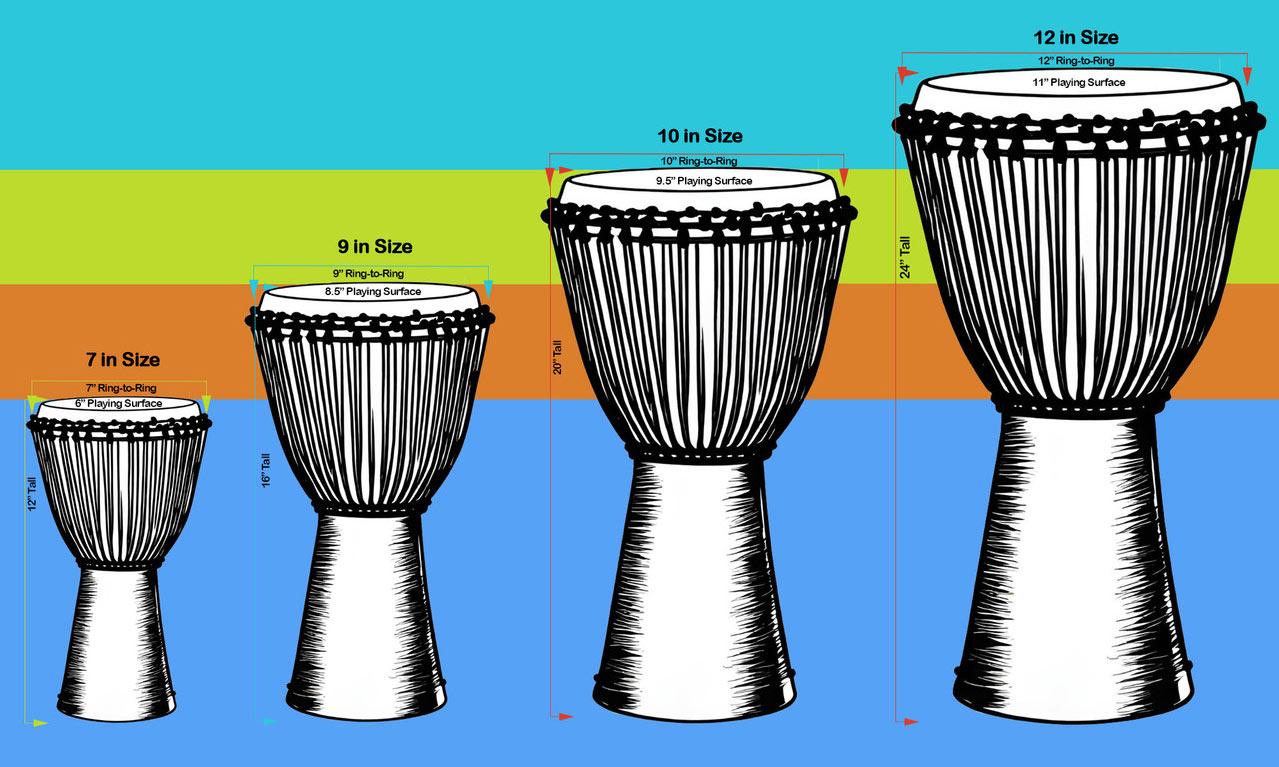
The djembe is a rope-tuned goblet drum from West Africa. It has a wide top, a narrow waist, and a flared base. The drum is usually played with bare hands while sitting or standing.

The djembe has strong links to Mandé communities in countries such as Guinea, Mali, Senegal, and Côte d’Ivoire. It has long been used for dance, celebration, communication, and community events. Today, people also play it in schools, drum circles, concerts, and world music groups.

The drum’s shape helps create its range of sounds:

• The wide head gives the drum its main playing surface.

• The narrow body helps shape the sound.

• The open base allows the sound to project outward.

A good djembe can produce a deep bass, a clear tone, and a sharp slap. These sounds work like the three main colors in a painter’s palette.
What Is a Djembe Drum?
Source: x8drums.com

How Do You Play the Djembe Drum?

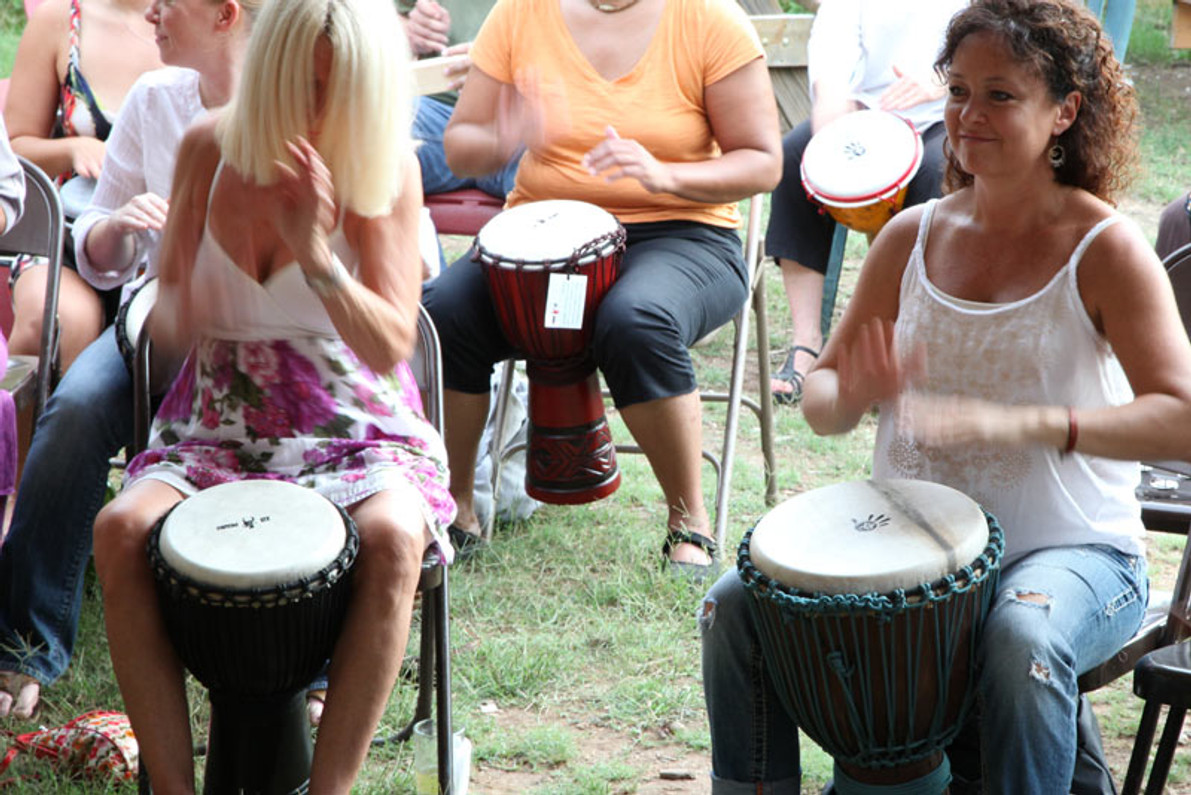
How do you play the djembe drum correctly? Start with a relaxed posture, place the drum securely, and learn the three basic hand sounds before trying complex rhythms.

Follow these steps:

  1. Sit near the front edge of a chair.

  2. Place the djembe between your knees.

  3. Tilt the drum slightly forward.

  4. Keep the bottom opening clear.

  5. Relax your shoulders and wrists.

  6. Use the center of the hand for bass notes.

  7. Use the fingers near the edge for tones and slaps.

  8. Practice slowly with a steady pulse.

Do not squeeze the drum between your legs. Your knees should support it without blocking the shell or bottom opening. If the drum feels unstable, adjust its angle or use a strap.

When learning how do you play the djembe drum, beginners often focus on speed. That is usually a mistake. A slow, even rhythm builds better timing than fast, tense playing.

How Do You Play the Djembe Drum?
Source: youtube.com

The Three Basic Djembe Sounds

Most beginner djembe lessons begin with three sounds: bass, tone, and slap. Each sound comes from a different contact point and hand shape.

Bass

The bass is a low, round sound. Play it in the center of the drumhead with the flat part of your relaxed hand.

Your palm should make contact with the head while your fingers stay together. Lift your hand quickly after the stroke. Do not leave it pressed against the head, or the sound may become dull.

Tone

The tone is a higher, clear sound. Strike near the outer area of the drumhead with your fingers together and your palm slightly lifted.

The fingers should land first. Your palm may touch the head lightly, but it should not press down for long. A good tone sounds open and bright.

Slap

The slap is the sharpest sound. It is played near the edge with a relaxed, slightly curved hand. The fingers create a quick snap against the head.

A slap should not come from force. It comes from timing, hand shape, and a fast rebound. Many new players hit too hard and tense their fingers. This can hurt the hands and produce a flat sound.

Practice each sound alone:

• Bass: center of the head.

• Tone: near the edge with fingers together.

• Slap: near the edge with a relaxed snap.

The Three Basic Djembe Sounds
Source: musicademy.com

Proper Hand Position and Technique

Hand position is central to understanding how do you play the djembe drum. Your hands should stay loose, much like a bird landing on a branch. A stiff hand cannot bounce well.

Keep these points in mind:

• Relax your shoulders.

• Keep your elbows slightly away from your body.

• Let your wrists remain flexible.

• Keep your fingers together for the tone.

• Let the hands rebound after each stroke.

• Use both hands evenly.

Your hands should not travel far from the head. Short movements save energy and improve control. Think of the drum as a spring. Your hand touches the surface, creates the sound, and comes back up.

Avoid striking with the fingertips alone. This can make the sound weak and may cause soreness. Also avoid hitting the drum with a locked wrist. The wrist should guide the motion while the fingers and palm create the tone.

A useful beginner exercise is to tap your thighs in the same shapes. Play a low tap in the middle of your thigh for the bass, then a lighter tap near the outer thigh for the tone. This helps you feel the difference before you play the drum.

Proper Hand Position and Technique
Source: youtube.com

How to Read Basic Djembe Rhythm Notation

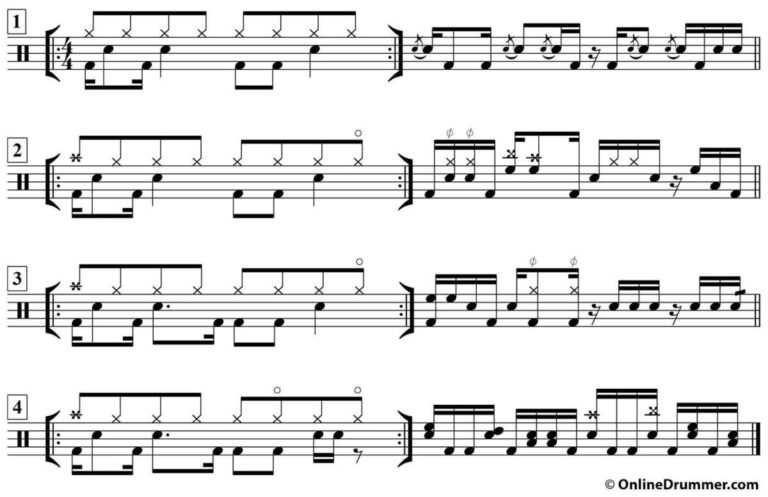
You do not need to read music to play the djembe. Still, simple rhythm symbols can help you practice and communicate with other players.

A basic notation system may use:

• B for bass.

• T for tone.

• S for slap.

• R for a right-hand stroke.

• L for a left-hand stroke.

For example:

1   2   3   4
B   T   B   T

Play one stroke on each count. Keep the count even. Then try:

1 & 2 & 3 & 4 &
B   T S   T B   T

The “&” means the space between the main beats. Use a metronome or a simple foot tap to keep your timing stable.

Do not worry if your first rhythm sounds plain. Simple patterns are useful because they teach control. Many strong players can make a basic rhythm sound musical through good tone, timing, and dynamics.
How to Read Basic Djembe Rhythm Notation
Source: x8drums.com

Beginner Djembe Exercises

Practice should be short, regular, and focused. Ten to fifteen minutes each day can help more than one long session each week.

Exercise 1: Single strokes

Play alternating hands:

R L R L R L R L

Start slowly. Make each stroke the same volume. Keep your hands close to the head.

Exercise 2: Bass and tone

Play:

B T B T

Use the right hand for bass and the left hand for tone. Then switch hands. This builds balance and control.

Exercise 3: Three-sound pattern

Try:

B T S T

Repeat the pattern without speeding up. Listen for a clear difference between the bass, tone, and slap.

Exercise 4: Call and response

Play a short phrase, then pause. Answer it with another phrase. For example:

B T S
pause
T B T

This mirrors the call-and-response style found in many African music traditions. It also develops musical conversation and memory.

Exercise 5: Add accents

Play eight even strokes, but make the first and fifth strokes slightly louder:

1 2 3 4 5 6 7 8
>       > 

An accent should sound stronger, not forced. Keep the other strokes relaxed.

Beginner Djembe Exercises
Source: youtube.com

A Simple Djembe Rhythm for Beginners

Here is a steady four-beat pattern:

Count: 1 & 2 & 3 & 4 &
Hand:  R L R L R L R L
Sound: B T B T B T B T

Once this feels comfortable, replace one tone with a slap:

Count: 1 & 2 & 3 & 4 &
Sound: B T S T B T S T

Keep your foot tapping on beats 1, 2, 3, and 4. Your foot is the anchor. Your hands add movement around it.

You can also try this slower pattern:

1   2   3   4
B   T   S   T

Repeat it for several minutes. Focus on even spacing. If the pattern falls apart, slow down rather than stopping.

A common lesson from hands-on drumming is that rhythm improves when you listen to the gaps between notes. Silence is part of the pattern. Do not fill every space just because you can.

A Simple Djembe Rhythm for Beginners
Source: kopfpercussion.com

How to Practice With a Metronome

A metronome helps you develop steady time. Set it between 60 and 80 beats per minute. Play one stroke per click at first.

Then try these stages:

  1. Play one bass on every click.

  2. Play alternating bass and tone.

  3. Play two strokes for each click.

  4. Add a slap while keeping the pulse steady.

  5. Practice the rhythm without the metronome.

The goal is not to follow the metronome forever. The goal is to build an internal pulse. You should eventually feel the beat in your body.

You can also practice with recordings of djembe ensembles. Listen before you play. Notice the main pulse, repeated patterns, breaks, and changes in volume.

Use reliable instruction when studying traditional rhythms. Names, patterns, and meanings can vary by region and teacher. A rhythm should not be treated as a simple sound effect without learning something about its cultural setting.

How to Practice With a Metronome
Source: youtube.com

Common Mistakes When Learning Djembe

Many beginners ask how do you play the djembe drum but overlook the habits that slow progress. Most problems come from tension, poor timing, or incorrect contact points.

Hitting too hard

Volume does not equal skill. A hard strike can damage your hands and make the sound harsh. Let the drum’s skin do the work.

Keeping the hand on the head

A hand that stays on the drumhead blocks vibration. Lift quickly after each note.

Using only one hand

Alternating hands improves speed and balance. Practice slowly with both hands from the beginning.

Playing too fast

Fast practice can hide mistakes. Choose a pace where every note sounds clear.

Sitting incorrectly

A cramped posture limits movement. Keep your back tall, your shoulders loose, and the drum tilted slightly forward.

Ignoring pain

Mild tiredness is normal. Sharp pain, swelling, numbness, or lasting soreness is a warning. Stop, rest, and review your technique. Seek medical care if symptoms continue.

One mistake I often see in early practice is chasing the slap before mastering the tone. Build a clean bass and tone first. The slap becomes easier when your hands already know how to rebound.

Common Mistakes When Learning Djembe
Source: co.nz

How Long Does It Take to Learn Djembe?

You can learn the three basic djembe sounds in one practice session. However, producing consistent tone and timing takes regular work.

A realistic path may look like this:

• First week: Learn posture, bass, tone, and basic hand alternation.

• First month: Play simple patterns with a steady pulse.

• Three months: Combine patterns, accents, pauses, and call-and-response phrases.

• Six months and beyond: Improve speed, musical expression, and ensemble skills.

Progress depends on practice time, instruction, the quality of the drum, and your previous music experience. Some people learn quickly by ear. Others benefit from written patterns or a teacher.

Do not compare your progress with a performer who has trained for years. Rhythm is a skill built through repetition. Each clear stroke is a small step forward.

Choosing and Caring for a Djembe

A beginner djembe should feel comfortable, stable, and responsive. The drum should not be so tall that your shoulders rise while playing.

Check these features:

• A firm drumhead with no major tears.

• Even rope tension.

• A shell without deep cracks.

• A bottom opening that is not blocked.

• A size that fits your body.

Synthetic heads often handle changes in weather better. Natural skin heads can offer a rich sound but may react to humidity and temperature.

Keep the drum away from extreme heat, direct sunlight, and damp storage areas. Do not leave it in a hot car. Temperature changes can affect the head and rope tension.

If the head becomes too loose, the sound may lose focus. If it becomes too tight, the drum can become difficult to play and may suffer damage. Learn tuning from an experienced teacher or instrument maker rather than making large changes at once.

Playing Djembe With Other People

Djembe music often becomes more exciting in a group. In an ensemble, each player may have a different role. One player holds a steady foundation, another adds a supporting pattern, and another leads breaks or signals.

Start by listening to the group. Do not try to be the loudest player. Match the pulse and leave room for other parts.

Good group habits include:

• Keep your pattern simple.

• Watch the lead drummer.

• Listen for changes.

• Stop when the group stops.

• Respect the rhythm’s structure.

• Avoid adding random hits during a break.

Call-and-response is also important. One drummer may play a phrase, and the group answers. This creates a musical conversation rather than a wall of sound.

If you join a drum circle, ask about the group’s customs. Some circles welcome free playing, while others follow specific rhythms and leadership rules. Courtesy helps everyone enjoy the experience.

Cultural Respect and Responsible Learning

The djembe is more than a product or a method of making noise. It is part of living musical traditions with deep cultural meaning.

Learn the history of the rhythms you play. Give credit to teachers and traditions. Avoid claiming ownership of a rhythm simply because you learned a version of it.

When possible, study with a qualified teacher who has direct knowledge of West African drumming. A teacher can correct hand position, explain rhythm structure, and provide cultural context that a short video may miss.

It is also useful to remember that “African drumming” is not one single style. Musical practices differ across regions, languages, communities, and generations. Treat broad labels with care.

This approach makes learning richer. You are not only learning where to place your hands. You are learning how rhythm connects people, movement, memory, and community.

Benefits and Limits of Playing Djembe

Playing the djembe can support rhythm skills, coordination, focus, and social connection. Group drumming may also help people feel engaged and connected, though results vary by person and setting.

Potential benefits include:

• Better hand coordination.

• Stronger sense of pulse.

• Improved listening skills.

• A creative way to manage daily stress.

• Enjoyment through group music.

• Greater awareness of musical dynamics.

Drumming is not a replacement for medical care or mental health treatment. Claims about healing should be viewed carefully. The strongest benefit for most beginners is practical and personal: regular music practice can be enjoyable, active, and socially rewarding.

Use hearing protection when playing in a loud group for long periods. Protect your hands with good technique, breaks, and gradual practice.

Frequently Asked Questions About How Do You Play the Djembe Drum

How do you play the djembe drum for the first time?

Sit comfortably, place the drum between your knees, and tilt it slightly forward. Learn the bass, tone, and slap one at a time before combining them in a simple rhythm.

Can you play a djembe with bare hands?

Yes, the djembe is traditionally played with bare hands. Keep your hands relaxed and use the correct contact points to avoid pain and produce clear sounds.

What are the three main djembe sounds?

The three main sounds are bass, tone, and slap. Bass comes from the center, while tone and slap come from the outer area of the drumhead with different hand shapes.

Is the djembe hard to learn?

The first sounds are easy to understand, but clean timing and strong technique take practice. Short daily sessions can help you improve faster than occasional long sessions.

Should beginners use a metronome?

A metronome is useful for building steady timing. Start at a slow speed and increase it only when every stroke remains clear and relaxed.

Can children learn to play the djembe?

Yes, many children can learn basic djembe technique with a properly sized drum and patient guidance. Sessions should be short, supervised, and free from painful hand strain.

How do you play the djembe drum without hurting your hands?

Use relaxed wrists, let each stroke rebound, and avoid hitting with excessive force. Stop if you feel sharp pain, numbness, or swelling, and check your technique with a qualified teacher.

Conclusion

Learning how do you play the djembe drum begins with three sounds, good posture, relaxed hands, and steady time. Start slowly, practice simple patterns, listen to the spaces between notes, and build your skill through regular sessions.

A clear bass, tone, and slap matter more than speed. Respect the djembe’s West African roots, learn from trusted teachers, and play with others when you are ready. Pick up a drum today, practice for ten minutes, and share your progress or favorite rhythm in the comments.

Similar Posts

Leave a Reply

Your email address will not be published. Required fields are marked *