How To Mute Unwanted String Noise While Playing Guitar: Fix
Use palm muting, fretting-hand damping, and precise picking to eliminate unwanted string noise quickly.
I’ve spent years teaching guitar and recording in studio sessions where clean tracks mattered. This guide explains how to mute unwanted string noise while playing guitar with clear, practical steps you can use tonight. I’ll share proven techniques, setup tips, simple exercises, and real-world advice so you sound tighter, cleaner, and more professional.
Why string noise happens
String noise is any unwanted rattle, buzz, or squeak from open or unused strings when you move or change chords. It comes from excess string vibration, sympathetic resonance, poor damping, or sloppy hand movement. Metal strings ring easily. A light touch in the wrong place can create clicks and squeals that show up in practice and recordings.
Understanding how to mute unwanted string noise while playing guitar starts with recognizing the common causes. Low action, worn frets, loose hardware, high gain, and sloppy chord shifts all add noise. Fixing the noise often means combining technique work with small gear or setup changes.

Core muting techniques
These are the main hands-on skills to stop noise. Practice each slowly, then bring them into songs.
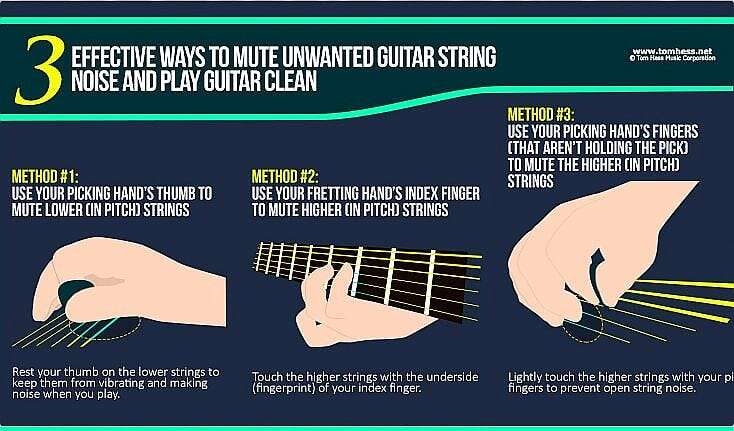
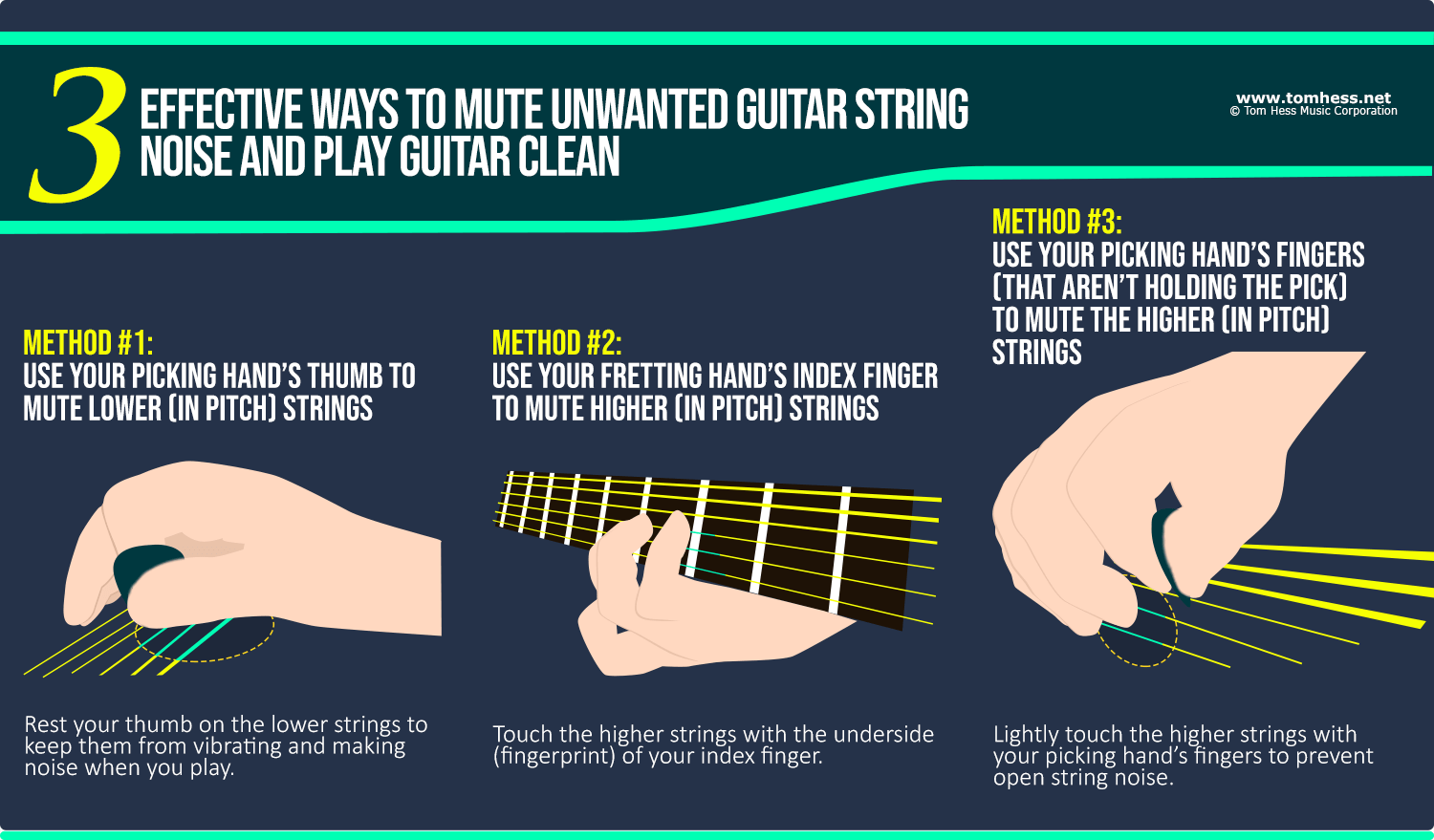
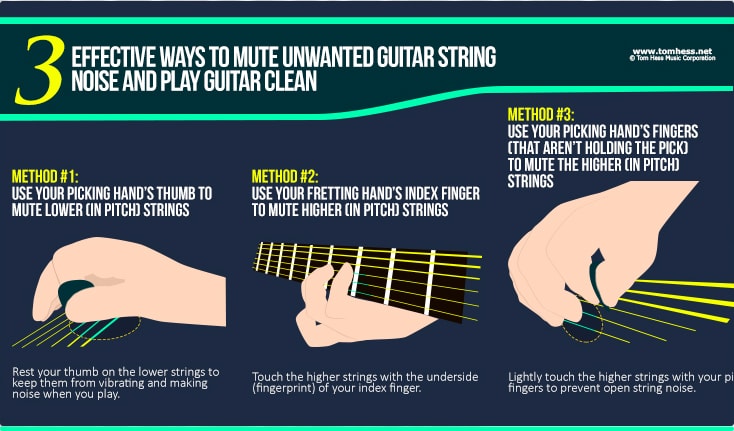
- Fretting-hand damping: Rest unused fingers lightly on strings you want silent. Keep the touch firm enough to kill vibration, but light enough not to fret.
- Palm muting with the picking hand: Rest the fleshy edge of your palm near the bridge to mute open strings while keeping tone for the active string.
- Floating thumb technique: Use your fretting-hand thumb to mute the low strings during chord changes or single-note runs.
- Thumb-over muting: Wrap your thumb over the low E to mute it when you need it quiet while still fretting other notes.
- Index-finger ghosting: Let the index finger lay across several strings (lightly) to deaden them during runs or arpeggios.
- Right-hand rest strokes: Anchor the side of your picking hand on the pickup ring or bridge saddle to control string motion and reduce sympathetic buzz.
How to mute unwanted string noise while playing guitar depends most on coordinated hands. Try combining light damping from one hand with targeted palm muting from the other.

How to apply these techniques in common situations
- Chord changes: Damp unused strings with fretting fingers, and use a quick palm rest on the bridge as you shift.
- Single-note lines: Use the fretting-hand index or thumb to mute adjacent strings while you play.
- Slides and hammer-ons: Pre-dampen the target string before releasing to avoid ringing from neighboring strings.

Practice drills to build noise-free playing
Build habits with short, focused drills. Use a metronome and stay patient.
- Slow chord changes:
- Pick a simple two-chord progression.
- Play one strum per beat, focusing on muting unused strings with fretting fingers.
- Increase tempo only when clean at slower speeds.
- String isolation:
- Play a single open string while intentionally touching all other strings to deaden them.
- Alternate which hand mutes the strings.
- Run-and-mute exercise:
- Play a 4-note scale fragment.
- After each fragment, rest the fretting hand to kill ringing for one beat.
- Recording check:
- Record a short loop and listen for low-level noises.
- Adjust muting and repeat until noise is gone.
Practicing these drills teaches your hands how to automatically mute. That’s the core of how to mute unwanted string noise while playing guitar.
Tools, accessories, and pedals that help
Sometimes technique needs backup. These tools can significantly reduce noise.
- Fretwraps and string dampeners: Soft wraps sit near the nut or over the strings to stop sympathetic resonance in studio or live runs.
- Foam strips or cloth at the bridge: Cheap and effective for recording to silence open-string ring.
- Noise gates and pedals: Use a noise gate after your amp or in the effects chain to cut low-level hum and string buzz between notes.
- Compression with careful settings: Compression can raise unwanted noise; tweak attack and threshold to avoid amplifying string noise.
- Mute devices for lap or 12-string guitars: Designed to silence extra strings quickly.
While these gear options help, they are best used after honing how to mute unwanted string noise while playing guitar with your hands. Relying only on gear often sounds unnatural.

Guitar setup and maintenance to reduce string noise
A proper setup cuts noise at the source. Check these items regularly.
- Action and fret condition: Too-low action causes buzzing. Level frets and correct action reduce unwanted contact noise.
- Nut slots: Overcut slots let strings buzz at the nut. Properly cut slots keep strings steady.
- String gauge: Heavier strings vibrate less uncontrollably but need more finger strength. Choose a gauge that balances tone and control.
- Intonation and bridge height: A stable bridge setup avoids transient buzzes when changing dynamics.
- Pickup height and electronics: Hot pickups amplify incidental noise. Lower pickups slightly or adjust tone to tame squeaks.
Fixes from a skilled tech or luthier can remove problems that practice cannot. That’s especially true when the source is hardware, not technique. Proper setup makes it easier to learn how to mute unwanted string noise while playing guitar.

Common mistakes and troubleshooting
These errors are easy to make and simple to fix.
- Over-muting: Press too hard and kill the tone. Aim for just enough pressure to stop vibration.
- Relying only on equipment: Using a noise gate to mask poor muting techniques will limit dynamics and feel.
- Ignoring posture: Tension in shoulders causes sloppy shifts that increase noise. Relax and breathe.
- Not checking open-string contact: Loose strings or faulty saddles create random buzz. Inspect the hardware.
- Rushing practice: Speed before control guarantees noise. Slow practice keeps parts clean.
If noise persists after technique and setup checks, isolate the source by recording each hand separately. That helps pinpoint whether the fretboard, bridge, or gear causes the problem.

Personal tips and real-world examples
I remember a session where a simple E9 chord kept ringing on a radio spot. Technique and a small foam mute solved it in minutes. Here’s what I learned and now teach.
- Start each practice session with 10 minutes of muting drills. Your brain adopts the habit.
- When recording, damp strings you’re not using with a soft cloth near the nut. It’s cheap and effective.
- When playing live, use a thin fretwrap during complex runs to prevent sympathetic ring.
- If you play high-gain styles, pair disciplined right-hand muting with a noise gate set to a natural release.
Those small steps made my live mixes clearer and cut editing time in studio work. If you want to know how to mute unwanted string noise while playing guitar in a real performance, combine the right technique with a simple mute device and you’ll be amazed at the difference.

Quick questions (PAA-style)
How do I stop string noise when switching chords?
Slow the motion and use fretting-hand damping. Lift and place fingers with a light ghost-touch on strings you want silent.
Will heavier strings reduce unwanted string noise?
Heavier strings can help by reducing excessive vibration, but they require stronger fretting technique and may change tone.
Can I use a noise gate to fix string noise?
A noise gate helps, but it’s best used after improving muting technique; otherwise it can cut sustain and natural decay.
Frequently Asked Questions of how to mute unwanted string noise while playing guitar
What is the quickest way to mute unwanted string noise while playing guitar?
Use fretting-hand damping and palm muting together. Rest an unused finger on the string and let your palm lightly touch near the bridge to stop ringing.
How do I mute open strings when playing leads?
Use a fretwrap or rest your picking-hand palm near the bridge to damp open strings while fretting notes with the other hand.
Does guitar setup really affect string noise?
Yes. Low action, worn frets, or poorly cut nut slots create buzz. A proper setup reduces mechanical noise and makes muting easier.
Can I mute string noise without changing my technique?
You can use accessories like fretwraps or noise gates, but technique improvements give the cleanest and most musical results.
How long does it take to learn clean muting?
With focused daily drills, you can see noticeable improvement in a few weeks. Consistent practice makes the technique automatic.
Conclusion
Clean sound comes from both your hands and your gear. Practice fretting-hand damping, palm muting, and targeted exercises while keeping your guitar well set up. Small tools like fretwraps and noise gates help, but solid technique always wins. Start one simple muting drill today and keep improving. Try the drills, tweak your setup, and share what worked for you in the comments or subscribe for more tips on playing cleaner, tighter guitar.

Senior Music Reviewer
Alex Carter is a seasoned music reviewer with over a decade of experience in the world of sound and instruments. Passionate about helping musicians and enthusiasts make informed choices, he brings sharp insights and in-depth knowledge to every review. From classical instruments to modern gear, Alex combines technical expertise with a love for music to deliver content that resonates with readers.
As a Senior Music Reviewer and expert author on Tuneluma.com, Alex is dedicated to sharing honest evaluations, practical advice, and thoughtful commentary to guide readers in their musical journey.