
When Was The Acoustic Guitar Invented: A Brief History
The acoustic guitar was not invented on one date; its modern form emerged over many centuries.
The question “when was the acoustic guitar invented” has a layered answer. Its early roots reach back to ancient plucked instruments, while the modern guitar took shape in Spain during the 15th and 16th centuries. Steel strings, larger bodies, and American designs later created the acoustic guitar most players recognize today.
When Was the Acoustic Guitar Invented?
The acoustic guitar was not created in a single year. Instead, it developed through a long chain of musical inventions, from ancient stringed instruments to the Spanish guitar and, later, the steel-string guitar.
If you ask when was the acoustic guitar invented in its modern form, the best answer is the 19th century. By that time, builders had created guitars with familiar features such as:
• A hollow wooden body
• A flat soundboard
• A fretted neck
• Six strings
• A central sound hole
• Acoustic projection without electronic amplification
However, the instrument’s basic design was already developing in Spain several centuries earlier. This is why historians often separate the history of the guitar from the history of the modern acoustic guitar.

The Ancient Roots of the Guitar
To understand when was the acoustic guitar invented, it helps to look far beyond modern music stores. Ancient civilizations used stringed instruments with a resonating body and a neck. These instruments were not guitars, but they introduced ideas that later guitar makers would refine.
Archaeological evidence shows that people in Mesopotamia, Egypt, Greece, and Rome played several types of plucked instruments. Some had long necks. Others had rounded bodies. Many were played with a pick or with the fingers.
Important early relatives include:
• The tanbur, a long-necked instrument from the ancient Middle East
• The oud, a short-necked lute with a rounded body
• The kithara, an ancient Greek lyre
• The Roman and medieval lute
• The guitarra latina, an early European guitar-like instrument
These instruments shared one important principle: a vibrating string transfers energy to a hollow body, which boosts the sound. Think of the body as a small wooden room that helps a quiet string speak more clearly.
Still, none of these instruments was the acoustic guitar as we know it. Their shapes, tuning systems, string materials, and playing styles were different.

The Development of the Spanish Guitar
The direct history of the modern guitar becomes clearer in Spain during the Renaissance. Between the 15th and 16th centuries, Spanish makers developed instruments called vihuelas and early guitars.
The vihuela looked similar to a guitar but often had a more complex string arrangement. It became popular among Spanish musicians and helped shape the body style, tuning, and playing methods of later guitars.
Early guitars usually had four or five courses of strings. A course could contain two strings tuned together or closely together. This design produced a fuller sound than a single string.
By the late 18th century, the guitar began moving toward its current form. Makers started using six individual strings instead of paired courses. The body also became larger, and the waist became more defined.
This period is central to the answer to when was the acoustic guitar invented. The instrument was no longer simply a distant relative of the lute. It was becoming a recognizable guitar.

When Did the Six-String Guitar Appear?
The six-string guitar became common during the late 18th and early 19th centuries. This change made the instrument easier to tune, easier to manufacture, and more practical for chord-based playing.
The standard tuning used today is:
• E for the sixth string
• A for the fifth string
• D for the fourth string
• G for the third string
• B for the second string
• E for the first string
The lower strings provide bass notes, while the higher strings carry melodies and chord tones. This wide range helped the guitar work as both a solo and an accompanying instrument.
Spanish builder Antonio de Torres Jurado played a major role in the modern classical guitar’s development during the 19th century. His larger body designs, improved bracing, and broader soundboards influenced guitar construction for generations.
So, when was the acoustic guitar invented as a six-string instrument? The most accurate answer is that it emerged gradually between the late 1700s and the 1800s.

How the Modern Acoustic Guitar Took Shape
The acoustic guitar changed quickly during the 19th century. Builders experimented with body size, internal bracing, bridge design, neck shape, and string materials.
Classical guitars used gut strings for much of this period. Gut strings produced a warm and gentle tone, but they had limited tension and volume.
Steel strings became increasingly important in the United States during the 19th century. Steel created more tension, which allowed guitars to produce a louder and brighter sound. It also required stronger construction.
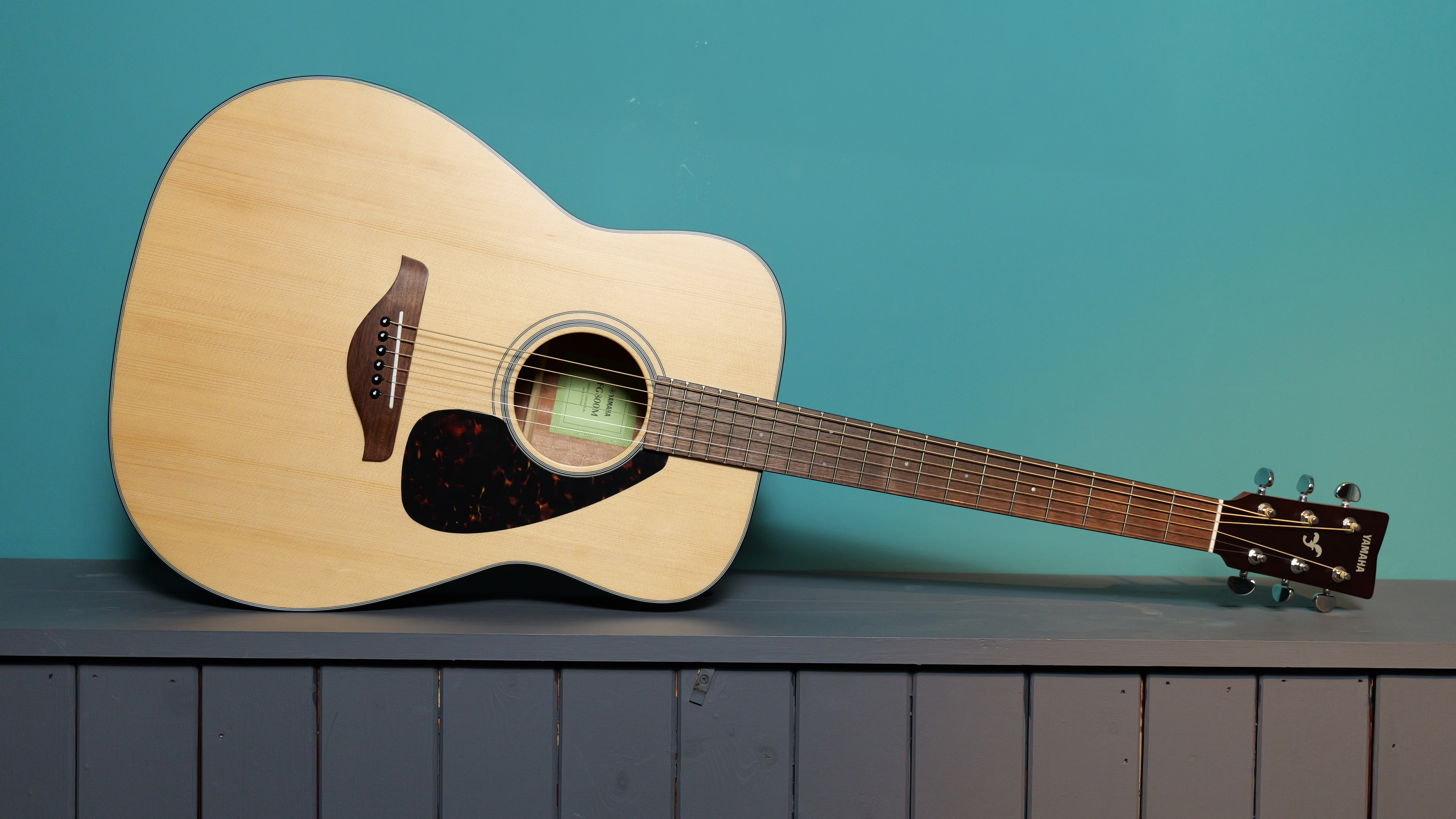
American builders enlarged the guitar body to increase volume. The dreadnought shape, which became especially popular in the 20th century, produced strong bass and powerful projection.
This development explains why people may give different answers to when was the acoustic guitar invented. A classical guitar, a steel-string guitar, and a modern folk guitar have related histories but are not identical instruments.
Was the Acoustic Guitar Invented Before the Electric Guitar?
Yes. The acoustic guitar existed long before the electric guitar.
Electric guitars appeared in the early 20th century, especially during the 1930s. Musicians and manufacturers wanted more volume for large bands, dance halls, and jazz groups. Early electric instruments used pickups to convert string vibration into an electrical signal.
The word “acoustic” became more useful as a way to distinguish traditional hollow-body instruments from electric guitars. In that sense, the acoustic guitar was not originally called an acoustic guitar. It was simply called a guitar.
This detail adds context to when was the acoustic guitar invented. The instrument itself is old, but the term “acoustic guitar” became common after electric amplification changed the guitar world.

Who Invented the Acoustic Guitar?
No single person invented the acoustic guitar. Its design came from many cultures, musicians, and instrument builders over thousands of years.
Several figures had a major influence on its development:
• Ancient instrument makers created early plucked string instruments
• Spanish builders developed the Renaissance guitar and vihuela
• 18th-century European makers moved toward six-string designs
• Antonio de Torres improved the classical guitar body and bracing
• American builders developed louder steel-string guitars
• Companies such as Martin helped standardize popular steel-string designs
It is tempting to name one inventor, but that would oversimplify the evidence. Musical instruments usually evolve like languages. Many people add small changes until a familiar form appears.
When was the acoustic guitar invented? It is more accurate to discuss stages of development than to credit one inventor.

The Role of C. F. Martin and Steel-String Guitars
Christian Frederick Martin, who founded the C. F. Martin company in the United States in 1833, helped shape the steel-string acoustic guitar. His company introduced important construction ideas, including stronger internal bracing and body designs suited to steel strings.
Steel strings place much more tension on a guitar than gut or nylon strings. Without proper bracing, the top can bend, the bridge can lift, or the neck can become damaged.
The X-bracing system associated with Martin guitars helped support the soundboard while allowing it to vibrate. This balance between strength and movement is one reason steel-string guitars can sound both loud and rich.
Martin was not the only important builder, but his work had a lasting effect. His designs influenced folk, country, blues, bluegrass, and popular music.
For many modern listeners, the answer to when was the acoustic guitar invented points to this 19th-century steel-string era.
How the Acoustic Guitar Works
An acoustic guitar creates sound through vibration. When a player plucks or strums a string, the string moves back and forth. That movement travels through the bridge to the soundboard.
The soundboard then vibrates the air inside and around the guitar. The hollow body strengthens and shapes the tone. The sound hole helps project the sound toward the listener.
Each part has a job:
• Strings create the initial vibration
• The bridge transfers vibration to the top
• The soundboard produces most of the audible movement
• The body adds volume and tone color
• The neck and frets control pitch
• Bracing supports the top without stopping its movement
This simple system is why the acoustic guitar needs no amplifier. It is also why small changes in wood, body shape, string type, and construction can create major tonal differences.
Understanding this design makes the history of when was the acoustic guitar invented easier to follow. Each historical improvement aimed to create better tone, greater volume, or improved playability.
Classical, Steel-String, and Acoustic-Electric Guitars
The phrase “acoustic guitar” covers several related types of instruments.
Classical guitar
Classical guitars usually have nylon strings, wider necks, and a softer tone. They are common in classical music, flamenco, folk traditions, and beginner instruction.
Steel-string acoustic guitar
Steel-string guitars have narrower necks and brighter, louder tones. They are widely used in country, rock, blues, bluegrass, pop, and singer-songwriter music.