
Best Taylor Guitar For The Money: Top Value Picks
For most players, the Taylor 114ce offers the best balance of price, tone, comfort, and long-term value.
You may want a guitar that feels easy to play, sounds rich, and still fits a real budget. That search can get confusing because Taylor makes compact travel guitars, full-size acoustic-electric models, and premium wood versions. I tested the key differences that matter most, including neck feel, body size, unplugged tone, electronics, build quality, and daily comfort. This guide will help you find the best Taylor guitar for the money without paying for features you may never use.
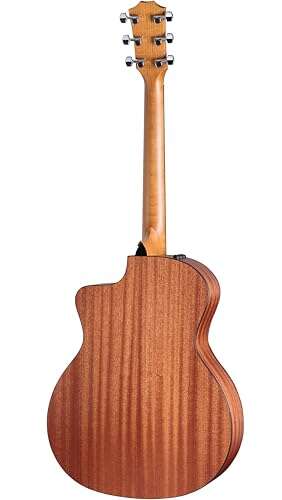
Taylor 114ce Grand Auditorium

The Taylor 114ce is the guitar I would place at the top of this list for many buyers. Its Grand Auditorium body gives it a useful middle ground between a small, comfortable guitar and a large, powerful dreadnought. The shape feels balanced when I play while seated, yet it still moves enough air for singing and light flatpicking. Its natural finish also gives it the clean, familiar Taylor look.
This acoustic–electric guitar makes sense for a beginner who wants room to grow, a songwriter who needs one dependable instrument, or a stage player who wants a simple setup. The onboard electronics make it easy to connect to an amplifier or PA, while the cutaway helps with upper-fret access. I also like the slim Taylor neck because it feels friendly to newer players without seeming weak to experienced hands. For many shoppers, these practical traits make the 114ce the best Taylor guitar for the money.
Pros:
- Balanced Grand Auditorium body suits many playing styles
- Comfortable neck feels approachable for beginners
- Acoustic-electric design works well for live use
- Cutaway improves access to higher frets
- Clear tone supports vocals, strumming, and fingerstyle
- Strong all-around value for a first serious guitar
Cons:
- Layered wood construction may not sound as complex as a solid-wood model
- Players seeking a deep dreadnought bass may want a larger body
- A gig bag or case may add to the total cost
In use, the 114ce has the sort of even response that saves time. Chords do not become muddy when I strum with a pick, and lighter fingerstyle work remains clear. That makes it forgiving when I am learning a new song or changing between styles. It does not force me to play one way.
Taylor’s design focus also shows in the playability. The neck feels smooth, the fret layout is easy to reach, and the body does not feel overly bulky. I would still inspect the setup after shipping because action can change with climate. A quick professional adjustment can make an already comfortable instrument feel much better.
Taylor 214ce Grand Auditorium

The Taylor 214ce is a step up for players who want more visual detail and a little more refinement than an entry-level model. It keeps the popular Grand Auditorium shape, so it remains comfortable for long sessions. The body produces a broad voice that works well for open chords, steady strumming, and gentle fingerpicking. I find this shape especially useful for singer-songwriters who need one guitar for home, rehearsal, and small shows.
The 214ce also includes stage-friendly features, such as a cutaway and onboard electronics. That combination removes much of the trouble from live playing because I can plug in without adding a separate pickup system. Its tone has enough sparkle for modern pop and enough body for folk or country work. If your budget reaches beyond the 114ce, the 214ce can be a rewarding long-term choice and a strong contender for the best Taylor guitar for the money.
Pros:
- Versatile body shape fits many music styles
- Comfortable for seated and standing performance
- Built-in electronics simplify amplified playing
- Cutaway supports lead lines above the body joint
- Polished appearance feels suitable for stage use
- Offers a clear upgrade path from beginner instruments
Cons:
- Costs more than the 114ce without changing the basic body shape
- Layered construction may not satisfy players wanting an all-solid guitar
- Bright projection may not suit players who prefer a dark, woody sound
I would recommend the 214ce to someone who already knows that guitar will become a regular part of life. It has the comfort of a familiar tool but feels more polished in the hands. The response is quick, so chord changes sound clean even when I play softly. That quick response can also encourage beginners because the guitar does not demand a heavy attack.
For recording, the 214ce offers a practical voice that sits well beside vocals. In a live mix, its balanced output can be easier to manage than an overly bass-heavy guitar. The exact amplified sound will depend on the amp, PA, strings, and setup, so I would not expect the same tone in every room. Still, the overall package is dependable and flexible.
Taylor BT2 Mahogany Top

The Taylor BT2 is a compact Baby Taylor with a mahogany top. Its smaller body makes it easy to hold, carry, and store, which matters when a full-size guitar feels too large. I see it as a useful practice guitar, travel companion, and starter instrument for younger players. The shorter scale can also make the strings feel less demanding for small hands.
Do not mistake its compact size for a toy. The mahogany top gives the BT2 a warm, focused sound that works well for basic chords and simple melodies. It will not produce the low-end power of a full-size Grand Auditorium, but that is not its job. For players who value portability above maximum volume, this may be the best Taylor guitar for the money.
Pros:
- Compact body travels easily
- Mahogany top gives the tone warmth and focus
- Comfortable choice for children and smaller adults
- Shorter scale can feel easier during early practice
- Useful for songwriting away from home
- Fits well in small rooms, offices, and campers
Cons:
- Lower volume than a full-size Taylor guitar
- Not an acoustic-electric model for direct stage connection
- Small body may feel cramped to large-handed players
The BT2 shines when convenience matters. I can leave it near a desk, pick it up for ten minutes, and put it away without a major setup. That low barrier makes regular practice easier. A guitar that gets played often can be more valuable than a larger instrument that stays in its case.
The mahogany sound also has a pleasant, dry character. It emphasizes the heart of each note instead of creating a wide wash of overtones. That can help new players hear chord changes clearly. I would choose it for travel, casual practice, and smaller players, but not as my only guitar for loud group work.
Taylor Swift Easy Guitar Songbook

This Taylor Swift songbook is not a guitar, but it can make a new Taylor guitar much more useful. It presents easy arrangements with chords, lyrics, and basic tab for players who want to learn familiar songs. That approach helps remove the blank-page problem many beginners face. Instead of wondering what to practice, I can open the book and start with a song I already enjoy.
The collection suits acoustic players who like pop and country material. Simple songs can build useful skills, such as chord changes, steady rhythm, and singing while playing. The book is best for beginners who understand basic chord diagrams or who have a teacher nearby for support. Paired with a comfortable guitar such as the 114ce, it can improve practice value and help justify the purchase of the best Taylor guitar for the money.
Pros:
- Uses familiar songs to keep practice engaging
- Includes chords, lyrics, and basic tab
- Approachable for newer guitar players
- Supports pop and country playing styles
- Useful for solo practice and casual sing-alongs
- Works with acoustic or electric guitar
Cons:
- It is a songbook, not a replacement for structured lessons
- Easy arrangements may feel too simple for advanced players
- Song preferences will vary from player to player
I like learning tools that create momentum. A beginner may practice scales for a few days, then lose interest. A favorite song gives that same player a clear reason to pick up the guitar. Even five minutes spent on a real song can build more confidence than an hour of unfocused practice.
This book also makes a thoughtful add-on gift. It does not require extra hardware, batteries, or special software. I would use it beside a chord chart and a metronome, then slowly increase speed. Players should check the arrangement level before buying because “easy” still requires basic timing and clean chord shapes.
James Taylor Easy TAB Guitar Songbook

The James Taylor songbook is another useful companion for an acoustic guitar, especially for players who enjoy warm singer-songwriter music. It uses easy TAB, which can show the player more than a simple chord sheet. I find that helpful when a song depends on a particular picking pattern or bass movement. The book can turn a basic practice session into a study of rhythm, melody, and accompaniment.
This collection pairs naturally with the rounded voice of a Taylor acoustic. A 214ce or 114ce can handle the chord work, while the TAB helps the player explore more detail. Beginners should expect to move slowly because fingerstyle patterns can feel awkward at first. With patience, the book may help a player build control and musical feel without making the learning process seem like a technical exam.
Pros:
- Easy TAB supports melody and picking practice
- Good match for acoustic singer-songwriter players
- Helps develop bass movement and rhythm control
- Useful beyond basic chord practice
- Can support solo guitar arrangements
- Works well with full-size Taylor acoustics
Cons:
- Some players may find TAB slower to learn than chord sheets
- Advanced players may want more difficult arrangements
- It does not replace feedback from a skilled teacher
What I value most here is the bridge between simple strumming and more musical playing. Many beginners learn chords but never learn how to make a part sound personal. TAB can show a small hook, walk, or picking idea that adds life to a song. That makes the practice feel closer to playing music and less like repeating shapes.
I would buy this book for a player who enjoys classic acoustic songs and wants to improve finger control. It is not a must-have accessory for every Taylor owner. However, it can add lasting value to a guitar purchase because it gives the instrument a clear job. A good guitar and good songs often keep each other in use.
MusicNomad Taylor Truss Rod Wrench

The MusicNomad MN231 is a maintenance tool made for Taylor guitars. It is not a sound upgrade, and it should not be confused with a setup performed by a qualified repair tech. Its purpose is simple: provide the correct 1/4-inch wrench for compatible Taylor truss rod adjustments. Having the right tool can prevent the poor fit and slipping that may happen with a random wrench.
Neck relief can change as temperature and humidity change. A small adjustment may sometimes help correct an uncomfortable setup, but I would only make one after learning the proper method. Turn the rod in tiny steps, measure the result, and stop if anything feels wrong. For new owners, this tool is most valuable as part of a careful maintenance kit, not as a reason to adjust a guitar without guidance.
Pros:
- Made for compatible Taylor guitar truss rod access
- Correct size reduces the risk of a poor tool fit
- Compact enough for a guitar-care drawer or case
- Useful for owners who perform basic maintenance
- Can save a service trip for a simple adjustment
- Works well beside a tuner and string-care kit
Cons:
- Not suitable for every guitar brand or every Taylor model
- Incorrect use can damage the neck or truss rod
- Does not replace a professional setup
I recommend checking the exact guitar model before ordering. Taylor has used different designs across its product range, and a tool should never be forced into an access point. I also suggest taking a photo of the original setup and reading the manufacturer’s care guidance. That small habit makes it easier to reverse a change if the result feels worse.
For most beginners, a local tech remains the safer choice when the action feels high or the neck looks unusual. Experienced players may appreciate keeping this wrench nearby for small, measured corrections. In that role, it is a low-cost tool that protects the value and playability of a guitar such as the 114ce or GS Mini.
Taylor GS Mini Mahogany

The Taylor GS Mini Mahogany is one of the most appealing compact acoustic guitars I have played. It uses a smaller body, but its shape retains enough depth to sound like a real guitar rather than a thin travel instrument. The mahogany top adds a warm, direct tone with strong midrange focus. This makes it a good fit for relaxed strumming, songwriting, and practice in rooms where a large guitar feels excessive.
The GS Mini also has a slightly longer feel than the Baby Taylor, so it can serve adults more comfortably. It remains easy to carry, yet it has more presence than the BT2. I would choose it for a player who wants portability but does not want to give up too much volume or low-end weight. For many users, it is the best Taylor guitar for the money when comfort and size matter equally.
Pros:
- Compact design remains comfortable for adult players
- Mahogany top creates a warm, focused voice
- More projection than many small travel guitars
- Excellent for songwriting and couch practice
- Easy to take on trips, lessons, and rehearsals
- Feels more substantial than a very short-scale guitar
Cons:
- Usually costs more than the Baby Taylor
- Not as loud or deep as a full-size Grand Auditorium
- This version may not include onboard electronics
The GS Mini is the guitar I would leave beside a sofa or desk. Its size removes the small excuse that stops many people from practicing. I can pick it up for a quick chord workout, then keep playing when an idea appears. That instant access is a real feature, even though it does not appear on a specification sheet.
Its mahogany voice also records well for simple demos. It does not overwhelm a vocal, and its midrange can help a melody stay clear. Players who use aggressive flatpicking may want more body and headroom from a full-size model. For travel, home use, and relaxed acoustic work, the GS Mini Mahogany is hard to dismiss.
Taylor 24ce Grand Auditorium

The Taylor 24ce Grand Auditorium is aimed at players who want a modern acoustic-electric guitar with a comfortable, versatile body. The Grand Auditorium shape remains the key attraction because it balances projection and ease of use. The cutaway adds access for higher notes, while the electric system helps the guitar move from bedroom practice to a plugged-in performance. I see it as a practical choice for an active player who wants one instrument for several jobs.
The 24ce name places it within Taylor’s newer numbered range, so buyers should confirm the current specification, finish, included accessories, and electronics before ordering. Product details can vary by release and seller. What stays appealing is the core concept: a stage-ready, full-size guitar with an approachable feel. If the price is close to other models, compare the wood package and included case before deciding whether it is the best Taylor guitar for the money.
Pros:
- Grand Auditorium body supports broad musical use
- Cutaway helps with upper-fret playing
- Acoustic-electric setup suits rehearsals and gigs
- Comfortable option for songwriters and performers
- Modern styling works well on stage
- Useful bridge between casual and serious playing
Cons:
- Exact features should be checked by model year and seller
- May cost more than established entry-level Taylor models
- Players seeking a traditional dreadnought sound may prefer another body
I would pay close attention to the listing details with this model. A guitar’s value depends on more than its name. Check the scale, pickup system, wood type, finish, and case or bag. That quick review can prevent disappointment and makes price comparisons fair.
When the specifications match your needs, the 24ce can be an excellent workhorse. It offers the reach and control needed for more advanced playing without turning into a large, difficult instrument. The Grand Auditorium design also makes it friendly for singing while playing. I consider it a good option for a performer who wants current features and a clean, flexible voice.
Taylor GS Mini Sapele

The Taylor GS Mini Sapele shares the compact GS Mini format but uses sapele for its top and body package. Sapele often gives a balanced tone with clear mids and a controlled treble response. I like that sound for strumming because it remains present without becoming harsh. The smaller body also makes this model easy to carry from a lesson to a friend’s house.
This version is a strong choice for players who want the GS Mini feel but prefer a slightly different wood character from mahogany. It is also a sensible first serious guitar for a teen or adult beginner. The shorter body reduces fatigue, while the scale still feels more natural than a very small child-size instrument. If you want compact value and do not need built-in electronics, the GS Mini Sapele deserves attention.
Pros:
- Compact body encourages frequent practice
- Sapele construction offers a clear, balanced sound
- Comfortable for travel and home playing
- Suitable for beginners and experienced players
- Easy to store in small spaces
- Good choice for rhythm playing and songwriting
Cons:
- Smaller body gives less bass than a full-size guitar
- May not include electronics for direct amplification
- Players who prefer a very warm sound may favor mahogany
The difference between the GS Mini Sapele and the mahogany version is not simply a matter of “better” or “worse.” It is about taste and use. Sapele can sound a bit more open and balanced, while mahogany often feels more concentrated and woody. I suggest choosing the model that fits your playing voice rather than chasing a material label.
As a daily guitar, the Sapele model makes a strong case. It is light enough to keep nearby and sturdy enough for regular use. I would use it for lessons, travel, songwriting, and quiet evenings. For louder ensemble work, a larger Taylor will usually provide more headroom.
Taylor 224ce-K DLX Grand Auditorium

The Taylor 224ce-K DLX brings a more distinctive wood look and a richer visual style to the Grand Auditorium format. Its koa-oriented design gives the guitar an eye-catching appearance, while the full-size body provides a broad platform for strumming and fingerstyle. The tobacco finish adds a warm, stage-ready feel. This is the kind of instrument that can feel special before the first note rings.
The “DLX” position usually signals upgraded appointments compared with more basic models, but I recommend checking the exact current listing for included electronics and accessories. Buyers should also understand that decorative wood and premium appointments can raise the price. For players who want a beautiful guitar with strong acoustic-electric flexibility, this model may justify that extra cost. It is less likely to be the cheapest choice, but it can be the best Taylor guitar for the money for someone who values finish, feel, and presentation.
Pros:
- Striking tobacco finish gives it strong visual appeal
- Grand Auditorium shape works across many styles
- Full-size body offers useful projection
- Acoustic-electric design supports stage performance
- Comfortable cutaway improves high-fret access
- Feels like a meaningful long-term instrument
Cons:
- Higher price may not suit a strict beginner budget
- Premium appearance does not guarantee a better fit for every player
- Wood color and grain can vary from the product image
I would select the 224ce-K DLX when the guitar also needs to look at home under stage lights. Its appearance can add confidence, but the body shape remains the main practical advantage. The voice should suit players who want a full response without moving to a much larger body. It is a comfortable middle road between a travel guitar and a professional-sized acoustic.
Still, I would not pay extra only for the finish. First, decide whether the neck, body size, electronics, and tone fit your work. If those points line up, the visual detail becomes a welcome bonus. Buyers should also protect the guitar from sudden humidity changes, since every acoustic instrument needs stable care.
My Recommendation
After comparing these options, I would choose the Taylor 114ce for the widest group of players. It gives beginners a comfortable start, songwriters a balanced voice, and performers a simple path to amplification. The 214ce is the better step-up choice when you want more refined appointments, while the GS Mini Mahogany and GS Mini Sapele suit players who value comfort and portability.
The BT2 is best for children, travel, and small hands. The 224ce-K DLX is better for buyers who want a more distinctive finish and premium feel. The two songbooks and the MusicNomad wrench do not compete with the guitars, but they can improve ownership by supporting practice and safe care. Before buying, compare the current price, seller, warranty, included case, and model specifications because those details can change the final value.
| Best for | Why |
|---|---|
| Best overall value | The Taylor 114ce balances comfort, tone, electronics, and price. |
| Best compact choice | The Taylor GS Mini Mahogany offers easy travel and a full, warm sound. |
| Best premium style | The Taylor 224ce-K DLX adds a distinctive finish to a versatile body. |
To find the best Taylor guitar for the money, start with body size rather than decoration. A full-size Grand Auditorium gives more projection, while a GS Mini makes practice and travel easier. Next, decide whether you need electronics, since an acoustic-only guitar may save money for home use. Finally, think about the sound you enjoy: mahogany tends to feel warm and focused, while sapele and koa-style models can offer a clear, lively character.
Playability should remain your first personal test. A guitar can have excellent materials and still feel wrong if the neck is too wide, the action is too high, or the body does not sit well against you. I suggest playing for at least ten minutes in both a seated and standing position when possible. Listen to open chords, single notes, soft picking, and firm strumming.
For beginners, comfort often matters more than extra features. If the guitar hurts your hand or feels hard to hold, practice will become a chore. The BT2 and GS Mini models solve that problem with smaller bodies. The 114ce solves it in a different way by offering a familiar full-size shape with an approachable neck.
Electronics also deserve a close look. An acoustic-electric model makes sense if you play at church, school, cafés, open mics, or rehearsals. It lets you connect to a PA or amplifier without installing a pickup later. If you only play at home, that feature may not be worth a large price increase.
Wood choice affects tone, but it should not control the whole decision. Mahogany-style voices often emphasize warm mids and direct notes. Sapele can sound balanced and clear, while koa-style guitars may bring strong visual character and a lively response. Taylor’s body design, bracing, strings, setup, and your own attack also shape the final sound.
Many online buyers focus on the lowest listed price and miss the full ownership cost. Check whether the guitar includes a gig bag or hard case. Add the cost of strings, a tuner, humidity care, and a setup if needed. A slightly higher-priced guitar that arrives ready to play may offer better value than a cheaper guitar that needs immediate work.
Shipping and climate deserve attention as well. Wood responds to changes in humidity, and an acoustic guitar may need time to settle after delivery. Keep it away from heaters, vents, direct sun, and very dry rooms. A stable environment protects the neck, bridge, top, and finish.
I also recommend checking the return policy before buying online. Look closely at the neck, frets, bridge, finish, tuning machines, and electronics after delivery. Small cosmetic differences can occur in natural wood, but cracks, loose parts, buzzing, or unstable tuning deserve quick attention. Keep the packaging until you know the guitar is a good fit.
A guitar setup can change your view of an instrument. The right neck relief, string height, fret condition, and fresh strings make chords easier and notes cleaner. I do not advise turning the truss rod without proper knowledge. A qualified repair person can often solve playability issues quickly and may help you avoid accidental damage.
String choice is another simple way to shape the experience. Lighter strings may feel easier for beginners, though they can reduce volume or change the attack. Medium strings can add power but may feel harder to fret. Use the gauge recommended for the model unless a trained technician confirms that another setup will work safely.
For recording, a Taylor Grand Auditorium can be a practical tool. Its balanced sound often leaves space for vocals and other instruments. Pointing a microphone near the 12th fret can capture a more even blend than placing it directly over the sound hole. Room size, mic distance, and playing force matter just as much as the guitar price.
For live work, practice with the same setup you will use on stage. An acoustic pickup may sound different through each PA. Learn the controls, bring a spare cable, and keep a tuner close. A good guitar becomes far more useful when the player knows how to control its amplified sound.
The Taylor 114ce remains my safest recommendation because it avoids extreme choices. It is not the smallest guitar, the loudest guitar, or the most decorated guitar. Instead, it covers a wide range of needs with few major compromises. That broad usefulness is why I consider it the best Taylor guitar for the money for most buyers.
The 214ce makes more sense when appearance and refinement matter. It can be the right choice for an adult beginner who wants to buy once and keep the guitar for years. The price difference should be judged against your budget and the included features. If the upgrade does not affect your playing needs, the 114ce may still be the smarter buy.
The GS Mini family proves that smaller does not have to mean limited. These guitars can become daily companions because they feel easy to reach for. The Mahogany model suits warm, direct tones, while the Sapele model offers a clear, balanced voice. I would pick either over a bulky guitar that discourages regular practice.
The BT2 has a more focused purpose. It works wonderfully for young players and travel, but adults with large hands may outgrow it. Its compact size is its strength and its main limit. Know that trade-off before ordering, and it can become a very enjoyable little guitar.
The 224ce-K DLX is a personal choice. Its premium look may inspire you, and inspiration has real value. Still, I would place playability and sound above finish when comparing prices. It is a good option for someone who wants a guitar that feels both musical and visually memorable.
The accessory products also have a place in a smart buying plan. Songbooks help a new player build a routine, and a correct truss rod wrench helps an experienced owner handle basic care. Neither item should replace lessons or professional service when those are needed. Used wisely, both can extend the value of a Taylor purchase.
FAQs Of best taylor guitar for the money
What is the best Taylor guitar for the money?
For most buyers, the Taylor 114ce offers the best mix of price, comfort, acoustic tone, and built-in electronics. It works for beginners, songwriters, and casual performers. Your ideal choice may differ if you need a compact travel guitar or a premium wood finish.
Is the Taylor 114ce good for beginners?
Yes. Its Grand Auditorium body is versatile, and its neck feels comfortable for many new players. It also gives beginners room to grow instead of requiring an immediate upgrade. A professional setup can make the first playing experience even easier.
Should I buy a Taylor GS Mini or a full-size Taylor?
Choose a GS Mini for travel, small spaces, comfort, and easy practice. Choose a full-size Taylor for more projection, deeper bass, and stronger performance volume. The best choice depends on where you play and how the body feels against you.
Are Taylor guitars worth the price?
Taylor guitars can be worth the price when you value comfortable playability, consistent design, and dependable acoustic-electric options. Compare the full package, including the case, setup, warranty, and current price. A guitar that gets played often usually delivers the most value.
Do Taylor guitars need a truss rod adjustment?
Not always. Temperature, humidity, strings, and normal use can change neck relief, but many issues need only a setup. Do not force an adjustment or turn the rod repeatedly. If you lack experience, ask a qualified guitar technician for help.
Final Verdict: Which Should You Buy?
I recommend the Taylor 114ce as the best Taylor guitar for the money for most players. It offers the right mix of comfort, tone, electronics, and long-term use without reaching premium prices.
Choose a GS Mini for travel or easy practice, and a 224ce-K DLX for premium style. Compare current specifications and price before ordering.

Senior Music Reviewer
Alex Carter is a seasoned music reviewer with over a decade of experience in the world of sound and instruments. Passionate about helping musicians and enthusiasts make informed choices, he brings sharp insights and in-depth knowledge to every review. From classical instruments to modern gear, Alex combines technical expertise with a love for music to deliver content that resonates with readers.
As a Senior Music Reviewer and expert author on Tuneluma.com, Alex is dedicated to sharing honest evaluations, practical advice, and thoughtful commentary to guide readers in their musical journey.


One Comment