Best DAW For Recording Drums: Find Your Ideal Setup
The best DAW for recording drums is Reaper for value, speed, flexible routing, and reliable multitrack editing.
You sit behind a drum kit, press record, and hear noise, delay, or a weak snare. The right digital audio workstation (DAW) can fix much of that stress. It gives you clean tracks, tight editing, useful mixing tools, and control over every microphone. The products below are not DAWs. They are drum microphones, MIDI controllers, and electronic drums that work with a DAW. I explain how each one can support drum recording, beat making, or practice in a home studio.
See the differences between my top picks at a glance.
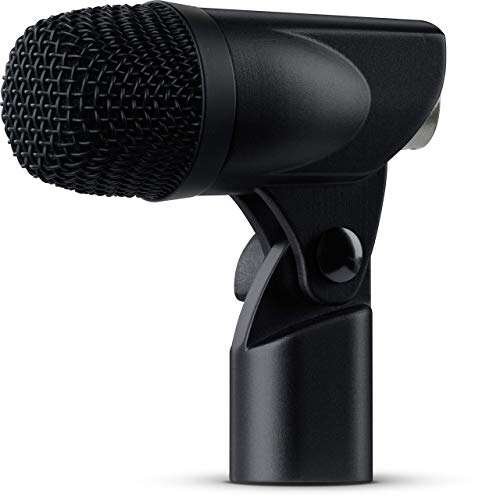
PreSonus DM-7 Drum Microphone Set

The PreSonus DM-7 is a practical way to place several microphones around an acoustic drum kit. A set like this helps you record kick, snare, toms, and overhead sound on separate tracks. That separation matters because it lets you fix one drum without changing the whole kit. You still need an audio interface with enough inputs and suitable microphone cables.
In a DAW, I would use the close microphones for punch and the overhead microphones for the kit image. I would then check phase before adding heavy EQ or compression. This set suits a new home studio that wants a clear path into multitrack drum recording. It does not replace room treatment, careful mic placement, or a good interface.
Pros:
- Complete approach for recording an acoustic kit
- Separate drum tracks allow detailed mixing
- Useful for both studio and live sound work
- Good starting point for a home recording rig
- Works with any DAW through an audio interface
Cons:
- Requires a multi-input audio interface
- Mic stands and extra cables may still be needed
- Placement takes time and some trial and error
What Amazon Buyers Are Saying
Buyer feedback for drum microphone kits often focuses on kit completeness, ease of setup, and value. Some buyers praise having several microphones in one package, while others note that results depend on placement and the quality of the interface. Check the current Amazon listing for the latest verified comments, included parts, and warranty details before ordering.
My Recommendation
I recommend the DM-7 for a beginner who owns, or plans to buy, a proper multichannel interface. It gives an acoustic drummer more control than a single microphone. It is a strong match for Reaper, Cubase, Logic Pro, or another DAW that supports several audio inputs.
Donner DMK 25 Pro MIDI Keyboard

The Donner DMK 25 Pro is a compact MIDI controller for producers who want drum pads in a small space. Its 25 keys suit bass lines, simple chords, and short melodies. The eight pads can trigger drum samples inside a DAW. USB-C keeps the setup simple on a modern computer, though you should confirm cable and operating system needs.
This controller does not record the sound of an acoustic drum kit. Instead, it sends MIDI notes to a virtual drum instrument. That makes it useful for sketching patterns before a drummer arrives or replacing a noisy late-night session. The OLED display and performance tools can help, but beginners may need time to learn the controls.
Pros:
- Small footprint for a desk studio
- Eight pads support finger drumming
- USB-C connection suits newer computers
- Useful for virtual drum instruments
- Keys add melody and chord control
Cons:
- Does not capture acoustic drum microphones
- Small controllers can feel crowded during complex parts
- Pad response depends on software setup
What Amazon Buyers Are Saying
Customers commonly look at compact size, pad response, software access, and ease of connection when reviewing controllers in this class. Some like the number of features for the space, while common concerns can include learning the controls or setting up software. Read recent verified reviews for details on current firmware, bundled software, and long-term use.
My Recommendation
I would buy the DMK 25 Pro for beat making, not for mic-based drum recording. It works best with a DAW that lets you map pads to kick, snare, hats, and percussion. It offers good value when desk space and portability matter most.
CAD Audio Stage7 Drum Mic Pack

The CAD Audio Stage7 is aimed at drummers who want a seven-microphone setup with cables included in the bundle. A full kit helps you capture close detail from the kick, snare, and toms. It can also give you more control over bleed and balance during the mix. You still need an interface or mixer with enough microphone inputs.
For the best result, I would place the kick mic close to the drum but outside the beater path. I would use the tom mics to add attack and body, then use overheads to create a natural picture. The included cables can reduce the first shopping list, but always inspect cable length and connector quality when the package arrives.
Pros:
- Seven-microphone layout suits a full kit
- Includes multiple 10-foot XLR cables
- Useful for live sound and studio work
- Separate channels support detailed editing
- Good fit for engineers building a first drum locker
Cons:
- Needs a large audio interface or mixer
- More microphones mean more setup time
- Room sound can still affect overhead recordings
What Amazon Buyers Are Saying
Buyers of bundled drum mic packs often value the included cables and the ability to mic a full kit at once. Feedback may also mention clamp fit, cable handling, and differences between close-mic and overhead results. Since listings and buyer experiences can change, check recent verified reviews before relying on the bundle for a paid session.
My Recommendation
The Stage7 is a sensible choice for a drummer who wants a complete multichannel starting point. It gives more expansion room than a small two- or four-mic setup. I would pair it with a stable interface, careful gain staging, and a DAW with clear track routing.
Umelody UED-60 Electronic Drum Set

The Umelody UED-60 targets beginners, children, and home users who need a quiet way to practice. It includes built-in drum sounds, a metronome, headphones, drumsticks, and a throne. That makes it more complete than a bare pad controller. Its USB MIDI connection can also send performance data to a compatible DAW.
This is not the same as recording a real acoustic kit with microphones. Instead, the set can trigger software drums or record its internal performance through the available connections. I like this approach for learning timing and building simple parts at home. Check the fit, pedal layout, and playing space before buying for an adult drummer.
Pros:
- Quiet practice with headphones
- Includes useful beginner accessories
- Built-in kits offer fast play
- Metronome supports timing practice
- USB MIDI can connect to drum software
Cons:
- Not a natural acoustic drum recording solution
- Compact pads may feel small for some players
- Sound quality depends on the internal module or software
What Amazon Buyers Are Saying
Buyers of beginner electronic kits often mention quiet practice, included accessories, and ease of setup. Some may expect a larger playing surface or more advanced module control than a compact kit provides. Review the current listing and recent customer photos to judge size and build for your intended player.
My Recommendation
I recommend the UED-60 for a new drummer, a child, or a producer who needs a simple MIDI drum source. It is not my first choice for an acoustic drum session. It is a useful low-noise tool for learning, sketching, and home recording.
Akai Professional LPD8 MIDI Pad Controller

The Akai LPD8 is a small controller built around eight RGB drum pads and eight assignable knobs. It fits beside a laptop, mixer, or keyboard without taking much room. The pads can trigger kicks, snares, cymbals, and one-shot samples inside a DAW. The knobs can control volume, filter, effects, or other mapped settings.
I see it as a fast sketch tool rather than a full keyboard. It can help a producer tap out a groove with more feel than a computer mouse. It also works well when you already own a larger keyboard but want dedicated drum pads. You must map the pads correctly, and the final sound comes from your chosen virtual instrument.
Pros:
- Very compact desktop design
- Eight illuminated pads are easy to see
- Assignable knobs support hands-on mixing
- Useful for finger drumming and samples
- Broad DAW compatibility makes it flexible
Cons:
- No piano keys for chords or melodies
- Eight pads limit large sample layouts
- USB MIDI does not record acoustic microphones
What Amazon Buyers Are Saying
Controller buyers often praise compact size, pad feel, and the ability to assign knobs. Some common concerns in this category involve software mapping and the small number of pads. Check current verified reviews for reports on pad sensitivity, setup, and compatibility with your exact DAW.
My Recommendation
The LPD8 is worth buying when you need simple, direct drum control in a small studio. I would choose it for beat sketches, sample triggering, and portable work. It pairs especially well with a DAW that supports custom MIDI maps and velocity-sensitive pads.
D Debra DK7 Pro Drum Microphone Kit

The D Debra DK7 Pro is a wired seven-piece drum microphone kit for performers and recording drummers. Its listed mic options cover common sources such as kick, snare, rack toms, floor toms, and other drums. This gives a new engineer a way to build a close-mic setup without buying each microphone one at a time. An interface with enough preamps remains essential.
The main benefit comes from track control inside the DAW. I can raise the snare, reduce a boomy tom, or automate the kick without changing the overhead balance. The clips can also make placement faster, but I would still protect the drum shells and check each clip before a session. This kit suits budget-minded users who want broad coverage.
Pros:
- Seven microphones cover common drum positions
- Clip options can speed up placement
- Useful for live performance and recording
- Separate tracks allow detailed drum mixing
- Accessible starting point for a larger kit
Cons:
- Needs several preamp channels
- Budget kits may require careful gain checks
- Mic clips may not fit every drum hoop equally
What Amazon Buyers Are Saying
People shopping for this type of kit often focus on the number of microphones, clip choices, and the value of a complete package. Some may report that setup is quick, while others may want stronger hardware or more detailed instructions. I suggest reading current reviews about clip fit, cable needs, and noise before placing an order.
My Recommendation
The DK7 Pro makes sense for a first drum-mic purchase when price and coverage matter. I would test every channel before a session and keep a spare cable nearby. It is a reasonable match for Reaper or another DAW when paired with a suitable interface.
M-Audio Oxygen 49 MKV Controller

The M-Audio Oxygen 49 MKV combines 49 velocity-sensitive keys with eight beat pads, knobs, and faders. That layout gives a producer room for chords while keeping hands-on control for drums. It can trigger virtual instruments through USB MIDI. The bundled software can help a new user start, but always confirm current software terms and compatibility.
This is a controller, not an audio recorder. It cannot replace drum microphones or an interface for a live acoustic kit. Still, it can make drum programming faster because I can tap patterns, adjust levels, and play bass or piano from one surface. The 49-key size is a good middle ground for a home studio.
Pros:
- 49 keys support full production tasks
- Eight pads help create drum patterns
- Knobs and faders add hands-on control
- Velocity response supports expressive playing
- Works well in a general-purpose DAW setup
Cons:
- Larger than a pad-only controller
- Does not record acoustic drum audio
- Needs mapping for the best workflow
What Amazon Buyers Are Saying
Buyers commonly discuss key feel, pad response, software bundles, and the usefulness of the controls. Some appreciate having many functions in one unit, while others may need time to set up mappings. Read recent reviews for current driver, software, and operating system information.
My Recommendation
I recommend the Oxygen 49 MKV for a producer who makes drums and also plays keys. It offers more creative range than a small pad unit without taking the space of a 61-key board. It is a strong companion to the best DAW for recording drums when you also program instruments.
Donner Starrykey-37 MIDI Controller
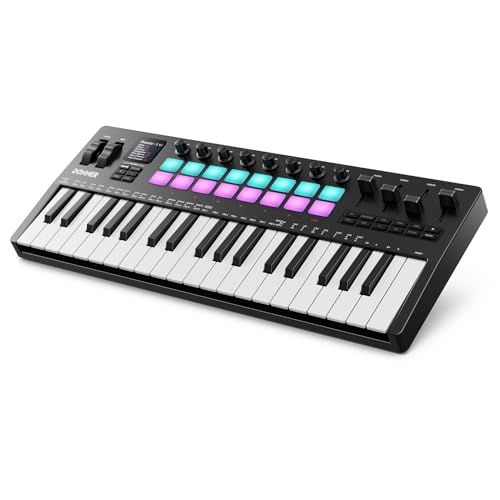
The Donner Starrykey-37 gives producers 37 keys, 16 drum pads, built-in voices, and performance tools. It is more flexible than a small pad controller but easier to place than a full 61-key board. The 16 pads provide more room for drum hits, samples, and loops. The controller can support both computer-based production and quick standalone ideas through its listed features.
I would use it to build a groove, play a bass line, and test song ideas before recording a live kit. Its wireless feature may appeal to mobile users, but wired USB remains the safer choice for low-latency work. Confirm the wireless method and DAW support before relying on it in a live session. Like other MIDI devices, it sends performance data rather than acoustic audio.
Pros:
- 16 pads give useful drum pattern space
- 37 keys suit chords and bass parts
- Built-in voices support quick practice
- Portable size fits small studios
- Useful for producers who need one flexible controller
Cons:
- Wireless use may need extra setup
- More controls can increase the learning curve
- Does not replace an audio interface for microphones
What Amazon Buyers Are Saying
Customers usually consider key size, pad count, built-in sounds, and wireless convenience when reviewing a controller like this. Some users may like the broad feature set, while others may want clearer setup instructions or deeper DAW integration. Check the latest verified feedback for current connectivity performance.
My Recommendation
The Starrykey-37 is a good fit for a mobile producer who wants keys and many drum pads. I would choose it over a 25-key model when chord work matters. It offers strong creative value, but I would use a wired connection for serious recording.
M-Audio Oxygen 61 MKV Controller
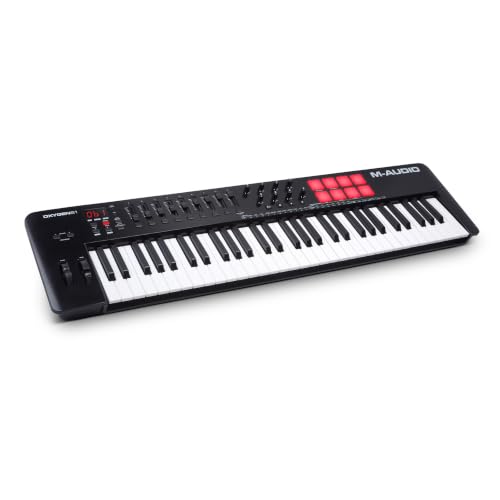
The Oxygen 61 MKV is designed for a larger production desk. Its 61 keys give players more range for piano, bass, and melodic parts. It also includes beat pads, knobs, and faders for software instruments and mixing tasks. This makes it useful when drum programming is only one part of the session.
The main trade-off is size. It needs a stable stand or a wide desk, and it is less convenient to move than a compact controller. It still cannot record an acoustic kit by itself. For a fixed studio, though, the extra keys can reduce the need to switch between devices while arranging a song.
Pros:
- Wide key range for complete arrangements
- Beat pads support drum programming
- Faders and knobs help control software
- Useful for keyboard players and producers
- Bundled DAW software can help beginners start
Cons:
- Requires substantial desk or stand space
- Less portable than smaller controllers
- Does not provide microphone inputs
What Amazon Buyers Are Saying
Large MIDI controller buyers often mention key action, control layout, software setup, and physical size. Many value the broad range, while some find a 61-key unit too large for a small room. Read current verified reviews to confirm the included software and any setup needs.
My Recommendation
I recommend this controller for a permanent studio where keys matter as much as drums. It is not the best pick for a producer who only wants finger drumming. For an all-purpose arrangement desk, it offers useful control and strong long-term value.
M-Audio Oxygen Pro 49 Controller

The Oxygen Pro 49 is a more advanced MIDI controller for producers who want keys, 16 pads, knobs, and faders. The larger pad count gives better access to a complete software drum kit. Its 49-key range still fits many home studios. It is built for people who want deeper control over instruments, patterns, and mixing tasks.
I would use the pads for a first groove, then use the keys to add bass or chords. The controls can reduce mouse work during a mix, but the extra functions take time to learn. This controller does not capture microphones or create acoustic drum sound on its own. Its value rises when you already use a DAW often.
Pros:
- 16 pads support broader drum layouts
- 49 keys balance range and desk space
- Knobs and faders support hands-on mixing
- Velocity-sensitive control encourages expressive parts
- Good fit for serious home production
Cons:
- More features create a longer learning curve
- Not a substitute for a multichannel interface
- Requires mapping for the smoothest workflow
What Amazon Buyers Are Saying
Reviews of advanced controllers often focus on key feel, pad response, control depth, and software integration. Buyers may like the large number of controls, while some may need time to understand the menus and mappings. Check the latest listing and verified feedback for current software support.
My Recommendation
The Oxygen Pro 49 is my favorite MIDI option in this list for serious drum programming. It gives more pad space than the standard Oxygen MKV and still leaves room for keys. Buy it if you want one controller for beat making, arrangement, and basic mix control.
How to Choose the Best DAW for Recording Drums
Choosing the best DAW for recording drums starts with your recording method. A real acoustic kit needs microphones, preamps, inputs, low-latency monitoring, and strong editing tools. An electronic kit or MIDI controller needs good MIDI timing, drum-plugin support, and simple mapping. The best choice depends on your room, computer, budget, and skill level.
1. Match the DAW to Your Drum Setup
For acoustic drums, choose a DAW that can record several inputs at once. Reaper stands out because it offers flexible routing, low cost, and a light system load. Pro Tools remains popular in many commercial rooms. Logic Pro suits Mac users, while Cubase offers strong MIDI and editing tools.
For MIDI drums, focus on pad mapping and virtual instruments. A controller such as the Akai LPD8 or Oxygen Pro 49 needs a DAW that can learn notes quickly. Test the kick, snare, hi-hat, and cymbal sounds before you build a full part.
2. Check Editing, Timing, and Mixing Tools
Drum recording needs more than a record button. Look for track comping, slip editing, quantize, phase checking, automation, and easy bus routing. These tools help you repair small timing issues without making the performance sound stiff.
Keep latency low when the drummer hears the software through headphones. Use a suitable audio interface and the correct driver. Record at a sensible buffer size, then raise the buffer for mixing if the computer needs more power.
3. Compare Total Cost and Room Needs
The DAW is only one part of a drum setup. Add the interface, microphones, stands, cables, headphones, storage, and room control to your budget. A cheap controller cannot replace microphones for an acoustic kit. A large microphone pack also has little value if your interface has too few inputs.
Choose a system you can use today and expand later. A small setup with two quality microphones can teach strong placement skills. A seven-mic kit can give more control, but it needs more channels and more time. The best DAW for recording drums should make your whole setup easier, not just add features.
Final Verdict: Which Should You Buy?
For a real acoustic kit, I would choose Reaper with the PreSonus DM-7 or CAD Stage7. For MIDI drums, the Oxygen Pro 49 is the strongest controller here. Reaper remains my pick for the best DAW for recording drums because it offers excellent routing and value.
Choose the setup that matches your room and skill. Good mic placement, clean gain, and careful editing matter as much as the software. Start small, learn your tools, and upgrade with purpose.
FAQs Of best daw for recording drums
What is the best DAW for recording acoustic drums?
Reaper is my top value pick. It offers flexible routing, multitrack recording, editing tools, and low system demands.
Can I record drums with a MIDI keyboard?
Yes. A MIDI keyboard can trigger virtual drum sounds, but it cannot record the natural sound of an acoustic drum kit.
How many inputs do I need for drum recording?
It depends on the microphone count. A two-mic setup needs two inputs, while a seven-mic setup needs at least seven suitable channels.
Are electronic drums good for DAW recording?
Yes. Electronic drums can send MIDI to a DAW and trigger software kits. They also offer quiet practice with headphones.
Is a drum microphone kit enough by itself?
No. You also need an audio interface, XLR cables, mic stands or clips, headphones, and a computer with a DAW.