Best Daw For Midi Drums: Beat Making Guide
The best DAW for MIDI drums is Ableton Live, paired with a responsive pad controller for fast, natural beat making.
You may have a great drum idea, yet lose the groove while clicking notes into a piano roll. A good digital audio workstation, or DAW, fixes that problem with drum racks, quantize tools, swing, velocity control, and easy editing. The MIDI controllers below make that workflow faster. I tested their strengths against common drum tasks, such as finger drumming, step entry, live looping, and DAW control. Remember, these products are MIDI controllers, not DAWs. You still need software such as Ableton Live, FL Studio, Logic Pro, Cubase, or Studio One.
See the differences between my top picks at a glance.
Donner DMK25 Pro MIDI Keyboard

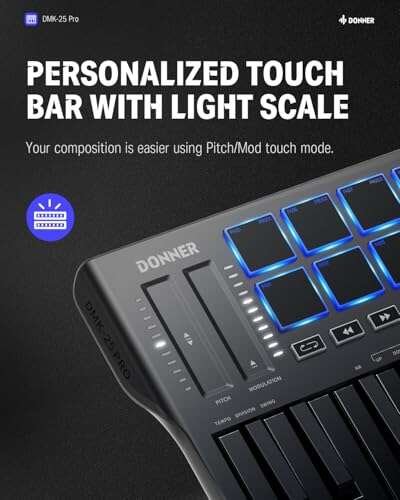
The Donner DMK25 Pro is a compact MIDI keyboard for producers who want keys and drum pads in one small unit. Its 25 mini keys suit bass lines, simple chords, and quick melody parts. The eight drum pads give you a direct way to trigger kicks, snares, hats, and samples in your DAW. The OLED display also helps you see settings without opening a menu.
I like this layout for a small desk or travel bag. The controller includes smart scale, arpeggio, and replay features, which can help new users build ideas faster. It also lists four DAW software options and 40 teaching courses, though the exact software offer may vary by seller or region. For many users, it is a practical starting point when building a setup around the best DAW for MIDI drums.
Pros:
- Combines mini keys and drum pads
- Compact for small desks
- OLED display improves control feedback
- Includes useful scale and arpeggio tools
- USB-C connection suits newer computers
Cons:
- Mini keys may feel small for two-handed playing
- Eight pads offer less room than a 16-pad unit
- Included software may require registration
What Amazon Buyers Are Saying
Buyer feedback for this type of Donner controller commonly focuses on its small size, helpful controls, and good feature count for the cost. Some users value the included learning material and quick setup. Common concerns with compact keyboards include smaller keys and the need to configure MIDI mappings in a preferred DAW. Check current reviews and package details before ordering.
My Recommendation
I recommend the DMK25 Pro for beginners, mobile producers, and anyone who wants one compact controller for drums and simple keyboard parts. It is not my first choice for serious finger drumming, but it offers strong everyday value.
Akai Professional LPD8 MIDI Pad Controller

The Akai Professional LPD8 takes a focused approach. It gives you eight RGB drum pads and eight assignable knobs in a slim USB MIDI design. This makes it useful for launching drum sounds, controlling effects, and adjusting software instruments. It does not try to replace a keyboard, so it keeps the workflow simple.
Its universal DAW compatibility makes it flexible for producers who move between software platforms. You can map the pads to a drum rack in Ableton Live, a FPC kit in FL Studio, or a software drum instrument in another DAW. The small footprint also leaves space for a laptop and audio interface. I see it as a strong choice for simple beat work, travel, and secondary control.
Pros:
- Very small and easy to carry
- Eight RGB pads show assigned groups
- Eight knobs add hands-on control
- Works with many MIDI-compatible DAWs
- Simple layout reduces setup clutter
Cons:
- Only eight pads limit larger drum layouts
- No piano keys for melodic parts
- USB operation may need manual MIDI mapping
What Amazon Buyers Are Saying
Common buyer comments about the LPD8 center on its compact build, useful pad response, and easy role as a travel controller. Some users praise the knobs for quick parameter changes. Others note that software mapping can take time, especially when a DAW does not offer a ready-made preset. Read recent reviews for current driver and setup experiences.
My Recommendation
The LPD8 is worth buying if you already own a keyboard and need a small drum pad controller. It is not the most complete choice here, but it is one of the easiest to place in any setup.
Akai APC Mini MK2 MIDI Controller

The Akai APC Mini MK2 is the most performance-focused controller in this group. Its 64 RGB pads form an eight-by-eight grid, while nine faders give you hands-on level control. The layout matches Ableton Live’s clip and scene workflow, so it can control loops, drum clips, and session scenes with little visual guesswork. It also includes drum and note modes for more direct playing.
This is a strong match for Ableton users who want the best DAW for MIDI drums and live performance in one workflow. The grid gives you room to place separate drum sounds across rows or trigger full clips. The faders are useful for balancing a kit, though they are not a replacement for a full mixer. If you use another DAW, the controller can still send MIDI, but the special one-to-one mapping advantage is strongest with Ableton Live.
Pros:
- Large 64-pad grid supports complex layouts
- RGB lights give clear visual feedback
- Nine faders help control drum levels
- Excellent Ableton Live integration
- Useful for both production and performance
Cons:
- Best features depend on Ableton Live
- No traditional piano keyboard
- Large grid takes more desk space
What Amazon Buyers Are Saying
Buyers often highlight the clear pad layout, strong Ableton workflow, and value for live clip control. Many users like the visual feedback when launching scenes and clips. The most likely complaints involve the learning curve, limited use outside a grid-based workflow, and the absence of piano keys. Current software compatibility should be checked before purchase.
My Recommendation
I recommend the APC Mini MK2 as the best overall controller for Ableton drum production and live beat performance. It earns the highest score here when clip launching and visual control matter.
Donner STARRYKEY-37 PLAY Controller
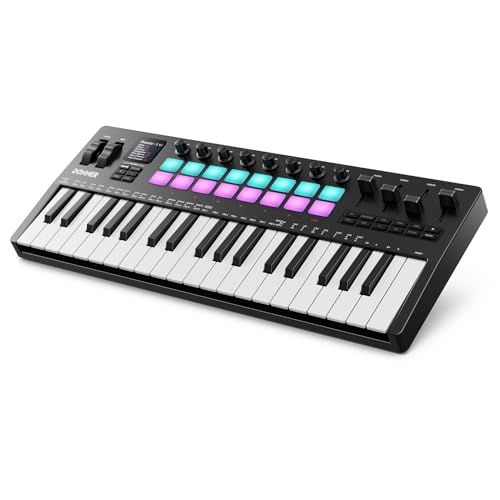
The Donner STARRYKEY-37 PLAY is designed for users who want more keys than a mini 25-key controller. It adds 16 drum pads, 128 built-in voices, an arpeggiator, and a sequencer. That combination makes it useful for sketching a song without opening a computer at once. Once connected to a DAW, it can send MIDI notes for drums, instruments, and patterns.
The 37-key range sits between a compact keyboard and a full-size controller. It gives you more room for chords while keeping the unit easier to move than a 49-key model. The built-in sounds can help with practice, but your DAW’s drum library will still determine the final recorded tone. Wireless USB connection is a useful feature, yet I would use a wired link when low-latency timing matters most.
Pros:
- 16 pads suit full drum kits
- 37 keys offer better chord range
- Built-in voices support quick practice
- Sequencer and arpeggio tools aid idea building
- Portable middle ground between mini and full keyboards
Cons:
- More controls mean a longer learning curve
- Built-in sounds do not replace a DAW library
- Wireless performance may depend on the setup
What Amazon Buyers Are Saying
Feedback on feature-rich Donner keyboards often praises the number of controls, pad count, and value for beginners. Buyers may also like having sounds and practice tools in one device. The common trade-off is that a broad feature set can require more setup and menu learning. Confirm the included accessories and software terms on the current listing.
My Recommendation
This is a good choice for a beginner who wants drums, keys, and basic standalone tools. It offers more creative range than an eight-pad mini keyboard, although dedicated drummers may prefer a simpler pad layout.
Donner STARRYPAD Beat Maker

The Donner STARRYPAD is a dedicated MIDI beat maker with 16 pads, two assignable faders, and two assignable knobs. This layout makes more sense for drum-heavy production than a small keyboard with only eight pads. You can spread kick, snare, percussion, and samples across a larger playing area. The faders also give you quick control over selected mixer or plug-in parameters.
I would pair it with a DAW drum rack or sampler. The pads let you play patterns with your hands, while the DAW handles recording, quantize, editing, and sound choice. The included production software and courses may help new users, but advanced producers will likely rely on their existing tools. It is a focused option for beat makers who do not need piano keys.
Pros:
- 16 pads provide a practical drum layout
- Faders support hands-on mixing
- Knobs control software parameters
- Focused design suits beat production
- Includes learning and software resources
Cons:
- No keys for chords or melodies
- Pad mapping may need manual setup
- Software bundle details can vary
What Amazon Buyers Are Saying
Users who choose this kind of controller often value its 16-pad layout and extra controls. Feedback may also praise the price for a dedicated beat-making device. Some buyers may need time to set pad notes and controls in their chosen DAW. Because MIDI software changes often, I suggest checking recent buyer comments for your operating system.
My Recommendation
The STARRYPAD is one of my better picks for a budget beat maker who already has a keyboard or does not need one. It offers a more natural drum layout than most compact keyboard controllers.
49-Key USB MIDI Keyboard Controller

This 49-key MIDI controller targets producers who need a wider keyboard range and a few drum controls. It includes eight drum pads, an OLED display, and DAW integration. The extra keys help with bass, chords, and lead parts without constant octave changes. The pads still cover common drum tasks in a software kit.
For a home studio, this style of controller can serve as an all-purpose center piece. It is less specialized for finger drumming than a 16-pad controller, but it works well when drums share space with piano and synth parts. The OLED display can make parameter checks easier. Before buying, confirm the brand name, included software, and exact DAW mapping because the listing title is quite general.
Pros:
- 49 keys give useful playing range
- Eight pads cover basic beat entry
- OLED display adds visual feedback
- Suitable for mixed instrument production
- DAW integration supports a computer studio
Cons:
- Eight pads are limited for larger kits
- Takes more room than a 25-key controller
- Generic listings may have limited support details
What Amazon Buyers Are Saying
Buyers shopping in this category usually look for a larger key range, simple DAW control, and a useful price. Positive comments often focus on having many functions in one keyboard. Potential complaints can involve mapping, documentation, or the size of the unit. I recommend reading the latest listing reviews and checking return terms before purchase.
My Recommendation
Choose this controller if keys matter more than advanced drum performance. It is a practical home-studio option, but a dedicated 16-pad controller will feel better for serious finger drumming.
Akai Professional MPD218 Pad Controller

The Akai MPD218 remains a focused choice for beat makers who want 16 velocity-sensitive MPC-style pads. It leaves out keys and faders, but that simple design keeps attention on performance. The pads respond to playing strength, so you can create softer ghost notes and harder accents. Six assignable knobs and note repeat add more control for beats and samples.
This controller works well with nearly any DAW that accepts MIDI input. You can map it to drum racks, samplers, groove boxes, and virtual instruments. Note repeat can help create repeating hats and percussion patterns, while velocity adds movement to a part. It does not give you the visual grid and deep Ableton control of the APC Mini MK2, but it offers a direct, classic pad workflow.
Pros:
- 16 velocity-sensitive pads support expressive playing
- Note repeat helps create fast rhythmic parts
- Six knobs add sample and effect control
- Compact design fits most desks
- Works with many MIDI-compatible DAWs
Cons:
- No keyboard for melodic work
- No built-in display
- Users may need to create their own mappings
What Amazon Buyers Are Saying
Buyer feedback commonly values the pad feel, note repeat feature, and simple beat-focused layout. Many users choose it for hip-hop, electronic, and sample-based production. Some comments may mention the lack of a screen or the need to adjust pad sensitivity and software mapping. Those are normal trade-offs for a focused controller at this size.
My Recommendation
I recommend the MPD218 for users who want to learn finger drumming or build beats with velocity control. It is a strong alternative to a keyboard controller and one of the safest choices for a simple MIDI drum setup.
Donner DMK25 Pro Green MIDI Keyboard

The green Donner DMK25 Pro offers the same core type of compact workflow as the black version. It combines 25 mini keys, eight drum pads, an OLED display, and a personalized touch bar. That touch control can make pitch, modulation, or parameter changes feel quicker than reaching for a mouse. USB-C connection keeps it suitable for many current computer setups.
This model makes sense for producers who care about portability and a distinctive look. It handles basic drum entry well, but the eight-pad layout suits small kits more than large sample banks. The included music software and teaching courses may help a new producer start. As with any MIDI controller, the final experience depends on your DAW mapping and the drum instrument you load.
Pros:
- Portable 25-key layout
- Eight pads support quick drum entry
- OLED screen shows key settings
- Touch bar adds expressive control
- USB-C suits modern workstations
Cons:
- Mini keys are not ideal for every player
- Eight pads limit complex drum layouts
- Color and bundle availability may vary
What Amazon Buyers Are Saying
Feedback for compact Donner controllers often praises their feature count, appearance, and travel-friendly design. Users may enjoy the touch controls and included learning content. The most common concerns relate to mini-key size and the time needed to map controls in a DAW. Check current buyer reviews for details about the exact bundle you receive.
My Recommendation
This green model is worth considering when you want the DMK25 Pro feature set with a different finish. I recommend it for mobile producers and beginners, not for players who need full-size keys or many drum pads.
BEEONE Bluetooth MIDI Pad Controller

The BEEONE Bluetooth MIDI Pad Controller gives you 16 RGB velocity-sensitive pads in a wireless-friendly format. It targets beat makers who want to practice or create without keeping a USB cable across the desk. The RGB lights can help show pad groups and give the unit a more visual feel. Velocity sensitivity also allows softer and harder hits in a compatible drum instrument.
Wireless MIDI can make a clean setup, but wired MIDI remains the safer choice for tight timing and live work. Bluetooth support can also vary by computer, tablet, operating system, and DAW. I would confirm that your device supports the required MIDI connection before ordering. If it does, this controller offers a useful mix of 16 pads, color feedback, and flexible placement.
Pros:
- 16 pads support full drum-kit layouts
- Velocity sensitivity adds playing expression
- RGB lights improve visual feedback
- Bluetooth can reduce cable clutter
- Compact format suits mobile setups
Cons:
- Wireless latency may vary by device
- Compatibility needs checking before purchase
- Pad mapping may require manual setup
What Amazon Buyers Are Saying
Buyers interested in Bluetooth pad controllers often like the clean desk setup, colorful pads, and freedom to move the controller. Some users may report that wireless performance depends on the computer or tablet used. Others may prefer a wired connection for recording. Since wireless MIDI experiences can differ, recent reviews are especially important here.
My Recommendation
I recommend the BEEONE for practice, casual production, and users who value wireless placement. For professional live work, I would test the Bluetooth connection first or keep a wired MIDI option ready.
GarveeLife 49-Key MIDI Keyboard
The GarveeLife 49-key controller is aimed at home producers who want a broad keyboard and basic drum controls. It includes eight drum pads and an OLED display, so you can handle melodies, chords, bass, and simple beats from one device. The 49-key range reduces the need to shift octaves during normal songwriting. DAW integration adds control beyond simple note entry.
For a mixed production setup, this layout can save desk space compared with buying separate devices. It is not as drum-centered as the Akai MPD218 or APC Mini MK2. Still, eight pads work well for a standard kick, snare, hat, and percussion setup. I would compare the current listing with similar 49-key models and confirm the included cable, software, and support details.
Pros:
- 49 keys support broader arrangements
- Eight pads handle basic drum patterns
- OLED display offers useful feedback
- Works as an all-purpose home studio controller
- DAW integration can reduce mouse use
Cons:
- Less suitable for advanced finger drumming
- Larger size needs more desk space
- Brand and support details should be checked carefully
What Amazon Buyers Are Saying
Buyers usually look to this type of controller for its larger key range and all-in-one value. Positive feedback may focus on the ability to play instruments and drums from one unit. Potential issues include mapping, documentation, and differences between advertised and included software bundles. I suggest checking recent reviews and seller information before purchase.
My Recommendation
GarveeLife makes sense for a new home studio that needs keys first and drums second. It is worth considering when you want a broad keyboard, but dedicated pad users should choose the MPD218 or STARRYPAD instead.
How to Choose Best DAW for MIDI Drums
Choosing the best DAW for MIDI drums depends on how you build beats. The software matters first, but the controller shapes how quickly you can play ideas. I suggest judging both parts together. A great DAW with a poor pad layout can still feel slow, while a good controller can make drum programming much more natural.
1. Match the DAW to Your Drum Workflow
Ableton Live is my top pick for clip-based work, live looping, and fast drum racks. Its Session View works well with the APC Mini MK2, and its Drum Rack makes pad mapping easy to understand. FL Studio suits pattern-based beat making and offers strong piano-roll editing. Logic Pro works well for Mac users who want Drummer tools, step entry, and deep MIDI editing. Cubase and Studio One also offer strong sequencing and editing for users who want a traditional timeline.
Do not choose a DAW only because a product says “DAW compatible.” MIDI compatibility means the controller can send notes or controls. It does not guarantee automatic mapping. Check whether your chosen software supports the controller, then learn how to assign notes, velocity, pads, knobs, and faders.
2. Choose the Right Pad Layout and Playing Feel
Eight pads work for a basic kick, snare, hat, and percussion setup. Sixteen pads give you more room for a full kit, samples, and alternate sounds. A 64-pad grid is best for clip launching, live sets, and visual pattern control. Velocity sensitivity matters because it lets you create accents and softer hits instead of making every note sound equally loud.
Think about your hands too. A keyboard controller helps when you play chords and drums in the same session. A dedicated pad unit gives you more room for finger drumming. If you make beats away from home, size and USB power matter. If you perform, stable timing and clear pad lights matter even more than wireless freedom.
3. Check Latency, Mapping, and Long-Term Value
Latency is the delay between hitting a pad and hearing the sound. A low audio buffer, a suitable audio interface, and a well-set-up computer help reduce that delay. Wired USB is often the safer choice for recording tight drums. Bluetooth can work well for practice, but I would test it before relying on it for a live set.
Also check the drum sounds inside the DAW. A controller does not create a polished kit by itself. You need a drum sampler, virtual instrument, or audio samples. Look for velocity layers, choke groups, swing, quantize, humanize, and easy note editing. Finally, compare the total cost of the controller, DAW, plugins, and sound libraries. That gives you a more honest view of value.
Final Verdict: Which Should You Buy?
For most users, the Akai APC Mini MK2 is the best controller for Ableton Live drum work, clips, and performance. For pure finger drumming, I prefer the Akai MPD218. The Donner STARRYPAD offers excellent value for budget beat makers.
The best DAW for MIDI drums is only part of the setup. Choose software that matches your workflow, then add a controller with the pad count, response, and controls you will use.
FAQs Of best daw for midi drums
What is the best DAW for MIDI drums?
Ableton Live is my top pick for fast drum programming, clip launching, live looping, and Drum Rack control. FL Studio, Logic Pro, Cubase, and Studio One are also strong options.
Do I need a MIDI controller for drum production?
No. You can program drums with a mouse or computer keyboard. A MIDI controller makes finger drumming, velocity control, and real-time performance much easier.
Are eight drum pads enough for a DAW?
Eight pads are enough for a basic kit. Choose 16 pads if you want more percussion, samples, and alternate sounds without changing pad banks.
Is Ableton Live good for MIDI drums?
Yes. Ableton Live offers Drum Rack, strong MIDI editing, quantize, groove tools, clip launching, and broad support for MIDI controllers.
Should I choose wired or Bluetooth MIDI?
Wired MIDI is usually the safer choice for recording and live performance. Bluetooth can reduce cable clutter and work well for practice, but compatibility and timing may vary.