How To Play The Drums: Easy Beginner Steps
Learning how to play the drums begins with simple beats, steady timing, proper grip, and daily practice.
I’ve spent years teaching and playing drums in studios, bands, and classrooms, so I know what works. This guide on how to play the drums walks you through gear, technique, rhythms, reading, practice plans, and real-life tips that I’ve used with students to get fast, reliable progress. Read on to get a clear, friendly, and expert roadmap so you can start playing confidently and stay motivated.
Parts of a drum kit and setup
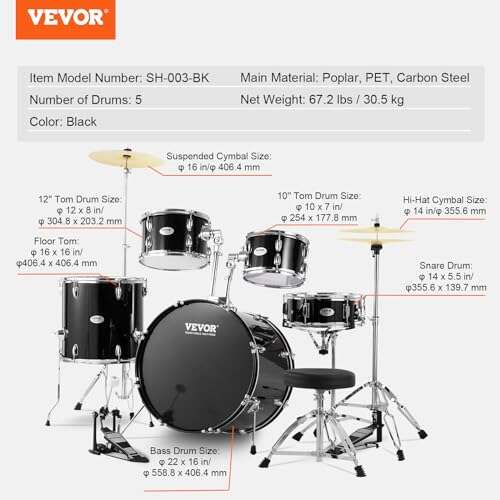
A clear kit layout makes learning how to play the drums faster and more comfortable. A standard acoustic kit includes a bass drum, snare, rack toms, floor tom, hi-hat, ride, crash, and a throne. Electronic kits add pads and module controls but follow the same layout logic.
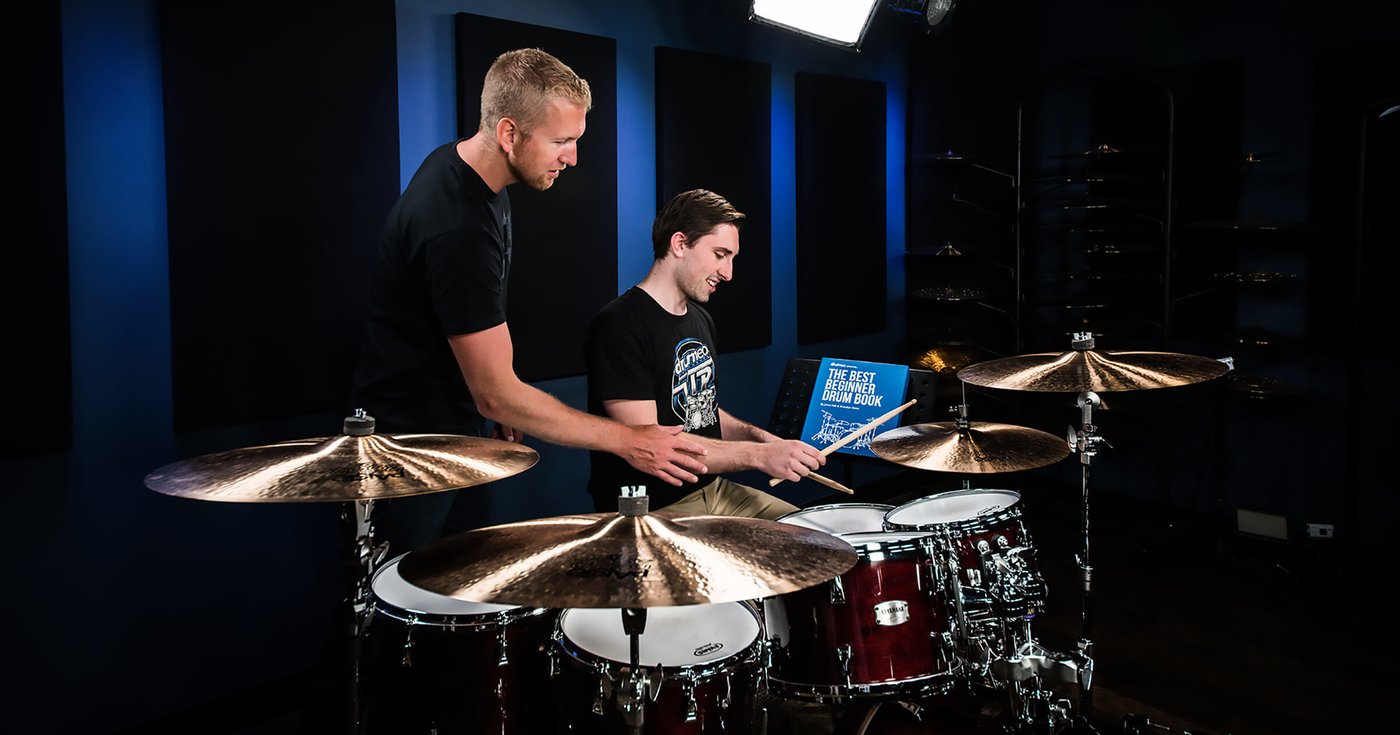
Set your throne so your knees are slightly lower than your hips. Position the snare at an angle that lets your wrists move freely. Keep cymbals reachable without tipping your shoulders. A good setup reduces tension and helps your technique grow faster.

Basic technique: grip, posture, and stroke types
How you hold sticks and sit changes everything when you learn how to play the drums. Use matched grip to start; both hands hold the sticks the same way. Keep a relaxed wrist and use finger control for speed.
Posture tips:
- Sit tall with a small forward lean for balance.
- Feet flat on pedals with heels slightly raised for heel-up work.
- Arms relaxed, elbows near your ribs to avoid flaring.
Stroke types to practice:
- Full stroke for loud notes.
- Downstroke to prepare for quieter hits.
- Tap stroke for light control.
These simple moves build a reliable touch and dynamic range.

Fundamental rhythms and beats
Learning basic beats is core to how to play the drums. Start with a simple four-on-the-floor rock beat: bass on beats 1 and 3, snare on 2 and 4, hi-hat steady eighth notes. Count out loud: “1 and 2 and 3 and 4 and.”
Try variations:
- Half-time feel by moving snare to beat 3.
- Shuffle by turning straight eighths into a swing pattern.
- Funk groove by adding ghost notes on the snare.
Play slowly, then speed up only when you stay consistent. Use small practice segments to lock the groove.

Practice plan: routines and exercises
A simple routine helps you learn how to play the drums without getting overwhelmed. Aim for short, focused practice sessions of 20–40 minutes daily. Divide time like this:
- 5 minutes warm-up: single strokes and wrist loosening.
- 10 minutes rudiments: paradiddles and flams.
- 10 minutes grooves and beats: practice with a metronome.
- 5–15 minutes song practice or fills.
Track progress by recording short clips. I found that students who record weekly improve timing and feel faster than those who rely only on repetition.

Reading drum notation and counting
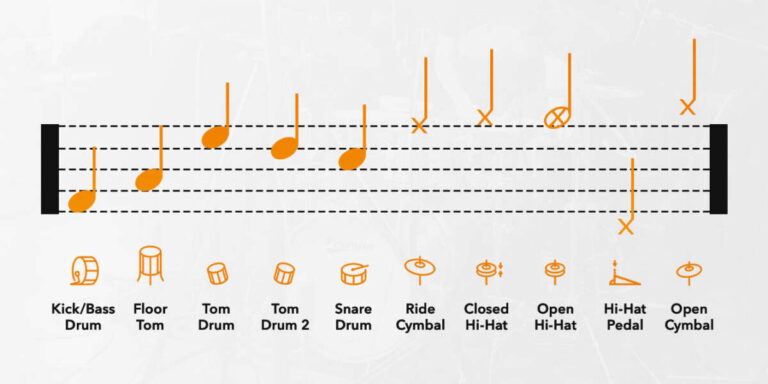
Reading basic drum notation speeds learning and communication. Notation maps instruments to staff lines: snare, bass, hi-hat, and toms each have a specific spot. Start by reading simple beats and matching them on the kit.
Counting tips:
- Use “1 e & a 2 e & a” for sixteenth notes.
- Clap the rhythm, then play on the kit.
- Count beats aloud while playing to lock timing.
Reading helps you learn songs faster and follow charts in band rehearsals.

Playing with others, using a metronome, and tools
Playing with a metronome teaches steady time—essential for how to play the drums in any setting. Begin with slow tempos and add a click on every beat. Move to playing with recorded songs and play-along tracks once you groove steadily.
Tools to try:
- Metronome or metronome app for steady pulse.
- Play-along tracks to practice phrasing.
- Loopers to build fills and independence.
Playing with others is the best teacher; it builds listening skills and dynamic control.

Common mistakes and how to fix them
Recognizing mistakes early saves practice time when learning how to play the drums. Here are common issues and fixes:
- Tension in hands and shoulders — Fix: relax, breathe between phrases.
- Rushing or dragging — Fix: use a metronome and subdivide beats.
- Weak fills — Fix: slow practice, focus on limb control and fill placement.
- Poor setup — Fix: adjust throne height and cymbal reach to reduce strain.
I once coached a student who hit too hard. We focused on lighter stick work and ghost notes and saw immediate improvement in control.
Equipment and buying guide
Choosing gear affects how fast you learn how to play the drums. For beginners, consider a basic but sturdy kit or a quality entry-level electronic kit. Essentials:
- Sticks: try 5A for a balanced feel.
- Snare: a versatile snare helps learning.
- Practice pad: perfect for quiet, focused work.
- Metronome: use an app or hardware device.
Budget tips:
- Buy used but inspect heads, hardware, and pedals.
- Rent or borrow before committing to a full kit.
A reliable, comfortable kit encourages daily practice and builds skill.

People also ask (PAA-style questions)
How long does it take to learn basics?
Most players get basic beats in a few weeks of consistent practice. Regular short sessions speed early progress.
Do I need lessons to learn drums?
Lessons help accelerate progress and fix bad habits, but self-taught players can succeed with discipline and good resources.
What stick size is best for beginners?
A 5A stick is a good all-around choice for most beginners due to its balance and feel.
Frequently Asked Questions of how to play the drums
How often should I practice to improve?
Practice 20–40 minutes daily for steady improvement, focusing on technique and timing.
What is the first beat every drummer should learn?
Start with a simple rock beat: bass on 1 and 3, snare on 2 and 4, hi-hat on eighth notes.
Can I learn drums without a kit?
Yes. Use a practice pad, sticks, and metronome to build technique and timing before using a full kit.
How do I stop rushing when I play?
Use a metronome, count subdivisions aloud, and practice at slower tempos to lock your timing.
Are drum lessons worth the money?
Lessons provide structured feedback and prevent bad habits, often saving time and helping players reach goals faster.
Conclusion
Learning how to play the drums is a step-by-step process: set up well, build solid technique, learn core beats, and practice with purpose. Use a metronome, record yourself, and play with others to grow faster. Start small, stay consistent, and enjoy the progress—drumming rewards patience and curiosity. If you found this helpful, try one focused practice session today and share your progress or questions below.

Senior Music Reviewer
Alex Carter is a seasoned music reviewer with over a decade of experience in the world of sound and instruments. Passionate about helping musicians and enthusiasts make informed choices, he brings sharp insights and in-depth knowledge to every review. From classical instruments to modern gear, Alex combines technical expertise with a love for music to deliver content that resonates with readers.
As a Senior Music Reviewer and expert author on Tuneluma.com, Alex is dedicated to sharing honest evaluations, practical advice, and thoughtful commentary to guide readers in their musical journey.